Safety Shoe Wholesale Supplier Engineering Change Control for United Arab Emirates Buyers
Vincent Xi — Editorial Author
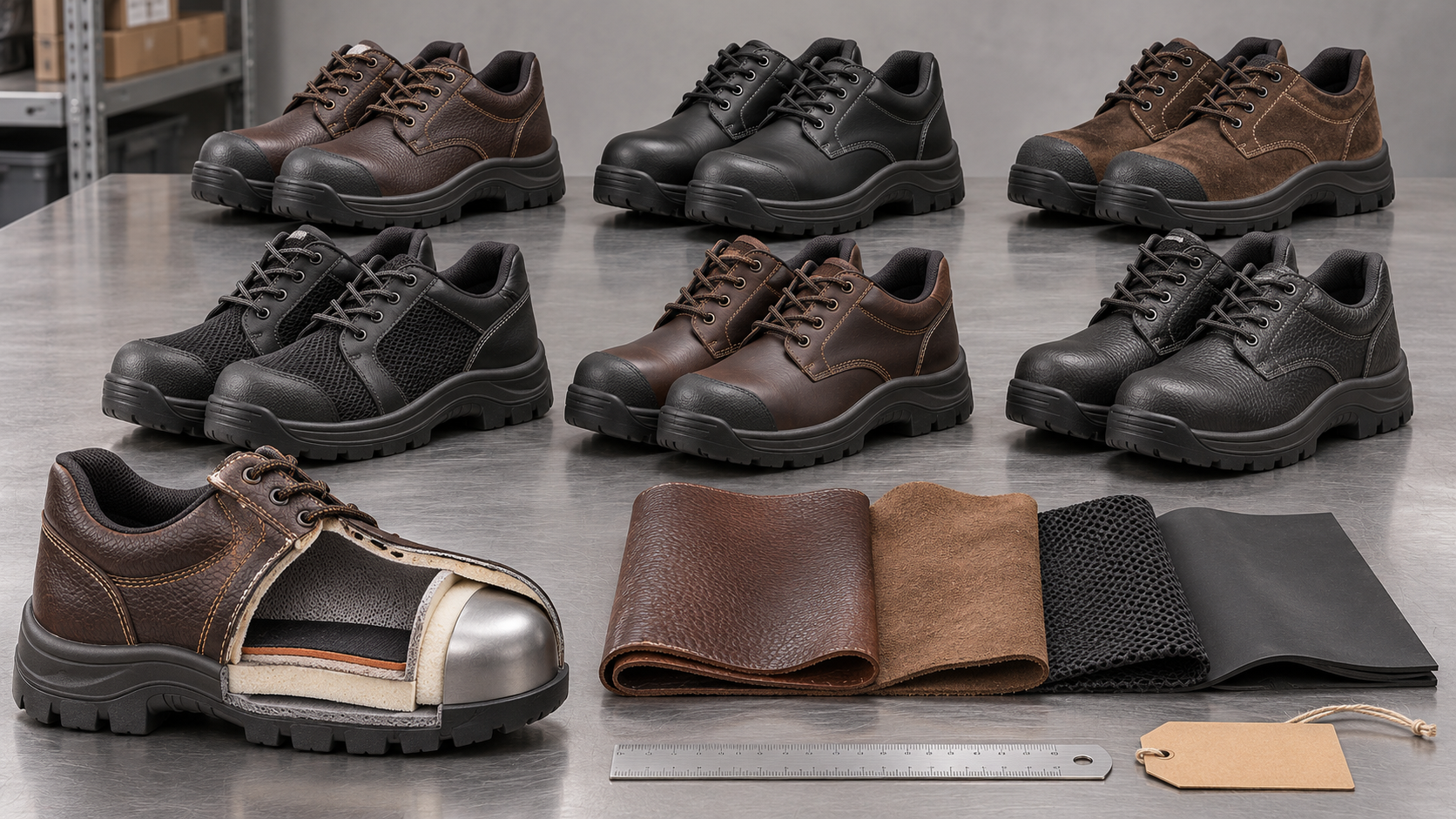
Engineering change control is the discipline that keeps a safety shoe wholesale order identical to the order the buyer approved. For United Arab Emirates buyers running repeat or multi-size wholesale programmes, the workable answer is to treat every proposed change — upper material, lining, outsole, toe cap or other internal component, last and size grading, colour, labelling, packaging, production site or sub-tier supplier — as a controlled request with a written description, a documented approval step, an effective date and a record both sides keep. No substitution should enter production because it is convenient mid-order, and no buyer should approve a revision without comparing it against the approved original. The decision table and RFQ checklist below set out what to agree with a safety shoe wholesale supplier so engineering change control survives repeat deliveries to the United Arab Emirates.
Why engineering change control matters in safety shoe wholesale supply
Wholesale safety shoe buying is rarely a one-off purchase. A buyer typically commits to a range of styles, a size ratio and a repeat window, then reorders against the same expectation. That is why change control sits alongside price and specification rather than after them: inspection can catch what was produced, but only change control decides what is allowed to be produced.
The commercial risk is cumulative. One substituted lining, one re-sourced outsole or one adjusted last can shift fit consistency, surface appearance and reorder behaviour across a whole size run, and the difference is often invisible in a carton-level check. Written change rules also protect the buyer's commitments to its own customers, because the buyer can point to an approved baseline instead of describing an intention. Treat change control as a two-way obligation: the supplier declares changes before they happen, and the buyer responds through a named approver so production is not stalled by an unanswered request.
Buyer decision table: which changes need which approval
Agree before the first purchase order which changes the supplier must declare and which approval route each one takes, then adapt the rows to the buyer's own product file rather than copying them unchanged.
| Change | Risk if it ships unapproved | Approval route to agree | Record to hold |
|---|---|---|---|
| Upper material or lining substitution | Appearance and fit consistency drift across a size run | Written request, revised specification sheet, comparison sample and buyer sign-off before the next production batch | Signed approval naming the affected order and effective date |
| Toe cap, insole board, shank or other internal component change | The approved build no longer matches the order file and cannot be seen from outside | Supplier declares the change and identifies affected styles and sizes; buyer decides whether re-approval is required | Revised bill of materials and approval note |
| Outsole compound, tread or surface treatment change | Grip feel, weight and appearance differ from the approved pair | Side-by-side sample comparison against the retained approved pair | Sample approval and updated specification sheet |
| Last, fit or size grading change | Size-to-size consistency breaks across the wholesale ratio | Buyer fit review on an agreed size set before the range is cut | Fit sign-off per size set |
| Colour, finish or trim change | Mixed shades inside one delivery and mismatch on reorder | Shade agreed against the physical approved original, not a screen image | Physical reference retained by both parties |
| Label, size marking, hangtag or carton artwork change | Goods fail the buyer's own receiving checks or its customers' requirements | Buyer approves final artwork and wording; supplier confirms in writing what it will print | Approved artwork reference recorded against the order |
| Production site, line or sub-tier supplier change | Undeclared origin difference and broken traceability for the buyer | Supplier notifies before production; buyer decides whether re-approval is needed | Change notice naming the affected order |
| Order quantity, size ratio or delivery schedule change | Unbalanced size runs, part-shipments and storage pressure | Written amendment to the purchase order under the same change reference | Amended purchase order and supplier confirmation |
How Engineering Change Control Works Across a Wholesale Order
- Freeze a baseline. Agree which sample, specification sheet, artwork file and bill of materials count as the approved version, and record a revision identifier on each. Keep a physical approved pair with the buyer and, where practical, one with the supplier.
- Require written change requests. Every proposed change should arrive as a numbered request, not as a remark in a chat or on a packing list. State in the supply agreement that verbal changes are not valid.
- Classify the change. Agree in advance which changes are documentation-only, which need sample approval, and which need written buyer sign-off before any production. Classification belongs to the buyer, not the supplier.
- Ask for an impact statement. The supplier should state which styles, sizes and open orders are affected, what happens to work in progress and stock already produced, and whether price, minimum quantity, packaging or schedule move as a result.
- Approve, reject or defer in writing. Record the decision, the approver, the effective order and the date from which the change applies. A change approved for the next order should not be applied to the current one unless both sides state so explicitly.
- Verify before shipment. Compare the first production against the approved baseline by sample or an agreed first-article review, and record the outcome. Where a sample was the approval basis, check the run against that sample, not against memory.
- Re-baseline and reissue. Once approved, update the specification sheet, bill of materials and artwork reference, reissue them with a new revision identifier, and confirm the buyer's receiving team works from the current version.
Change documentation fields to agree with the supplier
| Field | What the buyer should require |
|---|---|
| Change reference | A unique identifier quoted on all correspondence and on the amended purchase order |
| Description and reason | What changes, from what to what, and why the supplier is proposing it |
| Affected items | Styles, sizes, colours, open orders and shipments in scope |
| Baseline revision | The revision being replaced, so old and new versions cannot be confused |
| Commercial effect | Stated effect on price basis, minimum quantity, tooling or packaging |
| Stock and work in progress | How already-produced goods and open material are handled |
| Verification method | Whether a sample, comparison against the retained pair, or document review is required |
| Effective date | The order, shipment or date from which the change applies |
| Approval record | Named approver on each side and the date of written approval |
| Document marking | How the new revision is identified on specification sheets and order paperwork |
United Arab Emirates delivery, storage and labelling points to settle
Settle the following in the RFQ rather than at shipment:
- Transport and handover. Agree who arranges and pays for each leg, where risk passes, and which shipping and packing documents the supplier provides for the buyer's own import process.
- Consolidation and part-shipments. Confirm whether a change or a size-ratio amendment can split a delivery, and who carries the storage and handling consequence.
- Storage and transit assumptions. Ask the supplier to describe the storage and transit conditions its packaging is designed for, then compare that with the buyer's own warehouse and distribution conditions in the United Arab Emirates.
- Labelling and artwork. The buyer decides the label content, size marking, language and carton marks it needs, then requires written supplier confirmation of exactly what will be printed and an approved artwork reference.
- Change cut-off. Agree the point in the order cycle after which a change applies to the next order rather than the current one.
Comparing safety shoe wholesale suppliers on change control
Compare shortlisted suppliers on their change process, not only on samples and prices:
- A written procedure naming who can raise, approve and close a change.
- Revision identifiers on specification sheets and bills of materials, so versions can be told apart.
- Retention of approved samples for the life of the order programme, with a stated retention arrangement.
- Willingness to accept a change-control clause covering internal components, sub-tier sources and production sites.
- A defined response format, a response window both sides accept, and one named change contact.
- A change log the buyer can review against purchase orders and shipments.
RFQ Checklist
- Specify the product baseline in the RFQ: approved sample, specification sheet, bill of materials, artwork and revision identifier for each style.
- Require the supplier to confirm in writing that no material, component, last, outsole, labelling, packaging or production-site change will be made without prior written approval.
- Ask the supplier to describe its change-request procedure, including who raises it, who approves it and how the buyer is notified.
- Require a named change contact and an agreed response window on both sides.
- Ask the supplier to state how approved samples are retained and how production is compared against them before shipment.
- Specify which change categories need a comparison sample and which need document review only.
- Require the supplier to declare price, minimum quantity, packaging and schedule effects inside the same change request.
- Ask the supplier to list the shipping, packing and order documents it provides for each delivery to the United Arab Emirates.
- Require written buyer approval of final label, size marking and carton artwork before printing.
- Ask the supplier to confirm how goods already produced or in progress are handled when a change is approved.
- Agree a change-log format and include its review in the purchase order terms.
Acceptance checks and ongoing change reviews
At goods-in, compare the delivery against the current revision rather than the first order. Check that the revision quoted on the paperwork matches the approved file, that artwork and labelling match the approved reference, and that the physical pair matches the retained approved sample. Where a difference appears, quarantine the consignment and raise it as a change or a non-conformance rather than resolving it verbally on the dock.
Review the change log at an agreed interval against open orders and shipments. The review should confirm that every approved change has a matching purchase order amendment, that no closed change has quietly reappeared, and that the buyer's receiving team holds the latest revision. When a supplier notifies a sub-tier or production change, use the notification to decide whether re-approval is needed before the next order is released.
Limitations and buyer verification steps
This guide describes a procurement process; it does not confirm what any particular supplier does, and no supplier statement should be accepted without documents the buyer can review. Before ordering, ask each shortlisted supplier for its written change procedure, a specimen specification sheet showing how revisions are marked, and a sample change request. Confirm that any product claim the buyer intends to rely on is supported by documents the supplier provides for the buyer's own review, and check labelling, import and contract requirements with the buyer's own advisers and against the requirements of the destination market. Set the change-control clause in the supply agreement, name the approval authority on both sides, and keep the approved baseline under document control. Where a claim cannot be reviewed, remove it from the order file rather than relying on it.
Discuss Your Requirements
Review our manufacturing capabilities, then share your specifications for a supplier-fit review.