Work Boot OEM Production Scheduling Plan for Europe Manufacturing Buyers
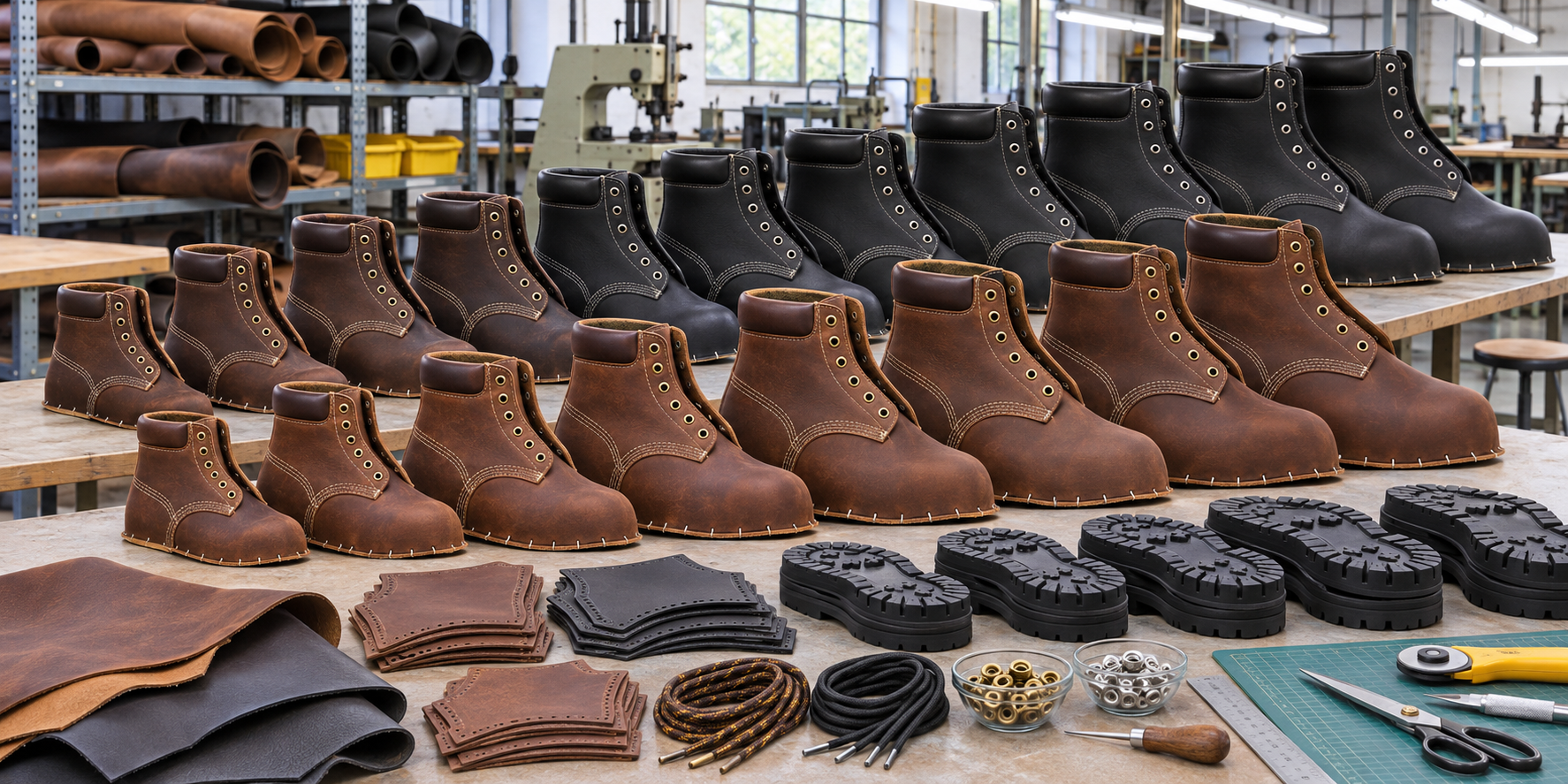
A work boot oem production scheduling plan is the agreed sequence that turns an approved work boot specification into a manufacturing order with clear start points, approval gates, material readiness checks, and delivery actions. For buyers in Europe, the value of the plan is not a promised date on its own. Its value is the shared control it creates: what must be locked before production can start, who approves each stage, how changes are handled, and what evidence the buyer receives before shipment is accepted.
Use the plan as a procurement document, not as a general overview of work boot manufacturing. It should connect the product definition to the production sequence for the exact order: last and size run, upper and lining materials, toe and sole construction as specified by the buyer, colourways, branding method, packing format, inspection points, and destination requirements agreed for that order. Where any of those items are still open, the schedule should show them as pending decisions with an owner and an approval action, rather than treating them as ready for production.
European buyers should also keep destination scope clear inside the plan. Europe is not a single rule set for every order. Ask the supplier to confirm, for the specific destination country named in the purchase order, which documentation, labelling, packing, and delivery requirements the buyer expects to apply, and whether the destination sits in the EU, the EEA, the UK, or another arrangement relevant to that shipment. Do not let the schedule assume that a requirement agreed for one European destination automatically covers another.
How a Production Scheduling Plan Works for Europe Work Boot Manufacturing
A useful production scheduling plan follows the order from specification freeze to final acceptance. Each stage should have an input, an output, and a decision. The input might be an approved sample, a signed specification sheet, a material confirmation, or a packing approval. The output might be permission to cut materials, start stitching, begin assembly, book inspection, or release cartons for shipment. The decision is the buyer or supplier action that allows the next stage to proceed without ambiguity.
Build the plan in this order:
- Confirm the approved product reference and the version of the specification that production will follow.
- List every material and component that must be ready before the relevant production stage can start.
- Place sample, counter-sample, and pre-production approvals before bulk cutting unless the buyer agrees a different sequence in writing.
- Sequence the main manufacturing stages in the order the supplier will actually perform them for this style.
- Add inspection, packing, documentation, and dispatch preparation as scheduled stages, not as afterthoughts.
- Define how a delay, substitution request, or specification change is reported, assessed, and approved before work continues.
This structure helps the buyer see where the schedule depends on their own decisions. A supplier cannot fairly be held to a sequence that depends on late artwork, unapproved materials, or an open size ratio. At the same time, the buyer should require the supplier to state dependencies early, so a missing approval is visible before it becomes a delivery problem.
Keep the plan specific to one order or one clearly defined group of styles. Combining several work boot styles into a single undifferentiated schedule hides important differences in lasts, materials, components, and packing. If multiple styles share a production window, give each style its own readiness checks and approval status while keeping the shared capacity discussion in one place.
Lock the Specification Before Reserving the Sequence
The schedule should start only from a specification the buyer is prepared to freeze. That specification needs to describe the work boot in enough detail for purchasing, production, inspection, and packing teams to work from the same reference. Vague descriptions create schedule risk because each team can interpret the product differently and discover the mismatch late.
Agree the construction details as buyer-defined fields rather than assuming a standard build. Specify the last reference, size range and size ratio, upper material and colour, lining, insole and outsole type as required by the buyer, closure system, eyelets or hardware, stitching expectations, branding placement and method, and any protective or performance features the buyer has defined for the order. For each feature, ask the supplier to state what documentation or sample evidence will be used to confirm it, instead of accepting a verbal assurance.
Material readiness deserves its own place in the schedule. List uppers, lining, reinforcement components, toe components where specified, midsoles, outsoles, laces, hardware, labels, boxes, and carton materials separately when they come from different purchasing actions. For each item, record the approved reference, the agreed quantity basis, the responsible party, and the check that confirms the correct item has arrived and matches the approved reference. This prevents a single materials ready statement from covering a partial delivery.
Colour and branding approvals should also be gated. Ask for the approval method for colour references, printed or embossed branding, size markings, box labels, and carton marks before bulk production reaches the stage where those elements are applied. If the buyer needs to approve physical swatches, strike-offs, or a pre-production pair, put that requirement in the schedule with the dispatch and return or confirmation action clearly named.
Buyer Decision Table
Use the table below to turn scheduling discussions into decisions the buyer and supplier can sign off. Each row is a process check, not a claim about a particular factory, material, or market rule. Complete the agreed action and evidence columns for the specific order before production is authorised.
| Decision area | Buyer check to agree | Scheduling consequence if left open | Evidence to request before approval |
|---|---|---|---|
| Specification freeze | Confirm the exact style reference, construction details, size run, and version that production will follow | Cutting and assembly may follow different interpretations of the same style | Signed specification sheet matched to the approved sample reference |
| Material readiness | List each material and component separately and confirm which party supplies or approves it | A partial delivery can be reported as ready while a critical component is missing | Material list with approved references and a readiness confirmation per item |
| Sample approval gate | Define which sample or pre-production approval must pass before bulk stages begin | Bulk work can start on an unapproved fit, colour, or branding detail | Written approval tied to the identified sample and specification version |
| Capacity slot | Ask how the order will be sequenced alongside other work and what event confirms the slot is held | The order may have a target dispatch aim without a defined production sequence | Written schedule showing stage order, dependencies, and confirmation point |
| Change control | Agree how specification, material, quantity, or packing changes are requested and approved | Unrecorded changes can reach production while inspection still uses the old reference | Change log requiring buyer approval before the changed work proceeds |
| Inspection timing | Specify when in-process and final inspection points occur and who receives the results | Defects or mismatches may be found only after packing is complete | Inspection plan linked to the approved specification and packing reference |
| Packing and labelling | Confirm pair packing, box, carton, size marking, and destination labelling fields for the named destination | Finished goods may need repacking or relabelling before dispatch | Approved packing reference and label layout for the specific order |
| Release for shipment | Define what must be complete before cartons are released, including documentation agreed for the destination | Goods may be dispatched while acceptance checks are still open | Release checklist signed against the purchase order requirements |
Review the table at RFQ stage and again at order confirmation. A decision that was acceptable for quotation may need tightening once the actual style, materials, and destination are known. Keep the completed table with the purchase order so later schedule discussions return to agreed facts rather than memory.
Capacity, Sequencing, and Change Control
Capacity should be discussed as a sequence of stages, not as a single statement that production is possible. Ask the supplier to break the order into its main stages, such as material preparation, cutting, stitching, lasting or assembly, sole attachment as applicable to the specified construction, finishing, inspection, and packing. For each stage, ask what must be complete before it starts and what output confirms it is finished. This gives the buyer a way to track progress that matches how the boots are actually made.
Sequencing matters when styles share materials or when one order contains several colourways or size runs. Agree whether the order will be produced style by style, colour by colour, or in another sequence, and how partial completion will be reported. If partial shipment is possible, define it in advance: which styles or cartons may ship first, how they will be identified, and how the buyer will accept a partial delivery. If partial shipment is not acceptable, state that clearly so the schedule is built around complete release.
Change control protects both sides. After the specification freeze, any change to materials, construction, branding, sizes, quantities, packing, or destination should enter a change log before it enters production. Ask the supplier to describe the effect of the change on the sequence, on materials already purchased or cut, on inspection criteria, and on the agreed dispatch plan. The buyer can then approve, reject, or defer the change with full knowledge of its scheduling effect.
Progress reporting should follow the same stage structure. Require updates that name the stage completed, the stage in progress, any dependency at risk, and the next buyer decision needed. A report that only states a percentage or a general assurance gives the buyer little to act on. Stage-based reporting lets the buyer intervene early, for example by resolving an approval or confirming a packing detail before it blocks the next step.
Delivery, Documentation, and Acceptance Alignment for Europe
For Europe orders, align the end of the schedule with the named destination rather than with a generic regional assumption. Specify the delivery destination, the party responsible for each transport and handover step, the documents the buyer expects to receive, and the timing for document checks relative to dispatch. Because requirements can differ between EU, EEA, UK, and individual country destinations, ask the supplier to work from the buyer instructions for the specific country and delivery point named in the order, and to flag any instruction it cannot meet before production is released.
Packing and identification should be checked against that destination instruction. Confirm carton quantities, mixed-size rules if any, box and carton markings, pallet or loading preferences where the buyer requires them, and how sizes and styles will be identified on arrival. These details affect receiving and quality checks at destination, so they belong in the production schedule rather than in a last-minute dispatch message.
Acceptance criteria should be agreed before final inspection. State how the buyer will judge conformity: by comparison with the approved sample, the signed specification, the packing reference, and any test or document evidence the buyer has specifically requested for that order. If the buyer requires third-party inspection or laboratory documentation for particular features, name the requirement, the responsible party, and the stage at which results must be available. Do not assume a feature is verified simply because it appears in the product description.
Finally, agree what happens if acceptance finds a mismatch. Define how affected cartons are identified and held, how sorting or rework proposals are approved, and how a revised dispatch sequence is confirmed. A clear remedy path in the schedule reduces the chance that a quality issue becomes an uncontrolled shipment decision.
RFQ Checklist
- Ask the supplier to confirm the exact work boot specification version, size run, and approved sample reference that the production scheduling plan will follow.
- Require the supplier to list every material and component separately, with its approved reference, responsible party, and readiness check before the relevant stage starts.
- Specify the sample, colour, branding, and pre-production approval gates that must be completed before bulk cutting or assembly is authorised.
- Ask the supplier to provide a stage-by-stage sequence for the order, showing dependencies, stage outputs, and the point at which the production slot is confirmed.
- Require the supplier to describe its change control process for specification, material, quantity, packing, and destination changes after the freeze point.
- Specify the in-process and final inspection points, the criteria taken from the approved specification, and how results will be shared with the buyer.
- Ask the supplier to confirm packing, box, carton, size marking, and labelling instructions for the specific European destination named in the order.
- Require the supplier to state which documents will be supplied for the named destination, when they will be available for checking, and who is responsible for each document.
- Specify whether partial shipment is allowed, how partial quantities would be identified and accepted, or state that only complete release is acceptable.
- Ask the supplier to define the release checklist and the hold process for any cartons that do not match the approved specification or packing reference.
A complete work boot oem production scheduling plan does not remove the need for buyer decisions. It makes those decisions visible early, ties them to the manufacturing sequence, and gives both buyer and supplier a shared record for the order. Keep the plan with the specification, the decision table, and the RFQ responses, and update it only through the agreed change control process.
Discuss Your Requirements
Review our manufacturing capabilities, then share your specifications for a supplier-fit review.