In summer footwear, buyer claims usually come from heat build-up, slow drying, sock staining, footbed collapse, and heavy bottoms rather than from obvious upper failure. That is why breathable summer shoes materials should be specified as a full package: upper, lining, reinforcement, strobel, sockliner, midsole, outsole, and adhesive process. A shoe with visible mesh can still wear hot if the hidden layers are dense or sealed.
From the factory side, the common bulk risk is substitution inside the non-visible components. A salesman sample may use open strobel, light tricot lining, and a lower-density phylon bottom, then bulk is built with denser nonwoven strobel, thick EVA sockliner, or larger hot-melt film coverage to improve line efficiency. The pair still looks acceptable in carton inspection, but wear performance changes sharply.
For sourcing managers, brand owners, and importers buying from China, the key decision is not simply mesh versus knit. It is which material-and-construction combination can hold target FOB, MOQ, lead time, pair weight, and test performance with repeatable bulk output. The breakdown below treats summer footwear as a specification and cost-control exercise, with supplier-side numbers that can be used in BOM review and price negotiation.
In summer footwear, the cooling result comes from the whole material stack, not from mesh alone.
How buyers should define breathability in a footwear brief
Factories cannot develop accurately from broad terms such as airy, cool, or lightweight. If the tech brief only states "summer casual shoe" or "mesh upper," the sample room will default to whatever balances appearance and cost fastest. A workable brief should define upper type, GSM, lining basis weight, reinforcement area, strobel type, sockliner density, outsole coverage, and finished pair weight by size. These are measurable items that affect thermal feel in use.
For mesh summer shoes and knit slip-ons, more openness is not always better. If the vamp aperture is too large, toe shape support weakens, abrasion risk rises, and dust ingress increases. In bulk production, a better result is usually moderate ventilation in the upper combined with a low-mass bottom package and fast-drying internal materials. That gives a cooler wearing experience without driving returns from poor shape retention.
Breathability targets also need to match the sales channel. Resort shoes, vacation slip-ons, and short-duration fashion casuals can accept lighter support and lower abrasion margin. Commuter shoes, school-use casuals, and mass online repeaters usually need tighter quarter reinforcement, more stable heel hold, and stricter outsole wear targets. Many weak programs fail because buyers try to use one very open specification across all channels.
- 01Set finished weight by reference size before sampling. Typical ranges are 460-610 g/pair in EU 42 for men's summer casual sneakers and 340-470 g/pair in EU 37 for women's knit or mesh slip-ons.
- 02Specify upper family and fabric weight. Common workable ranges are mono polyester mesh 140-220 GSM, warp knit mesh 170-240 GSM, sandwich mesh 180-260 GSM, and engineered knit 220-320 GSM.
- 03Define the moisture path through the whole shoe: upper openness, light lining, breathable strobel, perforated footbed, and outsole flex channels. If one layer is closed, the benefit of the others is reduced.
- 04Lock quality methods before commercialization. Align factory and lab on EN ISO, ASTM, or SATRA internal procedures for flexing, abrasion, peel strength, heat aging, color fastness, and compression set.
Upper material choices that work at scale in China
For mainstream volume production, the most practical upper options are mono mesh, engineered knit, sandwich mesh, perforated microfiber, and light canvas with controlled vent zones. They sit at different points on the airflow, support, price, and production-risk curve. Buyers should choose according to intended use and target FOB, not just visual trend direction.
Mono mesh is usually the most efficient route for ventilated footwear sourcing when low weight and quick drying matter most. A typical China build uses 140-220 GSM polyester mono mesh, often reinforced with 0.6-1.0 mm hot-melt film or thin printed TPU in eyestay and quarter areas. It gives better actual airflow than many padded textile uppers and usually helps contain sewing minutes. The weakness is shape retention if toe puff, heel counter, or quarter support are reduced too aggressively.
Engineered knit works well for higher-value summer casual shoes wholesale lines because it gives a cleaner premium look and better foot conformity. Common supplier constructions use polyester or recycled polyester yarn systems with zonal knit density, tighter around heel and eyestay and more open at the vamp, in the 220-320 GSM range. It is only breathable if backing, collar foam, and reinforcement are kept lean. Many factory samples lose their cooling advantage in bulk because too much foam is added to improve first-touch softness.
Sandwich mesh and air mesh remain common in athletic-inspired casuals because they feel soft and hide support layers easily. However, they often wear warmer than buyers expect. Once two fabric faces and spacer yarns are combined, heat and moisture retention increase. This material is more suitable when soft handfeel and fit tolerance matter more than maximum cooling.
Perforated microfiber is the stronger choice when the brand wants a cleaner lifestyle profile than open mesh can provide. Standard thickness is usually 1.2-1.4 mm with laser or mechanical perforation. The critical issue is backing. If it is bonded to dense foam or thick nonwoven, the perforation becomes mostly decorative. In these styles, partial unlined construction or light tricot lining is the safer route.
Supplier-side checkpoints for upper approval
Require the factory to identify the fabric correctly: mono mesh, sandwich mesh, warp knit, circular knit, or engineered knit, and confirm GSM tolerance, typically plus or minus 5-8%. On repeat orders, also lock yarn denier and mesh count because visually similar fabrics often behave differently in flexing and shape recovery.
Map reinforcement method on the upper drawing. State whether support is stitched overlay, screen print, hot-melt film, TPU skin, or molded support piece, and define coverage area. Over-coverage is one of the main reasons a summer upper flexes hot and stiff at the vamp.
For knit uppers, request confirmation of heat-set stability, collar recovery after repeated entry cycles, and topline opening tolerance. In mass production, knit summer shoes more often fail from heel slip and collar relaxation than from tearing.
For microfiber and dark textile uppers, include color fastness to dry rubbing, wet rubbing, and perspiration. Summer complaints often come from crocking onto light socks or insoles when the shoe is worn without heavy hosiery.
Breathable summer shoe component and cost driver breakdown
| Component | Typical range | Notes |
|---|---|---|
| Upper mesh or knit | US$1.10-3.20/pair | Mono mesh 140-220 GSM is lighter and dries faster; engineered knit 220-320 GSM gives better fit and visual value but higher yarn and color MOQ. |
| Reinforcement overlays | US$0.20-0.80/pair | Hot-melt film, TPU print, screen print, or stitched overlay. Excess film coverage reduces airflow and often creates stiff forepart flex. |
| Lining | US$0.35-1.00/pair | Light tricot or mesh lining improves moisture movement. Thick foam-backed lining improves showroom softness but usually traps more heat. |
| Strobel / bottom base | US$0.12-0.40/pair | Open strobel mesh or perforated textile performs better for summer than dense nonwoven board across the full forepart. |
| Sockliner / footbed | US$0.45-1.50/pair | Open-cell PU usually 0.16-0.22 g/cm3 for comfort and recovery; EVA is cheaper but less breathable and less resilient in hot storage. |
| Midsole | US$1.00-2.80/pair | Phylon or EVA density typically 0.18-0.25 g/cm3 for casual summer use. Density drift affects comfort, pair weight, and compression set. |
| Outsole rubber pods / full outsole | US$0.60-2.20/pair | Localized rubber can cut roughly 60-140 g/pair versus heavy full-coverage compounds. Review hardness and specific gravity. |
| Lasting and assembly | US$1.20-2.60/pair | Strobel lasting is usually lighter and lower cost than board lasting for breathable mesh and knit casuals. |
| Testing and compliance | US$0.05-0.35/pair allocated | Depends on lab scope and order size. Include flexing, bond after heat aging, abrasion, color fastness, and compression checks. |
| MOQ | 600-3,000 pairs/style | Lower MOQ is possible on stock molds and common materials; custom outsoles and custom knits push minimums higher. |
| Lead time | 30-45 days development, 35-60 days bulk | Custom knit uppers, mold revisions, and holiday periods can extend total timing by 10-20 days. |
Construction choices that actually improve ventilation
The biggest performance difference in breathable shoe design usually comes from construction rather than face material. A highly open upper can still feel hot if the lower package is sealed. In production terms, the most important ventilation-related decisions are strobel type, bottom board stiffness, sockliner build, and outsole contact geometry.
For summer casual shoes, open strobel constructions usually outperform dense nonwoven bottom boards. A breathable strobel mesh or perforated strobel textile allows heat and moisture to migrate downward rather than collecting around the sockliner. Where extra support is required, reinforce locally at the waist and heel instead of using a dense full-foot board across the forepart.
Sockliners should be treated as a functional component. Open-cell PU foam in the 0.16-0.22 g/cm3 density range generally gives the best balance of resilience, recovery, and moisture movement for casual summer wear. Basic die-cut EVA at around 45-55 Shore C remains common in value programs, but it breathes less and can harden after hot storage. If perforation is specified, it must align with the strobel below; otherwise it adds cost without improving airflow.
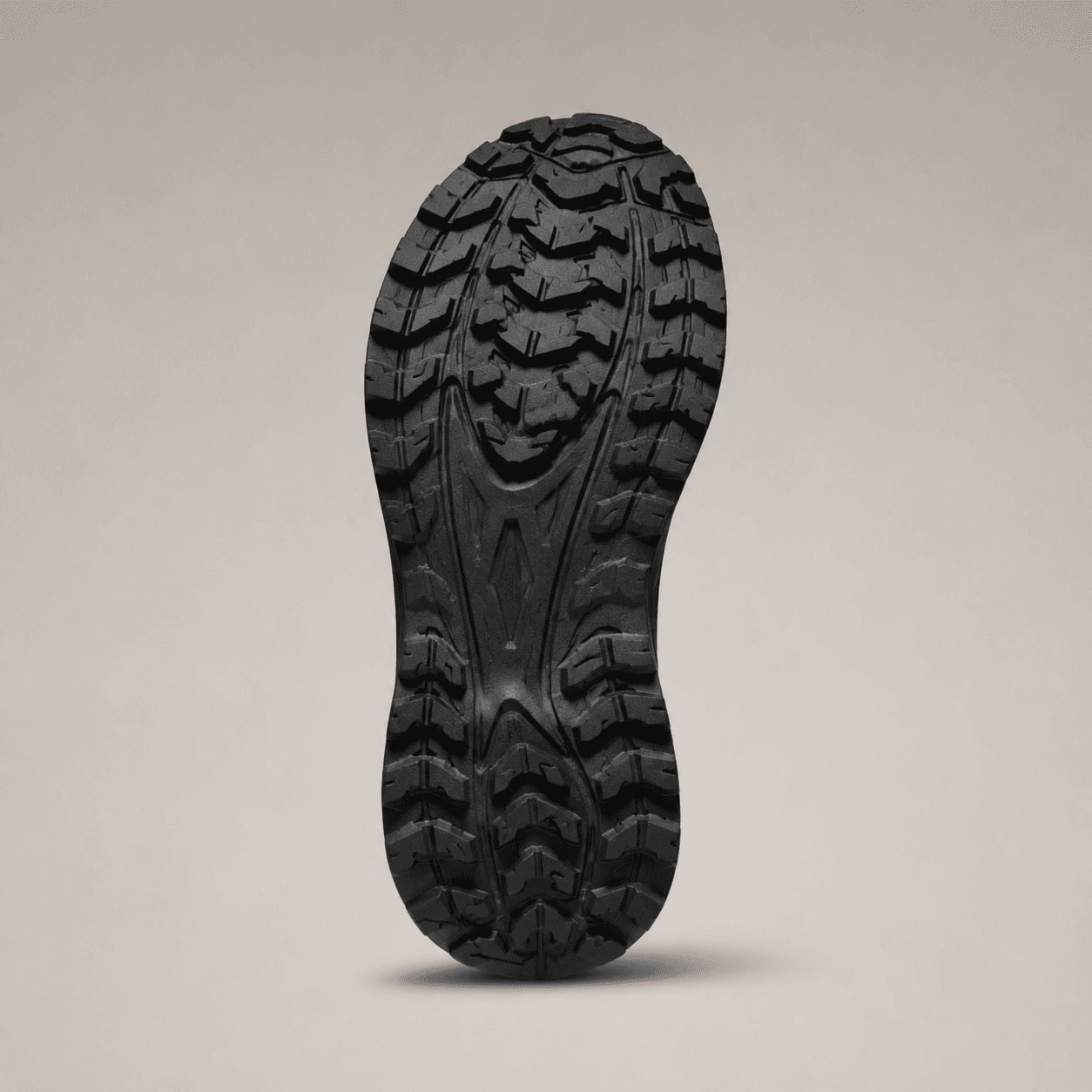
Outsole shape also affects heat perception. Large flat contact surfaces, deep wrapped sidewalls, and thick foxing trap heat and add unnecessary grams. Better summer outsoles use segmented contact, forepart flex grooves, and rubber only in high-wear zones. Phylon, injection EVA, and IP can all work well; heavy full-rubber bottoms usually do not, unless the order requires unusually high abrasion resistance.
- 01Use strobel-last construction for most mesh and knit casual sneakers when low weight, flexibility, and lower assembly cost are priorities.
- 02Upgrade from dense EVA sockliners to open-cell PU or perforated EVA+PU if target FOB can absorb roughly US$0.20-0.60/pair.
- 03Reduce unnecessary TPU cages, oversized wraps, and decorative foxing. Keep support only where fit and wear demand it: eyestay, toe bumper, heel counter, and sometimes medial waist.
- 04Map outsole coverage by real wear pattern. In many city casuals, heel and forepart rubber pods are enough; full-surface rubber often adds weight and cost without solving a real use requirement.
Midsole, outsole, and foam density: the comfort and FOB levers
Foam selection in lightweight shoe construction controls weight, rebound, compression set, and long-wear comfort. In Chinese summer-shoe production, the common options are compression-molded EVA, phylon, injection EVA, IP, and EVA-rubber combinations. The correct choice depends on retail band, target wear hours, and whether the shoe needs a sporty or lifestyle silhouette.
Compression-molded EVA remains common because nearly every casual factory can source and process it. The issue is density discipline. If density is pushed too low to impress in the showroom, the bottom can collapse quickly in wear. If it is too high, the shoe becomes hard and heavy. For mainstream summer casuals, a practical midsole range is often 0.18-0.25 g/cm3, adjusted for wall thickness, durometer target, and outsole pattern.
Phylon is still one of the best value choices because it reduces mass compared with full rubber and allows molded flex details. Its weak point is abrasion, so high-contact zones should be protected with 1.5-2.5 mm rubber pods. For many bulk programs, this gives a better result than moving to a full-rubber outsole compound.
Rubber compounds should be reviewed not only for hardness but also for specific gravity. Under FOB pressure, some suppliers increase filler content, which adds weight and can reduce flex life. On a summer casual shoe, a high-gravity outsole can add 80-140 g/pair without commercial benefit. TPR can be used for fashion-driven bottoms, but bond performance after heat aging should be checked carefully, especially on phylon-to-rubber assemblies.
Supplier-side cost structure and what moves price
Breathable styles can be cost-efficient or unexpectedly expensive depending on how the upper and bottom are engineered. A simple mono mesh upper with printed support and a phylon outsole can cost less than a padded synthetic upper because material usage and sewing minutes are lower. A developed engineered-knit upper with zonal density, molded support, open-cell PU footbed, and custom rubber pod tooling can price above a standard casual sneaker even though it feels lighter on foot.
As a practical FOB guide from China, entry mesh summer shoes usually run US$6.50-9.50/pair for basic private-label programs, mid-grade knit or mesh casuals US$9.50-14.50/pair, and more developed branded programs US$14.50-22.00/pair. Recycled yarns, custom outsole molds, molded PU footbeds, stricter testing, and branded packaging will push the number up.
MOQ depends mainly on outsole tooling, upper material minimums, yarn color minimums, and carton efficiency. With stock molds and common textiles, some factories can accept 600-1,200 pairs/style. With custom outsoles, engineered knit layouts, or more than two upper colors, a realistic range is 1,200-3,000 pairs/style, with color MOQ often at 300-600 pairs. Custom outsole mold charges for casual summer shoes usually sit at US$2,000-6,000 depending on complexity, size range, and whether matching foxing or plug parts are needed.
Lead time should be split between development and bulk. Confirmation samples for a new summer casual line usually need 30-45 days, including material trials, fit adjustment, and outsole matching. After material approval and deposit, bulk production commonly needs 35-60 days. Programs with custom knit uppers, outsole mold changes, or peak-season booking pressure should carry a 10-20 day buffer.
Testing and compliance points importers should write into the order
Breathability is usually sold as a wear feature, but quality control still needs to be anchored in standard footwear tests. For EU programs, factories and third-party labs commonly use EN ISO methods where relevant for upper abrasion, sole bond, flexing, outsole abrasion, and color fastness. For US programs, ASTM references may apply by category, while many Chinese suppliers also use SATRA methods internally because they are footwear-specific and widely understood by sample rooms and quality teams.
On summer shoes, the highest-risk checks are vamp flexing, sole bond after heat aging, outsole flex crack resistance, color fastness to dry and wet rubbing, perspiration resistance, sockliner compression set, and abrasion on exposed mesh or knit. Since many pairs are worn with light socks or no-show socks, crocking and odor-related complaints surface quickly. Dark uppers and dark sockliner top cloths need tighter control than many buyers expect.
If the brand claims recycled content or water-based adhesive use, confirm it by component and by production stage. Some sample rooms use one adhesive system while the main line uses another for speed. For hot-weather footwear, bond performance should be checked after elevated-temperature conditioning, not only at room-temperature peel values. This matters especially on phylon-plus-rubber pod constructions and mesh uppers reinforced with film.
- Include pair-weight tolerance in QC standards, usually within plus or minus 3-5% against approved sample by reference size.
- Inspect mesh or knit openness consistency left to right and across cutting lots to catch lot variation before stitching.
- Check hot-melt film and TPU print edge lift after flexing and heat aging, especially at forepart flex zones and quarter joints.
- Verify sockliner perforation alignment and bonding. Misaligned perforation often blocks the intended air path.
- For white or light-color bottoms, include yellowing observation after heat exposure on midsoles, top cloth laminations, and glue lines.
Typical test references buyers can request
For EU-oriented casual shoes, buyers often request EN ISO 17707 for upper flexing, EN ISO 20871 for outsole abrasion, EN ISO 20344/20345-based bonding or physical checks where relevant by component, and EN ISO 105 series references for color fastness depending on material type. For US programs, the exact ASTM reference depends on category and claim set, so buyers should define the end-use and ask the lab to confirm the suitable method before production starts.
Many Chinese factories still rely on SATRA routines for internal control because they are practical for footwear lines. That is acceptable if the buyer clearly states the required acceptance values, conditioning method, sample selection point, and whether pass/fail is based on confirmation sample, pilot run, or bulk-finished pairs.
Frequent sourcing mistakes in ventilated footwear sourcing
The first mistake is treating a breathable shoe as a styling idea instead of a BOM discipline. Buyers approve a good-looking sample with visible mesh, but bulk arrives with denser backing, thicker foam, heavier footbeds, and larger reinforcement films because those substitutions simplify production. The visual difference is small; the wear difference is not.
The second mistake is removing too much support in pursuit of low weight. Summer shoes still need controlled heel hold, eyestay stability, and a clean toe spring transition. If these are reduced too far, the shoe feels unstable even if it is cool.
The third mistake is using the same material package across very different channels. A highly open mono mesh upper may be fine for vacation use, but not for school, commuting, or repeated everyday wear. Return rates increase when ventilation is prioritized without reference to abrasion, shape retention, and outsole life.
The fourth mistake is saving cents on sockliner, lining, or strobel. In warm-weather footwear, these hidden components often change comfort more than upgrading the visible upper fabric by one price tier.
Practical specification routes for bulk programs from China
For most importers, two specification routes cover the majority of commercial summer demand. The first is a mono mesh or engineered mesh upper with printed or thin-film reinforcement, light tricot lining, open strobel, phylon outsole with rubber pods, and perforated PU sockliner. This setup suits men's and women's summer casual sneakers in the middle price band and usually gives the best balance of weight, comfort, and cost control.
The second is a zonal knit upper with reinforced eyestay and heel, partial textile lining, strobel-last construction, injection EVA or phylon bottom, and open-cell PU footbed. This works well for slip-ons and modern lace-ups where low mass and easy step-in are more important than very high abrasion resistance. On these styles, buyers should pay close attention to collar recovery and heel-lock in wear tests.
In both routes, freeze the bottom package early. Late changes to outsole geometry, footbed thickness, or midsole density affect fit, weight, cost, carton size, and even shipping cube more than upper artwork edits. Before sample approval and again before bulk cutting, review the full BOM line by line with the factory. That single step prevents most hidden downgrades.
SoleForge manufactures casual sneakers and sandals & slippers under OEM and ODM for brands and importers worldwide. Request a quote with your tech pack or reference pair and we'll reply within one business day.