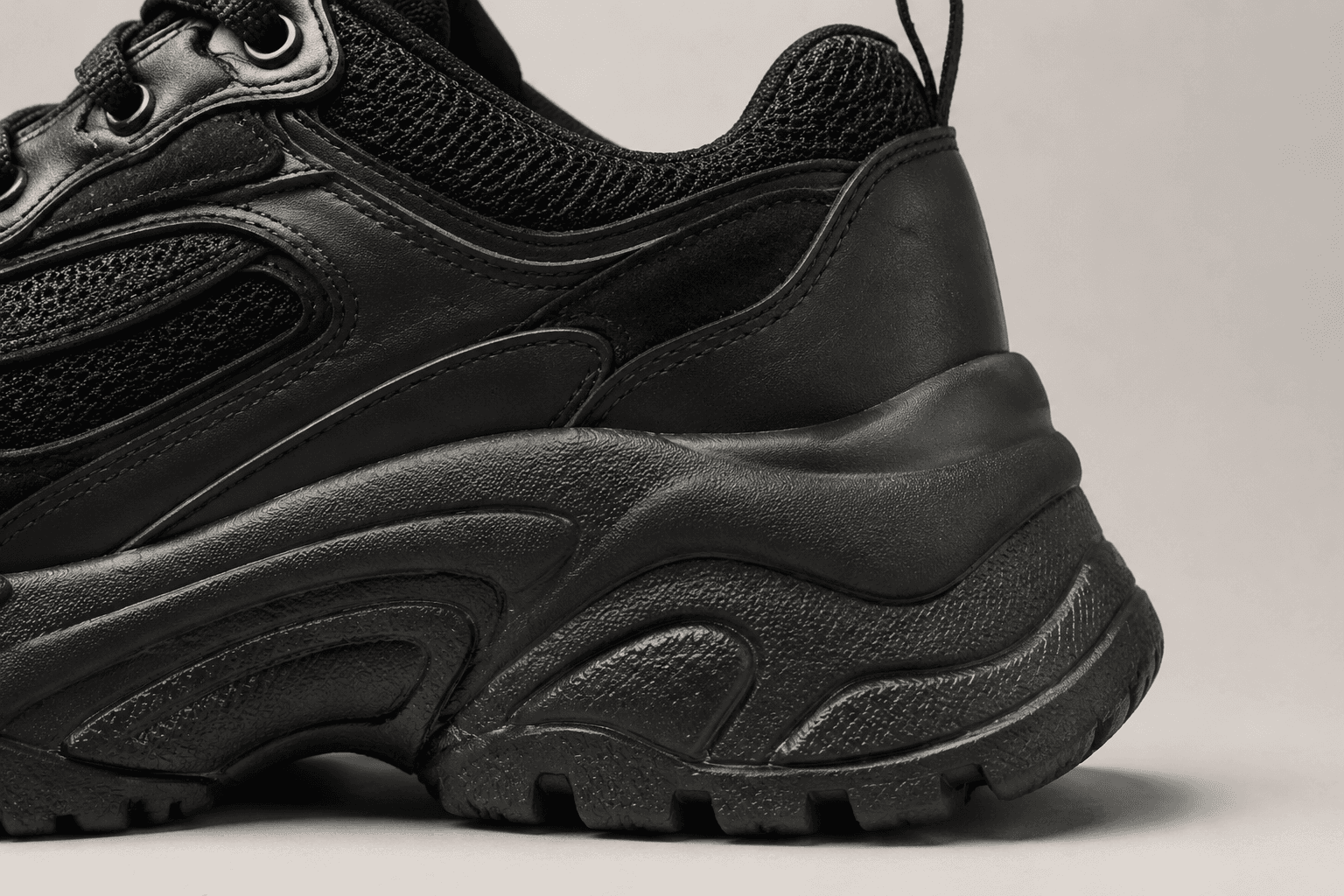
Placing a bulk shoes order is not one decision. It is a series of factory, cost, materials, compliance, and scheduling decisions that determine whether the landed product matches your target price and quality standard. For sourcing managers, brand owners, and importers buying from China, the main risk is not usually finding a supplier. It is approving a structure that looks competitive on the quotation sheet but fails later on MOQ flexibility, confirmation sample accuracy, or production timing.
A footwear factory prices and schedules differently from a general softgoods supplier because each style depends on molds, outsole tooling, upper material yield, size ratio, stitching complexity, and test requirements. A casual knit sneaker, a cemented cupsole court shoe, and a dual-density injected safety shoe may all be called bulk footwear order projects, but their true MOQ, cost drivers, and lead-time paths are different.
This guide is written as a buyer decision framework. Each section focuses on one factor you should confirm before issuing a purchase order: factory fit, shoe moq, pricing build-up, testing, sample approval, production lead time, and shipment planning. The goal is simple: when you buy shoes in bulk, you should know exactly what to ask, what to lock, and what can still change the final $/pair.
In footwear, the cheapest quotation is often the most expensive order once hidden material downgrades, testing gaps, and lead-time resets are counted.
Start with factory fit, not just the lowest quotation
The first decision is whether the factory is structurally suited to your product category. A supplier that is strong in vulcanized canvas may not be the right source for phylon-running shoes, and a factory focused on fashion women’s sandals may not control the tolerances needed for safety footwear with EN ISO or ASTM requirements. In footwear, the same upper sketch can lead to different results depending on the line setup, last library, outsole process, and finishing standard.
Ask what percentage of the factory's business is in your target category and where they export. A factory shipping mostly domestic low-price product may quote aggressively on bulk shoes, but its quality system may not support the carton markings, AQL expectations, or restricted substance documentation needed by an importer. On the other side, a factory already shipping to Europe or North America will usually understand size tolerance, bonding test records, color continuity, and packaging control at bulk stage.
You should also confirm whether the supplier is the manufacturing site, a trading company managing subcontractors, or a hybrid. There is nothing inherently wrong with a trading structure, but you need transparency on which plant cuts uppers, where soles are made, and who owns the production schedule.
- Ask which footwear categories the factory produces most: sport, casual, sandals, safety, kids, uniform, work.
- Confirm construction method: cemented, vulcanized, strobel, cupsole, injection, direct attach.
- Request main export markets and typical compliance standards already handled.
- Verify whether the quoted supplier is the actual factory or a coordinator using subcontractors.
- Check monthly capacity in pairs and peak-season utilization.
Understand the real shoe MOQ before approving development
MOQ in footwear is rarely one simple number. The supplier may quote 600 pairs per style, but the effective MOQ depends on outsole mold availability, color count, upper material minimums, logo applications, and size breaks. A standard answer such as 1,200 pairs can be misleading if the outsole supplier requires a larger color batch or if the mesh mill only accepts 300 meters per color.
For most China factories, an inline stock-upper style using an existing outsole can start around 600 to 1,200 pairs per style, often split across 2 to 3 colors, with a color MOQ of 200 to 400 pairs. For custom upper materials, custom outsole colors, or specialty compounds, the practical shoe moq may move to 1,500 to 3,000 pairs. Safety footwear, molded clogs, or styles needing custom lasts or steel toe certification may be higher.
The buyer should separate sampling MOQ assumptions from bulk MOQ realities. A supplier may make a development sample from substitute stock materials, then require substantially higher quantities once the exact upper, lining, and outsole specifications are locked. This is a common source of cost and lead-time surprises in a bulk footwear order.
- Ask for MOQ by style, by color, and by size run.
- Confirm whether MOQ changes if you use an existing outsole mold versus a new mold.
- Check upper material minimums in meters, kilograms, or sheets by color.
- Ask whether logo hardware, screen print, embroidery, or heat-transfer has separate minimums.
- Clarify if carton assortment can match your sales ratio or must follow the factory standard ratio.
Typical MOQ ranges by product type
A basic canvas vulcanized style with stock fabric and existing foxing may start at 800 to 1,200 pairs. A cemented casual sneaker with custom PU upper colors and stock cupsole often starts around 1,000 to 1,500 pairs. A performance running shoe with engineered knit, molded TPU parts, and custom phylon/rubber bottom can move to 1,500 to 3,000 pairs because several components carry independent minimums. Safety shoes with EN ISO 20345 or ASTM F2413 targets may require larger consolidated quantities to justify certified components and testing.
Indicative bulk shoes decision ranges
| Order type | Typical MOQ | Indicative FOB range | Typical lead time | Main risk point |
|---|---|---|---|---|
| Basic casual with stock upper and existing sole | 600-1,200 pairs/style | $5.50-$8.50/pair | 30-45 days repeat, 45-60 days new colorway | Material substitutions and size ratio limits |
| Cemented sneaker with custom upper colors | 1,000-1,500 pairs/style | $7.50-$12.00/pair | 45-70 days | Upper minimums, color approval, bonding consistency |
| Athleisure or running style with multiple molded parts | 1,500-3,000 pairs/style | $10.00-$18.00/pair | 60-90 days | Component MOQs, tooling, test failures |
| Safety footwear with EN ISO/ASTM target | 1,200-3,000 pairs/style | $16.00-$35.00+/pair | 60-100 days | Certified components, performance testing, documentation |
Break down pricing by component, not only FOB per pair
When buyers compare bulk shoes quotations, the largest mistake is treating FOB price as a single comparable number. Footwear cost depends heavily on component specification. A quote at $8.40/pair and another at $9.10/pair may not be quoting the same shoe in practical terms if one supplier uses 45C phylon, 1.2 mm PU upper, 120 GSM mesh lining, and 5 mm open-cell foam, while another prices 50C phylon, 1.4 mm microfiber, 150 GSM sandwich mesh, and 8 mm memory foam.
Request a costed specification summary even if the supplier will not disclose every line-item margin. You need enough detail to understand what drives price and what can be optimized without damaging performance. In most casual and sport styles, the principal cost blocks are upper materials, outsole and midsole compound, labor from upper complexity, packaging, and any brand trims. Minor adjustments such as eyelet count, stitch density, print process, or insole foam density can add or remove meaningful cents at scale.
For entry-level casual sneakers from China, bulk pricing can range roughly from $5.50 to $11.00/pair FOB depending on material mix and order size. More structured athleisure or outdoor-inspired shoes may sit around $10.00 to $18.00/pair FOB. Safety footwear with certified toe cap, midsole plate, oil/slip-resistant outsole, and heat or compression targets may range much higher. These are orientation numbers only; the point is that every material callout changes the true benchmark.
- Ask for the exact upper material type and thickness: PU, microfiber, split leather, full grain, knit, mesh.
- Confirm lining GSM and collar/tongue foam density and thickness.
- Request outsole and midsole material spec: TPR, rubber, phylon, EVA, PU, PVC, dual-density PU.
- Check insole board, strobel cloth, sockliner foam type, and shank if used.
- Separate FOB price from tooling, test fees, mold charges, and special packaging costs.
Decide where to spend and where to simplify
Not every cost reduction damages the shoe, but the reductions must be deliberate. In bulk footwear order planning, you should identify which features are performance-critical and which are decorative or overbuilt for your channel. For example, upgrading outsole rubber from 55% to 65% natural/synthetic blend may be justified for abrasion and slip. Increasing memory foam from 4 mm to 8 mm in a low-price uniform shoe may not return enough value. Similarly, a molded heel stabilizer hidden inside the quarter may matter more than a second logo print location.
A good supplier can propose value engineering if you give a target FOB and use case. But do not ask for a lower price without controlling the variables. Otherwise the factory will reduce hidden items first: lighter strobel, lower-density foam, cheaper adhesive, thinner lasting board, or less durable lace tips. These changes may not appear in the first wear trial but can drive claims after a few weeks of use.
- 01Fix the use case: fashion casual, school, light hiking, hospitality, warehouse, industrial safety.
- 02Define non-negotiables: slip resistance target, toe protection, brand appearance, material restrictions.
- 03Ask the factory for two cost options with written spec differences.
- 04Approve one exact BOM direction before size-set or pre-production sample.
Lock compliance and test standards before bulk materials are booked
Compliance is not a finishing step. In footwear, test strategy affects material selection, lead time, and even MOQ. If your market requires REACH-related chemical control, CPSIA-related component attention, California Proposition 65 review, or product-category-specific EN ISO or ASTM performance benchmarks, these must be declared before the supplier orders bulk materials.
For general casual shoes, common checks include bonding strength, color fastness, abrasion, flexing, sole adhesion, odor, dimensional consistency, and restricted substances in inks, coatings, glues, and synthetic materials. For work and safety shoes, requirements may extend to toe impact/compression, puncture resistance, slip resistance, fuel oil resistance, electrical properties, and upper water penetration depending on the standard and classification.
The factory should tell you which tests are done in-house, which at external labs, and whether testing is on materials, finished footwear, or both. If a sole compound has to be reformulated after a failed abrasion or slip result, your lead time moves immediately.
- State destination market and required standard at inquiry stage.
- Ask for proposed test list for the exact style and use case.
- Confirm whether adhesives, inks, foams, and synthetic uppers meet your restricted substance protocol.
- For safety product, confirm EN ISO or ASTM target clause before tooling and sampling.
- Clarify who pays re-test cost if failure comes from unapproved material substitution.
Examples of footwear-specific checks
For a cemented casual sneaker, ask about peel strength at toe and waist, upper-to-sole adhesion after heat aging, outsole abrasion, color crocking, and flexing at 30,000 cycles or as applicable to your protocol. For a work shoe, add slip resistance on the required surface, toe cap impact and compression, puncture resistance if specified, outsole oil resistance, and upper seam strength. The correct test package depends on product classification, not only on price point.
Control sample stages so the approved shoe is the one that goes into production
A reliable bulk shoes program needs disciplined sample gates. At minimum, you should distinguish between development sample, confirmation sample, size set, wear test sample if needed, and pre-production sample. Too many buyers approve appearance from one stage and assume construction is locked. In practice, factories may change foam, lining, counters, outsole color tone, or even eyelet spacing unless the approved reference is tied to a written BOM and color standard.
The pre-production sample should represent actual bulk materials, actual construction, actual logo process, and actual packaging. If the outsole uses a custom paint line or if the upper has a critical seasonal color, ask for color swatches or component confirmations before full assembly. This is especially important for white midsoles, light suede tones, reflective details, and knit uppers, where lot-to-lot variance is visible.
- Define sample stages and who signs each stage internally.
- Require a marked-up BOM and construction sheet with the approval.
- Approve outsole hardness, foam density, and upper thickness by spec, not by appearance only.
- Request size-set fitting review across key sizes, not just sample size.
- Keep one sealed approval sample as production reference.
Build lead time from the critical path, not from a standard promise
Lead time in footwear is component-driven. A supplier may say 35 to 45 days for repeat orders and 60 to 90 days for new styles, but these numbers only hold if the critical materials are available and testing does not interrupt the path. In a typical new-style order from China, upper material booking may take 7 to 15 days, outsole mold adjustment or new tooling much longer, confirmation sample 7 to 14 days, bulk cutting and stitching 10 to 20 days, lasting and assembly 7 to 15 days, and packing plus inspection 3 to 7 days.
For repeat bulk shoes using approved materials and existing molds, 30 to 45 days ex-factory can be realistic outside peak season. For a new custom sneaker with new outsole mold, lab dip approvals, and branded packaging, 60 to 90 days is more realistic. Safety shoes with certification-sensitive components or special outsole tests can move beyond that. Chinese New Year, summer labor turnover, and Q3-Q4 peak export periods should be built into your planning.
Do not accept a lead-time promise without asking what assumptions it depends on. If outsole color cards, logo molds, woven labels, or cartons are excluded from the quoted schedule, the date is not yet a full production date.
- Ask for lead time split by development, material booking, production, inspection, and ex-factory readiness.
- Confirm whether tooling, cartons, and branded trims are included in the timeline.
- Check if materials are stock-supported or made to order.
- Ask for weekly production milestone updates after deposit and PP approval.
- Plan buffer around Chinese New Year and peak shipping months.
Inspect production controls, not just final appearance
Final random inspection is useful, but footwear quality is created earlier. If the line does not control cutting direction, stitch alignment, lasting tension, adhesive application, oven activation, and sole pressing time, problems show up after shipment as delamination, pair mismatch, puckering, or unstable sizing. A buyer placing a bulk footwear order should know what in-line controls the factory uses.
Ask whether the plant checks upper panels before stitching, compares left-right quarter components, verifies outsole hardness by lot, and records oven temperature and pressing conditions for cemented shoes. For injected or direct-attach footwear, ask about mold maintenance and weight consistency. Also confirm moisture control and carton packing standards if the shipment will move through humid conditions.
- Confirm in-line QC points from cutting to packing.
- Ask for AQL level and whether final inspection is by the factory, buyer, or third party.
- Check how pairing, shade sorting, and left-right matching are controlled.
- Request carton drop, barcode, and packing assortment confirmation if retail compliance matters.
- Clarify claim handling process for bonding, sizing, and material defects.
Align payment, packaging, and shipment terms with the product risk
Commercial terms should match the development complexity of the shoe. A repeat stock-material program may fit standard deposit and balance terms. A highly customized buy shoes in bulk program with tooling, private packaging, and custom compounds requires tighter milestone control. You need to know when mold charges are due, whether they are refundable against order volume, and when branded materials become non-cancellable.
Packaging also affects both cost and timing. Individual box quality, tissue, silica gel, hangtags, size stickers, and master carton burst strength are routine details that can still create delays if not frozen early. If you ship e-commerce replenishment, drop-test performance and label accuracy matter more than for palletized wholesale delivery. If you ship large-volume retail orders, carton dimensions and pair counts affect container utilization and freight cost per pair.
- Confirm deposit, balance, and tooling payment terms separately.
- Ask when branded materials become committed and non-changeable.
- Lock inner box size, master carton dimensions, pair count, and carton spec.
- Check palletization or floor-load assumptions for container planning.
- Match incoterm and inspection release terms to your internal controls.
Key takeaways
- Confirm factory fit by footwear category and construction before comparing FOB price.
- Break shoe MOQ into style, color, size run, outsole, and upper-material minimums.
- Approve a written BOM with concrete specs such as foam density, lining GSM, upper thickness, and sole compound.
- Set compliance and test requirements before bulk materials are ordered, especially for EN ISO or ASTM product.
- Build lead time from tooling, material booking, samples, production, inspection, and peak-season constraints.
- Do not release a bulk footwear order until the pre-production sample matches the exact approved specification.
SoleForge manufactures casual sneakers and safety & work shoes under OEM and ODM for brands and importers worldwide. Request a quote with your tech pack or reference pair and we'll reply within one business day.