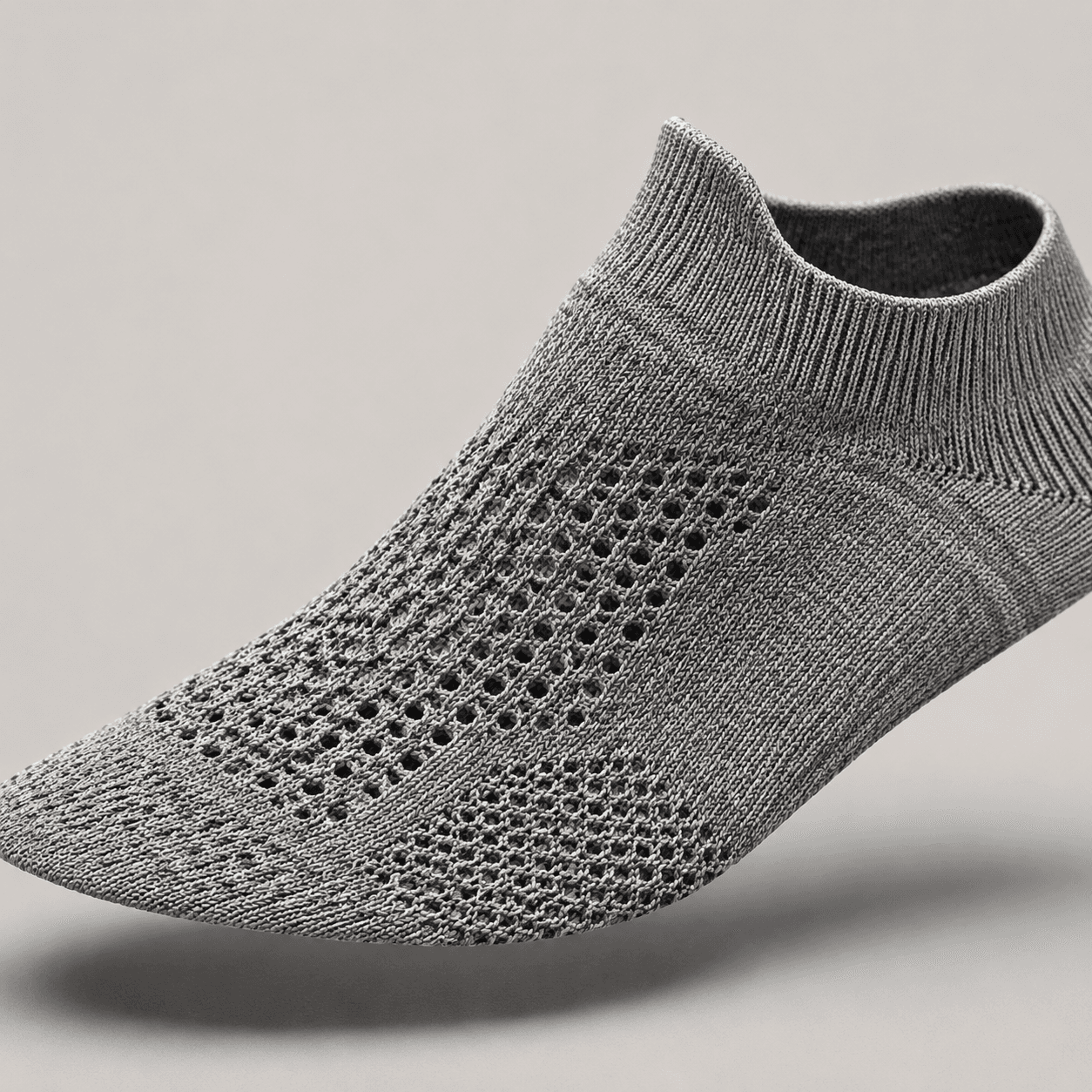
For commercial footwear buying, cemented vs strobel shoes is a sourcing decision, not a design label. It affects line speed, labor content, outsole bonding risk, pair weight, carton utilization, and after-sales claims. A buyer who approves the wrong bottom construction can be off by $0.30 to $1.00 per pair, 7 to 15 days in development time, and a full claim tier in wear performance.
In factory language, Strobel and board lasting describe how the upper bottom is built, while cemented describes how that upper package is attached to the sole. Most sport and casual shoes from China are cemented. The real buying choice is usually cemented Strobel versus cemented board-lasted. If those terms are used loosely, the supplier may quote one construction, sample another, and bulk with substituted unseen components such as lighter Strobel cloth, thinner lasting board, or softer sockliner foam.
This guide is written for sourcing managers, brand owners, and importers buying footwear in bulk from China. Each section is a decision factor. Each includes what to check with the factory before approving BOM, mold, confirmation sample, or deposit.
The right buying decision is rarely cemented versus Strobel in isolation; it is which bottom package delivers the lowest claim risk at your target FOB and wear brief.
Define the construction correctly before you compare quotes
Among common shoe construction types, the most expensive mistake is mixing up lasting method and outsole attachment. Strobel normally means the upper is stitched to a Strobel cloth or nonwoven bottom, creating a flexible sock-like base. That base is then usually cemented to an EVA, phylon, rubber, or cupsole unit. Cemented construction is the adhesive bonding step, and it applies to both Strobel and board-lasted shoes.
Board lasted shoes use a lasting board, commonly texon board, cellulose board, impregnated fiberboard, or nonwoven board in roughly 1.5 to 2.2 mm thickness depending on category. This creates a firmer bottom platform, stronger waist hold, and better shape retention during shipping and daily wear. In practice, many buyers searching for 'cemented vs strobel shoes' are actually choosing between flex-driven athletic construction and support-driven board-lasted construction.
A usable tech pack should identify bottom materials as tightly as upper materials: Strobel cloth GSM, lasting board type and thickness, insole board dimensions by size, sockliner foam density, toe puff grade, heel counter stiffness, shank if any, outsole hardness, and adhesive system. If those items are not frozen, the factory will fill gaps with house-standard materials that may not match the approved sample.
- Ask the supplier to state the exact build: cemented Strobel, cemented board-lasted, or hybrid heel board plus forepart Strobel.
- Specify Strobel cloth weight, typically 180 to 320 GSM for sport and lightweight casual shoes.
- Specify board material and thickness tolerance, for example 1.8 mm plus or minus 0.15 mm.
- Request cut-open confirmation samples before and after outsole bonding.
Match construction to end use and claim risk
For athletic shoe manufacturing, Strobel is usually the better choice when the brief requires low weight, soft step-in, and fast forefoot flex. It works best with mesh, knit, or thin synthetic uppers and EVA or phylon bottoms in the 45 to 58 Shore C range. In Fujian sports factories, once materials are stable, a standard cemented Strobel running or walking shoe can often run 1,500 to 2,800 pairs per line per day. Typical FOB for a basic-to-mid-tier mesh runner is around $7.50 to $13.50 per pair, excluding special foams, plated midsoles, or branded compounds.
Board lasted shoes are usually the safer option for school, uniform, court-casual, and structured leather-look categories. A 1.8 to 2.0 mm board, combined with a firmer heel counter and higher-rubber-content outsole, improves torsional control and slows waist collapse. That matters in boys' school shoes, hospitality uniform shoes, and men's black casual programs where the user expects 6 to 9 months of regular wear and retailers are sensitive to shape-retention complaints.
The commercial rule is straightforward: choose Strobel when flexibility, lower pair weight, and quicker break-in matter more than long-term structure. Choose board lasted shoes when stability, shelf shape, and repeated daily wear matter more. Construction should follow use case, user weight, and expected claim window, not category trend.
- For running or walking, ask for pair weight in size 42 and forefoot flex feel after outsole bonding.
- For school or uniform, ask for torsion resistance and heel seat stability after flex testing.
- For kids' shoes, confirm whether the board is full-length or heel-to-waist only.
- Request wear-test samples in final materials, not showroom prototypes with substitute bottoms.
Typical category mapping for buyers
A lightweight jogger with engineered mesh upper, phylon midsole at about 0.20 to 0.24 g/cm3 density, and rubber contact pods usually performs better in Strobel. A school shoe with action leather upper, full rubber outsole at 55 to 65 Shore A, and daily-wear target of two school terms is usually safer in board-lasted construction. A court-inspired casual cupsole can go either way, but buyers often move to board lasting when they need cleaner sidewall shape and less forepart collapse after warehouse storage and store try-ons.
Buyer comparison: cemented Strobel vs cemented board-lasted
| Factor | Cemented Strobel | Cemented Board-Lasted | Buyer implication |
|---|---|---|---|
| Best use case | Running, walking, athleisure, lightweight casual | School, uniform, court-casual, structured casual | Choose based on wear condition and return-risk profile |
| Initial comfort | Softer step-in, faster forefoot flex | Firmer underfoot, more structured fit | Useful for ecommerce comfort versus retail fit retention |
| Shape retention | Moderate and material-dependent | Usually stronger at waist and heel seat | Safer for daily-wear and heavier-user programs |
| Typical FOB impact | Often baseline | Often +$0.20 to +$0.60 per pair | Review full BOM before assuming a large cost gap |
| MOQ tendency | Often 600 to 1,200 pairs per color | Often 1,200 to 1,500 pairs per color | Confirm MOQ early at construction level |
| Lead time | 30 to 45 days repeat, 45 to 60 days new mold | 30 to 45 days repeat, 45 to 60 days new mold | Material and mold readiness matter more than label |
| Common claim risk | Bond failure, seam feel, bottom wrinkling | Over-stiff flex, board crack, outsole peel | Review likely failure mode before bulk approval |
| Best factory profile | Sports-shoe factory with Strobel line experience | Casual or uniform-shoe factory with board-lasting control | Match supplier specialization to construction |
Compare first-fit comfort against fit retention over time
Strobel shoes often win in first fitting because the bottom package bends more easily and feels less harsh underfoot. A 4 to 6 mm open-cell PU or polyurethane-look foam sockliner at about 0.16 to 0.22 g/cm3 density, paired with a soft Strobel foam layer, gives a quicker broken-in feel. That helps in ecommerce, club retail, and price-sensitive channels where consumer reviews are strongly influenced by first wear.
Board lasted shoes usually hold fit geometry better over time. When uppers are made from thin microfiber, PU synthetic, or low-basis-weight textile, the board reduces twisting through the arch and limits collapse at the waist. On men's sizes 41 to 46, larger women's runs, and heavier-user programs, that added structure often improves perceived support even if the first try-on feels firmer.
A proper shoe durability comparison should therefore separate first-fit softness from support after 20,000 to 50,000 flex cycles. Buyers should ask for both sample-room fit feedback and post-test shape retention. A shoe that feels comfortable at first try-on can still lose alignment quickly if the Strobel cloth, sockliner, outsole groove pattern, and last bottom are not balanced.
- Check sockliner thickness and density by size scale, not size 37 or 42 sample only.
- Ask for compression set or recovery data after 24-hour rest on insole foam.
- Request flex testing targets by category: 20,000 cycles for fashion casual, 30,000 to 50,000 for school or walking product.
- Fit-test the largest commercial size range before bulk approval.
Understand the real FOB difference per pair
The direct cost gap between cemented Strobel and cemented board-lasted shoes is usually narrower than new buyers expect. On many China programs, the assembly difference is only about $0.20 to $0.60 per pair. The larger cost movement comes from adjacent bottom materials: board grade, sockliner foam quality, counter package, roughing labor, shank, outsole compound, and reject rate during bonding.
A basic cemented Strobel athleisure shoe may quote around $8.20 to $8.80 FOB using mesh upper, standard phylon midsole, 220 to 260 GSM Strobel cloth, and simple rubber patches. The same upper on a board-lasted build may land around $8.60 to $9.30 FOB if it includes 1.8 mm board, firmer heel counter, and upgraded outsole compound. On heavy cupsole casual shoes, the gap can shrink because upper material, stitching, and outsole weight already dominate cost.
The bigger sourcing risk is hidden downgrading. A sample may use 280 GSM Strobel cloth, 5 mm sockliner at 0.20 g/cm3 density, and stronger counter stock, while bulk shifts to 220 GSM cloth, softer foam, and lighter reinforcement. That is why buyers should compare bottom-package components line by line instead of debating one FOB number.
- Request cost breakout for Strobel cloth or lasting board, sockliner, counter, shank, outsole, and bottom labor.
- Ask whether quoted FOB is based on salesman sample or production-intent construction.
- Lock density, thickness, hardness, and GSM on the signed BOM and confirmation sample.
- Separate mold, logo plate, and test charges from unit FOB.
Check MOQ, lead time, and line suitability before development starts
MOQ is tied to construction, material sourcing, and line setup. A sports factory with active Strobel lines and standard EVA or rubber bottoms may accept 600 to 1,200 pairs per color on a repeat runner, especially if upper mesh, lining, and outsole colors are stock-supported. A board-lasted school or structured casual program with custom board, special counter, or exclusive outsole color usually starts closer to 1,200 to 1,500 pairs per color, and sometimes 2,000 pairs if the outsole mold is exclusive and the size run is broad.
For repeat orders, a realistic lead time is often 30 to 45 days after deposit, material booking, and final confirmation sample sign-off. Fresh mold development generally needs 45 to 60 days, while 60 to 75 days is common if there are outsole wear corrections, board stiffness adjustments, or upper pattern changes after fitting. Strobel-knit styles are often delayed by upper knitting, heat-transfer, or print lead time. Board-lasted school shoes are more often delayed by outsole mold polishing, board cutting die timing, and reinforcement approval.
Line fit matters more than total factory capacity. A 2 million-pair factory is not automatically suitable if your product uses a construction it runs only occasionally. Daily output, rework rate, bonding discipline, and operator familiarity with your exact bottom package matter more than headline volume.
- 01Ask what share of monthly output uses your target construction and outsole family.
- 02Confirm MOQ by color, size run, and outsole colorway before approving development.
- 03Check whether mold opening days are included in the lead-time calendar.
- 04Request a critical path covering upper material, outsole, lasting, bonding, curing, packing, and inspection.
Evaluate durability by likely failure mode, not by construction label
Construction names do not guarantee performance. Cemented shoes most commonly fail at the upper-to-sole bond line, especially at toe flex points, heel seat edges, and sidewall transitions where roughing or primer application is inconsistent. Strobel shoes can also show seam read-through, sockliner instability, or wrinkling under the forepart if stitching position, foam stack, and outsole flex grooves do not match. Board lasted shoes may feel more stable but can crack at the flex point or create harsh break lines if board stiffness is too high for the outsole geometry.
For buyers, the practical question is which failure mode is acceptable at your target retail and warranty period. A fashion sneaker with a short selling cycle can tolerate a different wear profile than a school shoe, security shoe, or hospitality uniform style expected to last two seasons. In those programs, heel counter migration, forepart collapse, outsole peel, and upper creasing become margin issues quickly because retailer deductions and replacements exceed the saving made at sourcing stage.
Ask the supplier how it controls roughing depth, cement open time, activation temperature, pressing pressure, and post-bond curing hours. In China, a disciplined cemented process with written SOP and line records usually outperforms a theoretically stronger construction run with loose process control.
- Ask for adhesive brand, primer type, and roughing standard for each material combination.
- Request upper-to-sole peel-strength results after conditioning and flexing.
- Review failures by location: toe break, waist twist, heel seat, foxing edge, and lateral flex zone.
- Check whether the factory records oven temperature and post-bond curing time on each line.
Testing standards buyers should name on the PO
For Europe, buyers commonly specify bond, abrasion, flexing, slip, and color fastness using EN ISO-aligned methods or retailer protocols. For US work, uniform, or performance-oriented product, ASTM-referenced expectations are common, especially for slip and consistency across lots. The key point is not to request a generic pass report. Name the test method, conditioning requirement, sample size, and acceptance threshold in writing before production.
Control material specifications or the comparison is meaningless
A construction comparison is unreliable if the materials are changing at the same time. The same Strobel build can feel premium or cheap depending on Strobel cloth weight, foam package, outsole rubber ratio, and counter quality. The same board-lasted shoe can feel supportive or overly hard depending on board thickness, shank shape, sockliner recovery, and flex-groove design.
For athletic programs, define EVA or phylon density and hardness clearly. Many factories can quote phylon around 0.18 to 0.25 g/cm3 and tune Shore C to the wear target. For board-lasted shoes, specify board type, thickness, and whether the forepart is skived, scored, or segmented to improve flex. For synthetic leather uppers, also define backing thickness and tear strength because a firm board will not compensate for weak upper material.
Factories do not leave open specs unfilled. They default to house-standard components that fit target FOB. If sample-room feel must match bulk production, every bottom material that affects flex, support, or bonding needs to be frozen on the BOM and approved by swatch or cut piece.
- Write density and hardness targets for EVA, phylon, rubber, and sockliner foam.
- Specify Strobel cloth GSM and whether EVA or foam lamination is required.
- Specify board type, thickness tolerance, and forepart flex treatment.
- Approve toe puff and heel counter by physical sample, not description only.
Choose a supplier that regularly runs the same bottom construction
The strongest supplier for a Strobel runner is often not the strongest supplier for a board-lasted school shoe. A Jinjiang or Quanzhou sports factory may be excellent at lightweight bottoms, Strobel stitching consistency, and EVA-rubber bonding. A Wenzhou or Dongguan casual-footwear factory may be stronger on board lasting, structured uppers, edge finishing, and black commercial styles with stricter appearance standards.
Ask for recent production references by construction, not only by export market or customer name. A supplier producing 300,000 pairs of knit Strobel running shoes is solving different technical problems from one producing 300,000 pairs of board-lasted school shoes. Pattern engineering, line balance, lasting quality, and rework control differ.
Capacity should match your monthly call-off and replenishment pattern. If your forecast is 8,000 to 15,000 pairs per month over several colors, ask how many lines can run the same construction, what daily output is realistic, and what the recent rejection rate has been on comparable styles.
- Ask for recent styles using the same lasting method and outsole type.
- Review actual line output in pairs per day for your category, not factory-wide average.
- Confirm sample room and bulk line use the same bottom materials and adhesive system.
- Audit rework, rejection, and late-shipment rates on similar orders.
Use a pre-production checklist before you release deposit
Most avoidable footwear claims begin with an incomplete handoff from development to bulk. Before deposit release, the buyer should approve cut-open confirmation samples, final BOM, last code, mold code, outsole hardness, Strobel or board specification, sockliner density, adhesive process, and carton data. The phrase 'same as approved sample' is not enough when the approved sample was a showroom sample or salesman sample rather than a production-intent build.
If you are comparing cemented Strobel against cemented board-lasted options, ask the factory to build both versions on the same upper, outsole, and sockliner package. Otherwise the comparison is distorted by different counters, different foams, or different rubber coverage. A valid sourcing decision controls one variable at a time and compares measured performance, not only presentation quality in the sample room.
- 01Approve one cut-open confirmation sample with each bottom component labeled and measured.
- 02Approve final last code, outsole mold code, outsole hardness, and pair weight by sample size.
- 03Confirm adhesive system, activation temperature, pressing, and curing steps on the factory SOP.
- 04Verify carton dimensions, gross weight, and pairs per carton if construction changes weight materially.
- 05Release deposit only after bulk materials match the signed BOM and confirmation sample.
Key takeaways
- Define the build precisely: lasting method, outsole attachment, Strobel cloth or board specification, foam density, hardness, and adhesive system.
- Use Strobel for lower weight, faster flex, and softer first-fit comfort; use board lasted shoes for support, shape retention, and repeated daily wear.
- Expect direct construction cost differences of about $0.20 to $0.60 per pair, with larger FOB shifts driven by surrounding materials and process control.
- Confirm MOQ and lead time at construction level, especially when counters, boards, outsole colors, or molds are customized.
- Request cut-open samples, bond and flex test results, and construction-specific factory references before approving bulk.
- Freeze every bottom component on the BOM so sample-room feel matches mass production.
SoleForge manufactures athletic & running shoes and casual sneakers under OEM and ODM for brands and importers worldwide. Request a quote with your tech pack or reference pair and we'll reply within one business day.