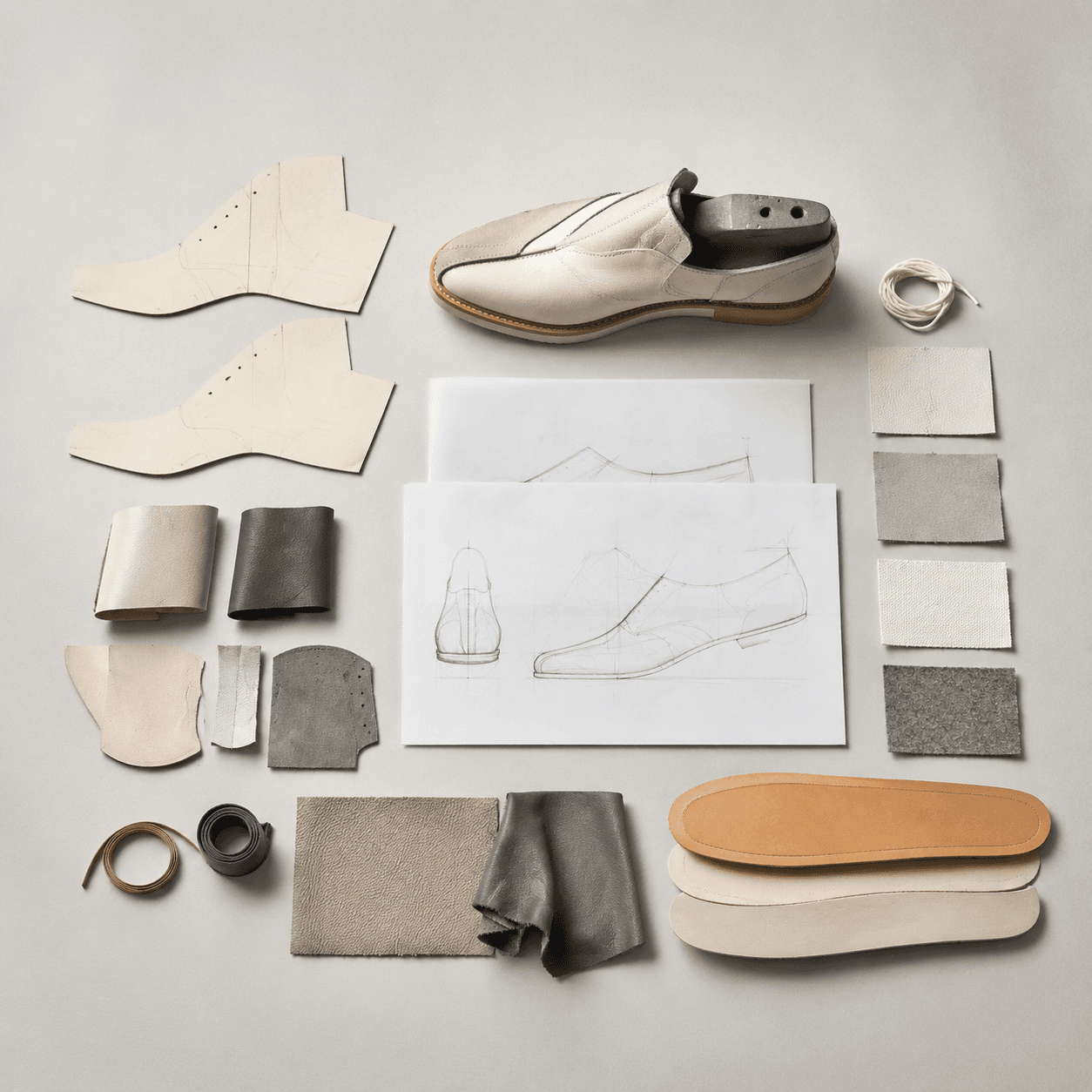
For sourcing managers, brand owners, and importers buying from China, sneaker construction types affect more than the silhouette. They determine outsole tooling, adhesive control, curing process, line allocation, minimum order quantity, FOB cost, inspection focus, and the kind of after-sales claims a supplier may need to handle.
A canvas vulcanized low-top, a leather cupsole court sneaker, and a lightweight cemented runner can look similar on a line sheet, but they move through different workshops. The wrong construction choice can add 20 to 30 days in re-sampling, raise the MOQ by 1,000 pairs, or create bond failures that only appear after container shipment.
This sneaker manufacturing guide gives a practical supplier-side process for comparing cemented footwear construction, vulcanized shoes, and cupsole sneakers before bulk order confirmation. It uses normal China export ranges for MOQ, lead time, FOB $/pair, foam density, lining GSM, outsole hardness, and EN ISO or ASTM test planning.
The right construction is the one the supplier can repeat at the agreed FOB, lead time, and test standard, not the one that only looks good in the sample room.
1. Start with the buying brief, then choose the construction
Do not start with the outsole sketch. Start with the commercial brief. A factory can recommend the right construction only when the target retail price, FOB ceiling, order quantity, delivery window, size range, and wearing purpose are clear. For export orders, these points should be fixed before the first prototype request, because construction changes after sampling usually mean a new last check, mold check, costing sheet, and test plan.
Cemented footwear construction is usually the most flexible option for lifestyle runners, athleisure sneakers, lightweight casual shoes, and mixed-material uppers using mesh, PU, microfiber, suede, nylon, or knit. The upper is lasted and bonded to EVA, phylon, TPR, rubber, TPU, or a combined bottom unit. Normal MOQ is 800 to 1,200 pairs per colorway when using an existing outsole. Some factories accept 600 pairs if the last, outsole mold, lining color, and upper materials are already active in production.
Vulcanized shoes suit canvas, suede, and skate-inspired sneakers where foxing tape, toe bumper, rubber sidewall, and waffle or herringbone tread are part of the product identity. The rubber package is assembled and cured under heat, so planning depends on rubber batching, foxing preparation, color control, and oven capacity. MOQ is normally 1,200 to 2,000 pairs per colorway. Custom foxing colors, printed sidewall stripes, special toe caps, and branded heel patches can push MOQ higher because rubber color changes create setup loss.
Cupsole sneakers are used for court, tennis, terrace, and retro basketball styles. The molded cupsole gives a stable sidewall, stronger toe shape, and a good area for sidewall logo or tread branding. MOQ normally starts at 1,000 to 1,200 pairs per colorway when the outsole is existing. For a new cupsole mold, the first order may need 2,000 to 3,000 pairs or a separate tooling charge, commonly $3,000 to $8,000 depending on size run, sidewall logo, tread depth, and mold quantity.
Early FOB ranges help avoid wasted sampling. A basic canvas vulcanized sneaker may sit around $5.80 to $8.80 per pair. An entry cemented casual sneaker with PU or mesh upper and existing EVA/phylon bottom may run $6.80 to $11.50. A synthetic leather or leather cupsole sneaker commonly falls from $9.20 to $16.50. Premium leather, custom outsole tooling, side stitching, recycled components, extra lab testing, and stronger packaging all move the price upward.
- Confirm FOB ceiling, target retail, order volume, size range, delivery date, and destination market before sampling.
- Match construction to use: cemented for flexible lightweight programs, vulcanized for rubber-cured canvas or skate shoes, cupsole for structured court sneakers.
- Check MOQ by upper color, outsole color, rubber compound, logo process, and size range, not only by style name.
2. Map the factory process before approving prototypes
A sample-room prototype is not proof that the bulk line can repeat the shoe. Before approving development, ask the supplier which workshop and production line will make the order. Cemented, vulcanized, and cupsole sneakers require different equipment, operators, process controls, and inspection points.
In cemented construction, the upper is stitched, lasted, bottom-roughened, cleaned, primed, adhesive-coated, heat activated, and pressed to the outsole. Bond strength depends on roughing depth, primer selection, adhesive open time, activation temperature, press pressure, and cooling time. EVA and phylon need correct surface treatment because low surface energy can cause weak bonding. Rubber patches must be cleaned well if mold release agent remains on the surface.
In vulcanized production, the stitched upper is assembled with outsole rubber, foxing tape, toe cap, heel patch, and sidewall details, then cured in an oven or autoclave depending on the factory setup. Heat and pressure cross-link the rubber. This creates the classic vulcanized look, but it also exposes the upper to heat. Cotton canvas may shrink, suede may darken, PU labels may deform, printed logos may bleed, and white rubber may shift toward cream if the compound is unstable.
Cupsole sneakers use a molded bottom with a raised sidewall. The lasted upper is inserted into the cup, bonded, pressed, and sometimes side-stitched. Side stitching can improve perceived value and reinforcement, but it does not replace proper cementing. Mold fit, last bottom shape, toe spring, heel seat height, and rand-line trimming must match. On a clean white court shoe, a 1.0 to 1.5 mm mismatch between upper and sidewall is visible at retail.
Development timing should be quoted by stage. Pattern and first prototype usually need 7 to 14 days when materials and molds exist. A new vulcanized or cupsole mold can add 15 to 30 days. Size set and fitting correction often need another 7 to 12 days. For a new export program, plan 30 to 45 days before final confirmation, excluding buyer-side approval time and lab testing.
Process questions to ask the supplier
For cemented sneakers, ask whether the factory will use water-based or solvent-based adhesive, what primer is required for the outsole material, and what activation temperature range is controlled on line. For vulcanized shoes, ask for curing temperature, curing time, rubber hardness target, and the shrinkage result of the selected upper after heat exposure. For cupsole sneakers, ask whether the outsole mold is existing, modified, or new, and how the factory controls upper-to-sidewall alignment.
These questions should be answered before salesman samples become approval samples. They decide whether the photo sample, size set, lab test pair, and bulk production can be made under the same conditions.
3. Specify materials by measurable construction requirements
Material descriptions must be measurable. A tech pack that says "mesh upper, rubber outsole, EVA insole" is too weak for bulk footwear. The supplier should quote against GSM, thickness, density, hardness, color tolerance, bonding method, and restricted substance requirements.
For cemented sneakers, common bottom packages include phylon midsole with rubber outsole patches, single-density EVA, TPR, full rubber, or EVA with TPU stabilizer. For lifestyle runners, removable sockliner foam density is often 0.16 to 0.22 g/cm3 for soft step-in comfort. A firmer insole for better shape retention may use 0.22 to 0.28 g/cm3. Strobel foam is commonly 2.0 to 4.0 mm. Collar and tongue foam often sits around 45 to 60 kg/m3. Mesh lining usually ranges from 180 to 250 GSM, while heavier sandwich mesh may be 280 to 350 GSM.
For vulcanized shoes, lock the upper fabric and rubber compound early. Cotton canvas is commonly 10 oz to 14 oz, but cured shrinkage must be checked by panel and by finished shoe. Rubber outsole hardness often falls around Shore A 55 to 68 depending on grip, abrasion, and flexibility target. Foxing height, toe cap thickness, sidewall stripe color, and rubber whiteness should be approved from cured samples, not flat rubber swatches. If recycled rubber is requested, specify the percentage and test abrasion and flex before confirming the price.
For cupsole sneakers, upper gauge and surface quality are more visible because the sidewall is clean and usually flat. PU synthetic leather may be 1.2 to 1.6 mm, microfiber 1.3 to 1.8 mm, and full-grain leather 1.4 to 1.8 mm depending on grade. Insole board is commonly 1.8 to 2.2 mm for court stability. Sockliner foam around 0.20 to 0.28 g/cm3 gives better shape retention than very soft foam. If the shoe has side stitching, the upper material must tolerate needle holes without tearing, whitening, or coating lift.
Compliance must be fixed at material stage, not after bulk cutting. For EU and UK orders, check REACH-related requirements including azo dyes, PAHs, phthalates, formaldehyde, DMFu, and chromium VI for leather. For US programs, importers may require ASTM-based physical tests and retailer-specific restricted substance screening. Adhesives, rubber accelerators, screen-print inks, synthetic leather coatings, metal eyelets, and lace tips should be included in the test plan.
- Put GSM, thickness, foam density, outsole Shore A hardness, insole board gauge, and color tolerance in the specification sheet.
- Approve vulcanized materials after heat exposure and finished-shoe curing, not only from flat swatches.
- Include adhesive, rubber compound, ink, coating, trims, and metal parts in chemical compliance screening.
4. Build the MOQ, costing, and tooling model before final approval
A final sample is useful only if the supplier can repeat it at the agreed FOB price, MOQ, and delivery date. Before confirmation samples, request the main cost drivers: upper material, lining, outsole, sockliner, labor, packing, testing, tooling, wastage, and logo process. The factory does not need to disclose every internal number, but the buyer should understand what is driving the quotation.
Cemented sneakers usually offer the most room for price adjustment. Cost can be reduced by using an existing outsole, simplifying rubber outsole patches, changing from full rubber to phylon plus rubber, reducing high-frequency or embroidery logos, or selecting local upper materials. Do not reduce surface preparation. Saving $0.10 per pair by weakening primer, roughing, or pressing control can create a much larger claim if outsole opening appears after flexing.
Vulcanized shoes look simple, but small-volume customization is inefficient. Custom foxing colors, contrast toe bumpers, sidewall printing, colored outsole rubber, and branded heel patches create rubber mixing loss and line setup time. If the order is only 600 pairs per color, a factory may refuse it or quote a price that removes the expected cost advantage. For stable production, many vulcanized programs should be planned at 1,500 pairs per color and above.
Cupsole sneakers need clear tooling terms. An existing cupsole can keep development fast. A proprietary outsole gives the brand a stronger identity but requires mold payment, trial time, and ownership agreement. Define whether the tooling fee includes all sizes, whether the mold is exclusive, who maintains it, how many pairs are guaranteed before renewal, and whether the mold can be transferred if the supplier relationship ends.
Lead time should be separated by stage. After deposit and material approval, cemented sneakers commonly need 45 to 60 days for bulk production. Vulcanized shoes often require 50 to 70 days because rubber batching, foxing preparation, and curing-line capacity must be reserved. Cupsole sneakers usually need 55 to 75 days, especially with leather uppers, custom outsole colors, or side stitching. Around Chinese New Year, add 20 to 30 days depending on factory closing dates and material supplier schedules.
- 01Confirm whether the outsole is existing, modified existing, or fully new tooling.
- 02Request MOQ by upper color, outsole color, rubber compound, logo process, and size range.
- 03Separate prototype lead time, mold lead time, size-set time, material lead time, bulk production time, lab testing, and final inspection booking.
- 04Clarify whether FOB includes lab test pairs, spare laces, hangtags, silica gel, inner box, export carton, barcode labels, and carton marks.
5. Lock testing before production materials are purchased
Testing should be agreed before the buyer signs the approval sample. If the lab standard is added after production starts, the factory may have selected the wrong adhesive, rubber compound, lining, thread, or sockliner foam. This is one of the common causes of shipment delay in footwear export orders.
For cemented footwear construction, the main technical risk is upper-to-sole bond strength. Request sole adhesion or peel strength testing under the buyer's protocol, often referencing EN ISO 20344, SATRA test methods, or ASTM-based retailer standards. Flexing, heat aging, hydrolysis resistance for PU parts, and colorfastness are also important when shoes will move through hot containers or long warehouse storage.
For vulcanized shoes, focus on foxing adhesion, outsole flex crack resistance, abrasion, colorfastness, upper shrinkage, rubber hardness, and yellowing. Shore A hardness should be checked against the approved range, for example 55 to 68 depending on the design. White and off-white rubber should be compared across toe cap, foxing, outsole, and heel patch after curing. Sidewall print should pass dry and wet rub requirements if it carries branding.
For cupsole sneakers, check bonding, sidewall alignment, toe spring, heel height, side stitching, flex resistance, outsole abrasion, and upper coating durability. Leather uppers should be checked for chromium VI and colorfastness to rubbing. PU and microfiber uppers should be checked for flex cracking and coating adhesion. If the shoe is sold as non-slip or court performance product, the buyer must provide the required slip or traction protocol instead of relying on a general casual footwear test.
A practical test matrix may reference EN ISO 20344 for footwear performance elements, ISO 17707 or equivalent flexing methods, ASTM D412 for rubber tensile properties where required, ASTM D1894-type friction references where used by the customer, and retailer-specific chemical standards. The exact standard should come from the importer or brand owner, but the supplier must receive it before pre-production.
- Issue the test matrix before confirmation sample production, not after bulk materials are ordered.
- Keep one sealed approved pair, signed outsole sample, upper material swatches, and color standard at the factory.
- Run pilot-run bond, flex, appearance, and fitting checks before releasing the full cutting quantity.
6. Inspect production by construction-specific failure points
Final inspection should not use the same defect focus for every sneaker. Each construction has predictable failure points. A useful inspection standard names them clearly and sets tolerances in millimeters where possible.
For cemented sneakers, inspectors should check glue-line cleanliness, outsole gaps, toe and ball flex points, pressing marks, outsole alignment, upper contamination from primer, and pair matching. A visible opening at the flex point is a serious defect even if the AQL sample count is small. The factory should run in-line bond checks after pressing and again after cooling, because weak adhesion can be hidden when the shoe is still warm.
For vulcanized shoes, priority defects include foxing height variation, toe cap deformation, sidewall wave, rubber blooming, curing marks, outsole color mismatch, sidewall stripe displacement, and upper distortion. If the foxing height tolerance is +/-1.5 mm, put it in the inspection file. If a sidewall logo may shift only 2 mm from the approved position, write that down. Without numeric tolerance, the shipment discussion becomes subjective.
For cupsole sneakers, the critical areas are sidewall surface, toe shape, heel seat, stitch line, rand alignment, and quarter symmetry. A white cupsole shows scratches, glue stains, mold-flow marks, and trimming defects quickly. Side stitching should be checked for skipped stitches, loose thread, needle damage, and inconsistent distance from the sidewall edge. Left and right shoes must match in toe spring, sidewall height, and heel counter shape.
Packaging also changes by construction. Vulcanized shoes with heavy rubber increase carton gross weight. Cupsole court sneakers may need stronger inner boxes or tissue placement to prevent sidewall rubbing. Lightweight cemented shoes may deform if cartons are over-stacked. Confirm inner box board grade, export carton ply, carton dimensions, pair packing method, silica gel, hangtag placement, barcode position, and carton marks before mass packing.
Pre-production meeting controls
At the pre-production meeting, review the approved sample, size set, last, outsole, cutting dies, adhesive, rubber compound, line process, test matrix, packing method, and AQL standard. Signed reference samples should be kept at cutting, stitching, lasting, bonding or curing, finishing, and packing sections.
For repeat orders, compare production against the previous sealed pair. A small change in lining GSM, outsole compound, primer, or upper backing can alter fit, bond strength, color, or carton appearance even when the style name remains the same.
7. Choose the construction that supports repeat orders
The best shoe construction comparison looks beyond the first quotation. Importers should consider repeat-order volume, mold amortization, color expansion, claim history, warehouse conditions, and how many seasons the outsole platform will remain active.
Cemented construction is strong for brands that refresh colors often, use multiple upper materials on one bottom, or need lightweight comfort at a controlled FOB. It supports faster product line extension and easier use of existing molds. The control point is consistency: do not allow uncontrolled changes to primer, adhesive, outsole compound, or upper backing between orders.
Vulcanized construction works best for evergreen canvas, suede, and skate silhouettes where the rubber sidewall is part of the design. Once the rubber formula, curing time, and upper shrinkage are stable, repeat orders can be consistent. It is less suitable for buyers who want many small colorways, frequent material changes, or urgent 30-day production schedules.
Cupsole construction is a strong platform for private-label court sneakers and brand-owned outsole identity. Tooling costs are higher, but the sidewall and tread can carry recognizable design language for several seasons. The best margin usually appears after the first order, when mold cost is absorbed and the factory has stabilized lasting, sidewall alignment, and finishing.
Use a simple decision rule. Choose cemented for flexibility, light weight, and lower development risk. Choose vulcanized for rubber-cured canvas or skate product with stable color volume. Choose cupsole for structured court sneakers where durability, shelf appearance, and outsole identity matter. Then confirm the choice with MOQ, FOB target, lead time, lab tests, and a pilot run before committing to bulk.
Key takeaways
- Sneaker construction types should be selected before sampling because they control MOQ, tooling, lead time, testing, and quality risk.
- Cemented footwear construction is the most flexible option for lightweight casual sneakers, usually with 800-1,200 pairs MOQ per color and 45-60 days bulk lead time.
- Vulcanized shoes suit canvas, suede, and skate-inspired product, but efficient production normally needs 1,200-2,000 pairs per color and careful curing control.
- Cupsole sneakers are best for structured court styles and proprietary outsole identity, but new molds can add 15-30 days and $3,000-$8,000 or more in tooling cost.
- A supplier-ready specification should include foam density, lining GSM, outsole Shore A hardness, material thickness, adhesive system, color tolerance, and restricted substance requirements.
- Construction-specific QA reduces claims: bond control for cemented, curing and foxing control for vulcanized, and sidewall alignment control for cupsole.
SoleForge manufactures athletic & running shoes and casual sneakers under OEM and ODM for brands and importers worldwide. Request a quote with your tech pack or reference pair and we'll reply within one business day.