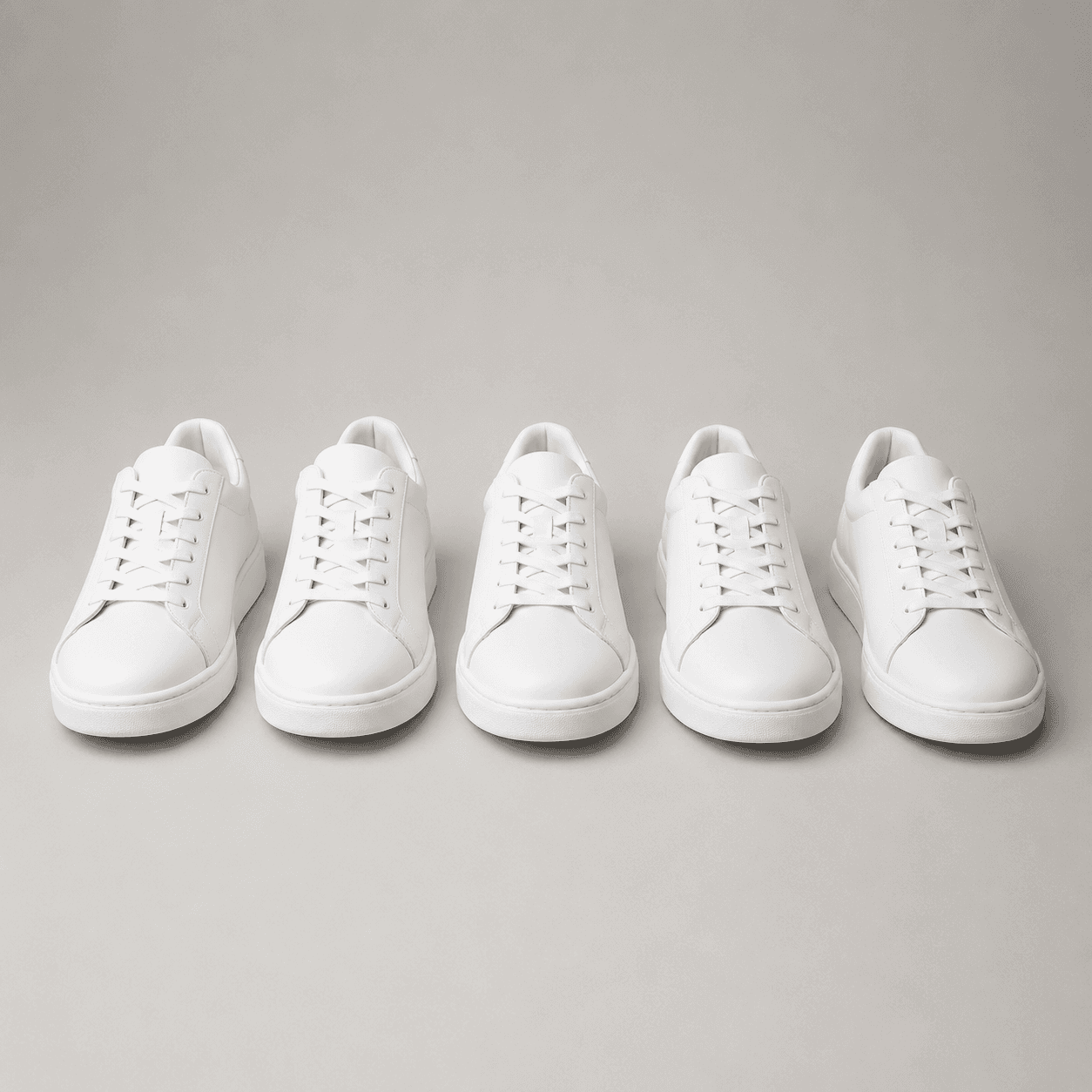
For bulk footwear programs, custom logo shoes should be specified like any other construction detail, not treated as late-stage artwork. The logo can sit on the quarter, tongue, heel tab, foxing, strobel, sockliner, footbed, midsole, or outsole, and each position changes tooling cost, line speed, reject exposure, and sample timing. For sourcing managers, brand owners, and importers buying from China, the practical question is not which branding method looks strongest in isolation, but which one fits the shoe structure, material package, MOQ, and target FOB.
A logo that reads cleanly on 1.6-1.8 mm corrected-grain leather can lose edge definition on 280-320 GSM sandwich mesh with 3 mm foam backing, or rebound on 1.2 mm PU synthetic with soft knit backing. A sharp sidewall mark on rubber cupsole can also blur on low-density phylon after expansion. The correct evaluation points are measurable: whether the mark survives 40,000-60,000 flexes, whether inks and films meet REACH or CPSIA limits, whether placement can be held within ±1.5-2.0 mm, and whether the order volume is high enough to justify a die, mold insert, or custom trim.
This article compares shoe branding methods as a supplier-side spec and cost breakdown. It focuses on MOQ, added lead-time days, tooling range, cost per pair, material limitations, and where buyers lose margin through unnecessary trim complexity, late artwork changes, or the wrong process for the substrate.
In footwear, the cheapest logo method is often not the lowest-cost program; tooling reuse, line efficiency, and reject rate decide the real FOB outcome.
How to assess custom logo shoes before sampling
The most reliable time to decide branding is before the first pattern confirmation sample. On footwear, logo execution is tied directly to bottom construction and upper substrate. A cemented casual sneaker, vulcanized canvas shoe, cupsole leather court, injected sandal, and strobel runner will not carry the same logo methods with the same consistency. The supplier needs to evaluate construction first, then material: full-grain leather, split suede, microfiber, PU synthetic, knit, mesh, rubber, TPR, EVA, IP, TPU, webbing, or metal.
For commercial comparison, every branding method should be checked against five numbers: one-time setup cost, recurring $/pair upcharge, MOQ by style-color, added lead-time days, and likely failure mode in production or wear. The failure mode is often the deciding factor. A US$0.09 upper print that smears after lasting or a US$0.14 transfer that lifts on a curved heel panel costs more than a US$0.22 woven label or molded badge once rework, scrap, and delayed inspection are included.
Most stable programs stay with two or three branding executions per pair. A typical package might be quarter print plus woven tongue label plus debossed outsole. Another might be embossed leather logo plus sockliner print plus heel patch. Once the logo count increases beyond that, the factory adds more trim sourcing, more strike-off approvals, more inline QC points, and more opportunities for shade, alignment, or left-right mismatch.
- Typical placement tolerance in bulk: ±1.5 mm for stitched labels, ±2.0 mm for panel prints, and up to ±3.0 mm for hand-positioned transfers on curved parts.
- If colorways use different upper materials, request separate strike-offs by material group; one approval on white microfiber is not enough for black suede or open mesh.
- For children’s, school, occupational, and safety categories, confirm branding trims do not conflict with REACH, CPSIA, EN ISO, ASTM, or retailer restricted substance protocols.
- 01Define every logo location in the tech pack before sampling: quarter, tongue, heel tab, foxing, eyestay, sockliner, footbed, strobel, outsole, hardware, and packaging.
- 02Lock the process, logo size, tolerance, Pantone or material standard, and abrasion target for each location before issuing artwork for sample tooling.
Upper branding methods: where buyers gain shelf impact and where they create rejects
Upper branding is usually the most visible part of custom logo shoes, but it is also where process variation shows fastest. Material grain, top-coat thickness, foam backing, seam contour, pre-heating, and lasting tension all affect the final logo edge. A logo that passes on a flat upper cut panel can distort once the quarter is stitched, lasted, and pulled over the last toe spring.
Screen print remains the lowest-cost entry point for many bulk programs. On canvas, microfiber, stable PU synthetic, and smooth coated leather, the added cost is commonly US$0.05-0.18 per pair, with MOQ often aligned to the shoe factory minimum of 300-600 pairs per colorway. It works best away from major flex lines. On suede, oily leather, brushed textile, or open-pore mesh, ink spread reduces sharpness and crocking risk increases. For workwear or school shoes expected to take repeated rubbing, screen print should be validated with flex and dry/wet rub before approval.
Heat transfer is more suitable for engineered mesh, knit, and lightweight sport uppers where stitched trims would add bulk or create pressure points. It allows fine line detail and multi-color logos without separate print screens. In production, the common problem is not artwork detail but edge lifting after lasting or during wear. Typical added cost is US$0.08-0.22 per pair, with 5-7 extra days for transfer strike-off, pressing trial, and adhesion review. On mesh uppers below about 220 GSM or with deep texture, the supplier may need a larger logo line weight or thicker adhesive film to avoid broken edges.
Silicone print, high-density print, and reflective transfer can raise perceived value, but they narrow the process window. Silicone applied too thick on a quarter flex zone can crack at the edge. Reflective film can scuff in carton transit or fail crocking under repeated contact. These methods are usually safer as one controlled brand hit rather than repeated across several upper panels.
Embossed leather logo and debossed upper marks
An embossed leather logo is one of the cleanest branding options for leather sneakers, loafers, sandals, and premium casual shoes. It avoids ink, keeps the upper visually quiet, and usually performs well on corrected-grain or coated leather in the 1.4-1.8 mm thickness range. Typical die cost is US$80-200 depending on size and cavity count. Added pair cost is commonly US$0.10-0.28, and the embossing die usually adds 5-8 days to sampling.
The result depends heavily on leather temper and backing. Soft milled leather, oily nubuck, thin sheep leather, or foam-backed synthetic can relax after pressing, reducing edge definition after 24-48 hours. If the panel is too thin, deep embossing can telegraph to the reverse side or create a weak point near stitch lines. The supplier should specify target depth, pressing temperature, dwell time, and whether a reinforcement backing is allowed behind the panel.
Debossed upper logos are similar in cost but visually more restrained. They are effective on quarter panels, straps, and heel tabs when the brand wants tactile identity without color contrast. On PU synthetic with heavy top coat, the deboss can rebound more than on leather, so approval should be based on production material after recovery time, not on a fresh press taken directly from sample room tooling.
Labels, badges, and ornaments
Woven tongue labels and stitched brand tabs are among the most efficient supplier-side solutions because they isolate the logo from upper material variation. Typical cost is US$0.04-0.12 per pair, setup is low, and MOQ can often remain at 300-500 pairs per colorway. Lead-time impact is usually 3-5 days. They are also easier to revise if the brand changes artwork after wear-test feedback or retailer review.
High-frequency badges, rubber patches, TPU logos, and metal ornaments create a stronger branded look but add more tooling and handling cost. A molded TPU badge typically adds US$0.18-0.45 per pair with mold cost around US$150-400 and 7-12 additional days. Metal logos can reach US$0.25-0.70 per pair once plating, attachment pins, washers, and manual setting are included. On running shoes and foam-backed uppers, these trims can add localized stiffness, extra weight, or pressure points if they sit over flex zones or collar foam.
Custom logo shoes: branding method cost and sourcing comparison
| Branding method | Typical MOQ | Added cost per pair | Tooling/setup | Lead time impact | Best use | Notes |
|---|---|---|---|---|---|---|
| Screen print on upper | 300-600 prs/color | US$0.05-0.18 | Low; screen and color setup | 3-5 days | Canvas, microfiber, smooth PU or coated leather panels | Lowest entry cost; watch flex cracking, crocking, and ink spread on textured materials |
| Heat transfer logo | 300-600 prs/color | US$0.08-0.22 | Low to medium; film and pressing setup | 5-7 days | Mesh runners, knit uppers, lightweight sport | Good detail; validate edge lift after lasting and 40,000+ flexes |
| Embossed leather logo | 500-800 prs/style | US$0.10-0.28 | Medium; emboss die about US$80-200 | 5-8 days | Leather sneakers, loafers, sandals, casuals | Best on 1.4-1.8 mm stable leather; edge may relax on soft or oily hides |
| Debossed upper logo | 500-800 prs/style | US$0.08-0.22 | Medium; press die setup | 5-8 days | Leather, microfiber, stable synthetic panels | Subtle look; rebound risk on PU with soft backing or heavy top coat |
| Woven tongue label | 300-500 prs/color | US$0.04-0.12 | Low; label setup about US$30-80 | 3-5 days | Most sneaker and casual categories | Low risk, low MOQ, easy artwork revision |
| Rubber or TPU badge | 800-1500 prs/style | US$0.18-0.45 | Medium to high; mold about US$150-400 | 7-12 days | Sports, outdoor, sandals | Strong visibility; adds mold MOQ, handling steps, and localized stiffness |
| Metal logo hardware | 1000-2000 prs/style | US$0.25-0.70 | High; mold, plating, and fixing setup | 10-15 days | Fashion casual, loafers, sandals | Check corrosion, plating consistency, edge safety, and attachment strength |
| Sockliner print | 300-600 prs/color | US$0.03-0.08 | Low | 2-4 days | Value programs, internal branding | Low cost; print fades faster on high-abrasion use or rough top cloth |
| Debossed outsole | 800-1500 prs/style or bottom | US$0.06-0.20 | Medium to high; insert or mold edit about US$120-350 | 7-15 days | Rubber, TPR, cupsole bottoms | Durable; readability depends on depth, location, and compound shrinkage |
| Raised outsole logo | 800-1500 prs/style or bottom | US$0.06-0.20 | Medium to high; insert or tread edit | 7-15 days | Rubber outsoles with low-contact logo zones | Stronger visual read in sample stage; faster wear on contact points |
| Midsole sidewall logo | 800-1500 prs/style | US$0.05-0.18 | Medium to high depending on tool edit | 7-12 days | EVA, phylon, IP runners and casuals | Definition depends on foam density, expansion, and paint adhesion |
| Foxing or heel patch logo | 600-1200 prs/style | US$0.10-0.30 | Medium; patch tool or print screen | 5-10 days | Vulcanized canvas, retro casual | Classic branding position; alignment and left-right consistency matter |
Outsole and midsole branding: durable methods with tooling consequences
Outsole branding is usually the most durable option because the mark is molded into the component instead of printed onto the surface. For repeat programs using the same bottom, this can be an efficient long-term branding investment. For first orders, however, buyers often underestimate the tooling and time effect. Once the logo is cut into an outsole cavity or insert, any artwork revision means reopening tooling or recutting inserts.
A debossed outsole is standard on rubber, TPR, and many cupsole bottoms. Added pair cost is typically US$0.06-0.20, while the insert or mold edit usually costs US$120-350 depending on size, complexity, and whether a blank area already exists in the tread. Lead-time impact is normally 7-15 days. Legibility depends on depth, draft angle, compound shrinkage, and location. If the logo sits in heel strike or forefoot push-off zones, shallow debossing can wear smooth quickly, especially on softer rubber compounds below about Shore A 55.
Raised outsole logos can be visually stronger in sales samples, but they wear faster if positioned on contact surfaces. Fine typography is a poor choice. Counters below roughly 0.8-1.0 mm, tight inner corners, and narrow serifs tend to fill during molding or soften during polish. Simplified artwork with larger negative space is easier to control and reads better after wear.
Midsole sidewall branding on EVA, IP, and phylon requires tighter engineering review because foam density and expansion rate directly affect edge definition. On lower-density EVA around 0.11-0.18 g/cm3, fine detail is difficult to hold. Firmer phylon or painted sidewalls can read better, but paint adds scuff risk and extra process time. Where the sidewall logo is important, the supplier should review foam density, compression set, and paint adhesion in the same approval cycle rather than treating branding as only a cosmetic item.
- Typical rubber hardness for readable molded outsole logos: Shore A 55-70, depending on wear target and tread geometry.
- Cupsole sidewall logos are usually more consistent than logos buried inside deep lug patterns or flex channels.
- For EN ISO 20345 or ASTM F2413 safety styles, keep brand marks separate from required size, slip, and compliance identifiers on the sole.
- 01Approve outsole logo location together with tread layout, Shore A hardness, abrasion target, and mandatory legal markings before cutting any insert.
- 02For repeat programs, spread outsole insert cost across at least two production runs; for one-off orders below about 1,000 pairs, avoid dedicated sole tooling unless the logo is commercially essential.
Interior and low-visibility branding methods that protect FOB
Not every bulk program needs a large visible upper logo. For private-label lines, retailer exclusives, and price-sensitive collections, interior or low-visibility branding often gives the best cost control: sockliner print, woven tongue label, strobel stamp, footbed transfer, and size-label co-branding. These options protect brand identification in inspection and in-box presentation without forcing the buyer into extra mold cost or high cosmetic reject rates.
Sockliner print is one of the lowest-cost options at about US$0.03-0.08 per pair. It works well on die-cut EVA or PU insocks with mesh, tricot, or microfiber top cloth. The limit is abrasion. On high-use shoes, especially with dark socks or rough insole fabric, surface print can fade quickly. For programs where internal logo life matters, a sublimated top cloth or woven tongue label is more stable than direct surface print. The factory should also confirm that print chemistry does not migrate on open-cell foam during heat aging.
Foam density and top-cloth weight affect print clarity more than many buyers expect. Molded EVA sockliners around 0.11-0.18 g/cm3 and open-cell PU around 0.18-0.25 g/cm3 are common. Softer foams rebound under print pressure and can blur small text. Top cloth in the 120-180 GSM range is typical for sport and casual shoes; highly brushed or loose-surface materials make fine logos look fuzzy. In practical terms, a one-color logo with larger line weight gives the cleanest and lowest-risk result.
Tongue labels remain one of the most versatile B2B branding tools because they work across vulcanized canvas, knit runners, leather sneakers, and outdoor casuals. They carry low tooling cost, modest MOQ, and fewer cosmetic issues than badges or panel transfers. If artwork revisions are still possible, labels are also cheaper to change than outsole inserts or embossing dies.
- Sockliner print is efficient for value programs, but it should not be the only brand signature where abrasion durability matters.
- Tongue labels, heel tabs, and strobel marks are easier to carry across multiple colorways than molded ornaments.
- Interior branding is often the safest solution when retailer guidelines limit large external logos.
The real cost drivers: tooling, line speed, rejects, and compliance exposure
The logo upcharge shown on a costing sheet is only the visible part of branding cost. The larger drivers are tooling amortization, artwork rounds, trim supplier MOQs, line handling time, and cosmetic reject rates. A quote showing only US$0.12 per pair for a logo print can become expensive once it includes two extra strike-off rounds, transfer replacement, or delayed inline approval during peak season. For that reason, branding should be costed as a process package, not only as a trim line.
Tooling is the first divider. Screen print, tongue labels, and sockliner prints have low fixed cost. Embossing dies, outsole inserts, and molded TPU badges are mid-level. Custom plated metal ornaments and complex sole edits are higher. Line speed is the second divider. Hand-positioned transfers, riveted ornaments, and precise sidewall badges slow sewing or assembly and increase labor minutes per pair. The third divider is reject rate. Curved heel counters, padded collars, and rough-texture foxing generate more visual rejects than flat labels or simple quarter embossing.
Lead-time impact is cumulative. A single upper print may add only 3-5 days. Add a custom woven label, embossed leather logo, and debossed outsole insert, and development can easily extend by 15-25 days before bulk booking. In busy months, the bottleneck is often the mold room, transfer vendor, or trim supplier, not the upper stitching line.
Compliance needs to be checked early if branding materials include soft PVC, coated labels, foil, metallic ink, solvent-heavy transfer film, or plated hardware. For children’s footwear, school shoes, and safety categories, the buyer should confirm whether REACH, CPSIA, EN ISO, ASTM, or retailer protocol testing applies to branding components in addition to the shoe body.
MOQ and quotation practice by branding method
MOQ usually follows the least flexible branding component, not the easiest one. A factory may accept 300-600 pairs per colorway for the upper, but a custom molded badge, metal ornament, or outsole insert can move the practical MOQ to 800-1,500 pairs per style-color, or trigger extra amortization if the order is smaller. That is why low-volume first orders should avoid mold-based branding unless repeat business is already planned.
A useful supplier quotation should separate three items clearly: one-time tooling, recurring unit upcharge, and MOQ condition. Buyers should also ask whether tooling is charged separately, amortized into the first order, or waived above a threshold such as 3,000-5,000 pairs. Without that split, comparisons between factories are misleading because one supplier may bury setup inside FOB while another shows it as a visible line item.
Recommended branding combinations by footwear category
For leather court shoes, cupsole sneakers, loafers, and premium casuals, the most balanced mix is usually understated: embossed leather logo on quarter or heel tab, woven tongue label, and a simple outsole or sidewall deboss. This gives durable brand identification without relying on surface ink over expensive upper material.
For technical runners, trainers, and knit sport styles, heat transfer, welded TPU film logo, thin badge application, and tongue or sockliner branding are more appropriate. These uppers are lighter, more elastic, and less suitable for thick stitched decorations. Hard ornaments should be used sparingly because they can increase pressure complaints and reduce upper flexibility.
For vulcanized canvas, foxing print, heel patch, woven label, and outsole branding remain the standard package because the construction naturally supports rubber-based marks and visible sidewall graphics. For sandals and slides, strap embossing, footbed print, and outsole cavity logos are generally efficient. Metal trims should be used selectively because they increase corrosion risk, manual labor, and skin-contact scrutiny.
For work shoes and safety styles, branding should remain secondary to durability and compliance. Simple executions such as tongue labels, quarter embossing, or restrained outsole marks are usually safer than decorative hardware or fragile transfers. Where EN ISO 20345 or ASTM F2413 applies, mandatory information must remain readable and separate from purely decorative marks.
The most profitable branding package is rarely the one with the highest logo count. It is the package that matches the substrate behavior, target FOB, reorder probability, and compliance route. If the order is seasonal, small-volume, or retailer-specific, labels and prints usually protect margin better. If the style is expected to repeat across seasons on the same upper pattern or bottom, embossed or molded branding can justify its tooling.
- 01For a first order, choose one durable visible logo plus one low-cost secondary point such as a tongue label or sockliner print.
- 02Move to mold-based branding only when repeat volume is high enough to absorb tooling across at least two production runs.
SoleForge manufactures casual sneakers and athletic & running shoes under OEM and ODM for brands and importers worldwide. Request a quote with your tech pack or reference pair and we'll reply within one business day.