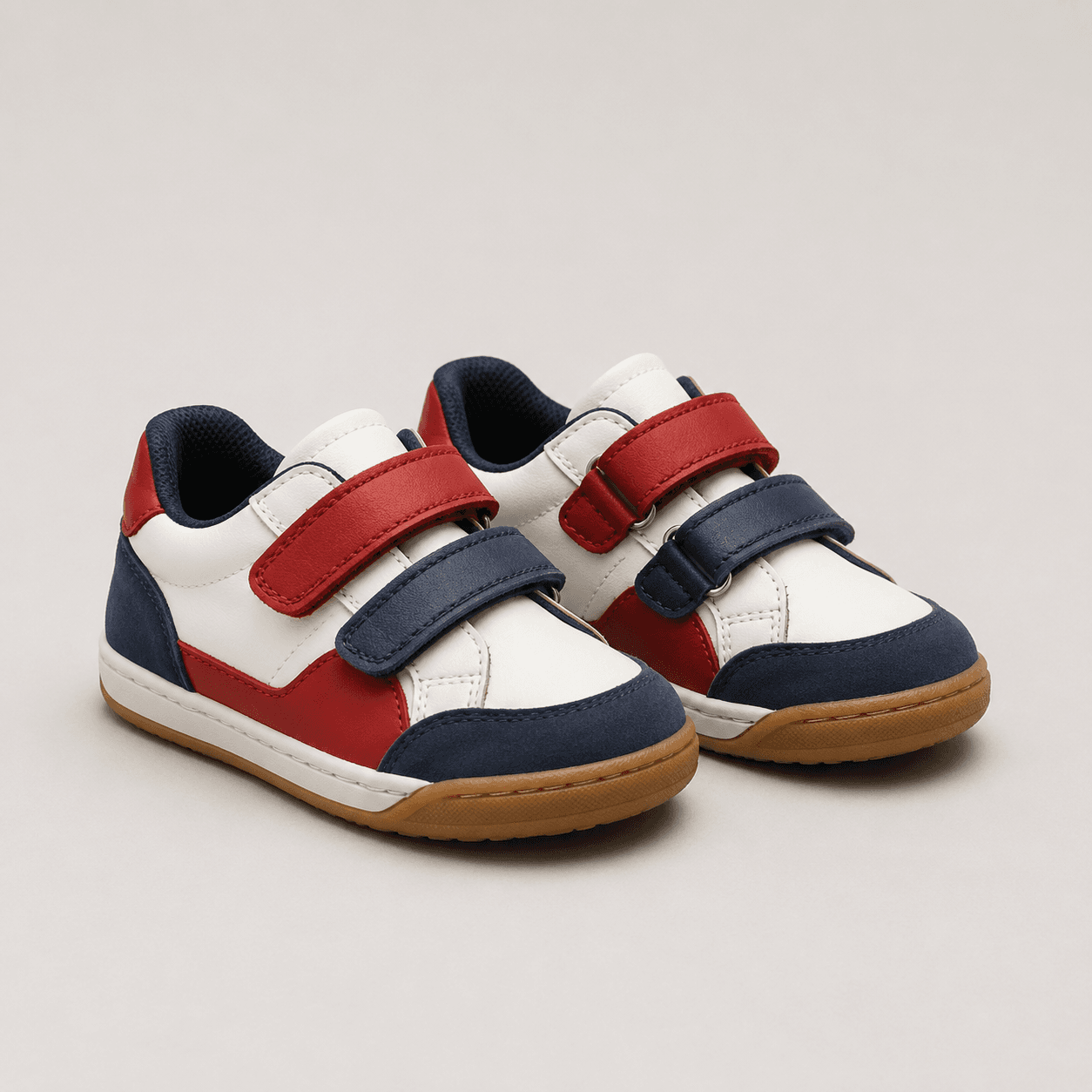
Footwear AQL inspection is a cost-versus-risk decision made before shipment, not a clerical step at the end of production. A tighter acceptance level catches more upper defects, bonding failures, pair-matching issues, and packing errors before goods leave China, but it also increases rejection risk, rework hours, and the chance of missing vessel cutoff. A looser level protects ship date, yet allows more variation to pass into your DC, retail channel, or e-commerce returns stream.
That trade-off is sharper in shoes than in most sewn products because one pair combines many failure points: cutting accuracy, stitching, lasting, cementing, outsole pressing, sockliner bonding, finishing, labeling, and size assortment. A 1,200-pair MOQ for molded EVA clogs, a 2,400-pair order of cemented joggers, and a 6,000-pair replenishment of vulcanized canvas shoes do not present the same quality risk. Material choice matters as well. PU-coated uppers can crack, low-density insocks collapse, foxing can lift, and light-color mesh can show glue or contamination immediately.
This article compares the main footwear aql options used by importers buying bulk footwear from China, with emphasis on what inspectors actually check, where aql 2.5 footwear sits commercially, and how to align AQL with MOQ, lead time, landed cost, and applicable standards such as EN ISO and ASTM. The goal is practical control, not theoretical perfection.
In footwear, the right AQL is the one that fits the claim risk of the shoe, the maturity of the factory, and the cost of missing ship date.
The real comparison is shipment continuity versus defect escape
AQL is a statistical sampling method applied to a production lot. It determines sample size and the maximum number of critical, major, and minor defects allowed before the lot is rejected. It does not certify that every pair is good, and it does not replace material qualification, wear testing, or lab work on chemical and performance requirements.
For footwear importers, the commercial comparison is usually between three positions. First, a stricter program, often with major defects at 1.5 or 2.0. Second, the standard middle ground of aql 2.5 footwear. Third, a looser acceptance level such as major 4.0 for low-risk repeat business. Each choice changes pass rate, rework volume, factory behavior, and the probability that defects reach market.
- Stricter AQL reduces defect escape but raises fail-and-rework frequency.
- AQL 2.5 usually balances retailer expectations with factory process capability.
- Looser AQL protects ex-factory date but tolerates more cosmetic and workmanship variance.
- The same sampling rule behaves differently on injected clogs, cemented sneakers, sandals, and leather boots.
Why footwear needs a narrower defect definition
Footwear defects are highly visible because shoes are sold and judged as left-right pairs. A quarter panel skew of 2 to 3 mm, toe spring mismatch, topline waviness, foxing misalignment, or outsole color difference may not affect safety, but it is immediately visible on shelf. In apparel, such variance may pass unnoticed. In shoes, it often becomes a retailer claim or a consumer return.
Footwear also has hidden technical risks. Low bonding strength at the forepart, outsole hardness drifting outside target Shore A, low foam density in insocks, thin lining GSM, unstable heel seat lasting, or brittle decorative trims can all lead to premature failure. A proper inspection program therefore needs a footwear-specific defect list tied to measurable tolerances: upper thickness, pair weight tolerance, left-right size difference, sockliner adhesion, foam density in kg/m3, and where relevant EN ISO or ASTM test references.
Option 1: stricter footwear AQL for high-claim, high-visibility, or compliance-sensitive orders
A stricter footwear AQL inspection program is suitable when downstream claim cost is high or brand exposure is unforgiving. Typical cases include children's school shoes, white leather court sneakers, work and safety footwear, and launch styles for chain retail. In these programs, buyers often set critical defects at 0, major defects at 1.5 or 2.0, and minor defects at 2.5 or 4.0 depending on channel tolerance.
The practical benefit is lower defect escape on issues that matter in footwear: poor outsole bonding, open seams beyond tolerance, left-right asymmetry, heel counter collapse, broken stitching, contaminated uppers, wrong size stamping, unstable trims, and packing assortment errors. If landed cost is $8.50 to $14.00 per pair and a retailer return or chargeback costs $16 to $38 per pair after freight, handling, reverse logistics, and markdown, failing more lots at origin can be the cheaper decision.
The trade-off is operational. Factories producing 2,400 to 5,000 pairs per colorway with 45 to 60 day lead times can handle a strict final inspection only if inline control is strong. Otherwise, tighter AQL creates sorting, repair, repacking, and re-inspection cycles that can push shipment by 3 to 7 days. For seasonal programs with fixed in-store dates, that delay risk is real and must be priced into the sourcing decision.
- Best for premium uppers, children's footwear, safety lines, and first bulk orders.
- More effective when inline QC and pre-final audits already remove recurring defects.
- Often adds 1 to 3 days of sorting and repair before re-inspection.
- Can increase labor cost per pair by $0.08 to $0.25 on defect-heavy lots.
What should be defined as major under a strict program
Major defects in footwear should be written with measurable thresholds, not subjective wording. Typical major defects include outsole bonding failure at toe or waist, open seam above agreed mm tolerance, severe pair asymmetry, incorrect size labeling, missing hardware, broken eyelets, sharp internal protrusions, heavy odor from incomplete curing, heel instability, and visible color mismatch outside approved shade band.
For performance footwear or safety categories, the defect list should connect to product standards and internal specs. Examples include slip resistance claims aligned to relevant EN ISO or ASTM methods, upper tear or seam strength limits, outsole hardness targets such as 55 to 60 Shore A for a rubber compound, and sockliner foam density of 120 to 160 kg/m3 for PU or 45 to 70 kg/m3 for open-cell comfort foams depending on construction. A tight AQL only works when the technical pass/fail line is already agreed before production.
Comparison of footwear AQL options for bulk imports from China
| Dimension | Stricter AQL | AQL 2.5 Footwear | Looser AQL |
|---|---|---|---|
| Typical major defect setting | 1.5 to 2.0 | 2.5 | 4.0 |
| Best fit | Launch styles, children's shoes, premium leather, safety or compliance-sensitive footwear | Mainstream private-label sneakers, sandals, slippers, boots, repeat commercial styles | Repeat injected sandals, flip-flops, indoor slippers, promo footwear |
| Lead-time effect | Higher rework risk; often adds 3 to 7 days if defects are found late | Usually manageable; many issues can be corrected in 1 to 2 days | Lowest disruption and highest pass probability |
| Unit-cost impact | Higher indirect cost from sorting, repairs, and re-inspection; often $0.08 to $0.25 per pair on problem lots | Inspection often about $0.06 to $0.14 per pair on medium runs | Lowest immediate QC burden, but higher risk of chargebacks and markdowns |
| Typical defect risk after shipment | Lowest escape rate on visible workmanship and assortment issues | Balanced control for most commercial footwear | Higher tolerance for glue marks, trimming, shade variance, and pair inconsistency |
Option 2: AQL 2.5 footwear as the most practical default for bulk imports
For most mainstream programs, aql 2.5 footwear is the right default. It is tight enough to catch commercially important defects, but not so tight that normal production variation turns every second lot into a negotiation. This is why many sourcing teams use critical 0, major 2.5, minor 4.0 for casual sneakers, sandals, slippers, basic boots, and private-label fashion lines manufactured in China.
From a supplier-side perspective, AQL 2.5 usually matches the process capability of competent factories running stable production. A well-managed plant should already have upper inspection, stitching patrol, assembly line QC, pair matching, cleaning, and pre-pack checks. In that environment, AQL 2.5 reinforces discipline on visible workmanship, labeling, and assortment accuracy without forcing unnecessary lot failure on marginal cosmetic findings.
Commercially, this level tends to produce the best total-cost outcome. Third-party final inspection may cost $280 to $450 per man-day in Fujian, Zhejiang, or Guangdong, which often translates to roughly $0.06 to $0.14 per pair on orders of 3,000 to 5,000 pairs. More important, the rework burden is usually manageable. Instead of full lot rejection, the factory often needs targeted cleaning, pair replacement, or carton correction within 1 to 2 days.
- Suitable for repeat private-label programs and medium-price commercial footwear.
- Works well for MOQ bands around 1,800 to 6,000 pairs per style.
- Usually keeps final pass rate realistic without lowering retailer-facing quality.
- Provides a clean baseline for claim tracking by style family and factory.
What a shoe quality inspection at AQL 2.5 should actually cover
A solid shoe quality inspection at this level should cover more than visual appearance. Inspectors should check pair matching, upper panel alignment, stitch density, logo placement, size marking, barcode accuracy, carton assortment, moisture-sensitive packing condition, and carton drop readiness. They should also perform basic field checks such as forepart flexing, adhesion spot checks, odor assessment, dimension checks, and left-right weight comparison.
For footwear, the report should refer back to the approved sample and technical pack. If the construction calls for 1.4 to 1.6 mm split leather, 220 to 260 GSM mesh lining, 45 Shore A EVA outsole, or PU insock foam density of 50 to 60 kg/m3, the inspector should verify available factory records, in-line test data, and physical consistency against the sample. On vulcanized shoes, foxing line appearance and sulfur odor should be checked; on cemented shoes, edge staining and bonding are more critical; on injected footwear, molding flash, sink marks, and size marking accuracy matter most.
Option 3: looser footwear AQL for repeat commodity business where timing matters more than finish precision
A looser footwear AQL setting, such as major defects at 4.0, has a place, but only on controlled repeat business. It is generally appropriate for low-risk replenishment styles with consistent material sourcing, fixed molds, and a factory that has already shown stable results across several shipments. Typical examples are basic PVC flip-flops, indoor slippers, low-cost injected sandals, and promotional footwear where unit value may be only $2.20 to $4.50 per pair.
The advantage is straightforward: higher pass probability and less disruption to shipping. If the lead time is only 25 to 35 days and the main commercial risk is missing a container close date, looser AQL can be justified. On a repeat 10,000-pair order of injected sandals, one missed sailing can cost more in lost sales and expedited freight than a limited amount of cosmetic imperfection.
The downside is not just more defects; it is more inconsistency. Small glue marks, rough trimming, slight print offset, pair weight imbalance, mild shade variation, or moderate outsole flash may all remain within acceptance limits. For disciplined retail accounts, these issues still create receiving friction, markdown pressure, and store complaints. A loose AQL should therefore be used as a supply-chain exception, not as a default quality strategy.
- Best for proven repeat styles with low claim exposure and low unit value.
- Useful when stock-out risk is more expensive than minor visual inconsistency.
- Not suitable for premium white uppers, children's styles, or compliance-sensitive footwear.
- Requires locked reference samples, stable raw materials, and reliable in-house factory QC.
How the three options compare on the dimensions importers actually manage
The direct inspection fee is rarely the main decision point. Importers should compare AQL options across defect escape risk, rework burden, lead-time impact, and claim cost after arrival. A passed lot with unstable bonding or wrong carton ratios is more expensive than a failed lot corrected at source. In footwear, returns and retailer deductions can erase margin faster than the inspection invoice ever will.
The second comparison point is factory maturity. A new supplier, a new outsole mold, a new upper material, or a new grading set should usually start under stricter control. Once the line proves stable across one to three shipments and claims remain low, many importers move to AQL 2.5. If a factory has recurring issues such as sockliner lifting, inconsistent cement application, crooked lasting, or carton mix-ups, moving to a looser AQL does not solve the process problem. It only delays the complaint.
- 01Use stricter AQL for first production runs, premium materials, and low-tolerance retail channels.
- 02Use AQL 2.5 for mainstream commercial styles with stable, competent suppliers.
- 03Use looser AQL only on repeat programs where speed and continuity clearly outweigh cosmetic precision.
- 04Review claim data every two or three shipments and reset the AQL by product family, not by supplier preference alone.
AQL works only if the specification pack is measurable
A weak tech pack undermines every inspection result. If the purchase order says only 'black fashion sneaker' and the approved sample is not frozen with tolerances, the inspector and factory will argue over subjective finish points. Footwear needs measurable criteria: upper material thickness, lining GSM, pair weight tolerance, outsole hardness, color tolerance, logo position, stitching SPI, adhesive cleanliness limits, carton pack ratio, and labeling language by market.
The strongest importers align these points before cutting starts. They issue approved swatches, size-set confirmation, carton marks, barcode files, insole density target, and packing method during pre-production. Then final random inspection becomes a control step, not a dispute resolution meeting on ship date.
How to choose the right footwear AQL by MOQ, lead time, and claim exposure
Start with claim economics. If the retail or marketplace cost of one defective pair is high relative to landed cost, tighten the program. If the style is low value, repeatable, and sold in a tolerant channel, looser control may be acceptable. For most importers buying from China, however, AQL 2.5 remains the best baseline because it fits both supplier capability and retailer expectations on the majority of footwear categories.
MOQ and production length also matter. On small development runs of 600 to 1,200 pairs, a failed final can be disproportionately disruptive because the lot is too small to sort efficiently and margin is already thin. On larger orders of 4,800 to 12,000 pairs, the value of disciplined sampling rises because lot mixing, size-assortment errors, and workmanship spread become harder to contain. Lead times should guide inspection timing as well. On a 35 to 50 day production calendar, final inspection is best booked when at least 80 percent of pairs are packed and 100 percent are finished, with 2 to 3 days left for corrective action before cargo handover.
- For new molds, focus on dimensions, sink marks, flashing, and size marking consistency.
- For white, beige, and pastel uppers, tighten shade, contamination, and glue-mark criteria.
- For children's shoes, keep critical defects at zero and define safety-related major defects precisely.
- For fashion sandals and embellished boots, add component-count and pull-test attention.
- For vulcanized footwear, monitor foxing adhesion, surface contamination, and shape consistency after cooling.
Verdict: standardize on AQL 2.5 footwear, then move by exception
For most importers, the strongest default is aql 2.5 footwear with critical defects at zero, backed by a footwear-specific defect manual and a measurable tech pack. It gives enough control over workmanship, pairing, labeling, carton assortment, and visible finish without causing unnecessary final-inspection failure on ordinary factory variation. In practical sourcing terms, it is usually the best balance of quality protection, rework cost, and shipment reliability.
Move stricter when the style is new, the material is unforgiving, the retailer is strict, or the consequence of failure includes safety, compliance, or brand damage. Move looser only when the program is repeat, the unit value is low, and the supplier has already demonstrated stable process control over multiple shipments. The key point is simple: footwear AQL inspection is not a generic checkbox. Used correctly, it is a risk-setting tool tied to the shoe type, the factory capability, and the economics of the order.
SoleForge manufactures safety & work shoes and casual sneakers under OEM and ODM for brands and importers worldwide. Request a quote with your tech pack or reference pair and we'll reply within one business day.