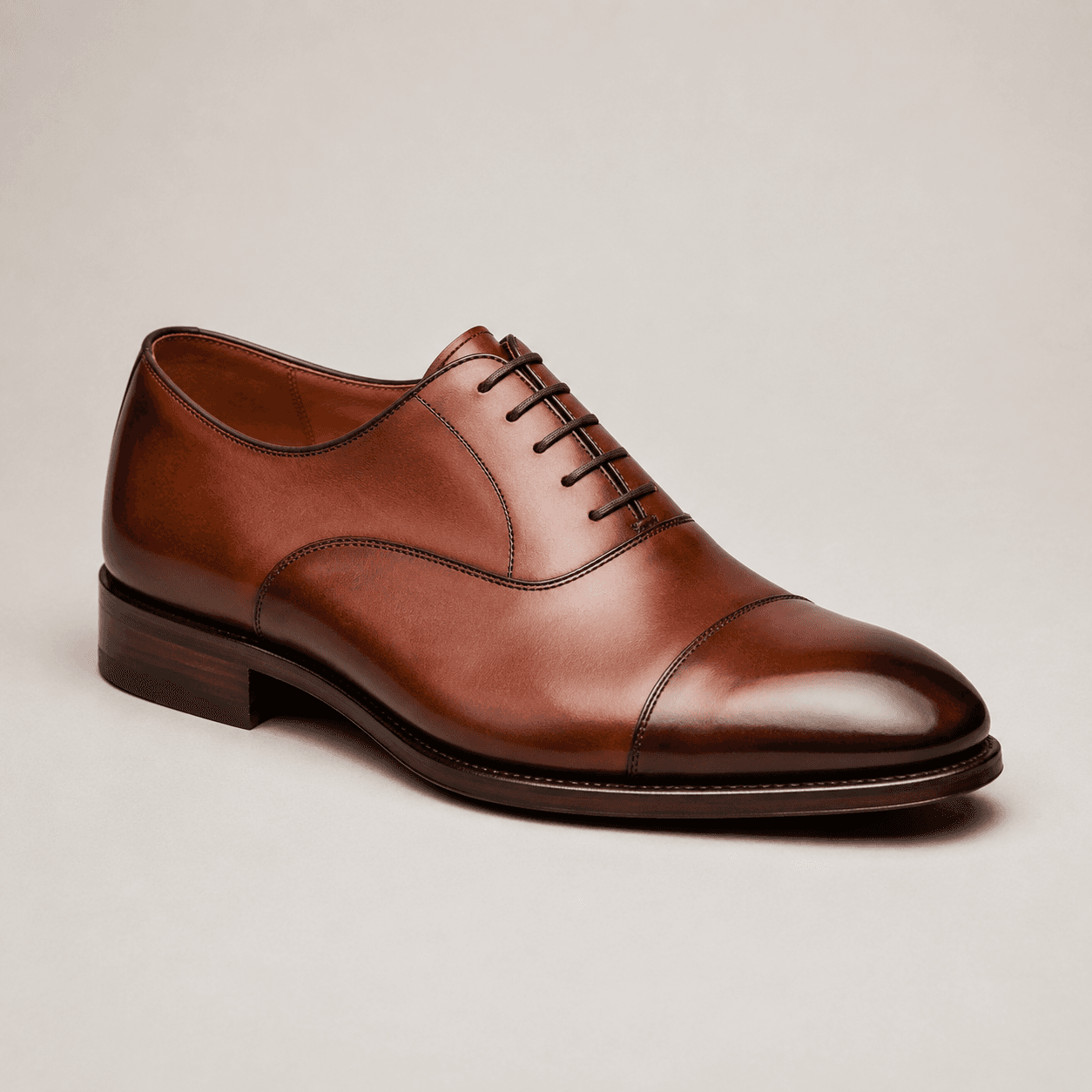
For bulk buyers sourcing from China, FOB is only meaningful when tied to one locked shoe specification. In footwear, the factory's FOB normally includes pattern-confirmed production cost, packing, inland transport to port, export clearance, and loading. It does not mean every supplier is quoting the same build. A quote at $8.40/pair and another at $9.15/pair may reflect different outsole weights, lining GSM, glue systems, carton specs, or compliance assumptions rather than different factory margins.
The practical way to control footwear cost is to break the quote into buyer decisions. A change from 160 GSM sandwich mesh to 120 GSM mesh, from 0.22 g/cm3 die-cut EVA to a molded PU footbed, or from a 620 g/pair rubber bottom to a 500 g/pair MD/RB combination can move FOB by $0.18 to $0.95/pair. On large-volume orders, these are not small adjustments.
This guide is written as a supplier-side decision tool for sourcing managers, brand owners, and importers buying footwear in bulk from China. Each section explains one cost driver, how it affects shoe manufacturing cost, and what to check before you accept a footwear FOB price as final.
A reliable footwear FOB price is the one supported by a fixed BOM, realistic MOQ, defined testing scope, and a lead time the factory can actually hold.
Product definition determines whether the FOB is real or only a placeholder
A footwear quote is only as accurate as the product definition behind it. A factory cannot give a dependable price from a mood board or a front-and-side sketch alone. At minimum, the supplier needs a tech pack, a marked-up reference sample, or a BOM assumption sheet listing upper material, thickness, lining GSM, tongue and collar foam, toe puff, counter, insole board, sockliner, outsole material, logo process, and packaging standard. Without those details, the first price is only a budgeting number.
This is where many sourcing comparisons go wrong. A casual sneaker built in 1.3 to 1.4 mm PU microfiber with 3 mm foam backing, 120 GSM mesh lining, 4 mm die-cut EVA sockliner, and a 520 g/pair TPR outsole is not equivalent to a similar-looking shoe using split suede, 150 GSM mesh, molded PU in-sock, and a 610 g/pair rubber cupsole. The visual difference may be small, but the BOM value and labor minutes are not.
The same issue applies to what is left unspecified. If the quote says 'mesh lining' but does not state GSM, or says 'EVA sockliner' without thickness and density, the supplier is pricing on assumption. Later, when wear-test feedback or buyer comments upgrade those materials, the FOB moves. On first-cost projects, most re-costing happens because the original RFQ left too much open.
A buyer gets a better shoe cost breakdown when three decisions are fixed first: construction, major materials, and final pack-out. Until those are settled, negotiations about cents per pair usually waste time because the technical base is still moving.
- Ask for a BOM assumption sheet with the first quote, not after sampling.
- Confirm whether the price is based on sketch, tech pack, or a physical sample cut open for review.
- Check upper thickness, lining GSM, outsole weight, and sockliner density before comparing suppliers.
- List all 'TBC' items in writing and ask which ones can trigger FOB revision.
Materials are usually the largest block in footwear cost
For most footwear categories, materials account for 45% to 70% of shoe manufacturing cost. The range depends on category. Basic EVA slippers may sit lower in absolute value, while runners, cupsole sneakers, hiking shoes, and occupational footwear sit higher because they use more components and heavier bottoms. From the supplier side, the material bill usually covers upper, backing, lining, reinforcements, toe puff, counter, insole board, sockliner, outsole, adhesives, laces, trims, boxes, and cartons.
Upper cost is not just a price-per-meter issue. Yield drives real cost. Designs with many small overlays, directional grain, heavy perforation, reflective films, or welded panels generate more cutting loss than simple vamp-quarter constructions. On leather or suede styles, usable yield can vary enough to change FOB by $0.20 to $0.45/pair even before labor is considered.
Bottom cost is one of the clearest price drivers because it is weight-sensitive and compound-sensitive. Moving from TPR to solid rubber, or increasing outsole weight by 80 to 100 grams per pair in the key size, can add $0.25 to $0.70/pair depending on raw material prices and abrasion targets. If the outsole also includes TPU heel clips, painted sidewalls, or a separate phylon midsole, the increase is higher because assembly and reject risk also go up.
Comfort materials deserve closer review than most buyers give them. A 4 mm EVA sockliner at 0.20 to 0.22 g/cm3 density is a cost-controlled commercial option. A 5 to 6 mm molded PU footbed with open-cell top layer, moisture-wicking top cloth at 120 to 150 GSM, and rebound targets above 40% is a different cost level entirely. The performance difference may be justified, but it should be specified early, not assumed under the word 'premium'.
The safest cost-down work happens through controlled material engineering: reduce upper layer count, standardize mesh colors, optimize outsole weight, shift from suede to microfiber where the brand accepts it, or lower lining GSM in low-wear zones. These changes can save $0.20 to $0.80/pair without creating immediate claims. Random downgrades in hidden materials often come back as delamination, hydrolysis, collar collapse, or poor wear.
- Request material cost split by upper, bottom unit, sockliner, trims, and packaging.
- Ask for outsole weight in the key size and note grams per pair on the approved sample.
- Confirm thickness, density, and hardness for sockliner, collar foam, and tongue foam.
- Check whether upper mesh, webbing, and lining are stock colors or custom-dyed to pantone.
- Review material yield risk on overlay-heavy or perforated designs.
Typical FOB cost structure by major footwear cost bucket
| Cost bucket | Typical share of FOB | What usually moves it | Buyer check point |
|---|---|---|---|
| Upper and lining materials | 25%-45% | Thickness, GSM, material grade, backing, cutting yield, branding process | Confirm exact upper spec, backing, and cutting assumptions |
| Outsole and bottom unit | 15%-30% | Weight, compound, density, mold complexity, abrasion and slip target | Ask for grams per pair and compound split in the key size |
| Labor and assembly | 10%-25% | Construction, stitch count, line output, rework rate, handling complexity | Check style complexity against expected pairs per line per day |
| Packaging and labeling | 3%-8% | Box type, carton strength, inserts, barcode and retailer labeling | Approve final pack-out before locking FOB |
| Testing and compliance | 1%-5% | Chemical rules, physical tests, special EN ISO or ASTM claims | Set protocol early and confirm fee treatment |
| Overhead, finance, margin | 8%-15% | Payment terms, season load, defect risk, admin burden | Compare commercial assumptions behind each supplier quote |
Construction choice changes labor, output, and claim exposure
After materials, construction is the next major cost lever. Cemented construction is still the most common for fashion sneakers, many casual shoes, and entry-to-mid runners because it balances speed and cost. Strobel adds flexibility and comfort but requires extra sewing and attachment control. Cupsole, vulcanized, direct injection, California, and welted constructions each come with different tooling requirements, labor content, and reject profiles.
The same upper pattern can have very different labor cost depending on construction. A basic cemented low-cut sneaker may run at 900 to 1,200 pairs per line per day after line balance is stable. A mid-cut outdoor shoe with gusset tongue, membrane bootie, speed hooks, padded collar, and reinforced heel seat may run closer to 350 to 600 pairs per day. Lower output means higher labor cost per pair even before material upgrades are counted.
Bonding performance is also a pricing issue. If the buyer needs cold-flex resistance, oily or heavily textured outsoles, or a high-finish synthetic upper, the factory may need extra roughing, primer treatment, stronger adhesive, longer drying time, and more pull tests. In practice, these process additions can add $0.10 to $0.35/pair compared with a simpler fashion shoe that uses standard cementing conditions.
Construction affects fit risk as well. Lasting allowance, toe spring, collar opening, board stiffness, and strobel margin all influence how the shoe sits on foot and how clean it looks in final inspection. If the design and construction are mismatched, the factory loses time in re-lasting, re-heating, and appearance rework, which either raises the FOB or weakens consistency in shipment.
- Confirm construction type: cemented, strobel, cupsole, vulcanized, injection, California, or welted.
- Ask expected line output per day for your exact category, not a general factory average.
- Check whether special primer, cold-resistant adhesive, seam sealing, or waterproof taping is included.
- Review construction choice against intended use: fashion, outdoor, uniform, safety, or performance.
MOQ, color count, and size range can move the FOB more than expected
MOQ affects more than purchasing leverage. It changes cutting efficiency, line setup absorption, inventory risk, and how many custom materials the factory is willing to carry. On many programs, the difference between 600 pairs per color and 1,200 pairs per color is already visible in FOB. The price gap might be $0.20 to $0.50/pair on a simple sneaker and more on a style with custom box, custom outsole color, or special trims. At 2,400 pairs per color, suppliers usually gain further efficiency if materials are standardized.
Color count is often the hidden problem. One color at 1,800 pairs is not costed the same as three colors at 600 pairs each. More colors mean more lab dips, more custom dye lots, more segregation in cutting and stitching, more leftover risk in mesh, webbing, laces, and labels, and more chances for shade variation claims. On private-label projects, color fragmentation is one of the fastest ways to lose cost efficiency.
Size range should also be reviewed at RFQ stage. An EU 36-41 women's run is different from a mixed run covering EU 35-46. Larger or smaller extremes may require separate outsole mold inserts, grading corrections, or carton adjustments. In some categories, factories apply surcharges for very small or very large sizes because material consumption and fit-control effort rise disproportionately.
The component MOQ is just as important as the shoe MOQ. A factory may agree to 800 pairs for the order, but the custom box vendor may require 1,500 boxes per artwork, the woven label mill 5,000 pieces per size-color, and the lace tip supplier 10,000 pieces per finish. If these component thresholds are not checked early, the buyer sees cost revision after sampling or before bulk booking.
- Ask MOQ by style, colorway, outsole, box artwork, and major custom trim.
- Compare FOB at 600, 1,200, and 2,400 pairs per color when volume is still flexible.
- Check surcharge policy for extended sizes, mixed gender size runs, or split fit lasts.
- Confirm separate supplier MOQs for boxes, labels, eyelets, lace tips, and molded logos.
Tooling and development charges should be separated from bulk shoe cost breakdown
Buyers should separate recurring FOB from non-recurring development cost. New outsole molds, custom lasts, footbed molds, logo plates, eyelet dies, and pattern engineering all sit outside standard bulk production, even when a supplier later spreads some of them across volume. If the order is below about 5,000 to 10,000 pairs, many factories will not absorb these costs fully because the amortization is too thin.
A standard rubber outsole mold for a basic casual shoe often falls in the $2,000 to $4,500 range depending on size range and sidewall complexity. A performance outsole with multiple cavities, exposed windows, or integrated TPU shank areas can go higher. Custom lasts add both cost and time, especially if fit corrections are expected after the first trial sample. These are normal charges in footwear, not signs that a supplier is over-quoting.
Sample rounds also need to be budgeted realistically. A first proto may take 7 to 10 days if stock materials are available. A corrected fit sample often takes another 7 to 10 days. A pre-production sample usually needs 10 to 14 days after all confirmed materials are in. If the buyer changes upper pattern, foxing height, outsole color split, logo location, or packaging artwork after approval, the supplier often re-costs because new screens, revised cutting dies, or extra handwork are required.
From a buyer's point of view, the correct question is not only 'what is the FOB per pair?' but also 'what is the total program cost before the first salable shipment?' A lower pair price can be misleading if the project needs multiple mold changes, repeated fit corrections, or several short-run samples.
- Separate unit FOB from outsole mold, last, logo tooling, and sample charges.
- Ask whether tooling becomes refundable after a set volume such as 5,000 or 10,000 pairs.
- Confirm lead times for proto, fit sample, sales sample, size set, and PP sample.
- Check mold ownership, storage terms, and whether future replacement is chargeable.
Testing and compliance are built into cost long before the lab report is issued
Testing is not an end-stage add-on in footwear. The required compliance level affects material selection from the start. A fashion sneaker for a discount channel may be built on a different chemistry and performance assumption than a shoe supplied to a major EU retailer, a US chain, or an occupational program requiring EN ISO or ASTM-related performance. If those standards are not stated at RFQ stage, the supplier is forced to quote on assumption.
The direct lab fee is usually not the main issue. The bigger impact is the cost of building the shoe to pass. Changing to phthalate-compliant compounds, nickel-safe hardware, higher peel-strength adhesive, hydrolysis-resistant PU, colorfast top cloth, or better abrasion rubber can add $0.10 to $0.80/pair depending on category. For safety or occupational footwear, toe cap, puncture plate, slip resistance, antistatic performance, or fuel-oil resistance can push the delta much higher.
Typical commercial footwear tests include upper tear, seam strength, sole bond, flexing, outsole abrasion, color migration, crocking, hydrolysis, odor check, and carton drop performance. Occupational or specialty shoes may require EN ISO 20345 or ASTM F2413 related testing on toe impact, compression, slip resistance, puncture resistance, and electrical properties. The test list should be attached to the RFQ and repeated on the purchase order.
Many price disagreements start when a buyer approves a sample visually and adds compliance requirements later. At that stage, the supplier may need to replace outsole compound, upgrade hardware, change adhesive, or re-source lining. That is not a small commercial adjustment; it is a new costing base.
- State EN ISO, ASTM, REACH, CPSIA, CA Prop 65, or retailer protocols in the RFQ.
- Ask which materials already have passing history and which ones need fresh testing.
- Confirm whether third-party lab fees are included, excluded, or billed only when testing is requested.
- Check if every colorway, print, transfer, and metal trim must comply individually.
Packaging and labeling are small in percentage but visible in cash and container use
Packaging rarely drives the largest share of footwear cost, but it often creates avoidable surprises. A plain kraft shoe box with one-color print is very different from a laminated color box with divider, tissue, silica gel, spare lace bag, hangtag, and retailer label set. On bulk orders, packaging can range from below $0.30/pair to above $1.00/pair depending on finish and compliance requirements.
Outer carton specifications also affect landed economics. Stronger corrugation, lower carton weight limits, mail-order ready pack-out, or drop-test requirements can reduce pairs per carton and lower container loading quantity. A box upgrade that adds only $0.08/pair in FOB may still increase landed cost meaningfully if 40HQ loading drops by several hundred pairs.
Labeling is another supplier-side labor issue buyers often underestimate. Country-of-origin labels, composition labels, carton assortment marks, size stickers, barcode labels, polybag warnings, and retailer-specific SKU labels require handling at multiple stages. On fast-moving lines, several additional labeling steps can add enough labor to shift the quote, especially on smaller orders where handling efficiency is already lower.
The best practice is simple: do not approve FOB on a temporary pack-out. Footwear packaging manuals from the retailer or importer should be reviewed before final pricing, not after the first production sample is approved.
- Request separate pricing for shoe box, outer carton, labels, inserts, tissue, and polybags.
- Confirm board grade, print colors, carton burst strength, and target gross weight per carton.
- Ask expected loading quantity in 20GP and 40HQ under the quoted packaging standard.
- Review retailer packaging manual before freezing the purchase order price.
Lead time affects price because factory scheduling has a cost
Lead time is a real cost variable in footwear production. A repeat order using existing molds and stock materials may run 30 to 45 days after deposit and final approval. A new style with custom-dyed upper materials, new outsole mold, and third-party testing often needs 45 to 75 days. When a buyer asks for shorter timing, the factory may incur extra cost in rush material booking, line reshuffling, overtime, or split shipment handling.
Seasonality matters as much as the nominal lead time. Orders inserted into peak production windows usually have less price flexibility because lines are already committed. In contrast, stable repeat programs booked early and forecast accurately often receive better pricing because the factory can plan labor, raw material purchases, and line loading more efficiently.
Buyers should also separate factory production time from approval time. Late comments on lab dips, sample fitting, outsole color, logo artwork, or carton marks can easily delay bulk start. Some suppliers absorb part of this risk in margin; others charge later through expedited trim purchases or airfreight support on late accessories. Either way, the delay has a cost behind it.
A useful sourcing question is not only 'what is the lead time?' but 'what assumptions is that lead time based on?' A 45-day quote that excludes custom material lead time is not directly comparable with a 60-day quote that includes it.
- Ask standard lead time for repeats versus new developments on your specific construction.
- Confirm whether quoted timing is 30-45 days or 45-75 days based on actual material status.
- Check if molds, lab tests, custom colors, and packaging approvals are inside the lead-time count.
- Ask what surcharge or operational change applies to rush orders or split deliveries.
Commercial terms, payment terms, and quality standards complete the FOB picture
The last layer in a footwear FOB price is the factory's overhead, financing cost, normal wastage, defect allowance, and margin. Two suppliers can quote the same shoe differently simply because the payment terms are different. A price based on 30% deposit and 70% before shipment will usually not match one based on OA terms, 60-day balance, or LC at sight, because the supplier's cash exposure and bank cost are different.
Quality expectation also changes the price even when the BOM stays the same. A buyer asking for strict shade band control, pair matching, clean cement line, zero tolerance on misaligned branding, and AQL 2.5 major / 4.0 minor is asking the factory to invest more in inline inspection, sorting, and rework control than a buyer with a looser commercial standard. That added effort is reasonable, but it belongs in the quote logic.
For that reason, the best sourcing comparison is rarely the lowest nominal $/pair. It is the quote tied to a fixed BOM, known testing scope, practical MOQ, realistic lead-time days, defined packaging standard, and clear inspection standard. That is the price most likely to remain stable from sample approval to vessel loading.
- Compare FOB together with payment terms, not as a separate negotiation topic.
- Ask what AQL level, appearance standard, and pair-matching expectation the price assumes.
- Confirm whether normal reject allowance and rework risk are included in the factory margin.
- Check whether delayed approvals, style changes, or split shipments trigger re-costing.
Key takeaways
- Freeze construction, main materials, and packaging before negotiating hard on price; otherwise the FOB is still provisional.
- Use objective comparison points such as outsole weight, lining GSM, foam density, compliance scope, and color-count MOQ.
- Separate bulk FOB from mold cost, last cost, sample charges, and other non-recurring development expenses.
- Put EN ISO, ASTM, REACH, CPSIA, retailer testing, and packaging requirements into the RFQ, not after sample approval.
- Compare $/pair together with payment terms, lead-time days, AQL standard, and re-costing conditions.
- Choose the quote with the clearest assumptions and lowest execution risk, not simply the cheapest first number.
SoleForge manufactures casual sneakers and leather & dress shoes under OEM and ODM for brands and importers worldwide. Request a quote with your tech pack or reference pair and we'll reply within one business day.