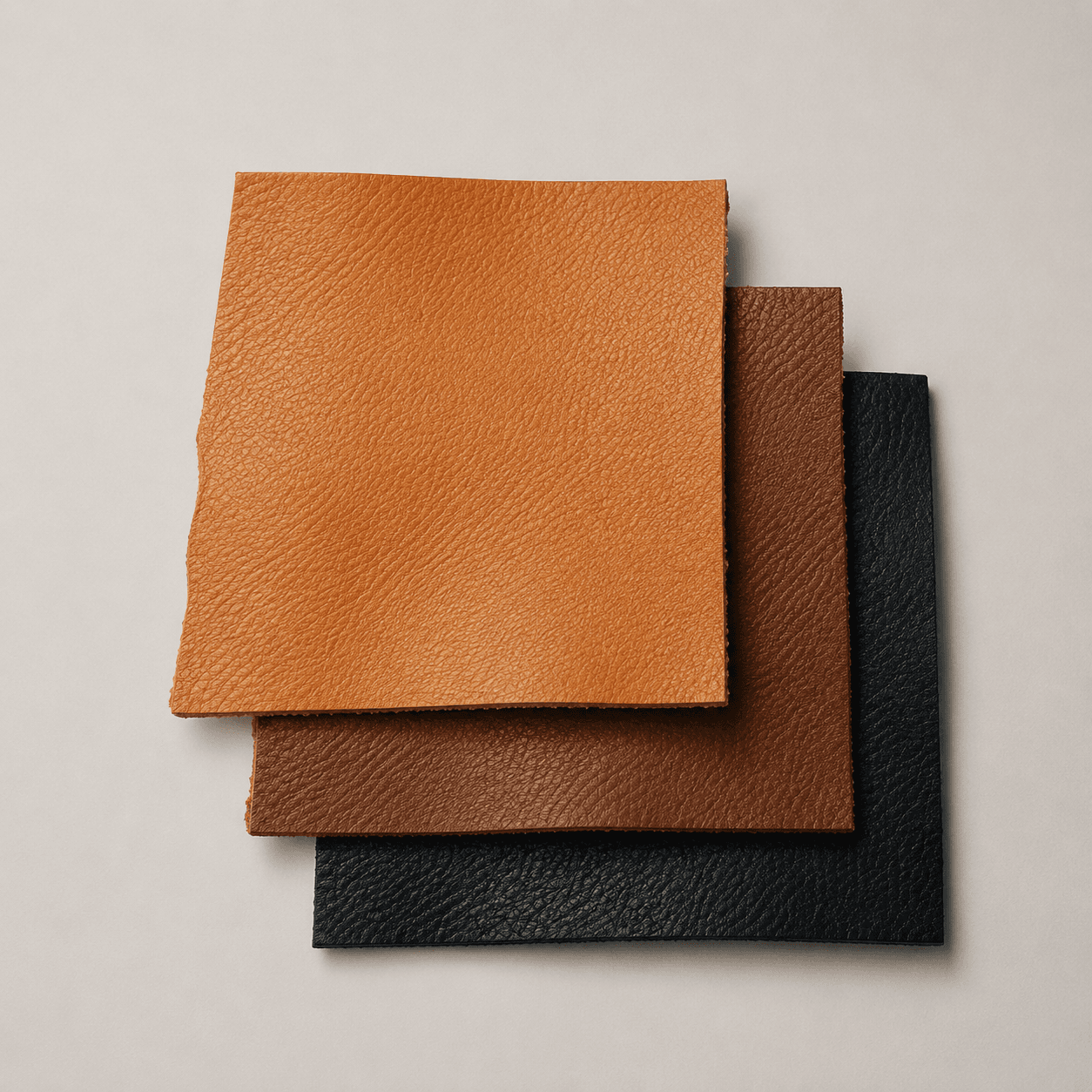
For bulk buyers, genuine leather vs PU leather shoes is not a branding discussion. It is a costing, quality-control, and market-fit decision that affects FOB by several dollars per pair, changes MOQ flexibility, and shifts the likely claim profile after shipment.
In China footwear sourcing, the upper material also influences cutting yield, closing efficiency, lasting appearance, carton consistency, and restock speed. A buyer selecting leather for a $29.99 retail program may overbuild the product and lose margin. A buyer forcing low-grade PU into a premium dress line may save $2.50 on FOB but create returns through vamp cracking, poor break pattern, or customer rejection of synthetic feel.
This guide is written from the supplier side for sourcing managers, brand owners, and importers buying dress and business footwear in volume. The focus is practical: what each material is, how it behaves in production, why it matters commercially, and when to use it by price point, with concrete specs such as thickness, GSM, foam density, MOQ, lead time in days, and relevant EN ISO or ASTM references.
In bulk footwear, the right upper material is the one that matches retail price, wear cycle, and claim tolerance at the same time.
What genuine leather and PU leather mean in footwear
In footwear, genuine leather means an animal hide article that has been tanned, finished, and converted into upper components such as vamp, quarter, strap, tongue, and backpart. In commercial dress shoe materials, the main categories are corrected grain cow leather, full grain cow leather, suede, nubuck, and finished split. These articles behave differently in cutting, skiving, lasting, creasing, and long-term wear. Two factories can both quote 'leather upper' while offering very different commercial value.
PU leather footwear uses a synthetic upper material made from a base fabric with a polyurethane layer or coating. In bulk dress-shoe programs, this usually means standard wet PU, dry PU, embossed PU, or microfiber PU. Typical total thickness is 0.8 to 1.4 mm. Backing weight often runs 120 to 250 GSM for standard PU, while microfiber structures can go higher to improve stitch tear, edge fold performance, and shape retention.
For leather shoe sourcing, the first control point is exact article identification. A workable spec should name the tannery article or PU mill code, finish, color, thickness, backing type, backing GSM if synthetic, and expected test standard. A quote that says only 'cow leather' or 'PU upper' is too vague for price comparison or claim prevention.
How suppliers classify genuine leather for shoes
Leather is normally purchased by square foot, then converted into pair cost based on upper consumption and cutting yield. For men's classic lace-up dress shoes in EU 39-45 or US 7-11, upper consumption commonly runs 13 to 17 sq ft per pair. Women's pumps and flats are often lower, around 8 to 12 sq ft depending on topline shape and coverage.
Corrected grain leather used in commercial dress shoes is often 1.2 to 1.4 mm for men's uppers and 0.9 to 1.2 mm for many women's styles. Thickness tolerance should be stated, commonly plus or minus 0.1 mm. Better leather gives more stable cutting and fewer loose areas. Lower-grade hides may look acceptable in a swatch but create inconsistent vamp break, panel mismatch, and extra cutting loss.
A proper leather material brief should include leather type, finish, tannage, thickness, thickness tolerance, color standard, origin, selection grade, and expected cutting yield. Without these points, buyers cannot compare one tannery offer against another in any meaningful shoe material cost comparison.
How suppliers classify PU upper materials
PU is normally quoted by yard or meter. The material sheet should include total thickness, coating type, backing composition, backing weight in GSM, grain pattern, hydrolysis performance, colorfastness target, and whether the article is stock or custom. For a men's cemented dress shoe, upper consumption often runs 0.75 to 0.95 yard per pair; for loafers or simple women's uppers it may be lower.
Commodity PU used in entry programs may be 0.9 to 1.0 mm with 120 to 160 GSM backing. Mid-tier synthetic articles often move to 1.0 to 1.2 mm with 160 to 220 GSM backing. Microfiber PU can be 1.2 to 1.4 mm with denser nonwoven structure, better skiving response, and improved stitch tear strength. That is why microfiber usually costs more but also performs better in business and uniform programs.
For buyers, the weak point in PU leather footwear is often not surface look but backing quality. A soft surface with low backing weight may fold poorly at topline, collapse during lasting, or crack early at the vamp. The supplier should define both thickness and backing GSM before the sample is approved.
How the materials work in production and wear
The factory-floor difference between genuine leather vs PU leather shoes shows up immediately after cutting begins. Leather is a natural material, so it brings scars, grain variation, shade variation, and different stretch behavior across the hide. That means more incoming inspection, more panel pairing, and more cutting control. PU arrives in rolls and is much more consistent, which improves planning, nesting, and color continuity across large production lots.
During closing and lasting, leather generally molds to the last more naturally and gives a cleaner break at the vamp when the article is selected correctly. PU gives better visual consistency pair to pair, but low-grade articles may show sharper creasing, weaker edge folding, or surface gloss change under heat. In wear, leather usually breathes better and develops a more acceptable aging pattern. PU can feel hotter and may fail by coating crack, hydrolysis, or backing delamination if the spec is too aggressive for the price target.
This is why buyers should evaluate material through the actual shoe construction, not by swatch handfeel alone. A material that looks smooth on a card can still fail once skived, stitched, lasted, and flexed at the vamp.
Construction compatibility by shoe type
Cemented construction works with both leather and PU. Entry office shoes, school shoes, and hospitality black styles are commonly developed in PU because the target FOB is tighter and the construction is simpler. For these categories, a stable black shade and lower price are usually more important than premium aging.
Blake-stitched and Goodyear-welted shoes usually sit better with genuine leather uppers. The upper is handled through more operations, the customer expects a natural-material story at that retail level, and synthetic crease character becomes more visible on classic toe shapes. For private label leather shoes in premium channels, genuine leather is usually the safer commercial choice.
Heat-sensitive operations should be reviewed early. During toe puff activation, counter setting, and edge folding, PU may shrink slightly or show gloss change if the coating is thin. Leather also requires process control, but it generally tolerates these operations better when the finish is stable.
Failure modes, testing, and comfort package
Leather and PU fail differently. Leather may show loose grain, finish rub, panel stretch, water marking, or color mismatch. PU more often fails through surface crack, brittle flex in cold conditions, hydrolysis, edge peel, or separation between coating and backing. Because the claim patterns differ, the test plan should match the upper material rather than using one generic approval sheet for every program.
Useful references include EN ISO 5402 for leather flexing, EN ISO 20344 for footwear test methods, SATRA methods for bond and flex performance, and ASTM D3574 for foam property checks where applicable. For basic dress-shoe programs, many buyers target upper flex at 50,000 cycles; for upgraded or uniform programs, 100,000 cycles is more realistic. Upper-to-sole bond for cemented shoes is commonly targeted at 60 N/cm minimum, with some buyers asking 70 to 80 N/cm on higher-risk categories.
Comfort package must be specified together with the upper. In entry programs, insock foam often runs 3 to 4 mm at 0.18 to 0.22 g/cm3 density. Mid-tier dress shoes usually improve to 4 to 6 mm in heel zones at 0.25 to 0.30 g/cm3. If a buyer upgrades from PU to leather upper but keeps a weak insole board, thin foam, and low-rebound sockliner, wear feedback will still be poor. Material upgrade alone does not solve comfort complaints.
Genuine leather vs PU leather shoes by sourcing scenario
| Scenario | Recommended upper | Typical FOB impact | Lead time | Main advantage | Main risk |
|---|---|---|---|---|---|
| Entry-price office dress shoe | Standard PU | $8.00-$13.50/pair | 35-50 days bulk | Low cost, color consistency, easier MOQ | Surface crack or poor flex if backing is weak |
| Mid-tier business casual | Microfiber PU | $13.50-$22.00/pair | 40-55 days bulk | Better stitchability and shape retention than standard PU | May still miss consumer expectation for real leather |
| Classic men's formal | Corrected grain cow leather | $18.00-$32.00/pair | 45-60 days bulk | Stronger premium perception and cleaner lasting result | Higher cost, lower yield, more sorting labor |
| Premium stitched or welted dress shoe | Full grain or corrected grain leather | $32.00-$58.00+/pair | 55-75 days bulk | Matches construction level and premium retail expectation | Longer development cycle and tighter leather grading needed |
| Uniform or hospitality black shoe | Microfiber PU or leather | $14.00-$28.00/pair | 40-60 days bulk | Repeatable black shade and easier maintenance | Wrong spec can lead to flex failure or heat-related upper issues |
Why it matters for shoe material cost comparison
In commercial dress footwear, upper material is one of the fastest ways to move FOB up or down. Replacing standard PU with corrected grain cow leather in a cemented dress shoe commonly adds about $4.00 to $9.00 per pair FOB. If the lining also changes from synthetic to pigskin or cow leather, the increase may reach $6.00 to $12.00 per pair depending on size range and leather market conditions. Moving from standard PU to microfiber PU is a smaller jump, often $1.20 to $3.20 per pair.
Raw material price is only part of the equation. Leather brings lower cutting yield, more sorting time, more panel matching, and more variation management on the line. Cutting waste on leather can easily run 18% to 30% depending on pattern and grade. Roll materials are more predictable. On the other hand, leather can reduce downstream claims in categories where customers expect a real upper and notice synthetic break patterns immediately.
Lead time also shifts with the material route. Standard black corrected grain leather from a regular tannery may be ready in 20 to 30 days after confirmation. Custom embossing, burnish effect, or special finish often pushes the leather schedule to 35 to 45 days. Stock PU articles may be prepared in 7 to 15 days. Custom PU with lab dips, embossing confirmation, and physical testing often needs 15 to 25 days. After all materials are in house, bulk production is commonly 30 to 45 days for standard cemented styles and 45 to 60 days for more complex leather dress shoes.
- Entry-level PU dress shoes: typical FOB $8.00 to $13.50/pair for cemented construction, synthetic lining, TPR or resin outsole
- Mid-tier microfiber or mixed-material business shoes: typical FOB $13.50 to $22.00/pair
- Genuine leather cemented dress shoes: typical FOB $18.00 to $32.00/pair depending on leather grade, lining package, and outsole
- Leather stitched or welted constructions: typical FOB $32.00 to $58.00+/pair
- Typical MOQ with stock PU upper materials: 600 to 1,200 pairs/style, often split across 2 to 3 colors
- Typical MOQ with standard leather articles: 300 to 800 pairs/style; custom tannery articles may require 1,000+ pairs or surcharge
- New outsole mold cost for dress shoes: often $2,500 to $6,000 depending on size range and tooling complexity
When to use genuine leather vs PU leather shoes at different price points
The correct material choice depends on retail architecture, target margin, expected wear cycle, and complaint tolerance. A low-price online program usually needs stable color, low material cost, and fast replenishment. A department-store dress line needs better touch, cleaner vamp break, and higher perceived value. Uniform tenders often prioritize exact black repeatability, wipe-clean performance, and predictable restocks over natural-material positioning.
The sourcing question is not whether leather is always better. The real question is which upper material supports the target retail and use case without forcing hidden compromises elsewhere in the bill of materials, such as weak foam, lower outsole grade, or reduced bond performance.
Low price point: use PU for cost control and repeatability
For entry-level office shoes, school shoes, and fashion-driven loafers, standard PU is usually the most workable option. It supports tighter FOB targets, gives more stable color across repeat orders, and allows faster material preparation when the factory is using stock articles. In this tier, the commercial goal is typically clean appearance at first wear and an acceptable use cycle, not premium aging.
The main mistake is approving soft handfeel without setting a minimum technical spec. For a basic dress upper, a practical starting point is 0.9 to 1.1 mm total thickness, backing around 140 to 180 GSM, flex target at 50,000 cycles, and a hydrolysis requirement appropriate to the market. Pair it with an insole board of adequate rigidity and at least 3 to 4 mm insock foam at 0.18 g/cm3 or higher. Very soft low-density PU often looks good in development but collapses at the toe after lasting and creates aggressive vamp wrinkling in wear.
Mid price point: use microfiber PU or targeted leather placement
In the middle tier, microfiber PU is often the best balance between performance and cost. It usually cuts cleaner than commodity PU, skives better, holds stitch tension more reliably, and gives a more stable shape through lasting. For importers managing both margin and return rate, this is often the strongest material-for-cost option in business casual and uniform categories.
Another route is selective leather placement. Some programs use leather on the vamp or other high-crease areas and synthetic on less visible panels. This can lower pair cost by roughly $1.50 to $4.00 compared with full leather while improving wear appearance where the customer notices most. It can work well in private label leather shoes if labeling rules in the destination market are checked carefully and the composition declaration is controlled.
Premium price point: use genuine leather in most dress categories
At premium price points, genuine leather is usually the safer commercial decision. This is especially true for men's Oxfords, derbies, loafers, monk straps, and women's classic pumps where the buyer is selling material quality as part of the value proposition. Customers at this level judge touch, odor, edge finish, crease pattern, and break behavior immediately.
There are still exceptions. Some corporate, airline, or hospitality programs prefer microfiber PU because they need exact black-shade continuity, easier wipe cleaning, and more consistent reorder appearance over time. In those cases, the supplier should not use fashion-grade PU. The spec should be closer to premium microfiber with stronger backing, higher flex performance, and tighter color control lot to lot.
Sourcing controls that reduce risk in bulk orders
Most claim problems in leather shoe sourcing are not caused by the material family alone. They come from vague specs, sample-room substitutions, unapproved tannery changes, or bulk production started before material performance is confirmed. The buyer should lock the upper article before wear test and should seal both a swatch and a factory-made confirmation sample.
For a standard dress shoe developed in China, a realistic timeline is 7 to 12 days for first prototype, 7 to 10 days for revision, 5 to 7 days for confirmation sample, and 35 to 55 days for bulk after deposit, material approval, and size confirmation. Add 25 to 35 days for a new outsole mold. Add another 10 to 20 days for custom tannery color or finish. If the order includes a new last or complex stitched construction, the total calendar can extend further.
Inspection focus should reflect the material risk. Leather needs stronger controls on panel matching, scars, break pattern, and shade variation. PU needs closer checking on roll consistency, smell, edge folding, glue reaction, and flex after lasting. A buyer who controls these points before bulk cutting usually prevents much larger cost later in claims, air freight replacement, or discounting.
- 01Approve a signed material sheet with tannery article or PU mill code, thickness, finish, backing type, backing GSM where applicable, and color reference.
- 02Seal a wear-appearance standard after lasting, including vamp break, topline shape, and toe spring appearance after 24-hour rest.
- 03Test final upper material before cutting for flex, adhesion, color rub, odor, hydrolysis where relevant, and restricted substances.
- 04Confirm comfort-package inputs: insock foam density, thickness map, insole board spec, shank requirement if used, and outsole hardness target in Shore A.
- 05Run a pre-production meeting covering cutting-yield assumptions, panel-matching rules, and material replacement approval procedure.
- 06Inspect bulk against the sealed standard and approved article code, not an early prototype made from substitute stock material.
SoleForge manufactures leather & dress shoes and casual sneakers under OEM and ODM for brands and importers worldwide. Request a quote with your tech pack or reference pair and we'll reply within one business day.