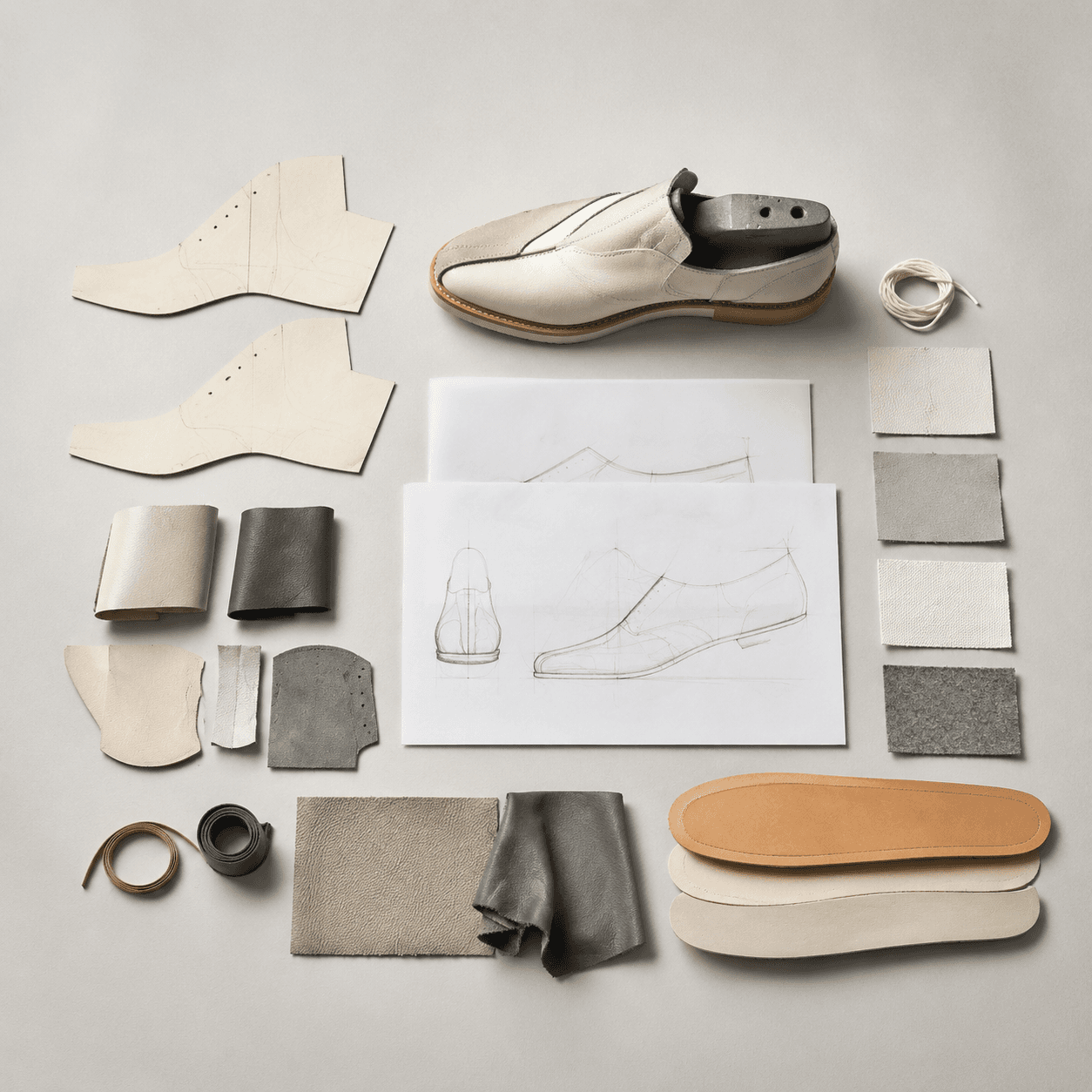
Footwear sourcing is a three-way negotiation between target price, quality standard and minimum order quantity. Importers often start with a retail margin and work backward to an FOB ceiling. Factories start from outsole tooling, material MOQs, cutting yield, stitching minutes, line changeover, testing risk and carton volume. Both sides are talking about the same shoe, but from opposite ends of the cost sheet.
The trade-off becomes visible when the request is specific. A men's casual sneaker at US$8.80 FOB Xiamen, 1,000 pairs per color, recycled 220 GSM lining, molded logo outsole, 95 kg/m3 insole foam, 32 ECT export carton and EN ISO 20344 flex expectation is not one requirement. It is a stack of requirements. Each may be workable alone. Together, they may push the style into a different footwear target price MOQ quality position.
Importers have six practical levers: simplify the construction, increase MOQ, reduce color count, narrow the size run, extend lead time, or pay a higher pair price for controlled materials and testing. The supplier needs to know which lever can move before salesman samples are made. Otherwise the negotiation turns into a late argument over why the approved sample cannot be produced at the quoted price.
A realistic footwear quote is not one FOB number; it is a controlled exchange between specification, MOQ, lead time and defect risk.
The core comparison: price-led, quality-led and MOQ-led sourcing
Most private label shoe pricing falls into three positions. A price-led buyer gives the factory a ceiling, such as US$6.50 FOB for a canvas vulcanized shoe, US$4.20 FOB for an EVA slide, or US$9.00 FOB for a basic cemented sneaker, then asks for the best construction inside that number. A quality-led buyer fixes the specification first: outsole compound, upper thickness, lining GSM, foam density, adhesive system, test standard and packing. An MOQ-led buyer limits cash exposure, for example 600-800 pairs per color, and asks the factory to make production viable at that volume.
Each position can be correct. Price-led sourcing works for mature styles with open molds, standard PU or canvas uppers, simple retail packaging and no hard performance claim. It is weak for waterproof boots, kids' shoes with restricted substance controls, school shoes with high flex demand, ASTM F2413 safety footwear, or EN ISO 20345 protective footwear. In those categories, the cost quality balance shoes discussion must start with performance and compliance, not only FOB.
MOQ-led sourcing protects launch cash, but it raises unit cost because the factory still buys from upstream minimums. A lining mill may require 500 meters per color. A rubber compound supplier may require 300 kg per batch. A shoebox supplier may quote properly only above 2,000-3,000 boxes. If the buyer orders 700 pairs in a special color, the supplier either carries leftover material, charges a surcharge, or pushes the buyer toward stock inputs.
This is the real shoe sourcing tradeoff: low price, low MOQ and high quality cannot all be maximized on the same order. A professional supplier will identify what changes before sampling. An unclear supplier may simply quote low, then recover the margin through thinner foam, weaker counters, lower GSM lining, cheaper adhesive, reduced carton board or looser inspection.
Option 1: hold the target price and simplify the shoe
When the FOB ceiling is fixed, the cleanest supplier-side move is to simplify the shoe while protecting wear-critical parts. On a casual sneaker, that may mean reducing upper panel count from 18 pieces to 12, replacing split suede with 1.0-1.2 mm microfiber, using stock 180 GSM mesh instead of custom jacquard lining, or moving from a custom rubber cupsole to an open mold TPR outsole. On a sandal, it may mean changing a dual-density footbed to single-density EVA at 45-50 Shore C.
This option suits fashion-led and seasonal footwear where the retail promise is visual rather than technical. It is also where hidden downgrades are most common. A phrase like "similar material" is not enough for bulk production. The revised tech pack should state upper thickness, lining GSM, insole foam density, outsole hardness, bonding process, colorfastness level, carton board grade and AQL level. If a 1.4 mm PU upper becomes 0.9 mm, the shoe may collapse after packing. If insole foam drops from 100 kg/m3 to 60 kg/m3, the try-on feel may pass while wear comfort fails quickly.
The buyer should split the specification into structural value and cosmetic value. Structural value includes outsole compound, adhesive, toe puff, heel counter, lasting allowance, midsole density, eyelet reinforcement and stitch strength at flex points. Cosmetic value includes foil logos, printed tissue, special aglets, extra hangtags, embossed patches, complex shoebox printing and color-blocked trims. Cut cosmetic value first. Do not weaken the heel counter or bonding system unless the buyer accepts a higher claim rate.
The savings are usually specific, not dramatic. Removing a decorative overlay may save US$0.12-0.25 per pair. Using plain tissue instead of custom printed tissue may save US$0.03-0.08. Switching from a custom outsole to an existing mold can save US$0.30-1.20 per pair and 15-25 development days. If the price gap is US$2.50 per pair, the brief is misaligned; a few trims will not close it.
- Best candidates: canvas shoes, EVA slides, basic cemented sneakers, simple PU sandals and repeat styles using existing lasts and outsoles.
- Supplier changes to request openly: fewer upper pieces, stock lining, standard lace, open mold outsole, simpler logo method and export-standard packing.
- Control point: every substitution must appear in the tech pack, confirmed sample, material swatch card and incoming inspection checklist.
Comparison of sourcing options for footwear target price MOQ quality decisions
| Option | Best use case | Typical supplier adjustment | Commercial impact | Main production risk |
|---|---|---|---|---|
| Hold target price | Price-sensitive canvas shoes, EVA slides, PU sandals and basic cemented sneakers | Use stock outsole, reduce panel count, simplify logo, lower-cost packing and protect only critical wear points | Can save US$0.30-1.50 per pair when tooling and materials are simplified | Hidden downgrade in foam density, counter stiffness, lining GSM, adhesive or outsole compound |
| Protect quality | Work boots, kids' shoes, school shoes, waterproof footwear and EN ISO/ASTM-tested products | Keep construction and tests fixed; group colors around shared last, outsole, lining and carton | FOB may rise, but failed tests, returns and retailer claims are reduced | MOQ may stay high when molds, membranes, leather colors or safety components require volume |
| Reduce MOQ | New launches, market tests, narrow colorways and first private label orders | Add surcharge for setup, material waste, cutting dies, small lots and line changeover | Lower cash exposure, but unit cost may rise US$0.50-2.00 per pair | Supplier may deprioritize the order in peak season or require 70-90 days lead time |
| Raise pair price | Repeat programs, retailer-critical launches and premium private label shoes | Upgrade material thickness, foam density, carton strength, adhesive, reinforcement and inspection scope | Higher landed cost, but better bulk consistency and fewer recovery costs | Margin pressure if retail price, sell-through or repeat volume is not confirmed |
| Extend lead time | Moderate-volume orders where MOQ is tight but components are shareable | Combine material buying, plan production outside peak weeks and avoid rush purchasing | Can make 800-1,000 pairs per color workable without a heavy surcharge | Launch risk if approvals, testing or material delivery slip |
Option 2: protect the quality standard and negotiate the MOQ
If the footwear carries a performance promise, quality should be fixed first. Hiking shoes, waterproof boots, kids' footwear, work shoes and safety styles cannot be sourced like promotional canvas shoes. A 90-minute waterproof test, EN ISO 4649 outsole abrasion, EN ISO 20344 flexing, slip resistance, toe cap impact, puncture resistance or ASTM F2413 requirement restricts the materials a supplier can use.
MOQ negotiation footwear works best through shared components. Instead of asking for 800 pairs per color across six unrelated colorways, the buyer can place 4,800 pairs total using the same outsole, last, lining, insole, counter, toe puff, carton and packing method. Only the upper textile or trim color changes. This gives the buyer range coverage while allowing the factory to buy material and run the line efficiently.
Size planning also changes MOQ pressure. A men's size run of 39-47 creates more outsole inventory, more size labels, more carton planning and more leftovers than 40-45. Women's 36-41 is easier than 35-42 on a small order. Fringe sizes are not free; they create small component lots and slow packing. If sales history does not support them, remove them from the first PO and add them only after sell-through data is available.
Lead time is a commercial lever. A supplier may reject 1,000 pairs per color at 45 days because material booking, lab dips, cutting and production scheduling are too tight. The same order may be workable at 70-90 days if the factory can combine material purchasing with other orders or schedule the style outside peak weeks. Longer lead time does not remove cost, but it can reduce surcharge and production disruption.
- Useful levers: shared last, shared outsole mold, common lining, fewer colors, tighter size run, longer production window and written repeat-order forecast.
- Typical movement: 1,500 pairs per color can sometimes move to 800-1,000 pairs per color when the total order reaches 4,000-6,000 pairs with common components.
- Hard limits: custom outsole molds, special leather colors, injected units, waterproof membranes and certified safety components often still require higher volume.
Option 3: accept a higher pair price to buy control
Sometimes the correct decision is to pay more per pair. This is not a preference from the factory side; it is risk arithmetic. A US$0.55 increase on 3,000 pairs is US$1,650. One failed final inspection, airfreight recovery, retailer chargeback or rejected EN ISO/ASTM test can exceed that amount quickly.
A higher price should buy named improvements. The supplier should identify the exact upgrade: 1.8 mm leather instead of 1.4 mm corrected grain, 220 GSM lining instead of 160 GSM mesh, 100 kg/m3 open-cell insole foam instead of 60 kg/m3, 55 Shore A rubber outsole instead of low-cost TPR, branded adhesive with better heat resistance, double-needle reinforcement at eyestay stress points, 0.04 mm individual polybags, or 32 ECT export cartons. The buyer should lock those details into the pre-production sample, bill of materials and QC checklist.
This approach is strongest for repeat programs. If the first PO is 2,400 pairs but the style is expected to repeat for two or three seasons, better tooling, stable materials and full testing usually cost less than repeated corrections. The second run benefits from known grading, cutting dies, lasting allowance, packing sequence and inspection criteria. A one-time market test does not need every premium feature; a core brand style should not be engineered to the lowest possible first-order FOB.
Price still has limits. Paying US$0.80 more per pair will not fix a poor last, unstable pattern, or a factory with no experience in the construction. It will not make a 600-pair custom outsole efficient if the mold and compound minimums are wrong. Higher FOB can buy better material and tighter control; it cannot remove engineering constraints.
Comparison by production dimension
A footwear factory does not manage target price, quality and MOQ in separate boxes. They meet in the same places: material purchase orders, outsole molds, cutting yield, stitching minutes, lasting difficulty, bonding control, packing time, lab testing and AQL rejection. Low MOQ increases leftovers. High quality increases testing and rejection exposure. Low target price narrows material choices before the style becomes unattractive.
A private label men's sneaker using a stock outsole may be feasible at 1,200 pairs per color and US$9.20 FOB with PU and mesh upper, 180 GSM lining, 70-80 kg/m3 insole foam and a standard shoebox. The same sneaker with a custom rubber outsole, molded side logo, suede overlays, 220 GSM recycled lining, 100 kg/m3 foam and FSC-marked packaging may move toward 3,000 pairs per color or US$12.50-14.00 FOB, depending on factory capacity and material market.
The importer is not paying only for material weight. The quote includes mold trial, component scrap, cutting loss, development time, bonding risk, line setup and the probability that bulk production needs correction. This is why a low quotation for a complex sample is less useful than a higher quotation that states assumptions clearly.
The decision should be made before salesman sample approval. Once a buyer approves a complex sample at an unrealistic target, the supplier has limited choices: refuse the PO, ask for a late price increase, extend delivery, or downgrade hidden components. All four damage the calendar and the relationship.
How to make the trade-off visible before sampling
Ask suppliers for a costed option set, not one quotation. Give one commercial target and request three versions: target price, target quality and target MOQ. Each version should show FOB US$/pair, MOQ per color, total MOQ, lead-time days, material changes, tooling assumptions, testing scope and packing standard.
For example, a men's cemented sneaker option set might look like this. Version A: US$8.80 FOB, 2,000 pairs per color, stock TPR outsole, 1.0 mm PU upper, 160 GSM mesh lining, 70 kg/m3 insole foam and standard shoebox. Version B: US$10.40 FOB, 1,500 pairs per color, 1.2 mm PU upper, 220 GSM lining, firmer heel counter, 95 kg/m3 insole foam and EN ISO flex test. Version C: US$12.20 FOB, 800 pairs per color, same quality as Version B, with a small-run surcharge for material waste, cutting die setup and line changeover.
This comparison makes the buyer sourcing strategy practical. The importer can see whether the pressure point is outsole tooling, lining MOQ, foam grade, color count, size run or test scope. The supplier can quote honestly without hiding downgrades. Sampling also becomes faster because the factory knows which version is commercially realistic.
Before sampling, ask for a supplier risk note. A production-minded factory can usually identify the difficult points: leather minimums, outsole mold charge, colorfastness on dark lining, bonding to oily PU, metallic trim corrosion, carton compression, last fit, toe spring or waterproof membrane lead time. This note often gives more value than a low first quote.
- 01Define the must-hold point: FOB ceiling, certification, wear performance, retail launch date or margin floor.
- 02Separate structural specifications from cosmetic specifications in the tech pack.
- 03Request three quote versions with MOQ, total order quantity, lead time and exact material differences.
- 04Confirm EN ISO, ASTM or retailer test requirements before salesman sample approval.
- 05Approve a pre-production sample that matches the quoted bill of materials and use it as the bulk reference.
Where importers commonly lose margin
Margin is often lost through late changes. Adding a molded logo after outsole approval may require a new mold insert and 10-20 extra days. Changing lining color after material booking may trigger a new 500 meter fabric MOQ. Expanding from four colors to seven creates leftover upper material, laces, thread, labels, eyelets and shoebox stickers. Upgrading carton strength after packing material is ordered adds cost and can delay shipment.
Another loss comes from quoting a sample-room shoe instead of a production-engineered shoe. Sample rooms can hand-cut panels, hand-buff edges and correct lasting problems one pair at a time. Bulk production cannot depend on hand adjustment. If the vamp pattern has tight tolerance, the heel curve is hard to last, or the outsole wall hides bonding defects on the sample, problems will appear during production or final inspection.
Compliance can also break a weak quotation. EN ISO and ASTM claims require controlled materials, test fees and records. Children's footwear may need phthalate, lead, cadmium, azo dye and small-parts control depending on market. Safety footwear must protect toe impact, compression, puncture plate performance, slip resistance and electrical hazard claims where applicable. These requirements limit substitutions and should be costed before PO release.
Packing and cube are often underestimated. A tall boot in individual shoeboxes loads far fewer pairs per container than a flat sandal. Moving from compact bulk packing to retail shoebox packing can add paper cost, labor and freight cube. If an FOB saving of US$0.20 per pair increases sea freight by US$0.35 per pair, the landed cost has moved in the wrong direction.
Verdict: choose the lever that matches the business risk
For importers buying footwear in bulk from China, the correct balance is not automatically the lowest FOB, smallest MOQ or highest specification. The right choice is the version where commercial risk and production risk are both understood. For short-life fashion footwear, hold the target price and remove non-structural details. For comfort, durability, waterproof or compliance products, protect the quality standard and negotiate MOQ through shared components, fewer colors, tighter size runs and longer lead time. For repeat private label programs, pay more where the extra cost buys measurable control.
The strongest sourcing process compares three versions before sampling: target price, target quality and target MOQ. Review them by FOB US$/pair, MOQ per color, total MOQ, lead-time days, material specifications, EN ISO or ASTM testing scope, packing and likely defect risk. This gives the supplier a production framework and gives the importer a real decision instead of a price argument.
In footwear, price is the result of material standards, tooling, line efficiency, order volume, rejection tolerance and testing obligations. When those variables are explicit, footwear target price MOQ quality decisions become manageable, quotable and repeatable.
SoleForge manufactures athletic & running shoes and leather & dress shoes under OEM and ODM for brands and importers worldwide. Request a quote with your tech pack or reference pair and we'll reply within one business day.