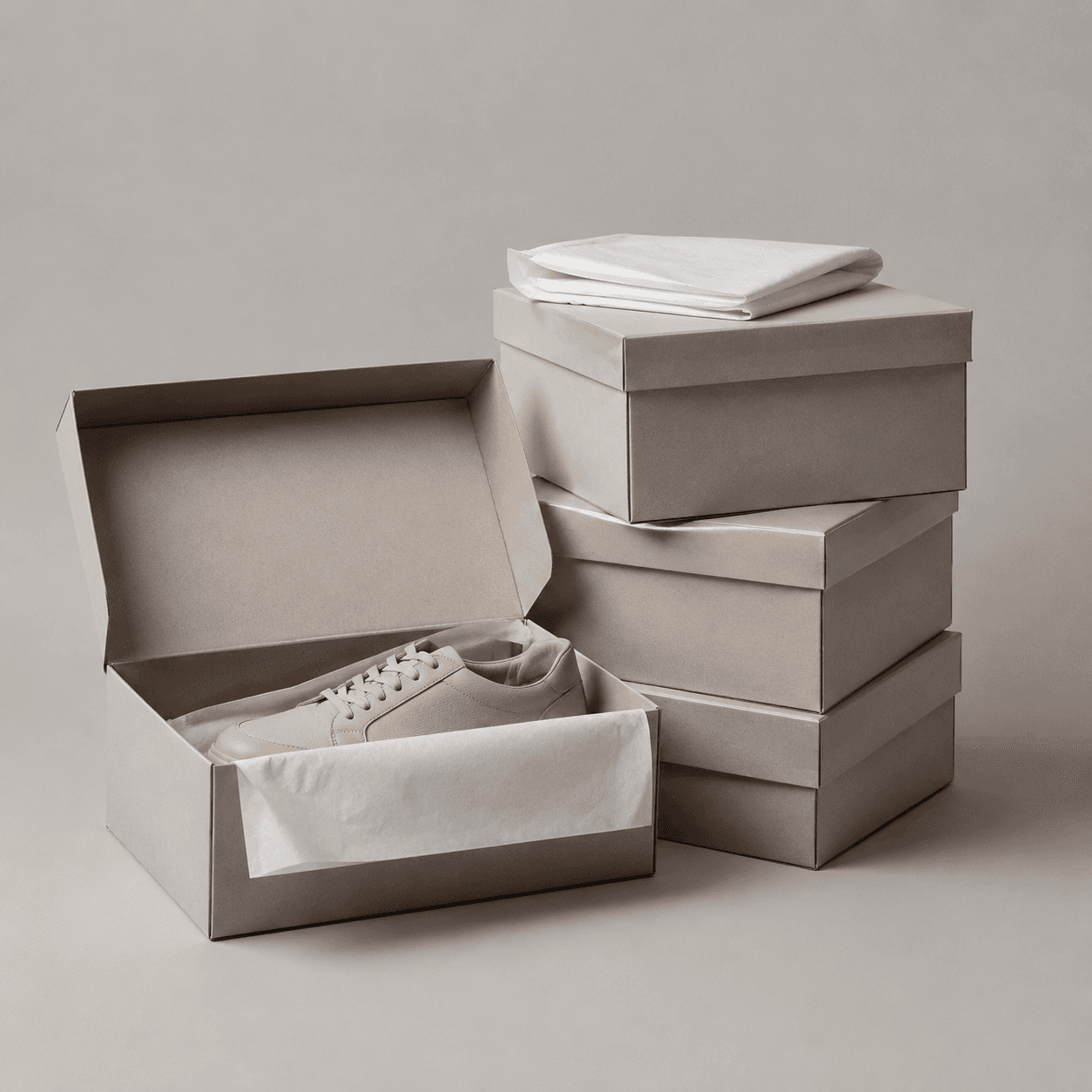
For bulk buyers, how many shoes fit in a container is a costing question, not a warehouse curiosity. The answer affects MOQ planning, FOB negotiation, vessel booking, and landed cost per pair. In footwear, most containers are limited by carton volume before they are limited by payload weight.
A China footwear supplier should calculate container loading from the approved pack-out: shoe box size, master carton outer dimension, pairs per carton, size curve, carton board strength, and final gross weight. A style quoted at US$6.80 FOB can lose its price advantage if poor packaging adds US$0.08 to US$0.20 per pair in ocean freight and destination handling.
This guide explains what footwear container loading is, how the calculation works, why it matters to sourcing managers and importers, and when to use FCL, LCL, mixed loading, or bulk packing. The focus is footwear-specific: 20ft 40ft shoe shipment ranges, pairs per container shoes, MOQ blocks, lead-time impact, EN ISO/ASTM considerations, GSM board choices, and practical supplier-side controls.
In footwear export, the cheapest freight is usually decided at box and carton approval, not at the port.
What container capacity means in footwear
In footwear export logistics, container capacity means the number of finished pairs that can ship inside a container while preserving retail packaging, carton integrity, compliance labeling, and load safety. For most sneakers, sandals, slippers, and casual shoes, the constraint is CBM. The container cubes out before it reaches the maximum payload.
There is no reliable universal number because shoe construction changes pack volume. A vulcanized canvas low-top with a thin foxing tape and compact box may load 20 to 30 percent more pairs than a running shoe with a thick EVA midsole, padded collar, molded heel counter, and high retail box. Safety shoes, hiking boots, and high-cut sneakers load fewer pairs because they need larger boxes and stronger cartons.
As a working range, a 20ft container usually fits about 4,500 to 7,500 pairs of boxed footwear. A 40ft container usually fits about 9,000 to 15,000 pairs. Compact EVA slippers or sandals may exceed those ranges. Steel-toe or composite-toe footwear tested to EN ISO 20345 or ASTM F2413 often falls below them.
- Use CBM per pair as the first planning metric, then check gross weight and carton compression.
- Retail shoe boxes improve presentation but normally reduce pairs per container shoes versus polybag or bulk pack.
- Master carton outer dimensions, not nominal shoe size, determine loading efficiency.
- A change in size curve from EU 40-42 to EU 44-46 can reduce container count even when the style code is unchanged.
How suppliers define usable container space
A standard 20ft container is often described as about 33 CBM, and a 40ft container as about 67 CBM. Suppliers should not calculate footwear loading at 100 percent of those figures. Door clearance, carton interlock loss, roof contour, mixed carton sizes, and loading gaps reduce usable space. For floor-loaded shoes, a realistic planning factor is usually 85 to 92 percent of nominal cube.
A clean order with one carton footprint and one size run can use the higher end of that range. A mixed program combining men's sneakers, children's shoes, and women's sandals often drops lower because carton heights and depths do not stack evenly. The supplier's loading sheet should show usable CBM, not only container name.
Why shoe category changes pair count
Footwear categories behave differently in bulk footwear shipping. Injected EVA slides may weigh 0.35 to 0.60 kg per pair and nest efficiently. A cemented fashion sneaker with 45C to 50C EVA midsole, 18 to 22 kg/m3 collar foam, and molded sockliner needs more box height. A work shoe with toe cap, puncture-resistant plate, and compliance manual needs stronger packaging and ships at lower pair density.
Channel requirements also matter. Wholesale programs may accept 250 to 300 GSM inner boxes and standard 5-ply export cartons. E-commerce or department-store programs often require 350 GSM SBS boxes, cleaner print, barcode placement on two faces, and better corner strength. Those upgrades protect the product but increase board cost and sometimes container cube.
How footwear container loading is calculated
The supplier-side calculation starts with the approved packaging, not the container. First confirm whether each pair ships in an individual shoe box, half box, polybag, hanger bag, or bulk pack. Then measure the final master carton outer dimensions after board, print, and taping are confirmed. Convert the carton dimension into CBM, divide usable container CBM by carton CBM, and multiply by pairs per carton.
This calculation must be updated after pre-production sample approval. Early tech-pack assumptions are often wrong because tissue, toe stuffing, silica gel, hangtags, QR labels, extra laces, or retailer inserts are added later. On a commercial PO, the buyer should request the revised packing ratio before mass carton production, not after the vessel booking is made.
- 01Confirm pair packing: individual box, half box, polybag, or bulk pack.
- 02Approve shoe box size and board specification, such as 300 GSM or 350 GSM SBS.
- 03Measure master carton outer dimensions in centimeters after final board grade is selected.
- 04Calculate carton CBM using meters: length x width x height.
- 05Confirm pairs per carton by size range, not only by style name.
- 06Apply realistic container utilization, normally 85 to 92 percent for floor-loaded footwear.
- 07Check gross weight, stack height, carton compression, and destination warehouse handling rules.
A practical carton math example
Assume a men's casual sneaker ships 12 pairs per export carton. The approved master carton is 62 x 42 x 34 cm. Carton CBM is 0.62 x 0.42 x 0.34 = 0.0885 CBM. If the supplier uses a 40ft container with 58 to 60 practical usable CBM, the load estimate is 655 to 678 cartons.
At 12 pairs per carton, that equals 7,860 to 8,136 pairs. If the order has mixed colorways, larger sizes, or carton marks requiring segregation by customer PO, the practical load may be closer to 7,600 to 7,900 pairs. A buyer should ask whether the supplier's figure is theoretical, trial-packed, or based on previous shipments of the same last and box size.
Typical 20ft and 40ft ranges by footwear type
Boxed casual sneakers commonly load about 5,000 to 6,500 pairs in a 20ft container and 10,000 to 13,000 pairs in a 40ft container. Bulkier athletic or court styles often load 4,500 to 5,500 pairs in 20ft and 9,000 to 11,000 pairs in 40ft. Sandals, slides, and slippers can reach 6,500 to 9,000 pairs in 20ft and 13,000 to 18,000 pairs in 40ft if packing is compact.
These ranges are planning numbers. A men's US 12-13 allocation, high toe spring, thick PU footbed, or molded heel clip can reduce loading density. A 10 mm increase in shoe box height can add several cents per pair to freight on a full-container program.
Cartons and inner boxes are freight components
In shoe export logistics, the freight unit is the master carton. If cartons are oversized, weak, or inconsistent, the load loses cube and stacking stability. Good factories standardize carton footprints across related styles so cartons can interlock by layer during floor loading.
Inner box design is equally important. A retail box with 15 to 25 mm of unnecessary headspace ships air. Reducing box height by 8 to 12 mm, rotating the pair, or changing tissue fold can improve footwear container loading without changing the shoe. On a 12,000-pair order, that may save US$0.03 to US$0.07 per pair depending on freight rate and port pair-out.
Indicative footwear loading ranges by container and category
| Footwear category | Typical packing method | 20ft container | 40ft container | Supplier-side notes |
|---|---|---|---|---|
| Boxed casual sneakers | Individual shoe boxes in 12-pair master cartons | 5,000-6,500 pairs | 10,000-13,000 pairs | Men's size run, box height, and carton footprint drive the range |
| Athletic and running shoes | Larger retail boxes in 8-12 pair cartons | 4,500-5,500 pairs | 9,000-11,000 pairs | Thick EVA midsoles, padded collars, and molded inserts reduce cube efficiency |
| Sandals, slides, and slippers | Compact boxes, polybags, or bulk pack | 6,500-9,000 pairs | 13,000-18,000 pairs | Bulk pack can improve load by 15-35 percent if the channel accepts it |
| Children's shoes | Small boxes in higher-count cartons | 6,000-8,500 pairs | 12,000-16,000 pairs | Labeling, size curve, and retailer carton-mark rules affect segregation |
| Safety footwear and work shoes | Reinforced boxes and stronger cartons | 3,500-5,000 pairs | 7,000-9,500 pairs | EN ISO 20345 or ASTM F2413 styles need heavier construction and stronger packaging |
Why accurate pair-per-container planning matters
For sourcing managers, container math affects costing, production quantity, deposit planning, and delivery timing. If a supplier quotes 12,000 pairs in a 40ft container but final packing loads only 10,900 pairs, freight cost per pair increases immediately. The buyer may also need a second partial booking, adding origin charges, destination CFS cost, and three to seven days of handling time.
The impact is larger on price-point footwear. A private-label jogger at US$5.90 FOB or a cemented women's sneaker at US$6.80 FOB may only have US$0.25 to US$0.45 per pair of commercial buffer after duty, freight, testing, packaging, and retailer deductions. A US$0.10 per pair freight mistake can erase a meaningful share of margin.
Accurate loading data also protects production flow. Overstated pair counts lead to split shipments, repacking requests, carton redesign, or late warehouse labor. During peak periods before back-to-school, Ramadan, Black Friday, or winter boot season, a lost vessel can matter more than a small FOB adjustment agreed earlier.
- Freight cost per pair becomes reliable during FOB and landed-cost negotiation.
- MOQ can be built around efficient shipment blocks instead of arbitrary color quantities.
- Warehouse receiving is cleaner when carton count, carton marks, and booking data match.
- Peak-season risk is lower when loading figures are verified before mass packing.
- Supplier accountability improves when CBM, carton count, and gross weight are listed on the PI.
How MOQ connects to container efficiency
Footwear factories often quote MOQ by outsole color, upper color, material purchase, or logo process. A common MOQ for a private-label sneaker is 1,000 to 1,200 pairs per color if outsole and upper materials are shared. For sandals using open molds, MOQ may be 800 to 1,000 pairs per color. For custom outsole tooling, the commercial MOQ may rise to 3,000 to 5,000 pairs because mold cost and material waste need to be absorbed.
The better buying unit is the efficient shipment block. A cupsole sneaker may have a production MOQ of 1,200 pairs per color, but the best 20ft load may be 5,200 to 5,600 pairs across three or four colors. A buyer who places 3,600 pairs may meet factory MOQ but still pay inefficient freight. Supplier and buyer should align MOQ, carton quantity, and container fill at quotation stage.
Small packaging changes move landed cost
Buyers often challenge upper material cost first, but packaging can move landed cost just as quickly. Upgrading from a 250 GSM inner box to 350 GSM SBS may be required for presentation, but it raises material cost and can increase box thickness. Changing a carton from standard 5-ply to heavier BC flute improves stack strength but may alter outer dimensions and reduce carton count per container.
On China-made footwear programs, packaging optimization commonly saves US$0.02 to US$0.08 per pair. Poor carton architecture can add US$0.10 per pair or more when freight rates are high. The supplier should review shoe shape, box die-line, master carton, and container layout together instead of treating packaging as a late artwork task.
When to use FCL, LCL, mixed loading, or bulk packing
The right shipping model depends on order volume, retail channel, delivery window, and packaging requirement. Full-container loading is normally the most efficient option once the order can fill one 20ft or 40ft container with stable carton dimensions. Smaller trial orders can move by LCL, but the cost per pair and damage risk are usually higher.
Packing method should be decided before bulk packing starts. If the buyer needs split-market labels, retailer-specific carton marks, extra warning cards, bilingual manuals, or country-specific hangtags, the factory needs those requirements during pre-production. Reworking cartons after packing starts adds labor, delays container closing, and often reduces loading efficiency.
Use FCL for repeat programs and stable volume
FCL is best for repeat orders, seasonal programs, and replenishment where the buyer can consolidate enough volume. It reduces handling points, lowers carton abrasion, and gives the supplier control over loading pattern. A repeat casual sneaker may need 35 to 45 days production lead time after material approval. A new upper, new last adjustment, or custom outsole can require 50 to 70 days including confirmation samples and tooling checks.
For example, if a men's synthetic-leather cupsole loads best at 5,400 pairs in a 20ft container, the supplier may recommend an order of 4,800 to 5,400 pairs across approved colorways. That may be more efficient than ordering exactly 1,200 pairs in four colors and leaving unused container space.
Use LCL or mixed loading for trials and small reorders
LCL works for market tests, small reorders, and sample-to-bulk transition orders below one container. The trade-off is higher cost per CBM, more handling, and greater risk of crushed or scuffed cartons. Matte black, dark navy, or laminated retail boxes show handling marks quickly, so stronger outer cartons may be needed.
Mixed loading can be efficient when styles share carton footprints. It is less efficient when combining boots, children's shoes, sandals, and boxed sneakers. The supplier should prepare a loading plan by carton size and PO sequence so warehouse staff do not simply load by availability.
Use bulk pack only when the channel accepts it
Bulk packing can increase pairs per container for slippers, flip-flops, hotel footwear, some school shoes, and low-price wholesale programs. It removes or reduces individual retail boxes and may improve pair count by 15 to 35 percent. It can also reduce packaging cost by US$0.05 to US$0.18 per pair depending on box spec and printing.
Bulk pack is not suitable when the buyer requires retail shelf presentation, e-commerce fulfillment, barcode-by-box scanning, or premium unboxing. It also increases risk of upper deformation if toe stuffing, dividers, or carton compression control are weak. For soft EVA, textile uppers, or PU synthetic leather, deformation risk should be checked in a packing trial and carton drop test.
Operational factors that change the final loaded quantity
Final container quantity can move 5 to 20 percent after development if packing decisions are not controlled. Size break is the first variable. A men's order concentrated in EU 44-46 needs longer boxes than EU 40-42. A women's program concentrated in EU 36-38 may load more pairs than the same style in extended sizes.
Construction is another variable. Thicker collar foam, 25 kg/m3 open-cell PU sockliners, padded tongues, winter lining, molded heel counters, and raised toe spring all increase pack volume. A runner with 50C EVA midsole and TPU heel support does not pack like a low-bulk canvas slip-on.
Compliance and market requirements add further volume. Safety footwear under EN ISO 20345 or ASTM F2413 may need manuals, safety labels, spare laces, or heavier inserts. Children's footwear may require tracking labels, warning statements, and stricter carton mark control. These items look minor, but across 10,000 pairs they change carton discipline.
- Freeze the size curve before final shoe box and carton approval where possible.
- Review foam density and component bulk as packing variables, not only comfort variables.
- Select carton board strength based on gross weight, stack height, and ocean transit duration.
- Ask for loading photos and final carton count before releasing balance payment.
- List carton dimensions, pairs per carton, and gross weight on the packing list and PI.
Carton strength, GSM, and compression control
Carton failure reduces container loading efficiency because the warehouse cannot stack to the planned height. For many footwear exports, 5-ply corrugated cartons are standard, but flute type, paper grade, and gross weight still need checking. Heavy work shoes, boots, and carton sizes above roughly 0.10 CBM may require stronger board to avoid corner crush.
Inner boxes are usually 250 to 300 GSM for basic wholesale programs and 350 GSM or higher for retailer presentation. The goal is not to over-spec packaging. The goal is to protect the shoe, maintain stack integrity, and avoid shipping dead space.
Lead time risk from late packaging changes
Packaging revisions delay shipments because they require new die-lines, print approval, carton sampling, and sometimes compression checks. A shoe that can be produced in 32 to 38 days as a repeat order can still miss the vessel if the box size changes after mass production starts. A new printed box commonly adds three to seven days if board is available locally; longer if special paper or color matching is required.
Experienced suppliers freeze packaging at pre-production approval. The buyer should approve shoe, box, carton, labels, and loading calculation together. That is the cleanest way to keep bulk footwear shipping on schedule.
What buyers should ask before confirming shipment
Before confirming a purchase order or vessel booking, buyers should request loading data specific to the style, size curve, and packing method. A statement like 'about 12,000 pairs in a 40ft' is not enough. The supplier should provide carton dimensions, pairs per carton, gross weight, total carton count, and expected pairs per 20ft and 40ft.
The buyer should also check whether the proposed order quantity fits the loading plan. If the PO is 3,600 pairs across six colors, the supplier should state whether it will ship LCL, combine with another PO, or wait for additional volume. This is part of supplier-side planning, not an after-sales logistics detail.
- Request pairs per carton by size range and master carton outer dimensions.
- Ask whether the loading figure is estimated, trial-packed, or based on previous export shipments.
- Confirm gross weight per carton and total shipment CBM before booking release.
- Align MOQ, production lead time, carton production, and container fill in one order review.
- Ask the supplier to express packaging and freight impact in US$ per pair, not only total CBM.
SoleForge manufactures athletic & running shoes and casual sneakers under OEM and ODM for brands and importers worldwide. Request a quote with your tech pack or reference pair and we'll reply within one business day.