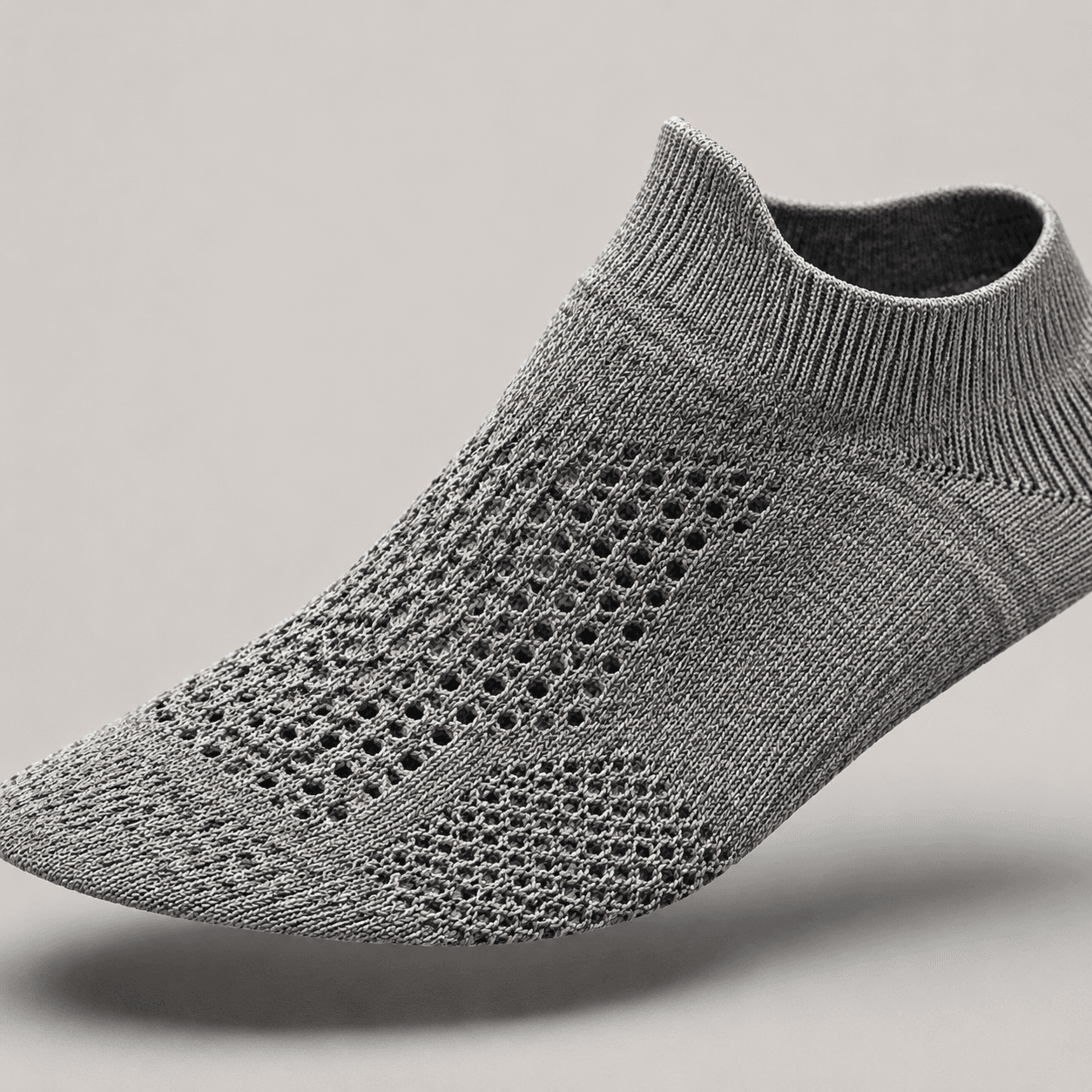
Approving footwear material swatches is the point where a design idea becomes a manufacturable shoe. For a factory, this is not only a visual sign-off. It is the decision that fixes the upper article, lining GSM, foam density, outsole compound, color route, and compliance path that the sample room will actually use. If that decision is vague, the first sample may look acceptable but still be wrong in fit, hand feel, bonding, flex, or FOB.
For sourcing managers, brand owners, and importers buying from China, the main risk is approving swatches that are attractive but not production-realistic. A supplier card may show a black microfiber at 1.4-1.5 mm, but the sample room may only be able to buy a similar 1.1-1.2 mm PU on short notice. A sole swatch may be shown in 60-65 Shore A rubber, while the actual sample is cut with a softer 50-55 Shore A compound because the original batch MOQ was not met. These gaps are where sample delays, price changes, and later claims start.
Good shoe material approval prevents those issues early. The buyer should leave swatch stage with a usable sample material confirmation file covering article code, supplier source, thickness, backing, GSM, density, hardness, color standard, MOQ, lead-time days, compliance route, and estimated $/pair effect. The sections below are written as a buyer decision guide, with each section focused on one approval factor and the practical questions that should be settled before sampling starts.
In footwear, a swatch is only approved when it is identifiable, purchasable, costed, testable, and repeatable in bulk.
Confirm exact material identity before approving any appearance
In footwear, a swatch is not approved because it looks right on a desk. It is approved when the factory can identify it precisely enough to buy the same article again for confirmation samples and bulk. Two black uppers can have the same surface grain and still behave differently in skiving, folding, perforation, stitching tension, embossing, and lasting. A 1.4-1.5 mm microfiber with nonwoven backing may support shape and edge folding well, while a 1.1-1.2 mm PU on knitted backing may wrinkle faster and reduce upper cost by $0.35-$0.80 per pair depending on usage.
The buyer should therefore ask for the material identity in measurable terms, not only trade names like 'premium microfiber' or 'breathable mesh.' Each major component needs article code, composition, backing, finish, thickness tolerance, and color reference. For bottoms, add process type, hardness, and density. If the swatch card cannot provide that data, the approval is only cosmetic and not reliable enough for footwear development.
- Ask for article code, supplier name, and source city for every approved swatch
- Confirm upper composition precisely: PU synthetic, microfiber, split suede, full-grain leather, sandwich mesh, engineered knit, or textile blend
- Request thickness with tolerance, such as 1.30-1.40 mm, not a single nominal figure
- Check backing type for upper and reinforcement materials: nonwoven, tricot, brushed knit, foam-backed, or laminated
- For lining, confirm GSM and construction, for example 130 GSM sandwich mesh or 180 GSM brushed textile lining
- For outsole and midsole materials, confirm compound family, Shore A hardness, density, and molding process
Decide whether the swatch is purchasable under your sample and bulk plan
A common problem on the supplier side is that the approved swatch exists only as a display article from the material vendor, not as a practical development option. This happens often with metallic synthetics, flocked uppers, recycled knits, custom jacquard, translucent rubber, and seasonal colors. If the article is not available in sample quantity, or if replenishment requires a full dye lot or batch MOQ, the factory must either delay or substitute. That is where many projects lose two to four weeks before the first upper is even cut.
Before approving footwear material swatches, check whether the article is stock, running stock, or made to order. Stock textile and common synthetic uppers can often be purchased in 5-10 days. Standard mesh, strobel fabric, and generic TPR sole material may be 7-12 days. Custom lamination, dyed lining, and custom outsole compounds usually require 20-35 days, and can reach 40 days when the vendor waits to combine orders. These lead-time differences should be visible before sample approval, not discovered after release.
- Ask whether the swatch is stock, running stock, seasonal stock, or custom production
- Confirm MOQ in the correct unit: meters, sheets, kg, pairs, or compound batch
- Check minimum dye lot or color batch requirement for custom uppers, mesh, or EVA
- Ask whether sample quantity can be purchased below MOQ or must be absorbed into costing
- Verify lead time separately for first sample material booking and for later bulk replenishment
- Confirm whether repeat orders can use the same article continuously or only by fresh lot booking
Buyer checklist for footwear material swatch approval
| Decision factor | What to confirm | Typical benchmark | Commercial risk if unclear |
|---|---|---|---|
| Upper material | Article code, composition, thickness, backing | 1.2-1.8 mm by category | Wrong hand feel, poor lasting, hidden cost change |
| Lining and foam | GSM, thickness, density, construction | Lining 120-220 GSM; foam density declared | Fit shift, comfort complaints, remake risk |
| Midsole and outsole | Compound, density, hardness, color method | EVA 0.18-0.28 g/cm3; hardness recorded | Weight change, abrasion issue, sample-to-bulk mismatch |
| Color standard | Master standard and light condition | Physical standard checked under D65 and warm light | Shade claims and component mismatch |
| Compliance route | Relevant EN ISO/ASTM path and RSL status | Passing history or planned lab route confirmed | Failed test, shipment hold, costly material switch |
| MOQ and lead time | Minimums for sample and bulk booking | Stock 5-12 days; custom 20-35 days typical | Sampling delay, forced substitution, missed launch |
| Per-pair cost | Cost delta by option and order volume | Quoted in $/pair at volume breaks | Margin erosion after sample approval |
Review upper and sole swatches as one footwear package
Upper and sole swatches should be approved together because the sample room builds a complete construction, not separate material cards. The upper gauge, lining GSM, toe puff stiffness, counter support, collar foam density, strobel softness, insole board rigidity, sockliner thickness, midsole density, and outsole hardness all affect the final result. A good-looking upper can crease badly if the board is too soft. A light EVA bottom can reduce weight but still feel unstable if paired with a heavy upper package or a weak heel counter.
From a manufacturing standpoint, the buyer should judge whether the approved combination suits the category. A lightweight runner may use 120-160 GSM air mesh, 3-5 mm collar foam around 0.14-0.18 g/cm3, EVA or phylon around 0.18-0.24 g/cm3, and a softer upper hand. A vulcanized casual shoe or cupsole sneaker often uses a firmer board, heavier foxing package, denser sockliner base, and a tougher outsole compound around 60-70 Shore A. Approving the package together reduces remake risk and gives the factory a more realistic first sample.
- Review upper, lining, foam, toe puff, counter, strobel, board, sockliner, midsole, and outsole in one approval round
- Check whether upper thickness matches the last shape, stitch density, and edge-fold requirement
- For EVA or phylon, confirm density range, rebound target, and shrinkage control in molding
- For rubber, TPR, or RB compounds, confirm Shore A hardness, abrasion expectation, and bonding history
- Ask whether the upper finish needs extra roughing, primer, or treatment for cement bonding
- Check whether perforation, folding, heat pressing, or quilting changes the approved appearance
Specification points buyers should ask for on sole materials
For EVA or phylon midsoles, density should be declared because it directly affects weight, compression, and wear feeling. Many commercial sneakers sit around 0.18-0.28 g/cm3, while molded sandals and injected slippers may fall outside that range. If the density is not recorded, the first sample can come back visually correct but 40-80 grams heavier or lighter per pair than planned. Buyers should also ask whether the color is molded into the compound or added by paint, because color stability and scratch resistance differ sharply.
For outsoles, hardness alone is not enough. Ask for Shore A hardness together with abrasion performance history on similar articles. A 55 Shore A rubber may feel softer underfoot but can wear faster than a 65-70 Shore A outsole, especially in shallow tread patterns. For insocks and footbeds, confirm foam density and thickness, for example 4 mm memory foam over a low-density base versus 3 mm PU foam around 0.16-0.22 g/cm3 with a textile top cover. These differences strongly affect first-sample comfort and long-term collapse.
Lock footwear color approval to a measurable standard
Footwear color approval is high risk because one shoe uses multiple surfaces that reflect light differently. A navy microfiber, navy sandwich mesh, navy lace, and navy rubber foxing can all look aligned on separate swatches and still shift once assembled. White is even more sensitive. A cool-white upper paired with warm-white EVA and neutral-white paint will already look off-tone before wear. That is why color approval should be based on a control standard, not on verbal descriptions such as 'same as previous season.'
A practical color process starts with a master standard: a physical sealed swatch, approved lab dip, Pantone-supported reference, or prior counter sample. The factory should review the critical materials side by side under D65 and a warm retail-like light source. Buyers should also ask which components are molded in color and which are surface painted, screened, transfer printed, or edge-inked, because each route carries different tolerance and colorfastness risk.
- Confirm the master standard: physical swatch, lab dip, sealed counter sample, or Pantone reference
- Review upper, lace, lining, logo print, foxing, and outsole together under D65 and warm light
- Check touching components directly, especially upper-to-lace, upper-to-mesh, and upper-to-outsole
- Ask the factory to define acceptable tolerance for white, beige, grey, navy, and pastel shades
- Confirm whether sole sidewalls are molded color, sprayed, or hand-painted
- For suede-like, oiled, or waxed uppers, ask how finishing and lasting may shift color depth
Check testing and compliance before the sample room cuts
A material route is not really approved if it meets the look target but fails your compliance or performance protocol. This is especially important for children’s footwear, school shoes, outdoor categories, work-influenced styles, and retailer programs with strict vendor manuals. If testing questions are postponed until the confirmation sample stage, any material change will hit the calendar much later and often at a higher cost.
At swatch stage, the factory should already be able to indicate whether the proposed materials have relevant passing history or known risk areas. Depending on category and destination market, buyers may need EN ISO or ASTM methods covering colorfastness, adhesion, flexing, abrasion, tear strength, hydrolysis risk, slip-related performance, and sole hardness consistency. For chemical compliance, the buyer should ask whether the same article has prior passing status for restricted substances such as azo dyes, lead, cadmium, chromium VI where applicable, formaldehyde, PCP, and DMFu. A supplier who cannot answer at swatch stage is asking the buyer to take development risk blind.
- Ask which EN ISO or ASTM methods apply to the style, market, and retailer manual
- Confirm whether the same material article has prior passing data or only a similar reference
- Check colorfastness, crocking, and perspiration resistance risk on dark linings and suede-like uppers
- Ask about flex cracking and adhesion risk on metallic films, high-gloss PU, and heavy top coatings
- For sole compounds, request hardness consistency and abrasion history before bulk commitment
- Confirm the restricted-substance route before the factory books sample materials
Typical test areas to raise at swatch stage
For upper and lining materials, common discussion points include colorfastness to rubbing, perspiration, and water, plus flex resistance where the upper has coating or film. For outsoles, abrasion and hardness consistency are basic points, while slip-related protocols may be relevant depending on category. Bonding strength between upper and bottom is critical on cemented shoes, especially when the upper finish is glossy, oily, or heavily coated.
For US programs, ASTM references may be requested by the buyer or retailer depending on category. For EU-facing programs, EN ISO references are more common. The exact test list belongs to the buyer specification, but at swatch stage the factory should still tell you where the material route is proven, where it is untested, and where a safer substitute may be wiser before sample cutting.
Price the swatch decision in $/pair before approving it
One of the weakest approval habits in footwear is to discuss price only after the sample is liked internally. By then, the buyer has already created attachment to a material route that may be too expensive or too MOQ-heavy. A 1.4 mm microfiber upper, stronger toe puff, molded PU footbed, or translucent rubber outsole may each be reasonable choices, but the factory should state their cost effect before the sample room buys materials. Otherwise the buyer is developing a shoe without knowing whether it fits the commercial target.
The most useful supplier response is a component-by-component price effect by order volume. For example, a microfiber upgrade may add $0.38 per pair at 5,000 pairs but $0.72 at 1,200 pairs. A custom mesh color may add only $0.06 per pair once the dye lot is spread over 6,000 pairs, but can be commercially inefficient on 800 pairs if the MOQ is 300 meters. This is why sample material confirmation should include both technical data and price architecture.
- Request cost effect by component in $/pair, not only as a percentage change
- Ask for pricing at practical breaks such as 1,200, 3,000, and 5,000 pairs
- Identify materials carrying custom MOQ, dye surcharge, screen cost, mold color charge, or lamination setup fee
- Check wastage exposure on directional textile, hairy suede, large repeat print, and translucent sole compounds
- Confirm whether lab tests, color spray charges, or mold cleaning are excluded from FOB
- Ask the factory which stock alternatives can deliver similar appearance with lower MOQ risk
Use a formal sample material confirmation file
In footwear, approvals become unreliable when they are kept only in email screenshots, marked-up photos, or chat messages. Once swatches are approved, the factory should issue a formal material confirmation file listing every visible and hidden component that affects appearance, fit, or wear. That includes upper panels, lining, reinforcement, tongue foam, collar foam, toe puff, counter, strobel, insole board, sockliner, laces, eyelets, logo application, foxing, midsole, outsole, and key color references.
This document is more than internal paperwork. It is the instruction sheet for sample room, purchasing, costing, and quality teams. If one item is temporarily substituted for a prototype, that note should be explicit. If the sample later becomes the basis for salesman sample or pre-production approval, the same file should carry forward. In practice, this is the cleanest way to avoid disputes about whether the factory used the approved shoe development materials.
- List each component separately with article code, color, thickness, GSM, density, or hardness where relevant
- Insert scan images or swatch photos into the confirmation file for visual control
- Mark sample-only substitutes clearly and state they are not approved for bulk
- Define sample purpose: prototype, fit sample, confirmation sample, salesman sample, or wear-test sample
- Include buyer approval date, factory release date, and target sample completion date
- Use the same file as the reference for costing, testing, and later bulk material booking
Know when to approve, reject, or approve with conditions
Not every swatch decision needs a full approval or full rejection. In development, conditional approval is often the fastest practical route when the main article is acceptable but one measurable detail still needs correction. For example, the buyer may approve the upper article and thickness, but require a darker lab dip, a lining increase from 130 GSM to 160 GSM, or a collar foam adjustment from 0.12 g/cm3 to 0.16 g/cm3 before cutting. That keeps the project moving without losing control of the material package.
The rule from a supplier side is straightforward. If the open issue affects fit, durability, compliance, production realism, or target FOB, do not release the sample room until it is corrected. If the issue is narrow, measurable, and quickly resolvable, approve with conditions and document those conditions in the material confirmation file. The critical point is that both merchandising and sample room teams must see clearly which components are frozen and which remain pending.
- 01Approve only when article code, specification, color standard, MOQ, lead-time days, testing route, and $/pair effect are clear
- 02Reject when the swatch is not production-realistic, fails cost target, or has unresolved compliance or performance risk
- 03Approve with conditions only when the remaining issue is specific and measurable, such as lab dip depth, foam density, or lining GSM
- 04Record every condition in the material confirmation file before the sample room starts cutting
- 05Set a deadline for replacement swatch or lab dip approval so the development calendar does not drift
Key takeaways
- Approve <strong>footwear material swatches</strong> by article code, composition, thickness, GSM, density, hardness, and supplier source, not by appearance alone.
- Review <strong>upper and sole swatches</strong> as one construction package so the first sample reflects real fit, bonding, comfort, flex, and wear.
- Lock <strong>footwear color approval</strong> to a physical standard or lab dip reviewed under controlled light before sample cutting starts.
- Confirm MOQ, lead-time days, and $/pair effect at swatch stage to avoid substitution, delay, and unexpected FOB drift.
- Use a written <strong>sample material confirmation</strong> file that covers every visible and hidden component, including temporary substitutes.
- Reject or conditionally approve any material route that is not commercially practical or cannot support the required EN ISO, ASTM, or buyer compliance protocol.
SoleForge manufactures athletic & running shoes and casual sneakers under OEM and ODM for brands and importers worldwide. Request a quote with your tech pack or reference pair and we'll reply within one business day.