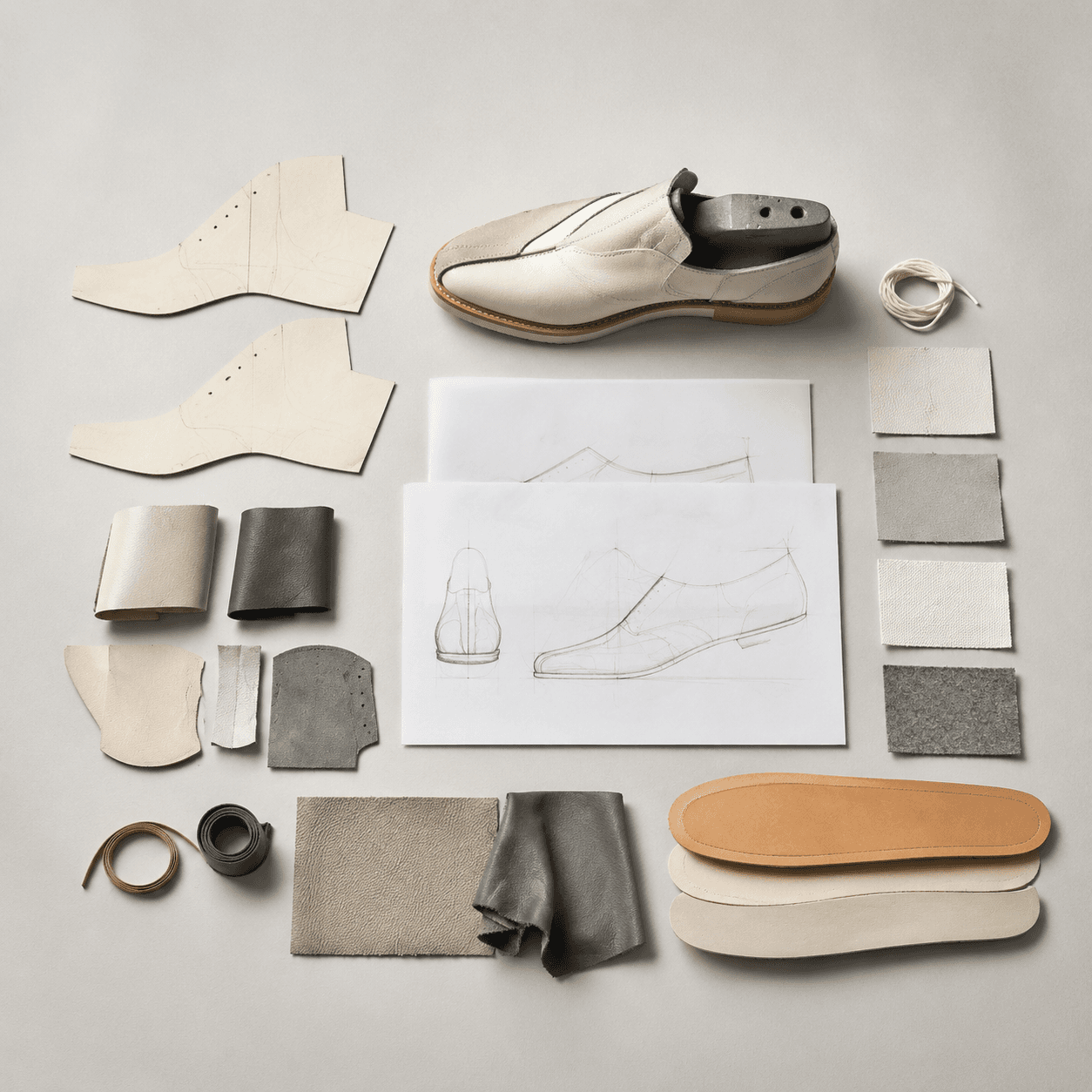
Bulk footwear buyers usually face one practical choice: use a factory stock last to save 2-4 weeks and reduce tooling, or invest in custom shoe last development to control fit, silhouette, and repeatability. In China sourcing, that choice affects more than comfort. It changes sample approval speed, outsole matching, grading accuracy, and how easily a program can be moved from one factory to another without fit drift.
A shoe last is the internal architecture of the product. It fixes heel seat width, toe spring, forepart girth, instep height, waist shape, ball position, and break point. If those dimensions are wrong, factories often compensate with 2-4 mm extra collar foam, softer toe puff, a lower-density sockliner, or looser lasting tension. Those are temporary corrections that raise cost and still leave the fit unstable.
For sourcing managers, importers, and brand owners buying in bulk from China, the real comparison is between three routes: stock last, modified existing last, and full custom footwear last. Each has a place. The correct route depends on order volume, category risk, intended market, and whether the style is a one-off price item or a long-term fit platform.
In bulk footwear, a bad last is usually paid for twice: once in development delay and again in fit-related claims.
The core trade-off: faster commercialization versus fit ownership
A stock last is fastest because the sample room already knows how it performs with the factory's existing upper patterns, insole boards, and outsoles. In Fujian and Wenzhou casual shoe factories, a first prototype can often be issued in 7-10 days if the buyer accepts an existing cupsole, phylon bottom, or vulcanized foxing package. Upfront tooling cost is usually zero or nominal. The drawback is that the buyer inherits the factory's fit block, toe shape, grading logic, and visual proportions.
A modified last is the middle route. The supplier starts from an existing base and changes specific areas such as forepart width, heel seat width, toe profile, or instep height. This route works when the original last already delivers about 75% of the target fit. It reduces visible genericness without taking on the full time and cost of a new fit platform.
A fully custom last gives the highest control over shoe last design, footwear fit development, and long-term brand fit consistency. It is the strongest choice for comfort casual, replenishment sneakers, school shoes, work footwear, and technical categories where fit complaints create immediate claims. It also matters when the brand wants to shift production between factories without rebuilding the product from zero.
- Stock last: fastest launch, lowest tooling, weakest exclusivity
- Modified last: balanced option for OEM and private label programs
- Full custom last: highest fit control, best transferability, strongest repeatability
Comparison on cost, MOQ, and lead time in China
From a supplier-side cost view, stock lasts are attractive because many factories do not charge separately if the style stays on an in-house bottom. Sample cost may only cover upper materials and labor. For simple cemented casual shoes or vulcanized canvas styles, MOQ can remain at 800-1,200 pairs per color if the carton, color box, and trims are standard. Lead time for a confirmation sample is commonly 7-12 days.
Modified lasts usually cost USD 300-800 for a master last change, or USD 500-1,200 if the factory also grades the full size range and reworks matching insole board and sockliner die lines. Sample lead time is typically 12-18 days for the first corrected pair and 5-7 days for one further adjustment. MOQ often moves to 1,200-2,000 pairs per color because upper pattern revision, cutting dies, and new sockliner shapes add engineering time.
A fully custom footwear last usually costs USD 800-2,500 for the size run, depending on category, number of corrections, and whether the buyer provides benchmark fit samples or 3D foot data. For casual sneakers and court styles, first-last development normally takes 18-28 days before the upper pattern is locked. For outdoor, safety, or waterproof boots, 30-45 days is more realistic because the last must be confirmed together with toe cap clearance, bootie construction, and bottom geometry.
The last does not directly set MOQ, but the total system does. If a new last also requires a dedicated outsole mold, footbed tooling, insole board knife, strobel template, and carton print set, the factory usually raises MOQ or spreads tooling into FOB. A custom cupsole sneaker program can easily need 2,400-5,000 pairs total. A direct-injected sandal or dual-density EVA bottom may need 3,000-6,000 pairs because mold cavity utilization is less flexible.
Where the hidden cost actually sits
The visible last charge is rarely the largest cost. The bigger cost comes from extra sample rounds, outsole cavity rework, and fit-driven material changes. A 2 mm error in toe spring can trigger new bottom matching. A loose heel seat may push the factory to add 4 mm to 6 mm topline foam at about 180-220 kg/m3 density, increase counter wrap, or switch to a thicker sockliner. Those changes add labor, distort wear feel, and still do not solve the geometry problem.
Comparison of shoe last development routes for bulk footwear sourcing
| Option | Typical upfront cost | Development lead time | MOQ impact | Best use case |
|---|---|---|---|---|
| Factory stock last | USD 0-200 or bundled into sample cost | 7-12 days first sample on existing bottom | Lowest; often 800-1,200 pairs per color with standard materials | Promo shoes, basic vulcanized styles, EVA sandals, low-risk casuals |
| Modified existing last | USD 300-800 master or USD 500-1,200 with graded size set | 12-18 days plus one correction round if needed | Medium; commonly 1,200-2,000 pairs per color | Private label sneakers, school shoes, mid-market casual programs |
| Fully custom last | USD 800-2,500 full size range | 18-28 days casual; 30-45 days technical categories | Higher if paired with new outsole; often 2,400-5,000 total | Repeat programs, comfort-led brands, target-market-specific fit |
| Custom last plus custom outsole system | USD 1,500-6,000 depending on mold count and bottom complexity | 30-60 days including outsole mold trial | High; usually 3,000+ pairs total to amortize tooling | Signature sneaker platforms, proprietary cupsoles, dual-density bottoms |
| Technical safety or outdoor last | USD 1,500-3,500 plus cap and mold validation | 35-60 days with compliance and wear validation | Higher due to testing and component constraints | EN ISO 20345 or ASTM F2413 safety shoes, outdoor boots, protective footwear |
Fit precision: what each route can really control
Fit precision is the main technical reason to invest in custom shoe last development. Once outsole opening, upper patterns, and insole board are frozen, internal volume is expensive to change. The critical zones are ball girth, first metatarsal allowance, toe depth, vamp height, instep circumference, heel seat width, and pitch balance between rearfoot and forefoot.
A stock last can be acceptable for low-risk categories such as EVA slides, open sandals, house slippers, and promo canvas shoes where the upper is forgiving and the wearer tolerates broad fit variance. It is a weak choice for structured sneakers, school shoes, safety shoes, or hikers. In those categories, the wrong base last typically creates a chain of patchwork corrections: softer toe puff, thinner strobel, lower-density insole, looser lacing, or altered collar padding.
A modified last works well when corrections are limited. In practical factory terms, acceptable changes are often forepart width plus or minus 1.5-3.0 mm, heel width plus or minus 1.0-2.0 mm, toe spring plus or minus 1.0-2.5 mm, or a vamp height lift to reduce instep pressure. When modifications go beyond that range, balance usually degrades. The side profile may still look right, but the shoe starts to wrinkle in lasting, flex in the wrong place, or grade poorly into edge sizes.
A full custom footwear last is the better route when the target consumer differs from the factory's usual fit block. North American men's casual programs often need more toe allowance and forepart volume than domestic China size blocks. EU fashion casual may require a cleaner toe line while preserving ball comfort. Kids footwear needs especially strict forepart and toe depth control because returns rise quickly when grading is inconsistent.
- Heel lock depends on heel seat width, topline opening, counter angle, collar foam, and sockliner compression as one system
- Toe comfort is controlled by toe depth and break point, not just bottom width
- Instep pressure is usually a last-plus-vamp issue, not a lace issue alone
Brand identity versus factory dependence
For many brands, the most stable visual signature is not the logo or outsole artwork. It is the last. Before branding is applied, the last already decides whether the shoe reads clean, bulky, heritage, technical, or fashion-led. Change toe spring by 2 mm, shift ball position by 3 mm, or narrow the heel line slightly, and the same upper pattern can become a different product visually.
A stock last ties that identity to one supplier's sample room. If the order later moves because of price pressure, compliance issues, or capacity limits, the next factory often recreates the fit only approximately. That usually leads to drift in toe shape, vamp tension, heel hold, and overall wear feel. This is one of the main causes of fit inconsistency across repeat orders.
A modified or full custom last becomes a brand asset if the buyer controls the technical package. At minimum, keep the approved master last, the grading table, bottom length, ball girth, waist girth, heel width, toe spring, heel height, and tolerance sheet. Serious suppliers can also provide 2D bottom drawings and 3D data, but a physical approved master and wear-confirmed sample are still the real references.
One approved fit block can support several styles if engineered correctly. A core sneaker last can branch into low-top lace, slip-on, winter collar, or cupsole variant, provided the sockliner thickness, foam package, and outsole seat are revalidated. That is how a brand builds identity without reopening fit risk every season.
- 01Approve one fit block per category: sneaker, sandal, vulcanized, boot, work shoe.
- 02Lock the master size after wear test, commonly EU 42 for men or EU 37-38 for women.
- 03Grade from the approved last, not from outsole CAD or concept artwork.
- 04Carry the same platform into future SKUs unless the target consumer clearly changes.
Last and outsole must be engineered as one system
A common sourcing error is to develop the last and outsole separately. In practice, shoe last manufacturing only works when bottom geometry matches construction. A cupsole needs the correct cavity allowance and sidewall wrap. A cemented EVA or phylon bottom needs the right feather edge and seat contact. A vulcanized shoe needs lasting margin and foxing pressure that match the last exactly.
If the last is narrow but the cupsole cavity is broad, the upper collapses visually after lasting and sidewall stitch placement drifts. If the last carries aggressive toe spring while the outsole mold is flatter, the forepart rocks, bonding pressure becomes uneven, and flex feel changes. This is why experienced factories do not freeze cavity dimensions and insole board shape until the last direction is approved.
Material package also changes internal volume and must be reviewed together with the last. An 8-10 mm memory foam sockliner at 0.18-0.22 g/cm3 density occupies far more space than a 4-5 mm die-cut EVA sockliner around 45-50 Shore C. A 320-380 GSM sandwich mesh lining behaves differently from a 180-220 GSM twill or microfiber lining. Counter board thickness, toe puff hardness, strobel cloth stiffness, and collar foam all alter the final fit.
This matters even more in regulated categories. EN ISO 20345 and ASTM F2413 safety shoes must maintain toe cap clearance, impact resistance, and compression space while still fitting correctly. If a supplier starts with a fashion sneaker last and then forces in a steel or composite cap, toe pressure and test failure risk rise quickly. Outdoor boots face a similar issue when waterproof booties and thicker insocks reduce usable volume by several millimeters.
Construction-specific fit risks
Strobel construction is flexible but exposes excess forepart volume immediately.
Board-lasted construction stabilizes shape but punishes a wrong flex point.
Direct-injected bottoms allow less post-lasting correction, so last accuracy must be right earlier.
Sidewall-stitched cupsoles need stable upper wrap and cavity match across the full size run.
How to run footwear fit development with Chinese factories
A workable development process starts with measurable fit intent. The buyer should send target region, intended use, sock condition, benchmark shoes, and comments on what fits well or poorly. If the only input is a rendering, the sample room will default to the nearest convenient last. That saves days at the beginning and costs weeks later.
The first checkpoint should be the master last review before upper patterns are fully frozen. Ask the factory to confirm bottom length, heel height, toe spring, ball position, forepart girth, and heel width. Some suppliers can ship a resin or CNC check last, or at least a dimension sheet with lateral and medial profile views. That is cheaper than recutting upper patterns and insoles after a poor wear test.
Wear-test at least the master size and one edge size. If the commercial run is EU 39-45, test EU 42 and EU 45. If it is women's EU 36-41, test EU 37 or 38 and EU 41. Many grading mistakes only appear at the edges: short toe feel in small sizes, heel slip in large sizes, or instep pressure that rises too sharply because the girth increment was copied from a different last family.
For a standard casual sneaker in China, a realistic sequence is 5-7 days for last proposal, 7-10 days for first sample, 3-5 days for comment review, and 7-10 days for the second wear sample. If a new outsole mold is involved, add 12-18 days for mold cutting and trial. Textured rubber cupsoles, dual-density phylon, or deep sidewall tooling may push outsole confirmation to 18-25 days.
Approval records should be detailed. The minimum pack should include last dimensions, grading chart, outsole opening measurements, insole board thickness, sockliner spec, lining GSM, collar foam density, final pair weight, and tolerance. If the factory changes from 4 mm foam to 6 mm foam, 200 GSM lining to 350 GSM mesh, or 5 mm die-cut EVA to 9 mm memory foam, the fit must be checked again because the approved last alone is no longer the full fit condition.
- Send benchmark fit samples with written comments, not only photos
- Approve the last and the bottom as one matched system
- Wear-test using production-intent foam, lining, strobel, and sockliner
- Separate master-size approval from grading approval
When stock or modified lasts are enough
A full custom last is not mandatory for every program. If the product is a short-life promotion, low-price EVA sandal, basic vulcanized canvas item, or a close carryover from a validated in-line factory style, a stock last can be commercially sensible. The buyer should treat that choice as a speed and price decision, not as a fit-control decision.
A modified last is often enough for mid-market private label programs targeting 1,500-6,000 pairs per style family. It can sharpen the toe shape, improve heel hold, or ease forepart pressure without the cost burden of a full platform build. For many OEM fashion sneaker programs, this is the most efficient route.
The limitation of both options is long-term consistency. If the business depends on replenishment, comfort positioning, school fit reliability, kids return control, or multi-factory sourcing, underinvesting in the last usually costs more later through extra sample rounds, fit claims, and rejected repeat orders.
A simple per-pair cost view
On volume orders, last development is often cheaper than buyers expect. A USD 1,500 custom last spread over 5,000 pairs adds about USD 0.30 per pair before other tooling. That is often less than increasing lining weight by 100 GSM, adding 2 mm collar foam, or upgrading from basic die-cut EVA to memory foam. If the custom last avoids one failed sample round or a fit-related return, it usually pays back quickly.
Verdict: choose by business model, not by first sample cost
For price-led, one-season, low-risk products, a stock last is acceptable if the factory already has a proven upper and bottom package and the brand can tolerate broader fit variance. For most OEM sneaker and casual programs, a modified last gives the best balance of tooling cost, lead time, and visible fit improvement. It reduces obvious problems without slowing the project excessively.
For repeat business, fit-sensitive categories, and any brand building long-term identity, a fully custom last is the strongest decision. It gives control over shape, grading, internal volume, and supplier transferability. In practical sourcing terms, it reduces trial-and-error cost, lowers fit-related claims, and protects brand fit consistency across seasons.
The clear verdict is this: if the style is disposable, borrow the factory's fit block. If the style is strategic, own the last. In bulk sourcing from China, that decision often separates simple buying from disciplined footwear platform building.
SoleForge manufactures athletic & running shoes and leather & dress shoes under OEM and ODM for brands and importers worldwide. Request a quote with your tech pack or reference pair and we'll reply within one business day.