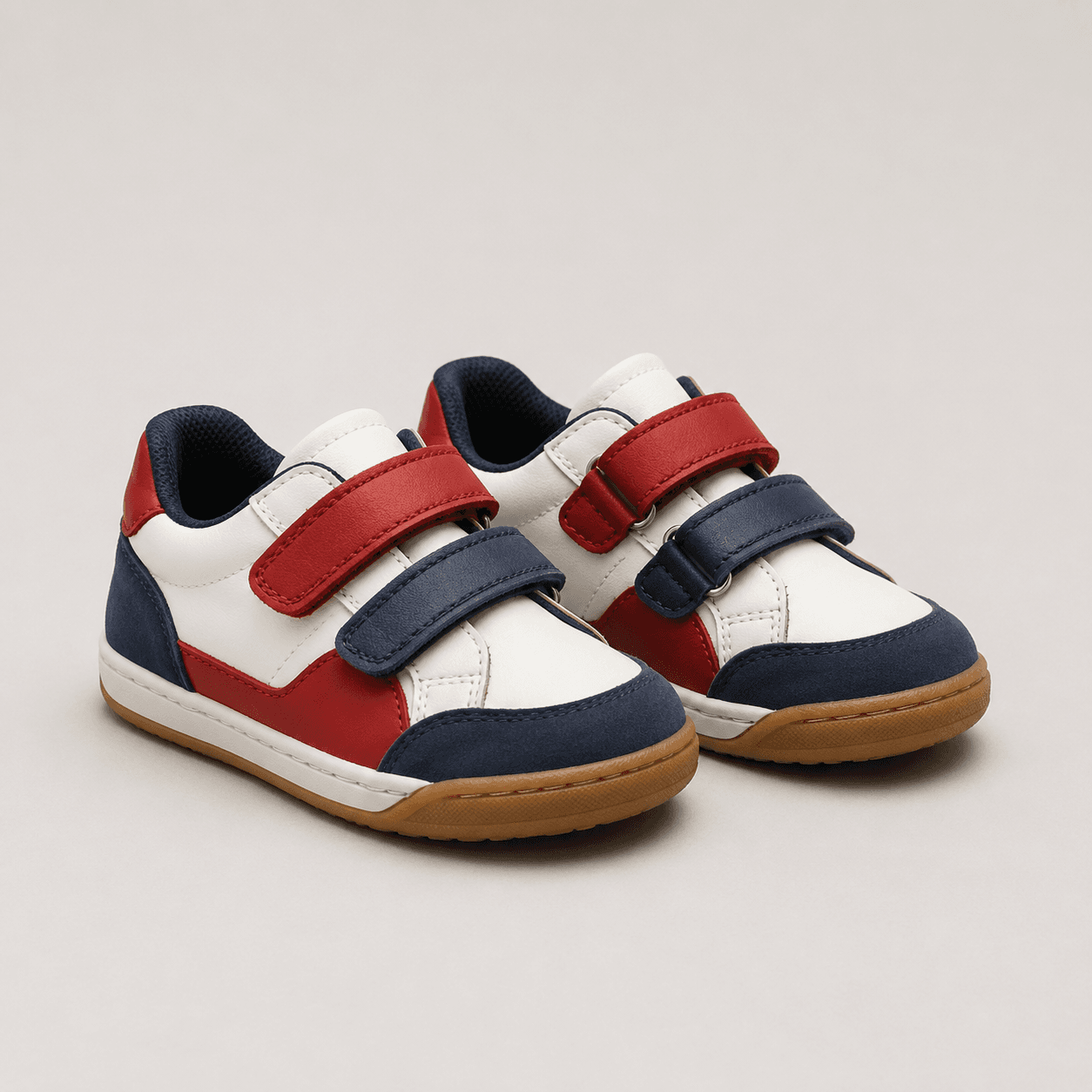
Selecting a footwear OEM ODM factory China is a manufacturing decision with direct impact on claim rate, margin, and replenishment speed. In footwear, a sample that looks acceptable on the table can still fail in bulk because of last grading, adhesive process, outsole shrinkage, lining abrasion, or carton weakness. For sourcing managers and importers, the issue is not whether a supplier can make one good-looking sample. It is whether the factory can repeat the same fit, finish, and performance across 1,200-10,000 pairs, multiple sizes, and multiple colorways.
China remains a core base for footwear sourcing China because the supporting chain is still dense: outsole mold shops, EVA and rubber compound suppliers, mesh and lining mills, insole foam converters, printing houses, eyelet and buckle suppliers, carton plants, and independent test labs are all accessible within short lead times. That said, one factory may be strong in cemented casuals and weak in injected EVA, vulcanized canvas, waterproof hikers, or EN ISO / ASTM safety shoes. Category matching is more important than country selection alone.
This guide explains what a shoe factory China actually does, how OEM and ODM programs move from development to shipment, why the right factory matters commercially, and when to use OEM, ODM, or private label. The focus is practical: MOQ by style, sample and bulk lead-time days, outsole mold cost, upper thickness, lining GSM, insole foam density, compliance testing, and the supplier-side questions that expose real capability.
In footwear, the cheapest sample is often the most expensive bulk order once fit claims, material downgrades, and rework are counted.
What a footwear OEM/ODM factory in China actually is
An OEM footwear manufacturer produces to the buyer's specification. The buyer typically supplies a tech pack, reference sample, construction notes, logo artwork, size range, and target FOB. The factory then converts that into a workable BOM, last selection, pattern engineering, outsole or midsole tooling if needed, material booking, sample making, size grading, pre-production control, and bulk manufacturing. In OEM, the brand owns the product direction; the factory owns the execution discipline.
An ODM shoe supplier starts from existing factory assets such as an open outsole mold, a proven last, an upper pattern block, or a complete ready-to-sell construction. The buyer customizes materials, colors, logo application, sockliner print, tongue label, and packaging. ODM reduces sample time because the outsole dimensions, fit basis, and material consumption have usually already been tested in prior production.
A capable private label shoe factory may run all three models depending on the product line. The useful distinction is not the sales label. The useful distinction is whether the factory controls development, material verification, bottom matching, quality checkpoints, and shipment timing for your specific footwear category.
OEM in footwear: what the factory must really control
OEM in footwear is not simply copying a picture. The factory must turn a concept into a production file with measurable parameters: last shape, toe spring, heel height, upper allowance, counter height, toe puff strength, outsole hardness, midsole density, insole foam density, stitching SPI where relevant, and tolerance by size. For cemented styles, a serious supplier should also define roughing area, primer type, adhesive system, open time, pressing pressure, and curing conditions.
Lead time depends on whether the factory can use existing assets. A first sample on a stock outsole may take 7-14 days. A corrected sample may take another 5-10 days. If a new outsole mold is required, first sample timing usually becomes 20-35 days because the process includes CAD review, mold cutting, trial shot, shrinkage correction, fit check, and often one more mold adjustment. New outsole mold cost is commonly $2,000-$5,000 for simple casual bottoms and $5,000-$8,000+ for technical athletic, hiking, or multi-part rubber/EVA constructions.
ODM in footwear: where it saves time and where it creates limits
ODM is efficient when the buyer wants a lower-risk launch. Existing molds reduce development cost, and the factory usually has known material consumption and standard labor minutes for that construction. MOQ can often start at 600-1,200 pairs per style across 2-3 colors, depending on upper materials and packaging complexity. For importers buying broad assortments, this is often the fastest path to shelf-ready product.
The limitation is differentiation. If the outsole mold and upper block are open-line assets, the same bottom unit may be sold to several markets with only cosmetic changes. Before approving an ODM style, ask whether the mold is open, market-protected, or available for buyout; whether the same last-bottom combination has shipped into your target country within the last 12 months; and whether logo placement areas are structurally fixed or can be modified without reopening the pattern.
How a shoe factory in China works from development to shipment
A reliable shoe factory China follows a controlled sequence. Merchandising reviews target FOB and quantity. Development checks whether the target cost fits the requested construction. Pattern engineers match or create the upper pattern based on last profile, toe shape, topline, heel seat, and lasting allowance. Materials teams confirm upper thickness, lining GSM, eyelets, laces, toe puffs, counters, insole board, sockliner, and box spec. Bottom engineers check outsole compound, unit weight, hardness, shrinkage rate, and, for athletic product, density split between EVA, phylon, rubber pods, or TPU parts.
The first sample is where most cost and quality risk becomes visible. Typical failures include vamp wrinkling, loose collar fit, toe box collapse, outsole mismatch, poor heel pitch, unstable insole board, dark lining color transfer, glue squeeze-out, and carton size mismatch. A disciplined factory records each correction against the BOM and process sheet rather than handling revisions informally through chat messages only.
After sample approval, pre-production should begin only when the BOM, approved swatches, logos, packaging, and size ratio are locked. If fit sensitivity is high, a graded size set should be checked before bulk. The factory should hold a pre-production meeting with cutting, stitching, lasting, bottoming, QC, warehouse, and packing teams. One sealed golden sample should remain with the buyer, and one sealed reference should remain on the production floor.
- 01Inquiry review, target FOB/CIF alignment, and category feasibility check
- 02Last confirmation, upper pattern review, and construction approval
- 03Material booking with swatches, lab dips, trim samples, and carton artwork
- 04First sample, revised sample, and size set where fit risk is high
- 05Outsole tooling development or mold modification if required
- 06Confirmation sample and packaging approval
- 07Pre-production meeting, line allocation, and incoming material inspection
- 08Inline QC, final inspection, carton drop test, and shipment release
Critical process points by footwear category
Different footwear categories fail in different ways. Cemented fashion sneakers often fail on bond strength, toe shape consistency, sidewall glue cleanliness, and shade variation between left and right foot. Running-style shoes add risk in strobel stitching quality, heel counter stiffness, EVA or phylon density consistency, outsole abrasion, and upper-lining distortion after lasting. Sandals often fail on strap pull, buckle plating, rivet setting, outsole flex crack, and footbed compression. Leather boots bring hide thickness variation, vamp creasing, sole attachment issues, and panel shade mismatch. Safety footwear adds toe cap impact and compression, puncture resistance, upper tear, slip resistance, and electrical or antistatic performance.
This is why buyers should ask, 'What construction do you produce every month?' rather than 'Can you make this style?' A factory shipping 150,000 pairs per month of cemented casuals may still outsource injected EVA, vulcanized, waterproof seam-sealed, or Goodyear-related work. Once critical operations move outside the main plant, lead-time control, traceability, and corrective action become weaker.
Commercial ranges you should expect
Sample lead time on existing components is usually 7-21 days depending on logo treatment, material sourcing, and pattern complexity. Bulk lead time is often 30-45 days for repeats and 45-75 days for new developments after deposit and final approval. Waterproof membranes, custom knitted uppers, molded footbeds, and third-party testing can extend this. If a supplier promises 25-30 days for a new molded outsole program, ask how trial shots, fit correction, and material lead time have been accounted for.
MOQ commonly starts at 600-1,200 pairs per style for ODM and 1,200-3,000 pairs for OEM. Color minimums are often 200-500 pairs. Special outsole colors, transfer logos, custom eyelets, woven labels, printed tissue, and gift boxes may each have their own minimums. In price terms, EVA slippers can be under $3.00 FOB; basic canvas or synthetic casuals around $4.50-$9.00; standard fashion sneakers $8.00-$18.00; leather hikers, work boots, and EN ISO / ASTM safety footwear often $18.00-$40.00+ depending on leather grade, outsole compound, toe cap type, membrane, and required testing.
Quick benchmark for evaluating a shoe factory China
| Checkpoint | Typical acceptable range | Questions to ask |
|---|---|---|
| MOQ | ODM 600-1,200 pairs/style; OEM 1,200-3,000 | Is there a separate MOQ by color, outsole color, logo, or box? |
| Sample lead time | 7-14 days on existing tooling; 20-35 days with new mold | What causes delay: mold, upper material, logo, or testing? |
| Bulk lead time | 30-45 days repeat; 45-75 days new development | What is the lead time in peak season, not only off-season? |
| Outsole mold cost | $2,000-$5,000 casual; $5,000-$8,000+ technical | Who owns the mold and can it be market-protected? |
| Material control | Upper mm, lining GSM, foam density, outsole Shore A | Can these values be written into BOM and PO without substitution? |
| Compliance | Category-specific EN ISO / ASTM / SATRA / internal QC | Do you test in-process, pre-shipment, or only after production? |
Why factory selection matters more in footwear than in many other consumer products
Footwear defects are worn, felt, and returned quickly. A grading error of 2 mm can change fit enough to trigger size complaints. A heel counter that softens after heat exposure changes support. Outsole hardness moving from Shore A 55 to 62 changes underfoot feel and can affect slip performance. An insole foam specified at 0.22-0.25 g/cm3 but supplied at 0.18-0.20 g/cm3 will compress earlier in use. A sandwich mesh lining expected at 180-220 GSM but supplied lighter may abrade faster and distort during lasting.
Because of this, factory selection affects landed margin more than FOB alone. A low quotation may hide lower rubber content, thinner microfiber, lighter lining, lower-density EVA, cheaper insole board, reduced reinforcement tape, or weaker carton board. A development sample can still look acceptable while bulk performance declines. In footwear, the common claims are not only cosmetic. They are bond failure, hydrolysis, color crocking, logo peeling, outsole crack, odor, mold, fit inconsistency, and packing shortages.
The right supplier is valuable partly because they reject unrealistic combinations early. If a buyer targets $7.50 FOB at 900 pairs with a custom rubber outsole, 1.6 mm microfiber upper, 220 GSM breathable lining, molded PU footbed, branded eyelets, and rigid gift box, a credible factory should say the target is misaligned instead of accepting the order and quietly downgrading materials later.
- Fit consistency depends on last grading, upper allowance, sockliner thickness, and size-set approval.
- Durability depends on material thickness, adhesive process control, reinforcement placement, and bottom matching.
- Compliance risk sits in synthetics, inks, adhesives, foams, metals, and packaging components.
- Cost accuracy depends on true material consumption, reject allowance, labor minutes, and tooling amortization.
- Delivery reliability depends on whether outsole molding, printing, embroidery, and packing are in-house or subcontracted.
How to evaluate a footwear OEM ODM factory China before placing bulk orders
Evaluation should combine category fit, development evidence, process control, and commercial clarity. Showroom walls full of samples prove very little by themselves. In footwear, the practical question is whether the same pattern room, bottom source, material chain, and production line used for the sample will also be used for your order. Some suppliers show strong salesman samples built with stock premium materials that are unavailable at your MOQ or target FOB.
Start with category matching. If you buy vulcanized canvas, do not begin with a safety shoe factory. If you buy molded EVA clogs or injected sandals, confirm the supplier actually runs injection or foam molding in-house. Then ask for current production proof: machine list, monthly capacity by construction type, number of stitching lines, lasting lines, and whether outsole molding, cutting, screen printing, embroidery, and packing are subcontracted. For example, a factory quoting 250,000 pairs per month should be able to explain that output by construction, not only by a total number.
Technical questions that expose real capability
Ask what lasts they already run for your market: US men's standard or wide fit, EU women's narrow fashion fit, kids school fit, or outdoor boot fit. Ask how they grade sizes and whether they can provide a full size set before bulk. For materials, ask for upper thickness in mm, lining GSM, counter spec, toe puff type, sockliner composition, foam density, and outsole hardness range. A serious answer sounds like 'microfiber 1.4-1.6 mm with knitted backing, sandwich mesh lining 200 GSM, strobel insole board 2.5 mm, EVA sockliner 0.22 g/cm3, outsole 58-62 Shore A,' not 'good quality material.'
For regulated or performance categories, ask which tests they routinely control. Good answers may include SATRA flexing cycles, DIN abrasion values, peel-strength targets by construction, slip testing method, color fastness grade, hydrolysis resistance, and for safety shoes recent EN ISO 20345 or ASTM F2413 programs. Also ask whether testing is done in-house for process control, or only by third-party lab after production is complete. A supplier that only tests after bulk is exposing the buyer to avoidable risk.
Commercial questions that prevent margin erosion
Ask MOQ at four levels: style, color, outsole color, and packaging. Many buyers hear '1,200 pairs MOQ' and later discover a 500-pair minimum per outsole color, a 1,000-piece minimum for printed boxes, or a logo charge for metal trims under 3,000 sets. Clarify who owns the mold, whether maintenance cost applies after the first order, whether buyout is possible, and whether the mold can be blocked from use for other customers in your market.
Confirm sample fees, mold fees, development refund policy, payment terms, surcharge rules for small runs, and the exact claim window after receipt. Also ask for lead times by scenario: repeat upper plus repeat outsole, new upper on existing outsole, and full new tooling. A factory that ships repeats in 35 days may need 50-60 days in peak season before major holidays or during autumn/winter booking pressure.
When to use OEM, when to use ODM, and when to use private label
Use ODM when you need speed, low tooling exposure, and a commercially proven base. It is suitable for market testing, seasonal retail programs, and importer assortments where launch timing matters more than structural exclusivity. Use OEM when fit, silhouette, tooling, or category positioning is central to the brand. If the shoe is a key product line rather than a short-life seasonal item, OEM usually creates better control over margin and differentiation.
Private label sits between the two and works well for retailers, wholesalers, and importers building wide assortments with controlled risk. The supplier provides a proven construction, while the buyer customizes branding, colorways, upper materials, and packaging. This model is practical for school shoes, slippers, basic sandals, commodity casuals, and standard fashion sneakers.
A common sourcing error is choosing full OEM too early and spending heavily on tooling before demand is proven. The opposite error is staying with open-line ODM after a style succeeds, which leaves the brand exposed to lookalike competition and limits price leverage once volume grows.
What to verify in materials, compliance, and testing
In footwear sourcing China, material names alone are too vague to protect quality. 'PU upper,' 'rubber outsole,' or 'memory foam insole' does not define thickness, density, abrasion, hardness, or bonding behavior. Buyers should request measurable specifications and mark prohibited substitutions in the PO or BOM. Otherwise, bulk can drift through small changes that each save only a few cents but materially change wear performance.
Testing should match use case and market requirement. A basic fashion sandal may focus on strap pull, buckle pull, color migration, slip resistance, and outsole flex. A running-style sneaker may require flexing, abrasion, peel strength, and insole compression testing. A work boot may need EN ISO or ASTM-related impact, compression, puncture resistance, slip, and oil resistance. Kids footwear should receive extra scrutiny on small parts, odor, and chemical compliance because the risk profile is different from adult casual footwear.
- Upper material thickness in mm, backing structure, surface finish, and tolerance range
- Lining GSM, abrasion resistance expectation, and color fastness requirement
- Insole or footbed foam density, hardness, rebound, and compression-set target
- Outsole compound, Shore A hardness, abrasion value, and flex target
- Bonding peel-strength target by construction type
- Chemical compliance control for adhesives, prints, foams, metals, and packaging
How to reduce risk on your first order
Treat the first order as a validation run, not a scale run. Keep the assortment narrow and avoid stacking too many custom elements into one launch. A new outsole color, new upper material, new logo process, and rigid printed gift box all introduce separate failure points. For the first order, it is usually better to use one proven outsole and limit the number of upper materials and trims.
Ask for a confirmation pair made from actual bulk materials, not development substitutes. If fit is sensitive, request a size set in the key selling sizes. Define measurable tolerances in the PO: logo position, shade tolerance, outsole hardness range, upper thickness, pair weight, carton dimensions, packing ratio, and barcode placement. Also identify which steps are subcontracted, because embroidery, transfer print, metal hardware plating, and outsole molding are frequent sources of inconsistency.
Inspection should not start at final random check only. Inline QC at 10-20 percent completion catches stitching issues, bond preparation errors, missing reinforcements, and color mismatches before most pairs are assembled. Final QC remains necessary, but in footwear it is too late to solve many structural defects once lasting and bottoming are complete.
- 01Launch with 1-3 core styles instead of a wide collection.
- 02Use an existing proven outsole on the first order where possible.
- 03Approve BOM, color standards, logos, and packaging before material booking.
- 04Request one pair made from bulk materials before full-line assembly starts.
- 05Schedule inline and final QC with size- and color-specific reporting.
- 06Agree on claim handling, retained samples, and document retention before shipment.
SoleForge manufactures athletic & running shoes and casual sneakers under OEM and ODM for brands and importers worldwide. Request a quote with your tech pack or reference pair and we'll reply within one business day.