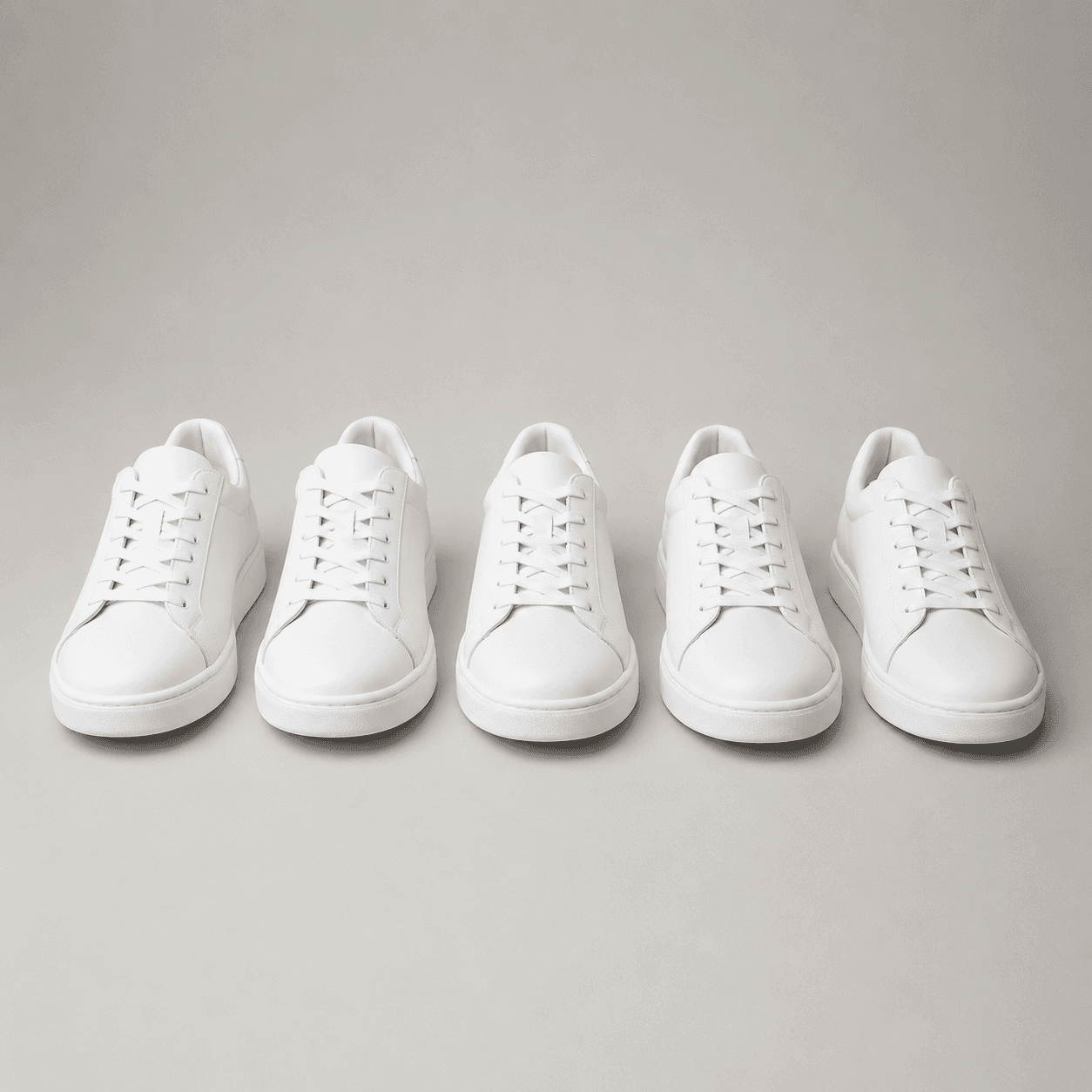
A shoe factory quotation is a costing document, not a casual price indication. In footwear, the supplier prices the style from construction, material consumption, labor minutes, packaging, testing, and order structure. A change from 120 GSM tricot lining to 180 GSM sandwich mesh, from 4 mm EVA sockliner at 0.16 g/cm3 to molded PU at 0.22 g/cm3, or from stock outsole to custom logo tooling can move cost by $0.15 to $1.80 per pair. If the buyer sends only photos, the factory can only issue a budget estimate.
For sourcing managers, importers, and brand owners buying in volume from China, the goal is not the lowest opening FOB. The goal is a quote that survives development, fit correction, lab testing, packaging approval, and PO placement with minimal revision. A disciplined footwear RFQ makes supplier comparison cleaner, exposes hidden charges early, and reduces the common problem of re-pricing after confirmation sample stage.
This article explains what a quotation is, how it works inside a factory costing process, why accuracy matters commercially, and when to request an estimate versus a final quote. The focus is footwear-specific and supplier-side: MOQ by construction, sample lead times in days, typical tooling charges, realistic $/pair cost drivers, EN ISO and ASTM implications, outsole hardness, textile GSM, foam density, and packaging details that buyers often miss.
In footwear, the cheapest quote is often the quote with the most assumptions hidden inside it.
What a shoe factory quotation actually includes
A proper shoe factory quotation is the factory's priced response to a defined bulk order request. At minimum, it should state trade term such as EXW or FOB, MOQ per style and per colorway, unit price by quantity break, sample charge, mold or tooling cost if applicable, sample lead time, bulk lead time, payment terms, and quotation validity. In footwear, a serious quote also states what is included in the price: standard shoe box, tissue, silica gel, size sticker, polybag, export carton, logo plate, and whether any internal testing is assumed.
The quotation is built from cost blocks. Upper material, lining, foam, toe puff, counter, insole board, strobel, sockliner, midsole, outsole, lace, eyelet, logo application, packaging, labor, wastage, overhead, and target margin all sit inside the final $/pair. If any of those are not defined in the shoe costing request, the supplier must guess. Those guesses are the main reason bulk pricing later changes.
- Typical MOQ per colorway: 300 to 500 pairs for basic cemented casual shoes, 600 to 800 pairs for cupsole or vulcanized styles, 800 to 1,200 pairs for technical or safety bottoms
- Typical MOQ per style: 600 to 1,200 pairs with open outsole, 1,500 to 3,000 pairs when a custom outsole mold is required
- Typical quote validity: 15 to 30 days; rubber, PU synthetic, and freight volatility can shorten this to 7 to 15 days
- Typical sample lead time: 7 to 12 days for upper-only revision, 12 to 20 days for outsole color or material change, 20 to 35 days for new bottom development
- Typical payment terms: 30% deposit and 70% before shipment; some factories offer 20/80 only for established accounts
What should appear in a usable quotation sheet
A reliable quotation sheet should list style code, product category, construction type, destination market, size range, size ratio, upper and lining specification, outsole material, branding method, MOQ, unit price, tooling list, sample fee, sample timing, bulk timing, packaging basis, testing basis, and payment terms. If those fields are absent, the quote is too vague to compare across factories.
For example, a vulcanized sneaker quoted at $6.90/pair FOB tells you almost nothing by itself. Is the upper 12 oz canvas or 16 oz canvas? Is the foxing rubber-rich or high-styrene blend? Is the sockliner a flat 3 mm EVA insert or a 5 mm molded PU insert with arch? Are the eyelets plated and nickel-free? Those are not minor details. They change both cost and compliance risk.
What factories often exclude unless the buyer specifies it
Many first-round quotes exclude third-party lab testing, retailer ticketing, anti-mold treatment, spare lace pack, custom hangtag, individual polybag, barcode application, and drop-test-grade carton. They may also exclude mold ownership terms, mold maintenance, failed-test remake liability, and special carton marks for DC routing.
If your project requires EN ISO 20345, EN ISO 20347, ASTM F2413, REACH restricted substances, CPSIA for children's footwear, or buyer-specific slip and abrasion standards, state that before the supplier quotes. Otherwise the factory will cost against a normal commercial material package, and the first footwear sourcing quotation will look lower than the true production cost.
How the factory builds the price
Factories do not calculate footwear from a picture alone. They calculate from material consumption and process cost. Consumption means how many square feet, kilograms, meters, or pieces are required for each component, plus cutting loss and process waste. Process cost means labor minutes and machine usage from cutting through packing. A photo does not tell the factory whether the upper synthetic is 1.0 mm or 1.4 mm, whether the lining is 120 GSM tricot or 180 GSM sandwich mesh, or whether the sockliner is die-cut EVA or molded PU with top cloth and heel cradle.
The stronger the specification, the narrower the quote variance. On a photo-only inquiry, a supplier may give a broad budget range such as $10.80 to $13.50/pair FOB. With a clear BOM, size breakdown, and packaging spec, the same supplier may quote $12.18/pair at 1,200 pairs, $11.86/pair at 3,000 pairs, and state exactly what assumptions support those numbers.
- 01Confirm construction: cemented, strobel-cemented, vulcanized, cupsole, direct injection, direct attach, welted, or safety build.
- 02Calculate upper consumption by panel, backing, reinforcement, foam, lining, tongue, and logo process, then add cutting waste.
- 03Cost the bottom package: outsole, midsole, shank, strobel board, insole board, sockliner, and adhesive or direct-injection compound.
- 04Estimate labor minutes by process: cutting, stitching, preparation, lasting, sole attaching, trimming, finishing, inspection, and packing.
- 05Add development charge, tooling charge, test allowance, defect buffer, overhead, and required margin.
- 06Adjust the result for MOQ, color split, size run, material supplier minimums, and requested delivery window.
Material details that move the quote fastest
Upper material assumptions are the first place where pricing shifts. A casual trainer in 1.4 to 1.6 mm microfiber can cost $0.40 to $0.90/pair more than the same pattern in entry-grade 1.0 mm PU synthetic. A 280 GSM knit upper is not equivalent to engineered knit with TPU yarn support, hot-melt film, and laminated foam. A 4 mm EVA sockliner at 0.16 g/cm3 is not equivalent to 5 mm open-cell PU at 0.20 to 0.22 g/cm3 with mesh cover and printed logo.
Bottom material matters just as much. TPR, rubber, EVA, phylon, PU, and TPU all behave differently in both cost and test performance. A rubber cupsole with custom color fleck and sidewall logo may add $0.35 to $0.80/pair over a standard monochrome cupsole. A dual-density PU safety outsole that must meet EN ISO 20345 slip and fuel-oil resistance can add several dollars per pair compared with a basic casual EVA/TPR bottom.
MOQ, color split, and size ratio directly change cost
MOQ is a costing variable, not just a sales condition. If the order is 600 pairs split across 4 colorways and 11 sizes, the factory buys materials inefficiently. Mesh is bought by roll, synthetic by meter, outsole compounds by batch, and boxes by print run. Small color splits create leftovers, lower cutting yield, and increase setup time. A style priced at $9.60/pair FOB for 1,200 pairs in 2 colors may rise to $10.50 to $11.10 when the same total is split into 4 colors.
Size ratio also affects quoting accuracy. Larger sizes consume more upper area and use heavier bottoms. A men's EU 39-45 run costs differently from a mixed EU 36-46 run with substantial volume in EU 45 and 46. If the buyer does not provide the size split, many factories quote on an average size assumption and revise after ratio confirmation.
Information to include in a shoe quotation request
| RFQ item | What to specify | Why it affects price |
|---|---|---|
| Style and construction | Men's casual sneaker, strobel-cemented cupsole construction | Defines labor route, machinery, and assembly complexity |
| Upper material | Microfiber 1.4-1.6 mm with brushed finish and backing | Upper material grade is a major cost driver |
| Lining and padding | Sandwich mesh 150 GSM, collar foam 8 mm, tongue foam 10 mm | Changes comfort level, material consumption, and stitching time |
| Bottom unit | Rubber cupsole 520-560 g/pair, hardness 60±3 Shore A | Bottom weight and compound heavily affect cost |
| Sockliner and insole | Open-cell PU 5 mm, density 0.20-0.22 g/cm3, mesh top cover | Affects comfort claim, durability, and material price |
| MOQ and color split | 1,200 pairs total, 600 pairs/color, 2 colors | Controls material buying efficiency and waste |
| Size range and ratio | EU 39-45 with exact pair split by size | Changes consumption, carton mix, and average pair cost |
| Branding | Deboss tongue patch, printed sockliner, woven size label | May require tooling and extra labor steps |
| Packaging | 1 pair per box, 350 gsm box board, tissue, barcode, 5-ply carton | Packaging commonly adds $0.20-$0.80/pair or more |
| Testing and compliance | REACH, EN ISO 20347 or ASTM F2413 where applicable | Can require upgraded materials, test fees, and more lead time |
| Lead time target | Development 10 days, confirmation 12 days, bulk 45 days | Rush timing may increase cost or narrow factory options |
| Trade term | FOB Xiamen or EXW factory | Required for valid price comparison |
Why quotation accuracy matters
An inaccurate quote rarely fails on day one. It fails after the buyer has approved development samples, fit adjustments, logos, and timelines. Then the supplier states that the confirmed material, larger outsole, extra packaging, or required testing was not in the original assumption. At that point the project has already consumed time and margin.
Accurate pricing also determines whether supplier comparison is meaningful. If three factories quote the same design but one assumes 0.18 g/cm3 sockliner foam, one assumes molded PU at 0.22 g/cm3, and one excludes testing and special packaging entirely, the prices are not comparable. The lowest quote may simply be the least complete one.
Testing and compliance are common sources of re-pricing
Many quotations break after lab testing because the required standard was not included at RFQ stage. If the outsole must pass buyer slip testing on wet ceramic, or abrasion must meet a retailer benchmark closer to SATRA-style wear limits, the initially quoted compound may fail. The supplier then has to adjust rubber ratio, hardness, tread geometry, or adhesive. That can add $0.20 to $1.20/pair and 7 to 15 days.
For safety, school, uniform, and children's footwear, compliance is even more sensitive. EN ISO 20345 and ASTM F2413 programs may require tested toe caps, puncture-resistant midsoles, anti-static performance, and specific sole behavior. Children's shoes may require stricter chemical control on prints, PVC trims, and adhesives. If those conditions were not declared in the OEM shoe inquiry, the first quote is incomplete by definition.
Accurate quotes protect margin and shipment planning
A $0.55/pair gap looks small in a spreadsheet but becomes $13,200 on a 24,000-pair order before duty and freight. Packaging decisions can also distort landed cost. Upgrading from a standard 300 to 350 gsm shoe box to a rigid gift box may add only $0.30 to $0.45/pair, but the larger carton cube can reduce loading efficiency enough to raise total cost more than the packaging delta itself.
A good supplier uses the RFQ stage to suggest cost-down options before tooling and confirmation are locked. Typical examples are reducing outsole weight by 20 to 30 grams, switching quarter branding from welded patch to print, simplifying stitch count, using standard eyelets instead of custom color plating, or reducing foam thickness where it does not affect fit. Those changes are much cheaper to implement before confirmation sample approval.
How to prepare a footwear RFQ that gets a reliable quote
A strong footwear RFQ gives the factory enough technical and commercial information to cost the style without guesswork. It does not need to be a perfect production tech pack, but it must lock the main assumptions. If you only have a benchmark sample, send measured information with it: upper thickness, outsole weight, sockliner thickness, lining GSM, size range, and box requirement.
If you request quotes from several factories, use the same RFQ structure for all of them. Do not ask one supplier to quote from sketches and another to quote from a detailed BOM. A standardized input sheet is the only valid basis for comparing a factory quote shoes response across suppliers.
- Product type: running shoe, vulcanized sneaker, cupsole casual, sandal, slipper, hiking shoe, work shoe, safety shoe, children's shoe
- Construction type: cemented, strobel-cemented, vulcanized, cupsole, direct injection, direct attach
- Trade term and market: EXW or FOB, destination country, retail or industrial channel
- Order plan: trial quantity, repeat forecast, MOQ target per style and per colorway
- Size range and exact pair ratio by size
- Upper, lining, reinforcement, insole board, sockliner, midsole, outsole, and hardware specification
- Branding points and process: print, deboss, embroidery, HF weld, molded logo, woven label
- Packaging details: box style, board grade, tissue, silica gel, barcode label, master carton standard
- Compliance and testing: EN ISO, ASTM, REACH, CPSIA, slip, abrasion, carton drop, colorfastness
- Target dates: development sample, confirmation sample, ex-factory date, and shipping window
Technical information the supplier must have
At minimum, specify upper material type and thickness, textile GSM where relevant, foam thickness and density where relevant, outsole material, hardness if known, insole board type, closure type, logo method, and target pair weight if available. If the shoe is performance, outdoor, occupational, school, or washable footwear, state the functional requirements clearly: anti-slip, anti-static, puncture resistance, water resistance, hydrolysis resistance, or machine wash tolerance.
Useful RFQ language is measurable. For example: microfiber upper 1.4 to 1.6 mm, sandwich mesh lining 150 GSM, tongue foam 10 mm, collar foam 8 mm, strobel board 2.5 mm nonwoven, open-cell PU sockliner 5 mm at density 0.20 to 0.22 g/cm3, rubber outsole hardness 60 plus or minus 3 Shore A, target outsole weight 540 g/pair in sample size EU 42. That level of detail sharply reduces quote drift.
Commercial details buyers often forget
Size ratio, labeling language, packing method, payment term, and delivery window are frequently missing from the first shoe costing request. In footwear, these affect cost immediately. A difficult size run changes material consumption. Retailer pairing rules and barcode placement add labor seconds per pair. Individual polybags, anti-mold stickers, paper stuffers, and 5-ply export cartons all add cost. Payment terms can also change the supplier's risk loading.
Also tell the factory whether you want first-order pricing or a framework price based on annual volume. If the opening order is 1,200 pairs but the annual forecast is 36,000 pairs, some suppliers will sharpen FOB pricing, absorb part of the sample cost, or spread tooling amortization. If it is a one-time buy, they usually will not.
When to ask for an estimate, target quote, or final quotation
Different sourcing stages need different pricing depth. Many buyers ask for a fixed final price while the shoe is still evolving. That creates repeated revisions and frustration on both sides. In footwear, it is better to separate estimate, target quote, and final quotation because each serves a different purpose.
Using the right quotation type at the right stage saves time and reduces false price expectations.
- 01Estimate: use during concept review or supplier screening when only photos, sketches, or a benchmark sample are available.
- 02Target quote: use when construction, key materials, MOQ, size range, and packaging basis are mostly defined.
- 03Final quotation: use when fitting is approved, material comments are closed, compliance assumptions are fixed, and packaging is confirmed.
When an estimate is enough
An estimate is enough when the buyer needs quick commercial direction. If a knit runner must stay near $8.80 FOB or a metal-free safety shoe must stay below $20.50 FOB, a budget quote helps screen out unsuitable suppliers. Ask the factory to mark the number as budgetary and list the key assumptions behind it.
Do not use an estimate to confirm retail margin, sign a sales contract, or commit delivery. In footwear, the gap from estimate to final can be wide if bottom unit, compliance level, or material grade is still open.
When to request a final footwear sourcing quotation
Request a final footwear sourcing quotation after fit is accepted, materials are substantially confirmed, logo applications are fixed, and the packaging structure is settled. If the outsole is custom, confirm mold cost, number of cavities, ownership, wear-test trial, and whether future maintenance or replacement is extra.
At this stage, the quotation sheet should show unit price by quantity break, sample fee paid and whether it is refundable, tooling list, sample lead time, production lead time in calendar days, carton size, GW and NW, and payment term such as 30% deposit and 70% before shipment. This is the version purchasing should use for PO negotiation and approval.
Common mistakes that make quotations unusable
Most quotation failures come from incomplete RFQs or from factories responding too quickly without clarifying assumptions. Stable pricing requires both sides to be explicit early. In footwear, speed at inquiry stage often creates delay later.
If one supplier looks unusually cheap, check what has been omitted before treating the price as a real saving.
- Sending only inspiration photos and asking for fixed FOB
- Using vague language such as 'soft foam', 'good mesh', or 'durable rubber' with no density, GSM, or compound detail
- Ignoring MOQ per colorway and expecting blended price on 80 to 100 pairs per color
- Leaving EN ISO, ASTM, REACH, CPSIA, slip, abrasion, or carton drop requirements until after sample approval
- Failing to confirm whether outsole mold, logo die, test fee, and confirmation sample charges are included
- Adding custom box, multilingual labels, anti-mold packing, or retailer carton marks after quote approval
- Comparing EXW with FOB or comparing quotes built on different packaging and testing assumptions
- Assuming the development sample material is automatically the approved bulk material
SoleForge manufactures casual sneakers and sandals & slippers under OEM and ODM for brands and importers worldwide. Request a quote with your tech pack or reference pair and we'll reply within one business day.