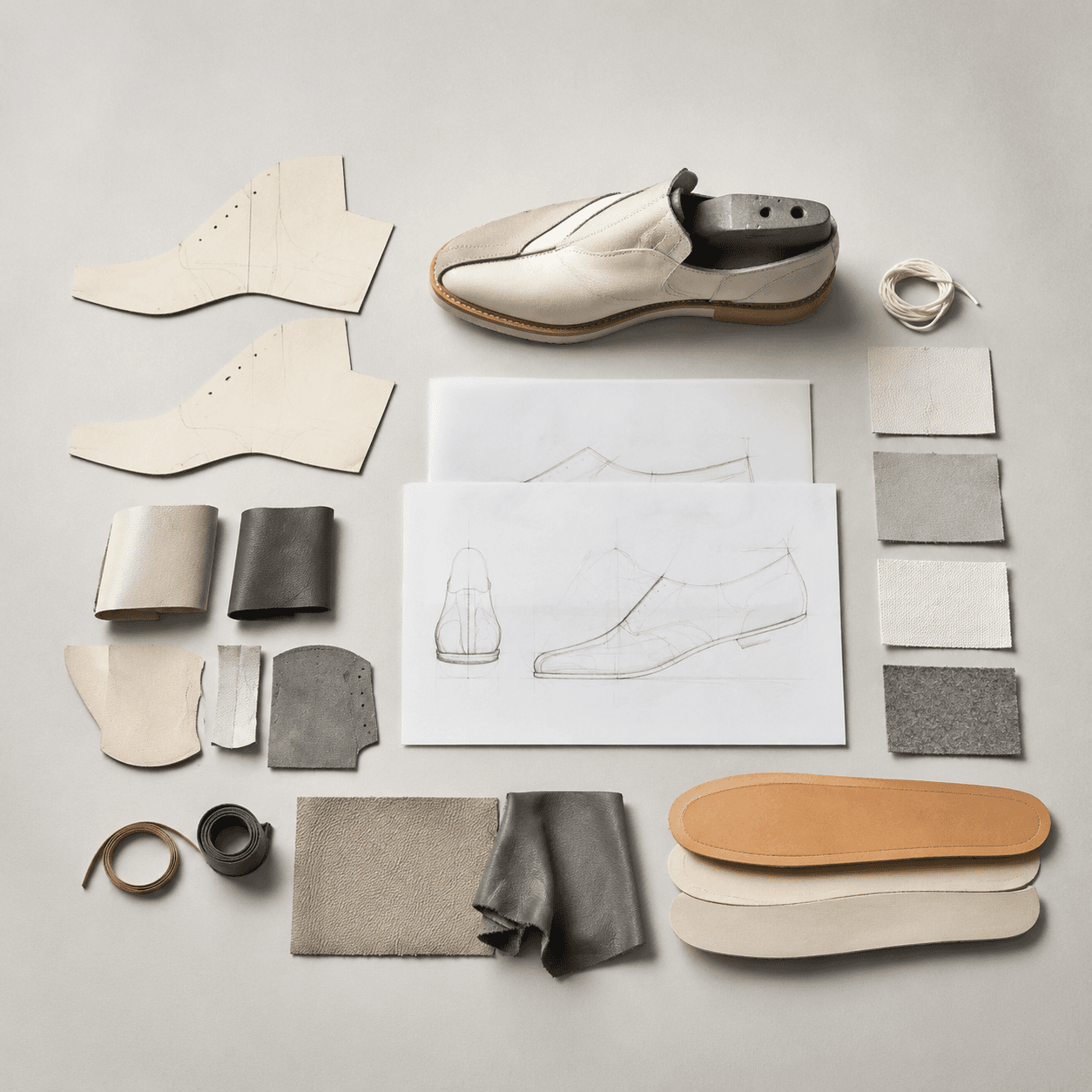
Bulk buying sandals and slippers fails at the same points repeatedly: incomplete specifications, unrealistic MOQ assumptions, and quotations built from reference images instead of technical data. A reliable custom sandals manufacturer should quote from a defined bill of materials: upper fabric GSM, foam density, outsole compound, Shore hardness, logo process, packaging method, and destination compliance. Without that, the first price is only a placeholder.
Retail and hospitality products may look similar, but the factory route is different. Retail slides are driven by shelf appeal, repeat wear, and margin per pair. Hospitality slippers are driven by room cost, anti-slip performance on tile, odor control, packing hygiene, and pair consistency. The construction, inspection points, and carton efficiency should reflect that difference from the first sampling round.
This article breaks the category down by specification and cost. It shows how sourcing managers, brand owners, and importers can buy private label slippers, evaluate a hotel slippers supplier, and place custom slide sandals OEM orders through a sandals factory China program using practical MOQ, lead times in days, realistic $/pair ranges, and test references used in actual bulk sandals sourcing.
The price that matters is not the first price; it is the repeatable bulk price tied to a locked specification.
Set the product brief before asking for price
The factory cannot give a stable quote until the end use is fixed. A guest-room slipper, spa slipper, pool slide, airline slipper, and retail shower slide may share one visual direction, but they require different outsole friction, upper weight, footbed compression, and packing. If the inquiry only shows artwork and silhouette, the supplier will quote against assumptions and re-cost later.
At minimum, the product brief should lock five commercial variables: use environment, target ex-factory price, expected wear cycle, compliance market, and packaging format. For example, a disposable hotel slipper at $0.48-$0.62 per pair ex-factory will use a very different material package from a reusable spa slipper at $1.80-$2.60 or a retail slide at $3.20-$5.50. A supplier-side quotation becomes usable only when those boundaries are written into the RFQ.
- 01Define channel and usage: hotel room, spa, poolside, airline, promotional, retail chain, or e-commerce.
- 02Define wear duration: single-use, short-stay reusable for 2-7 days, or repeat retail wear over several months.
- 03Define target cost: for example $0.40-$0.80 for economy hospitality, $0.90-$1.80 for better hotel slippers, or $2.50-$6.00 for retail slides ex-factory.
- 04Define destination and compliance: REACH, CPSIA, California Proposition 65, buyer RSL, and any EN ISO or ASTM performance requirement.
- 05Define packing at inquiry stage: loose in carton, individual polybag, paper band, pouch, printed box, hanger, barcode label, or master poly set.
Material and construction choices that change cost fastest
In sandals and slippers, cost is set by weight, labor steps, and waste rate. Logo decoration is usually not the main driver unless embroidery, molded branding, or multi-position transfers are involved. Buyers should review the product by component: upper, lining, padding, insole or footbed, outsole, branding, and packaging. This is the only way to compare quotations from different factories on the same basis.
For private label slippers, common upper materials are non-woven PP, coral fleece, velour, waffle, terry, brushed knit, and microfiber. Economy room slippers usually sit around 180-220 GSM. Better hospitality programs use 230-320 GSM. Premium spa slippers are commonly 320-450 GSM with cleaner edge binding and fuller upper padding. Upper backing is often 2-3 mm sponge in economy builds and 3-5 mm sponge in mid-grade and premium builds. Needle-punch felt may be used where shape stability matters more than surface softness.
For retail slides and sandals, standard upper options include PVC, PU, microfiber, neoprene, woven webbing, engineered mesh, and molded EVA straps. If comfort is a selling point, request measured EVA density and outsole hardness rather than soft-hand descriptions. EVA density around 0.18-0.22 g/cm3 is common for low-cost soft slides. Density around 0.23-0.28 g/cm3 generally improves rebound and reduces collapse in repeated wear. Outsole hardness is often specified at Shore C 45-55 for soft indoor comfort and Shore C 55-60 where wear resistance and shape retention are more important.
Hotel slipper construction options
The basic hotel slipper is usually a stitched textile upper on 3-5 mm EVA or dot-cloth sole, packed with a paper band or plain polybag. Open-toe is common for tropical markets, spa use, and lower room-cost programs. Closed-toe gives a cleaner presentation and supports embroidery or centered print placement more easily. Mid-range reusable hotel slippers often move to 5-7 mm EVA with fabric wrap and anti-slip dot fabric or TPR bottom. Better spa slippers typically build to 8-10 mm total footbed thickness, use upper fabric above 300 GSM, and require cleaner cutting and binding to avoid fray after short reuse cycles.
Where anti-slip is critical, ask the hotel slippers supplier what sole surface is used on glazed ceramic tile. Dot-fabric soles are low cost but inconsistent across wet conditions. Thin TPR sheets and patterned EVA bottoms cost more, but they usually provide more predictable traction and quieter contact on corridor floors. For hotel chains, this performance difference matters more than a $0.05 saving per pair.
Custom slide sandals OEM routes
The main production routes are one-piece injection EVA, two-piece molded EVA with inserted or fixed strap, and outsole-plus-upper assembly using padded or lined straps. One-piece injection EVA is the most efficient on labor and usually offers the best size consistency. If the factory has a suitable mold already, MOQ often starts around 1,000-1,500 pairs per color. If upper and outsole are assembled, practical MOQ is more often 1,500-3,000 pairs per color because labor content and material sourcing are higher.
If a new outsole mold is required, tooling can range from about $300 for a simple modification to $2,500-$3,500 for a new adult size-set mold, depending on sculpting depth, texture, logo engraving, and size coverage. Many factories quote against standard mold groups such as EU 36-41 and EU 42-46. Buyers should verify whether mold cost is charged separately, amortized into unit price, or refunded after a volume threshold. That point affects the true comparison between suppliers.
Typical component and cost drivers for custom sandals and slippers
| Component / driver | Typical range | Notes |
|---|---|---|
| Upper fabric for hotel slippers | 180-450 GSM | 180-220 GSM for economy room use; 230-320 GSM for better hospitality; 320-450 GSM for spa and premium programs. |
| Upper backing / sponge | 2-5 mm | 2-3 mm common for economy softness; 3-5 mm gives fuller handfeel and better upper shape. |
| Retail slide upper material | $0.25-$1.60 / pair | PVC and simple PU at low end; padded microfiber, neoprene, and lined straps at higher end. |
| Insole / footbed thickness | 3-15 mm | 3-5 mm for disposable slippers, 5-8 mm for reusable hospitality, 10-15 mm for comfort-led retail slides. |
| EVA density | 0.18-0.28 g/cm3 | Lower density feels softer; higher density improves rebound, support, and shape retention. |
| Outsole hardness | Shore C 45-60 | 45-55 for softer indoor comfort; 55-60 for better wear resistance and shape stability. |
| Outsole material cost | $0.12-$1.40 / pair | Dot cloth and thin EVA are budget options; TPR, molded EVA, and rubberized compounds cost more. |
| Logo application | $0.02-$0.45 / pair | Screen print is lowest cost; emboss, embroidery, woven label, and heat transfer increase setup and labor. |
| New mold / tooling | $300-$3,500 | Depends on size coverage, texture, sculpting depth, and whether an existing mold can be modified. |
| Packaging | $0.03-$0.80 / pair | Polybag and paper band are basic; pouches, printed boxes, and full barcode sets add cost and cube. |
| MOQ | 800-10,000 pairs | Lower with existing molds and stock materials; higher with custom dyeing, custom boxes, or molded logos. |
| Sampling lead time | 5-14 days | Standard slippers are faster; new uppers, color matching, and mold changes move toward the upper end. |
| Mass production lead time | 25-60 days | 25-35 days for repeat hotel slippers; 35-50 for most new slides; up to 60 in peak season. |
MOQ, sampling, and production lead times
MOQ depends on material minimums and process complexity, not on a generic factory slogan. For standard hotel slippers made from stock fabric colors and stock sole materials, 2,000-5,000 pairs per style-color is typical. If the order requires custom-dyed waffle fabric, woven size labels, embroidery thread matching, individual pouches, or buyer-specific cartons, MOQ usually moves to 5,000-10,000 pairs because the fabric mill and packaging suppliers have their own minimum runs.
For retail slides based on existing molds and standard upper materials, factories often accept 800-1,500 pairs per color. Once the buyer asks for custom outsole texture, molded logo on outsole sidewall, retail gift box, or exact Pantone foam color, the practical minimum rises. If the order is small but multi-color, a useful cost-saving method is to keep one outsole color across several strap colors. That reduces molded material changeover and lowers dead stock risk.
Sampling should be structured, not improvised. A standard room slipper counter sample can be made in 5-7 days. A retail slide prototype with new upper patterning is usually 7-12 days. New mold work or outsole modification adds roughly 12-25 days depending on the mold shop queue. Bulk production for repeat hotel slippers is often 25-35 days after deposit and final approval. New sandal programs generally require 35-50 days, while complex multi-material slides in peak season can require 50-60 days.
- 01Quote from a tech pack or approved reference sample, including quantity by color, size ratio, and destination market.
- 02Approve material details first: upper GSM, sponge thickness, EVA density, outsole hardness, tread finish, and logo method.
- 03Approve a pre-production sample made from bulk-intended materials; do not approve on substitute stock materials if the color or handfeel matters.
- 04Confirm carton size, pairs per carton, gross weight, barcode layout, and shipping marks before cutting and assembly begins.
Cost breakdown: what actually moves the ex-factory price
Unit price in this category moves mainly with material weight, labor steps, defect risk, and packing volume. In hospitality slippers, upper fabric GSM, sole thickness, anti-slip bottom choice, and individual packing can move cost more than the logo. In retail slides, the main drivers are outsole weight, mold route, upper construction, and whether the strap is plain, padded, lined, stitched, welded, or molded.
As working factory ranges, disposable hotel slippers commonly quote around $0.38-$0.65 per pair ex-factory at volume when using non-woven or light coral fleece uppers, 3-5 mm sole build, and basic packing. Mid-grade coral fleece, waffle, or velour slippers with fuller footbed build usually fall around $0.70-$1.40. Reusable spa slippers with wrapped EVA, anti-slip TPR or patterned bottom, and better bagging generally fall around $1.60-$3.20, depending on upper GSM and outsole sheet thickness.
For retail, one-piece injection EVA slides often start around $1.80-$3.00 per pair using existing molds and standard colors. Two-piece or assembled slides with padded PU, microfiber, or neoprene straps often land in the $3.20-$5.80 range. More sculpted outsoles, dual-density feel, molded logos, larger size runs, or retail box packing can move ex-factory price to $5.80-$7.50 or higher. These are factory-side guide ranges; final price still depends on oil-based material movement, color count, reject allowance, and how concentrated the order is by size and color.
Freight should be reviewed at the quoting stage. Slippers are low-value and space-heavy. A packaging upgrade that adds only $0.05-$0.08 in material can create a larger increase in sea freight cost because of cube. Ask for product net weight, carton gross weight, carton dimensions, and estimated pairs per 20GP and 40HQ during quotation so the landed-cost model is real.
QC points that matter in production, not only on paper
Most claims in this category come from repeatable consistency issues, not catastrophic failure. Typical problems are left-right mismatch, uneven strap placement, outsole warpage, weak embossing, print rub-off, glue marks, odor, and compression dents caused by over-tight packing. The supplier QC plan should check these during in-line production, not wait for final random inspection only.
For hospitality slippers, inspect upper symmetry, stitching consistency, sole centering, edge cleanliness, pair matching, odor, and packaging hygiene. For slides and sandals, inspect strap pull strength, flex cracking at strap joints, print abrasion, outsole traction on wet and dry surfaces, and dimension tolerance across the size run. If the product is intended for hotel corridors or hard flooring, outsole noise should also be checked because some compounds squeak even when slip performance is acceptable.
- Dimensional tolerance: many buyers accept +/- 3 mm on finished outsole length, but tolerance should be agreed by construction and size range.
- Strap pull and seam strength: define the test method in advance, especially for assembled <em>custom slide sandals OEM</em> products with stitched or welded straps.
- Adhesive control: no visible glue overflow from top view; no edge lifting after manual flex and 24-hour conditioning.
- Logo durability: confirm print, emboss, or transfer quality after rub test and after packing compression.
- Compression set: soft EVA footbeds should recover after 24 hours in packed condition without visible collapse line.
- Needle and metal control: important for textile slipper programs supplied to hotel, airline, and healthcare channels.
Compliance, EN ISO and ASTM references, and documentation
Testing should match the material package and sales channel. For adult sandals and slippers, chemical checks commonly include REACH SVHC screening, phthalates on PVC or soft plastic parts, azo dyes on dyed textiles, and California Proposition 65 if the customer requires it. For children's products, buyers usually add stricter label requirements and a tighter restricted substances list. A supplier should confirm whether tests will be run on finished goods or on high-risk materials before assembly to avoid full-lot exposure.
On performance, the usual checks are slip, seam or bond strength, flexing, abrasion, odor, and wear. Hospitality buyers often ask for anti-slip evidence on ceramic or coated flooring. Retail buyers may ask for internal flex and wear tests plus third-party verification where needed. Common references requested by buyers include EN ISO and ASTM methods for slip and material performance. The exact standard name should be stated in the product file, because testing wet ceramic for a spa slipper is not the same as testing a dry retail floor sample. The factory should not promise compliance in general terms without naming the method and the test surface.
Documentation should be controlled before shipment: approved BOM, artwork sign-off, size ratio, carton mark layout, barcode list, packing instruction, material declaration, and any agreed test reports. If the upper textile is custom dyed, request a lab dip or swatch approval and define acceptable shade tolerance under the agreed light source. If EVA density is a comfort-critical parameter, the supplier should state the target and tolerance in the internal spec, for example 0.24 g/cm3 +/- 0.02. This keeps bulk production aligned with the approved sample.
How to manage a sandals factory China program without re-costing
The cleanest orders are not always the simplest-looking ones; they are the ones documented correctly. Re-costing usually comes from late changes to outsole thickness, upper GSM, packing, logo scale, or color after the first quote. Even a small change, such as moving from 220 GSM coral fleece to 320 GSM waffle or from bulk pack to individual pouch, can shift unit cost and carton loading enough to reopen the quotation.
The buyer should issue one version-controlled specification with upper material code, GSM, foam thickness, EVA density, outsole hardness, tread pattern, logo position and size, size run, pairing method, barcode placement, and inspection standard. For retail slides, add mold number, footbed texture, strap attachment method, and any Shore hardness requirement. For hotel slippers, add open-toe or closed-toe, universal or left-right shape, thread color requirement, and each-pair packing method.
A dependable custom sandals manufacturer is not simply the supplier with the lowest opening price. The better supplier is the one that can turn the tech pack into repeatable bulk output, state MOQ honestly, identify material risks before sampling, and provide shipping data that matches actual carton loading. That is what protects margin when the order moves from development to mass production.
SoleForge manufactures sandals & slippers under OEM and ODM for brands and importers worldwide. Request a quote with your tech pack or reference pair and we'll reply within one business day.