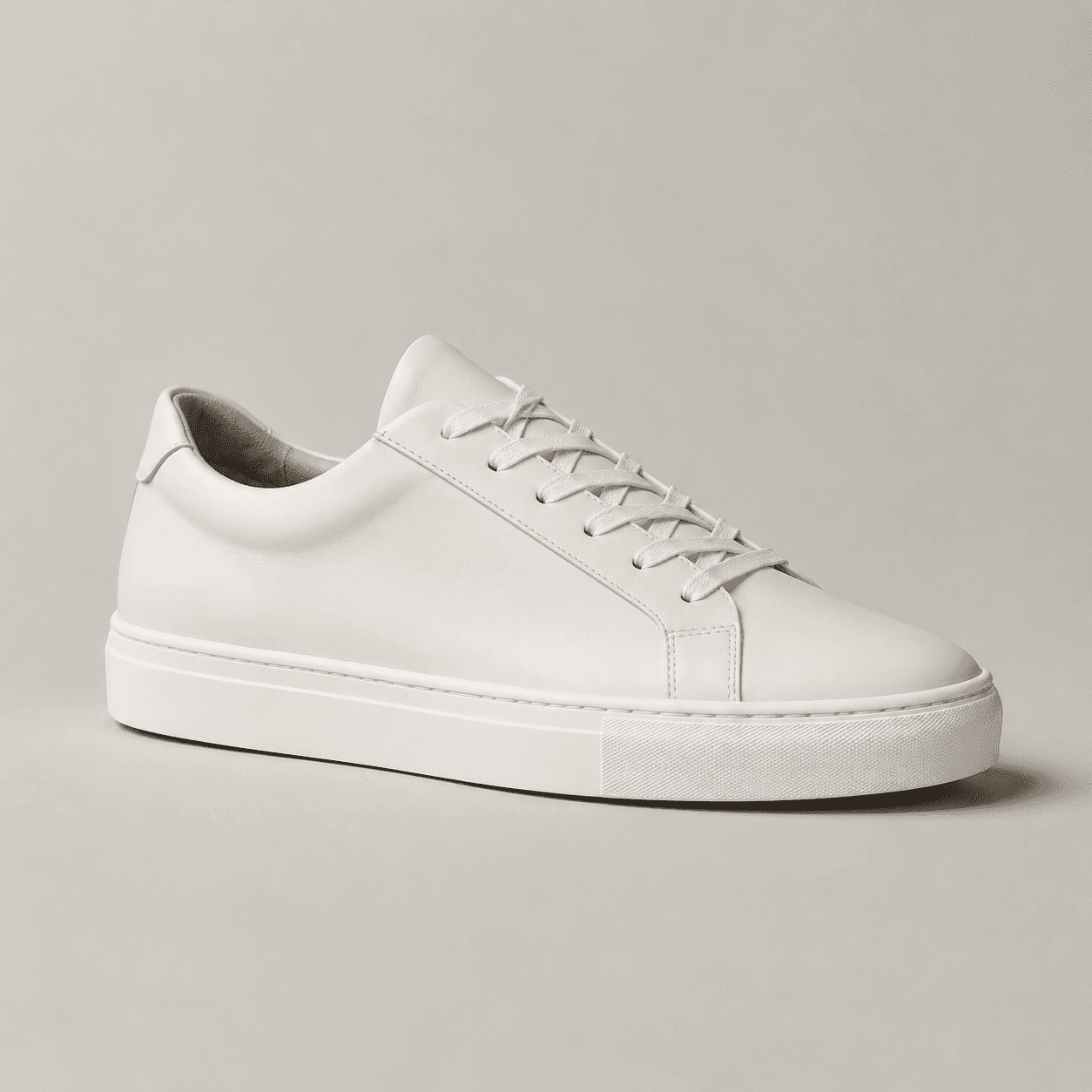
A fast reorder footwear program is not a rush order. It is a pre-engineered replenishment setup where the factory has already fixed the last, outsole, BOM, grading, packaging, and key suppliers, then reserved enough material or semi-finished capacity to shorten the next PO. If the supplier still needs to confirm fit, reopen outsole production, or source a custom mesh from zero, the program is not fast; it is only a smaller standard order.
For sourcing managers, brand owners, and importers buying footwear in bulk from China, the commercial target is simple: keep proven SKUs selling without tying up cash in slow-moving finished inventory. The factory-side execution is less simple. The supplier must manage outsole MOQ, upper material call-off, carton print minimums, line loading, and repeatable QC so that repeat order shoes can ship in 12-30 days ex-factory instead of the usual 35-55 days.
This guide is structured as a buyer decision process. Each section covers one factor that determines whether a supplier can support reliable best seller replenishment: SKU discipline, construction choice, component MOQ, replenishment lead time, inventory model, repeat-order QC, compliance continuity, pricing logic, and operating rhythm. The point is not to ask whether the factory offers fast reorder. The point is to verify how it is built.
In footwear, fast reorder is created before the PO lands: frozen construction, booked components, measurable specs, and a forecast the factory can schedule with confidence.
Define the reorder SKU more narrowly than the selling SKU
Many replenishment problems start with a loose SKU definition. On a sales sheet, one bestseller may look like one style. In production, it can become multiple technical variants once you change upper color, foxing color, sockliner print, logo placement, lace tip finish, box label, or carton mark. Each variation creates a separate material planning problem and usually pushes the style out of a true replenishment window.
A usable fast reorder footwear program should be based on one approved last, one outsole mold code, one strobel or board specification, one insole package, one packing method, and a limited color range. For example, a cemented runner using 300 plus or minus 20 GSM sandwich mesh, 1.30 plus or minus 0.10 mm PU microfiber eyestay, 45-50 Asker C insole foam, and 58-60 Shore C compression EVA can often be repeated quickly across black, white, and grey. The same style becomes much slower if it adds suede overlays, reflective film, custom molded clips, or color-specific carton artwork.
Keep replenishment styles out of seasonal development traffic. Once a style enters repeat mode, the BOM, grading, carton spec, size range, and labeling route should be frozen. Any material upgrade, logo revision, or holiday packaging should move to a separate development path and a separate PO timeline.
- Ask whether reorders are controlled by style code, color code, or full SKU including packaging version.
- Confirm which elements are frozen: last number, outsole mold, footbed spec, upper pattern, logo method, polybag, box, and carton mark.
- Ask how many colorways can run under one replenishment program without reopening material booking.
- Define which changes reset the order to normal lead time: outsole color, upper base material, lining, print, size run, or carton artwork.
Choose constructions that can actually be replenished fast
Not every footwear category supports short-cycle replenishment. Cemented casual sneakers, vulcanized canvas styles, injected EVA clogs, and basic knitted runners with standard bottom units are usually the best candidates for quick turnaround shoe orders. Waterproof hikers, fashion cupsoles with heavy trim content, stitched-down boots, and certified safety shoes are slower because there are more controlled components, more process steps, and less tolerance for substitution.
The fastest repeat styles use local materials with stable domestic supply. A textile runner built with 280-320 GSM air mesh, 1.2-1.4 mm PU synthetic, 3-4 mm SBR backing foam, standard polyester lace, tricot lining, and compression-molded EVA with common rubber pads can often restart within 2-5 days of PO release if stock is reserved. A leather sneaker using nominated cow suede, custom eyelets, molded TPU clips, and painted sidewalls may lose 10-18 days waiting for upstream suppliers alone.
If your bestseller is already technically complex, the question is not whether the factory can make it again. The question is whether the supplier will carry the risky items in advance: outsole inventory, custom trims, imported films, knitted uppers, or stitched upper packs. Without that commitment, the lead time remains normal even if the style has been produced before.
- Ask which constructions in the factory achieved the shortest stable repeat lead times in the last 12 months.
- Request material lead-time days by component: mesh, synthetic, lining, foam, lace, webbing, logo trim, outsole, and carton.
- Check whether the outsole is open mold, exclusive mold, or buyer-owned mold with dedicated capacity.
- Ask if the factory can hold molded outsoles, cut panels, or stitched uppers for top-volume styles.
Materials that reorder faster and materials that slow the program down
Lead-time risk is lowest on commodity materials with dense local supply. These usually include common flyknit yarns, 600D-900D polyester, black or white PU synthetic leather, standard tricot lining, 3-5 mm open-cell foam, EVA insocks in standard hardness bands, TPR foxing, and standard woven labels. These are the materials most factories can call off in 2-7 days if the supplier relationship is stable.
Risk rises sharply on imported films, reflective transfers, custom jacquards, supercritical foam compounds, water-based printed skins with color matching limits, nominated leather from one tannery, or custom-milled rubber in one Pantone. For repeat orders, ask the supplier to classify each BOM line as stock, reservable, or high-risk. Stock means 2-5 day call-off. Reservable means 7-15 days with forecast support. High-risk means 20 plus days, unstable MOQ, or lot-to-lot inconsistency that can affect shade, handfeel, or compliance.
Typical reorder setup by footwear type
| Footwear type | Usual reorder MOQ | Typical ex-factory reorder lead time | Best inventory model | Main risk points |
|---|---|---|---|---|
| Basic EVA slide or slipper | 1,200-3,000 pairs per style | 10-18 days | Finished goods or molded stock | Color consistency, mold capacity, carton MOQ |
| Cemented casual sneaker | 800-1,500 pairs per style | 15-25 days | Reserved raw materials | Upper material availability, outsole stock, bond consistency |
| Knit running shoe | 1,000-2,000 pairs per style | 18-30 days | Yarn and outsole reservation | Knit lead time, foam density stability, size ratio changes |
| Vulcanized canvas shoe | 1,200-2,400 pairs per style | 20-30 days | Semi-finished upper plus foxing stock | Foxing color, curing capacity, print registration |
| Safety shoe | 1,000-2,000 pairs per style | 30-45 days | Reserved critical components | EN ISO or ASTM continuity, toe cap and plate supply, slip test repeat |
Set MOQ at component level, not only at finished-pair level
A buyer may hear that reorder MOQ is 600 pairs per color and assume the style is replenishment-ready. In footwear, that statement is incomplete. The real limit often sits one level below the finished shoe: 1,200 pairs equivalent for the outsole color compound, 2,000-3,000 units for printed shoe boxes, 5,000 pieces for a custom woven tongue label, or one full roll minimum for laminated upper material. If those thresholds are not planned in advance, the factory either delays the PO, blends lots, or substitutes without enough control.
The most workable stock footwear program uses layered MOQ rules. A common setup is 1,200 pairs per style, 300 pairs per color, fixed size ratio, one outsole color across all uppers, and one shared carton print for all replenishment runs. Another workable structure is to hold 3,000-5,000 pairs equivalent of outsole stock and 60-90 days of core upper materials while cutting and stitching only against incoming demand. That keeps finished-goods risk low but still protects a 15-25 day reorder window.
Small-lot replenishment usually costs more unless the buyer finances material reservation. In basic China-made casual and sport footwear, the premium is often $0.20-$0.80 per pair for repeat orders of 800-1,500 pairs. Below 600 pairs, the surcharge can rise to $1.00-$1.50 per pair because line efficiency drops, carton minimums become inefficient, and material waste increases.
- Ask for MOQ by style, color, outsole color, upper material, sockliner print, logo trim, and carton version.
- Check whether size runs are fixed or whether limited changes are allowed within the same total pair quantity.
- Identify hidden MOQ items: outsoles, strobel boards, insock boards, labels, polybags, tissue, hangtags, and master cartons.
- Request reorder pricing at three volume bands such as 600, 1,200, and 3,000 pairs per style.
Break lead time into production stages and external stages
A factory promise of 20 or 25 days is not enough to evaluate replenishment risk. For best seller replenishment, you need the schedule broken into material call-off, inbound inspection, cutting, stitching, lasting, sole attachment, finishing, packing, final inspection, and export booking. This is how you see whether the supplier is genuinely shortening production or simply quoting an optimistic total.
For a standard cemented sneaker with reserved materials, a credible repeat-order timeline can be: 2-4 days to release stock materials, 1-2 days incoming inspection and issue, 2-3 days cutting and skiving, 5-7 days stitching, 4-6 days lasting and bottom bonding, 1-2 days finishing and packing, 1-2 days final inspection, then 3-7 days waiting for vessel cut-off. If outsoles are not stocked, add 7-12 days. If upper materials are not prebooked, add another 5-10 days. That is why many factories quote 20 days but ship in 32-40 days.
Always separate ex-factory lead time from ETD and landed timing. Also ask how the plant prioritizes repeat orders when the same lines are loaded with seasonal launches, especially from August to October and in the 6-8 weeks before Lunar New Year shutdown. A replenishment program that only works in March is not a real program.
- 01Request a written stage-by-stage reorder calendar with day counts.
- 02Ask which stages are shortened specifically by reserved materials, outsole stock, or semi-finished uppers.
- 03Separate ex-factory date, ETD, and arrival estimate in every quotation and PO confirmation.
- 04Verify lead times for peak season and pre-holiday production, not only off-season timing.
Choose the right stock model: raw materials, semi-finished, or finished goods
There are three practical replenishment models. First is raw-material reservation, where the factory or its sub-suppliers hold outsoles, upper materials, foam, laces, labels, and cartons against your forecast. Second is semi-finished stock, where the plant keeps molded outsoles, cut parts, or stitched uppers ready. Third is finished-goods stock, where completed pairs are stored for immediate dispatch. For most branded casual and sport programs, raw-material reservation gives the best balance between speed and inventory risk.
Finished-goods stock makes sense when demand is stable and the size curve barely moves, such as school shoes, hotel slippers, black service shoes, or some occupational lines. Semi-finished stock works well for vulcanized canvas, simple cemented sneakers, and EVA clogs where final size split or color pack can still be decided late. Raw-material reservation is usually the safest model for fashion-sensitive best sellers because it preserves flexibility on final size ratio while still shortening the factory cycle.
The commercial terms need to be explicit. If the supplier reserves stock for 60, 90, or 120 days, define ownership, aging liability, dead-stock treatment, and whether unused components roll into the next PO. For adhesives, PU, EVA, and laminated foams, also confirm storage condition and shelf-life controls because bond performance and rebound can drift if materials sit too long.
- Ask which inventory model is proposed and why it fits the style’s demand pattern.
- Confirm reservation period in days and the reserved quantity by material code.
- Check whether outsole compounds, adhesives, laminations, and foam materials have shelf-life limits or storage restrictions.
- Ask whether final size ratios and color splits can be adjusted at PO release without surcharge.
Control repeat-order quality with measurable footwear specs
Fast replenishment has little value if the second shipment wears or fits differently from the first. In footwear, repeat-order drift usually appears in upper shade, material thickness, foam rebound, outsole abrasion, bond strength, toe spring, collar volume, and internal fit. These problems are common when the factory changes one sub-supplier to save time or mixes new and old lots without clear limits.
The reorder file should contain measurable tolerances, not only approved photos. For casual and athletic footwear, useful controls include upper GSM or thickness, foam density in kg per cubic meter, EVA density in g per cubic centimeter, hardness in Shore A or Shore C, insole compression set, outsole abrasion, peel strength, color fastness, and dimensional tolerance on key fit points. A realistic example is sandwich mesh at 300 plus or minus 20 GSM, PU synthetic at 1.30 plus or minus 0.10 mm, collar foam at 28-32 kg per cubic meter, die-cut footbed density at 0.18-0.22 g per cubic centimeter, EVA midsole hardness at 58 plus or minus 3 Shore C, and upper-to-sole peel strength minimum 45 N per 25 mm after conditioning.
Keep one sealed golden sample, one approved fit sample in the key size, one color standard, and one tested material file at the factory. On reorders, compare the current lot back to these records rather than relying on memory or commercial photography. For higher-volume SKUs, require in-line checks at upper stitching and pre-pack, not only final random inspection.
- Ask which physical specs are recorded and retained for each production lot.
- Confirm the factory keeps a golden sample, fit sample, and approved color standard on site.
- Check which tests are repeated every PO: bond strength, abrasion, color fastness, dimensional check, carton drop, and size grading verification.
- Ask how the supplier controls lot-to-lot shade variation on textile, synthetic, and knit uppers.
Protect compliance continuity on regulated or retailer-controlled programs
Compliance is often what breaks a replenishment promise. Children’s footwear, slip-resistant service shoes, occupational products, and retailer-managed private label programs may require recurring physical or chemical verification before shipment. A style can be ready for packing in 18 days and still miss vessel cut-off because a lab report, declaration, or retailer submission is incomplete.
For safety and occupational footwear, changes to the toe cap, penetration-resistant insert, outsole formula, anti-slip pattern, upper thickness, or lining package can affect EN ISO 20345 or ASTM F2413 performance. For children’s footwear and retailer-sensitive casual lines, adhesives, coatings, print inks, metallic trims, and sockliner treatments are frequent chemical control points. If the factory wants substitution rights in order to keep lead time short, those rights must be limited to pre-approved equivalent materials with unchanged compliance status and no performance impact.
A stable repeat-order program should define three categories in writing: changes allowed without retest, changes requiring delta testing, and changes requiring full retest. Without that rule, the factory may either overtest and lose time or under-control a change that later creates a shipment hold.
- Ask whether the supplier permits material substitution under the reorder program and who signs off on it.
- Confirm test frequency for physical, chemical, slip, and wear-related performance requirements.
- Check whether compliance files are style-specific, material-specific, or lot-specific.
- Ask what hold-and-release procedure applies if lab results are delayed, borderline, or failed.
Price the speed support separately from the FOB pair price
The cleanest commercial model is to separate the FOB unit price from the services that create fast replenishment. If you want the factory to hold outsole stock, reserve upper materials, preprint cartons, or keep line capacity open, those supports have a cost. If all of it is buried inside one blended pair price, the supplier may quietly reduce the support level later when raw-material markets tighten.
A common structure is base FOB plus defined charges for material reservation, warehousing after a grace period, packaging carry cost, or expedite handling. Another workable model is a quarterly volume commitment in exchange for fixed reorder lead times and no separate reservation fee. In lower-priced basic footwear, carton and simple-material carrying cost may only add $0.03-$0.10 per pair per month. For outsole inventory, custom upper material, and dedicated trim stock, the actual exposure is higher and should be quoted transparently.
Compare these costs against the cost of stockouts. On a proven bestseller, missing one replenishment window often costs more margin than a quarter of reservation fees. The practical sourcing question is not whether speed costs more. It is whether the extra cost is visible, measurable, and tied to a service level the supplier can be held to.
- Ask for reservation, warehousing, and expedite costs as separate line items where possible.
- Check price review terms if EVA, rubber, PU, adhesive, or freight markets move materially.
- Confirm whether the reorder premium changes by lead-time band, order size, or forecast accuracy.
- Request two commercial scenarios: standard replenishment lead time and expedited replenishment lead time.
Run the program with a disciplined forecast and release process
The final decision factor is operating discipline. Reorder planning footwear works when the buyer and factory run a fixed forecast-release rhythm, not when urgent top-up requests arrive from multiple departments with different numbers. The better factories assign one planner to manage outsole booking, material reservation, line loading, and shipment windows for every replenishment style.
Use a rolling 90-120 day forecast by style, color, and size family, then update it every 2-4 weeks. Define the trigger for calling off stock materials, such as inventory dropping below four weeks of cover or on-hand stock reaching 35 percent of one month’s average sell-through. If the supplier is holding materials, a monthly reconciliation of reserved balance, aging stock, and forecast accuracy is required; otherwise the program will drift into dead stock or emergency buying.
One buyer-side owner should consolidate demand from sales, merchandising, and logistics. On the factory side, ask for one named planner and one backup contact. Many reorder failures come from conflicting release signals rather than production incapability, especially when the style is sold across multiple markets with separate carton labels or retailer marks.
- 01Share a rolling 90-120 day forecast every 2-4 weeks by style, color, and size family.
- 02Set reorder triggers by weeks of cover, open PO level, or minimum material call-off quantity.
- 03Review reserved material balances, aging stock, and forecast accuracy every month.
- 04Track actual versus promised ex-factory lead time on every repeat shipment and review misses by root cause.
Key takeaways
- Do not approve a fast reorder footwear program until the supplier defines exactly which style, color, packaging, and component variables are frozen.
- Assess reorder readiness by component MOQ, outsole booking, upstream material lead times, and line capacity, not by finished-pair MOQ alone.
- Require lead time by stage in days and compare promised versus actual ex-factory performance, especially in peak season and before Lunar New Year.
- Choose the stock model deliberately: raw-material reservation for flexibility, semi-finished stock for selected constructions, and finished goods only where demand and size ratio are very stable.
- Lock repeat-order QC with measurable footwear specs such as upper GSM, PU thickness, foam density, EVA hardness, abrasion, and bond strength, then hold a golden sample at the factory.
- Run reorder planning footwear through a 90-120 day forecast cycle with one buyer owner, one factory planner, and monthly stock reconciliation.
SoleForge manufactures casual sneakers and safety & work shoes under OEM and ODM for brands and importers worldwide. Request a quote with your tech pack or reference pair and we'll reply within one business day.