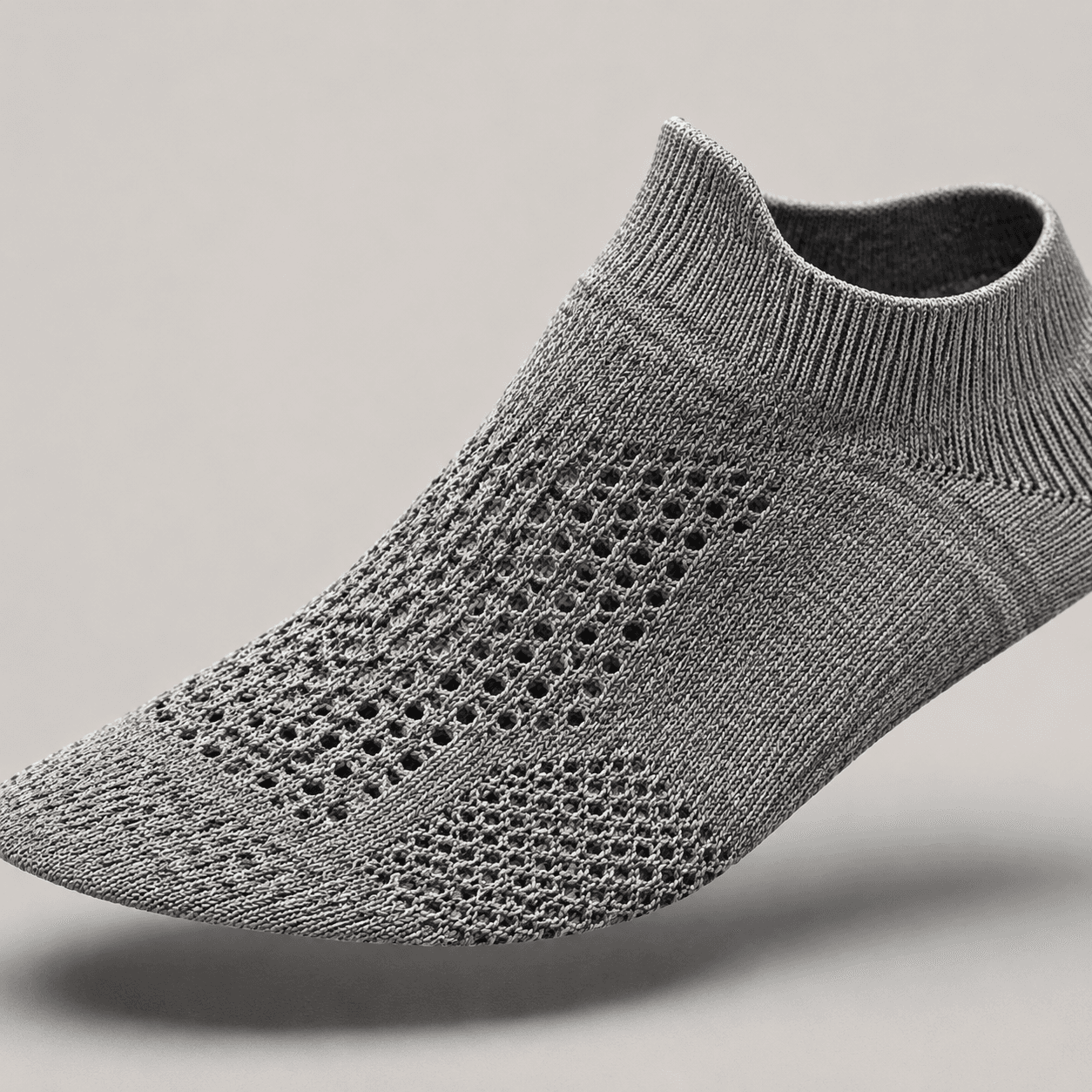
For sourcing managers and importers, lightweight travel shoes are not a lifestyle category. They are a specification-driven product where pair weight, collapse resistance, cushioning retention, outsole wear, and carton efficiency directly affect margin. If a style is sold as packable but returns with crushed heel counters, or sold as comfort-led but bottoms out after two days of city walking, the failure is usually in development control, not in marketing.
A capable lightweight travel shoes manufacturer should translate the retail brief into measurable production parameters: target weight by reference size, upper GSM, insole and midsole density, outsole hardness, flex performance, and sample-to-bulk tolerances. For bulk programs from China, those details are what separate a workable OEM order from a shoe that looks correct in sample room review but becomes unstable, heavy, or inconsistent in production.
This guide covers what lightweight travel shoes are in sourcing terms, how a supplier develops them, why the technical details matter to sell-through and claims rate, and when to choose stock tooling versus custom OEM. The emphasis is practical: MOQ, lead-time days, FOB cost ranges, EN ISO/ASTM-style testing points, and the material specifications that should be locked before costing.
A travel shoe should be approved as a controlled specification, not as a lightweight feeling in the hand.
What lightweight travel shoes are in B2B sourcing terms
In bulk footwear buying, lightweight travel shoes sit between athleisure and casual packable footwear. The key requirement is not only low mass, but low mass with acceptable support, recovery, and wear life. As a sourcing benchmark, women’s styles often target 420-620 g/pair in EU 37, while men’s styles often target 500-760 g/pair in EU 42. Slip-on knit styles can go lower. Rubber-heavy sneakers will sit higher.
The category usually includes engineered mesh sneakers, knit slip-ons, foldable loafers, low-profile cupsole casuals, and EVA-rubber hybrid shoes. Each construction solves one problem while creating another. Knit reduces seam count and weight, but can over-stretch at the collar. Foldable uppers improve suitcase efficiency, but often lose rearfoot hold. EVA outsoles reduce FOB cost and mass, but pure EVA can abrade too quickly on rough pavement if Shore C hardness is too low.
For buyers evaluating lightweight casual footwear, the first question is not whether the shoe feels light in hand. It is whether the construction matches the actual travel use case: airport transfer, hotel and cruise, all-day city walking, or casual leisure packing. Those uses require different foam density, upper stability, and outsole coverage.
Typical material and weight targets by product type
Basic knit or mesh travel sneakers often use upper fabrics in the 220-320 GSM range, with die-cut EVA sockliners at 0.18-0.25 g/cm3 and CMEVA midsoles at 0.20-0.28 g/cm3. Foldable slip-ons usually use lighter uppers, often 180-260 GSM, but need localized reinforcement at vamp and topline to avoid collapse in wear. Premium comfort-led travel sneakers often move to PU footbeds in the 0.22-0.35 g/cm3 range to improve long-walk cushioning retention.
Outsole composition should be defined early. A low-cost travel style may use full EVA or IP/EVA, while a stronger city-walk style often needs rubber contact pods at heel and forepart. That rubber addition commonly adds 35-90 g/pair and $0.25-$0.65/pair, but it usually improves abrasion performance enough to justify the cost in mid-tier retail.
What importers should request in the first spec review
Before asking for final FOB, buyers should request reference-size weight, upper material composition, fabric GSM, foam density, outsole hardness, estimated carton pack ratio, and a proposed test list. If the supplier cannot provide those six items during early costing, the quote is not stable. It will shift after sample confirmation, usually upward in both weight and cost.
For private label travel shoes, also request available stock lasts, existing outsole families, logo limits on stock molds, and the supplier’s minimum order by colorway. These details determine whether the project should stay on a quick-turn platform or move into custom tooling.
How a lightweight travel shoes manufacturer develops the shoe
A supplier-side development flow should start with the tech pack, target market, target FOB, and one or two benchmark samples. The factory then reviews whether the style can run on an existing last and outsole mold, or whether a new outsole and fit block are required. That decision controls the entire timeline. Using stock tooling can save 15-25 days and avoid mold cost, but it can force compromise on toe shape, flex point, and bottom visual identity.
For a typical travel sneaker OEM program, the sample path is: engineering review, material swatch approval, first proto, fit correction, wear-test sample, salesman sample if required, then pre-production sample. On a lightweight program, every stage should carry a pair-weight record in the reference size. If the first sample is 540 g/pair and the PP sample reaches 640 g/pair, the original brief has already been lost.
Most weight creep comes from avoidable changes: thicker collar foam, heavier decorative films, oversized pullers, denser sockliners, larger rubber patches, or replacing mono mesh with double-layer knit. A disciplined factory flags those changes immediately and updates FOB and weight before approval. A weak factory only presents the change when bulk materials have already been booked.
Sample timing buyers should expect
For stock-bottom developments, first proto lead time is typically 7-14 days after material confirmation. Fit-corrected samples usually require another 7-10 days. For new outsole tooling, mold development and sample confirmation generally take 25-40 days, depending on the number of size runs and whether outsole texture needs revision.
Bulk production after PP approval is usually 35-50 days on stock mold programs and 50-75 days on customized OEM programs. Peak-season congestion, especially before August and before Lunar New Year, can add 7-20 days. Importers should ask whether outsole pressing, upper stitching, and assembly are all in-house or split across subcontractors, because subcontracting often adds hidden delay.
Common costing structure from the factory side
For stock-construction travel footwear, MOQs often start at 600-1,200 pairs/style, with 300-600 pairs/color. Simple foldable or slip-on travel shoes usually quote around $4.20-$6.80/pair FOB China. Basic knit or mesh sneakers commonly land at $5.80-$8.80/pair, depending on outsole complexity and insole build.
Customized travel sneaker OEM projects usually require 1,200-3,000 pairs/style. New mold cost for outsole sets often falls between $2,500-$6,500, with higher figures for dual-density bottoms or deep logo textures. FOB is commonly $8.20-$12.80/pair for mid-tier custom travel sneakers with branded details, PU footbeds, and rubber contact pods.
Typical sourcing benchmarks for lightweight travel shoes
| Product type | Common MOQ | FOB China $/pair | Sample lead time | Bulk lead time | Key technical note |
|---|---|---|---|---|---|
| Basic knit travel sneaker | 800-1,200 pairs/style | $5.80-$8.80 | 7-14 days | 35-50 days | Define knit GSM, pair-weight target, and heel slip tolerance |
| OEM comfort travel sneaker with rubber pods | 1,200-3,000 pairs/style | $8.20-$12.80 | 20-35 days | 50-75 days | Check CMEVA density, PU footbed spec, abrasion, and adhesion |
| Packable slip-on or foldable casual | 600-1,000 pairs/style | $4.20-$6.80 | 7-12 days | 30-45 days | Confirm counter construction and recovery after luggage compression |
| Private label EVA travel leisure shoe | 1,000-2,000 pairs/style | $4.80-$7.80 | 10-20 days | 35-55 days | Monitor Shore hardness, shrinkage, odor, and slip performance |
Why technical detail matters in comfort travel shoes sourcing
Most travel-shoe claims originate from predictable engineering gaps. Heel slip usually comes from weak collar patterning, shallow topline shaping, or over-soft heel foam. Bottoming-out comes from low-density EVA or poor compression-set performance. Early outsole wear usually appears when the tread is too shallow or the compound is too soft for urban pavement. Crushed counters and misshapen uppers show up when the shoe is designed to fold but not to recover.
This is why comfort travel shoes sourcing must be treated as a full system, not a single comfort feature. A breathable upper is not enough if the footbed compresses flat within a few hours. A soft ride is not enough if the shoe becomes unstable at the rearfoot. A packable silhouette is not enough if the lining wrinkles and causes heel friction after unpacking.
Factories should be told the intended wear pattern before sampling. A hotel-leisure travel shoe can prioritize lower weight and softer structure. A city-walk travel sneaker needs denser foam, better strobel support, and stronger outsole contact points. The retail channel should determine the build, not the other way around.
Testing points that matter before mass production
At minimum, buyers should align with the factory on upper-to-sole adhesion, outsole abrasion, flexing resistance, colorfastness to perspiration, compression set, and slip performance. Depending on destination market and customer requirement, tests may be referenced to EN ISO, ASTM, SATRA, or retailer internal methods. The exact test code can vary, but the acceptance level must be agreed before order confirmation.
For lightweight travel styles, pair-weight tolerance should be written into the PP approval. A workable control range is often plus or minus 5% in the approved reference size. Without that tolerance, suppliers may solve production issues by adding foam or reinforcement in bulk, which protects their yield but changes the product you costed and sold.
Failure points specific to packable shoes
In packable shoes wholesale, recovery after compression is a real performance issue. If the shoe is intended to be flattened into luggage, the factory should define whether the heel counter is board-backed, foam-backed, or fully unstructured. A fully unstructured heel saves weight and space but can create high return rates if the consumer struggles to step in cleanly.
Buyers should also ask for a simple recovery assessment after a fixed compression period. Even where no formal standard is specified, the factory can simulate luggage packing for 24 hours and review shape return, upper creasing, and heel entry condition. That is far more useful than only approving the shoe in unworn sample form.
What specifications should be fixed before final costing
Generic wording such as “mesh upper,” “soft footbed,” or “light outsole” should never be the basis for bulk quotation. Before approving FOB, fix upper composition, GSM, lining type and weight, insole material and thickness, foam density, outsole compound, hardness, and target pair weight. If the supplier has to estimate these points, the costing is provisional even if it is presented as final.
A more usable supplier-side spec would read as follows: upper in engineered polyester mesh at 240-280 GSM; lining in polyester tricot at 120-160 GSM; strobel with nonwoven board at defined thickness; sockliner in die-cut EVA 4-6 mm at 0.18-0.25 g/cm3 or molded PU footbed 4-8 mm at 0.22-0.35 g/cm3; CMEVA midsole at 0.20-0.28 g/cm3; rubber pods with hardness set by approved sample; outsole abrasion target agreed before PP.
These numbers directly affect cost and wear life. Upgrading from die-cut EVA sockliner to a molded PU footbed commonly adds $0.35-$0.80/pair. Moving from pure EVA contact surface to EVA plus rubber often adds $0.25-$0.65/pair. Adding sandwich mesh lining, foam-backed quarters, and stronger heel counters improves comfort and shape retention, but can also add 50-120 g/pair if not tightly managed.
How to choose the right construction for each retail channel
Off-price and promotional retail usually require speed, simple colors, low tooling investment, and broad size coverage. In those cases, stock molds and standard knit or mesh uppers are usually the correct choice. The objective is to achieve a commercially acceptable light shoe at a stable FOB, not to create unique tooling.
Mid-tier department store and travel-specialty programs need more precise fit, better cushioning retention, and stronger consumer perception under hand and on foot. These programs often justify a more engineered upper, a better insole package, and partial rubber outsole coverage. The additional FOB can be recovered if returns drop and repeat orders hold.
For a brand building a repeat line of private label travel shoes, custom outsole geometry and last correction usually become necessary by the second or third order. Once annual volume reaches roughly 8,000-15,000 pairs across colors or carryover seasons, the tooling investment is often easier to defend because fit consistency and product differentiation start to matter more than short-term mold savings.
When stock tooling is the right choice
Use stock tooling when the style is a market test, a capsule, or a price-led program. This route is common for first-time importers and for buyers entering packable shoes wholesale with limited size depth. It reduces development risk and often keeps lead time within one booking window.
The trade-off is that stock molds can limit toe spring, sidewall branding, tread identity, and outsole shape correction. If the factory’s existing last does not fit the intended market well, you may save mold cost but lose on sell-through and comfort claims.
When custom OEM is worth the investment
Use custom OEM when the travel shoe is planned as a carryover line, when fit is central to the brand position, or when the outsole needs proprietary branding and tread layout. This is also the better route for travel shoes positioned for extended walking rather than occasional transit wear.
The financial threshold is usually straightforward: if repeat volume is expected and the style will stay in range for multiple seasons, the added mold cost and longer development cycle can be absorbed. If the order is one-and-done, custom tooling is usually too slow and too expensive unless the retail margin is unusually high.
What quality control should be built into the purchase order
Quality control should be written into the order, not left to final inspection only. For travel footwear, the PO should specify reference-size pair weight, allowable tolerance, critical material substitutions requiring buyer approval, outsole color tolerance, size grading standard, and packaging compression requirements. If those items are not in the PO or PP comments, they will be negotiated informally during production.
A practical QC checklist includes pairing, size check, bond line cleanliness, stitching density, needle damage on mesh, logo placement, upper shade consistency, outsole abrasion, flexing, adhesion, slip performance, and carton drop condition. For lightweight shoes, even minor glue overflow or pattern distortion is more visible because the uppers are often thin and minimally layered.
Buyers should also ask whether all testing will be done on production-line material or only on sample-yardage material. That difference matters. Travel shoes often use light knits, mono mesh, and thin no-sew films, and those materials can vary noticeably between sample lot and bulk lot if the mill is changed.
When to use each sourcing model
Use stock mold development for low-volume trial orders, speed-to-market programs, and price-led basic travel silhouettes. Expect MOQs around 600-1,200 pairs/style, first proto in 7-14 days, and bulk in 35-50 days. This works best when the buyer accepts limited outsole exclusivity.
Use customized OEM for repeat programs, comfort-focused travel sneakers, and branded lines where fit and outsole differentiation matter. Expect MOQs around 1,200-3,000 pairs/style, tooling lead time of 25-40 days, and bulk production of 50-75 days. This is the correct route when the brand is selling on function and fit rather than only on appearance.
The wrong decision is usually obvious in hindsight: brands over-invest in custom tooling before proving demand, or stay on stock molds too long and struggle with fit inconsistency and easy competitor matching. The sourcing model should follow expected repeat volume, not internal preference.
SoleForge manufactures casual sneakers and sandals & slippers under OEM and ODM for brands and importers worldwide. Request a quote with your tech pack or reference pair and we'll reply within one business day.