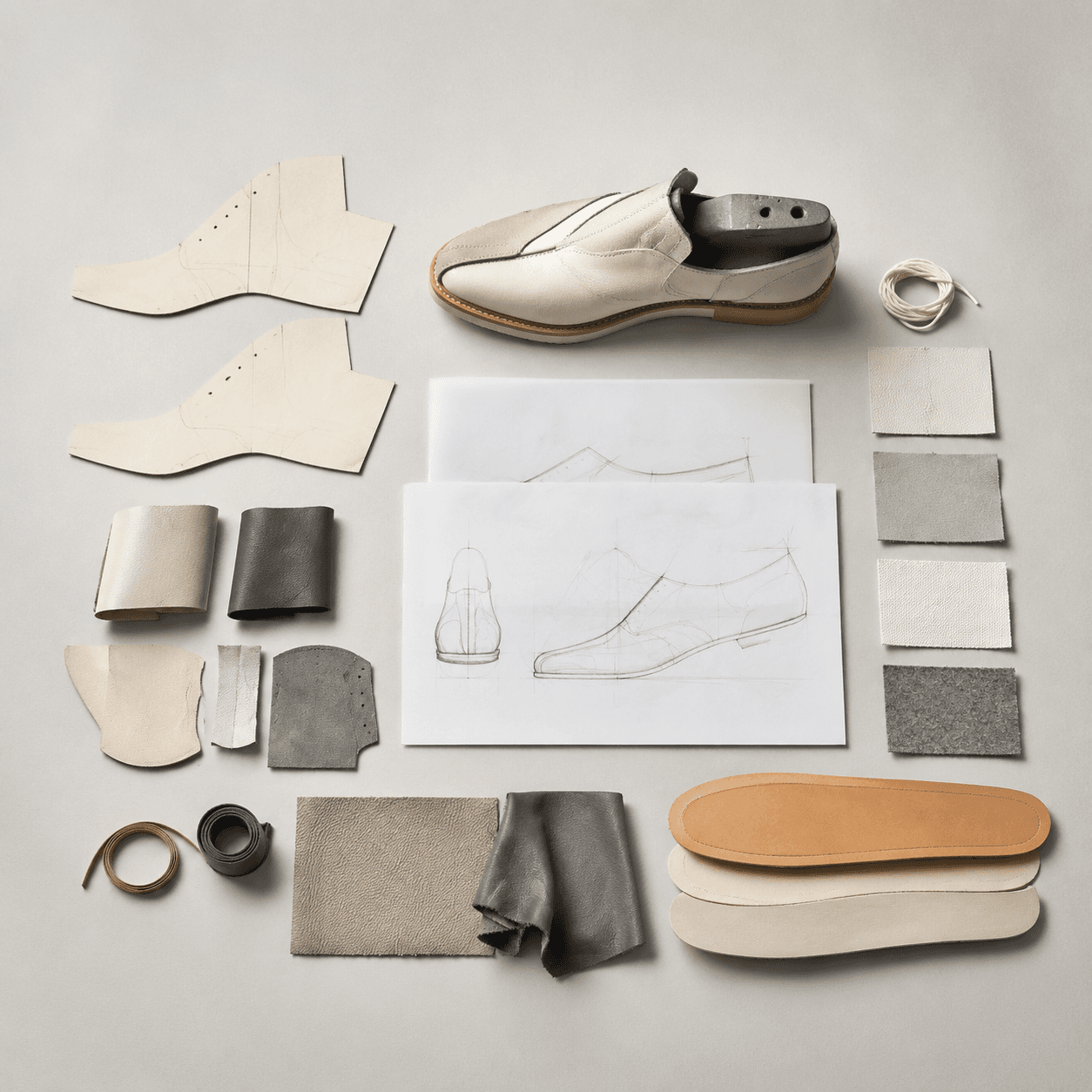
Sourcing school shoes wholesale is a planning exercise built around repeatability. Uniform distributors do not need fashion-led product; they need black shoes that fit consistently, survive daily abrasion, and arrive before the school selling window closes. In practice, the biggest failures are not visual. They are spec drift on upper thickness, weak toe reinforcement, unstable fit grading, low outsole abrasion resistance, and late production booking.
For importers buying from China, the process works best when commercial and technical decisions are locked early. A realistic target FOB, a measurable BOM, existing outsole tooling where possible, and milestone QC will prevent most avoidable claims. A capable school shoe manufacturer should be able to discuss outsole hardness, adhesive system, size-set timing, carton GSM, and production capacity in pairs per month without hesitation.
This guide sets out the sourcing sequence step by step. It focuses on the details that actually affect landed performance: MOQ by tooling status, lead-time in days, cost ranges by material level, test standards used in school footwear, and the practical checkpoints for bulk kids school shoes and private label school shoes.
In school footwear, the lowest quoted FOB often becomes the highest total cost once claims, rework, and missed-season delivery are counted.
1. Define the school shoe program in measurable specs before requesting quotations
Most weak quotations start with a photo, a black color reference, and a target price. That is not enough. Two school shoes with the same appearance can differ by $2.50-$4.00 per pair once upper grade, outsole weight, toe puff strength, lining abrasion level, and box quality are specified. If the RFQ is vague, the factory will usually price to the lowest acceptable assumption, and the mismatch appears later at sample stage or after shipment.
Start by separating the program into age and use segments. Primary-school shoes usually need wider entry, lighter pair weight, stronger front scuff resistance, and more forgiving fit at the instep. Secondary-school styles shift toward cleaner uniform looks such as derby lace-up, loafer, T-bar, or mary jane patterns, often with firmer upper materials and more formal last shape. If boys' and girls' uppers can share one outsole family, you lower mold exposure and improve MOQ efficiency.
Treat the product as durable school footwear, not black casual footwear. Write the RFQ with numbers. For corrected-grain leather, 1.50-1.80 mm is common. For action leather, 1.40-1.60 mm is workable in mid-price programs. For school-grade microfiber, buyers often target 1.30-1.50 mm with stable backing and low whitening on flex. Outsole hardness for TPR is commonly 60-68 Shore A. Rubber compounds may sit around 55-65 Shore A depending on tread design and climate. Collar foam at 45-55 kg/m3 normally holds shape better than low-density foam after repeated wear. Retail box board is usually 250-350 GSM, while outer carton board often sits around 5-layer export grade depending on pair count and destination stacking pressure.
Be clear on the selling channel as well. A back-to-school retail line, an institutional uniform contract, and a supermarket school-shoe program are not costed the same way. Institutional tenders may accept plain boxes and simpler branding, but retail shelf product usually needs better box finish, better shape retention, and cleaner upper cosmetics.
- State target FOB by construction: cement, strobel-cement, or vulcanized
- Confirm size range, for example EU 28-35 for primary and EU 36-44 for youth
- Specify upper article, thickness range, and color standard, not only 'PU' or 'leather'
- Define outsole compound, target hardness, and whether non-marking is required
- Set closure type and hardware finish: lace, hook-and-loop, buckle, elastic, slip-on
- List packaging level: retail box GSM, tissue, stuffing, carton pair count, carton mark format
What a usable first tech pack should include
A useful first tech pack should contain side, top, heel, and outsole views; one reference size with internal length target; pair-weight target; material callouts for upper, lining, sockliner, insole board, toe puff, counter, outsole, and thread; packaging requirement; and the minimum test package by destination market. This one-page technical brief will usually produce a more reliable quotation than a longer creative brief with no measurable footwear data.
2. Shortlist a school shoe manufacturer by tooling base, process control, and category capacity
Not every footwear factory can run school shoes well. A supplier that mainly makes runners, slippers, or sandals may quote aggressively but still struggle with formal last shape, black shade consistency, edge folding, and repeat sizing. A specialized school shoe manufacturer should already have black outsole options across kids and youth sizes, existing formal or uniform lasts, and stable sources for black microfiber, action leather, counters, toe puffs, and lining materials.
When qualifying factories, ask what percentage of monthly output is school, uniform, or black formal footwear. If the share is low, there is a higher chance that the order will be fitted around other categories and that some operations will be subcontracted without tight control. Capacity must also be discussed by construction. A factory with 300,000 pairs monthly total capacity may have only 40,000-60,000 pairs available for cemented school shoes during peak months if stitching lines and lasting teams are booked on sport styles.
Existing tooling matters more than buyers often assume. If the factory already has a commercial black outsole suitable for the program, MOQ may be 800-1,200 pairs per style in mixed sizes. If several uppers share one outsole family, the combined MOQ can often be managed at 2,400-3,000 pairs across multiple styles. If a new outsole mold is needed, MOQ usually rises to 3,000-5,000 pairs per colorway, and mold cost may run from $2,500 to $6,500 depending on size split, number of steel sections, logo detail, and whether youth sizes extend to EU 44 or UK 10.
Map process ownership early. Ask whether cutting, stitching, lasting, sole bonding, finishing, and packing are all in-house. If some are outsourced, ask which ones and how often. In school footwear, the most common failures from loose process control are bond failure on the forepart, left-right shade difference on black uppers, unstable top line shape, and poor edge painting consistency.
- Request current production photos or video of school or uniform shoes, not sample-room images only
- Ask for monthly capacity in pairs for school-shoe construction specifically
- Review the existing outsole library in black and confirm size coverage by mold
- Confirm MOQ by style, by outsole family, and by branded packaging requirement
- Check whether the supplier can support <strong>private label school shoes</strong> with sockliner print, tongue label, box, and carton marks
Questions a serious supplier should answer clearly
Ask which adhesive system is used for upper-to-TPR or upper-to-rubber bonding, what outsole hardness range is standard for school programs, whether black microfiber or action leather is stocked as a running article, and how many days are needed for development sample, confirmation sample, size set, and repeat order production. On repeat programs using existing molds and approved materials, a disciplined factory should usually quote 30-45 days for repeat bulk, not 60-75 days.
3. Build the specification around wear life, fit consistency, and claim prevention
In school footwear, most quality claims are created before stitching starts. Final random inspection cannot fix an upper that cracks on flex, a weak toe puff, low-density collar foam, an underspecified insole board, or outsole compound with poor abrasion resistance. The only reliable way to reduce claims is to specify these parts before material booking.
Upper selection should follow the target price band and claim tolerance. Leather is still a good choice for premium uniform programs, but it brings higher FOB and more lot-to-lot variation. Microfiber is often the most stable mid-range option because thickness, grain, and black shade are easier to control. For entry-price programs, PU can work if thickness, backing, and surface durability are defined. For humid or long-shelf-life markets, ask about hydrolysis resistance. For all school-shoe uppers, wipeability and resistance to crease whitening matter more than soft hand feel.
Toe durability should be engineered as its own issue. The earliest complaint in many school programs is front scuffing from stairs, playground abrasion, and desk contact. Depending on the look, you can use stronger toe puff, anti-scuff print film, hidden toe bumper, matte rubberized toe overlay, or a heavier vamp article. A stronger toe package may add only $0.15-$0.35 per pair, but it often saves more than that in returns. Heel counters should also be specified by stiffness and height because heel collapse is a common wear complaint in lower-priced school lines.
The internal comfort package also needs hard numbers. EVA sockliner foam around 0.12-0.18 g/cm3 is standard, but ask about compression set, not density alone. Collar foam is commonly 8-12 mm thick at 45-55 kg/m3. Insole boards for school shoes should be chosen by wear duration and size range; larger youth sizes need better flex recovery than small kids' sizes. If a factory reduces FOB by $0.30-$0.50 per pair, the saving often comes from these hidden components rather than the visible upper.
- 01Define upper article, thickness, backing, and black color standard
- 02Set outsole compound, target hardness, abrasion requirement, and flex expectation
- 03Specify sockliner foam density, collar foam density, and insole board construction
- 04Confirm toe puff and counter specification, including anti-scuff measures if required
- 05Write test requirements into the PO, BOM, and PPS sheet before material purchasing
Test points that are useful for school shoes
For EU and UK business, buyers normally require restricted substance compliance according to destination-market rules plus physical tests such as upper and lining abrasion, sole bond strength, flex resistance, color fastness, and where relevant slip performance. Some tenders also request EN ISO-oriented reports for physical performance descriptions. For the US market, retailers may reference selected ASTM methods depending on the claim and category.
A practical test package often includes upper thickness confirmation, outsole hardness, abrasion resistance, sole adhesion or pull-off strength, lining abrasion, and 30,000-50,000 flex cycles depending on construction and target price. If the style is sold with slip-resistant wording, define the exact test protocol before development. If the shoe is sold as non-marking, test the final outsole formulation, not only a lab development compound. If the lining is synthetic, ask for dry and wet rub color fastness because black migration claims are common in warm-weather use.
4. Cost the program correctly: FOB, MOQ, mold cost, and packaging must be separated
Accurate school-shoe costing comes from component logic. The main cost drivers are upper article, outsole compound and weight, tooling status, closure system, lining level, sockliner package, and box specification. On a standard kids' black school shoe using existing outsole tooling, cement construction, action leather or basic microfiber upper, textile lining, and standard retail box, a realistic FOB range is often $7.20-$9.50 per pair at 1,200-3,000 pairs. With better microfiber, anti-scuff toe construction, stronger insole board, or premium packaging, FOB may move to $9.80-$11.80. Leather uppers or heavier rubber bottoms can take youth-size lines to $12.00-$14.50 FOB or higher depending on size mix.
MOQ should be negotiated at outsole-family level whenever possible. School programs usually carry many sizes but only one color, so efficiency comes from shared tooling and shared material purchasing. If three uppers can share one black outsole, a combined 3,000-pair order normally runs better than three separate 1,000-pair orders. The factory can buy outsole compound more efficiently, reduce wastage on edge materials, and hold more balanced size assortments in production.
For private label school shoes, separate fixed cost from variable cost. Fixed cost includes outsole mold, logo hardware mold, new last if required, custom box artwork setup, and occasionally carton print plate or barcode setup. Variable cost includes printed sockliner, tongue label, heat transfer logo, branded tissue, polybag sticker, and carton mark format. For first orders, many importers keep the outsole and hardware generic and brand the insole, tongue label, box, and carton only. That approach keeps MOQ lower and avoids wasting tooling cost if fit or styling needs revision after the first season.
Packaging should be costed based on route to market. Retail programs usually need 250-350 GSM boxes, tissue, toe stuffing, and heel support to preserve shape. Tender and institutional programs may reduce packaging by $0.20-$0.45 per pair with plain boxes or simpler labels, but if packaging is stripped too far, the upper can deform during container transit. If you simplify the box, increase internal stuffing and maintain export-worthy outer carton strength.
- Request separate pricing for existing outsole tooling versus new tooling development
- Ask for two or three material levels with exact $/pair difference for each upgrade
- Confirm sample charge, mold charge, and whether mold cost is refundable against volume
- Check carton pair count, carton dimensions, and gross weight for youth-size runs
Typical development and bulk lead times
For existing outsole tooling, first development sample normally takes 7-14 days, revised confirmation sample 10-15 days after comments, and pre-production sample 7-10 days after final BOM confirmation. Bulk production is commonly 45-75 days after deposit, artwork approval, and PPS release. New outsole tooling usually adds 20-30 days including sole trial, fitting adjustment, and final confirmation. During the back-to-school build window, assume the longer end of the range unless materials are pre-booked.
5. Sample in stages, wear-test where possible, and freeze the BOM before bulk starts
A school shoe should not be approved from one showroom sample. The practical sequence is development sample, fitting sample, confirmation sample, size set if required, and pre-production sample. For large retail programs or new bottom constructions, a short wear test of 2-3 weeks is worthwhile. Even a limited test can expose toe-scuff sensitivity, collar rubbing, tongue migration, flex whitening, hook-and-loop contamination, or outsole edge cracking that static inspection will not catch.
Fit control must be stricter than many buyers expect. One sample in EU 31 or UK 13 child does not prove the pattern in EU 37 or EU 42. Ask for the grading chart and internal measurements by size. Check opening circumference, heel grip, instep allowance, toe allowance, and sockliner length. On lace-up school shoes, throat opening and tongue placement matter. On hook-and-loop shoes, confirm that the landing area still works across the full size run. Many return issues in bulk kids school shoes come from poor grading, not visibly defective workmanship.
At confirmation stage, freeze every material by article code and measurable standard. Avoid BOM language such as 'black PU', 'foam lining', or 'TPR outsole' without article number, thickness, hardness, finish, and origin if relevant. A proper BOM should identify upper article and backing, lining article, foam spec, insole board type, thread ticket, outsole compound, adhesive system, sockliner construction, box board grade, and carton requirement. Any change after approval should be re-submitted and signed off.
The pre-production sample is the benchmark for QC, merchandising, and claims review. Seal one golden sample for the buyer and hold one at the factory. On repeat programs, this simple discipline is often what prevents arguments over whether the bulk pair matches the approved shoe.
Pre-production approval checklist
This is the last low-cost control point before the order becomes expensive to fix.
6. Run production by milestones and ship to the season, not to the factory's optimistic date
For school shoes from China, the correct planning method is backward scheduling from the in-store date. A shipment that arrives 10-14 days late for the school season can erase more margin than a $0.20-$0.30 FOB increase on a better-controlled factory. Core styles should ideally have production slots booked 60-90 days before the required ex-factory date, especially if the order includes broad size runs or multiple shipping marks.
Use milestone control instead of relying only on final inspection. Material arrival inspection should confirm upper thickness, lining article, outsole hardness, and box board GSM before cutting starts. First-line upper inspection should check stitch density, seam alignment, edge folding, and left-right shade consistency. First-line lasting inspection should check toe shape, topline height, heel seat, outsole alignment, and cement cleanliness. Inline finished-goods checks should confirm pairing, logo position, and packing ratio before the order is fully completed.
Define acceptance criteria in operational language. For example, set stitch density per inch or per 3 cm, maximum visible cement line on upper edge, emboss depth tolerance, left-right pair color tolerance, and acceptable outsole flash. On school footwear, wrong size labeling, mixed left-right sizes, obvious black shade variation, or poor sole bonding should be treated as major or critical defects because they translate directly into store returns.
Payment terms on first orders are still commonly 30% deposit and 70% before shipment or against copy documents. Once a distributor proves forecast reliability on a seasonal program, some factories will support material pre-booking or more flexible scheduling. Rolling forecasts by style and size help the factory reserve black upper material, outsole compound, and packaging in advance, which usually improves both lead-time reliability and FOB stability.
- 01Book the production slot 60-90 days before required ex-factory date
- 02Approve BOM, artwork, carton marks, and packaging before material purchasing
- 03Inspect at material-arrival, upper-line, lasting-line, and packing stages
- 04Audit carton assortments against PO size ratios before container loading
- 05Release shipment only after inspection report and shipping documents match the PO
Key takeaways
- Define <strong>school shoes wholesale</strong> programs with measurable specs: upper thickness, outsole hardness, foam density, size range, and packaging GSM.
- Choose a <strong>school shoe manufacturer</strong> based on existing tooling, school-category capacity, and process control, not headline price alone.
- Use shared outsole families to keep MOQ practical and lower mold exposure across multiple school styles.
- Reduce claims by engineering toe durability, fit grading, internal support parts, and destination-market test requirements before bulk starts.
- Cost the program by component and fixed-versus-variable charges, especially for <strong>private label school shoes</strong>.
- Manage the order against the school selling calendar; in this category, late shipment is a product failure.
SoleForge manufactures kids' footwear under OEM and ODM for brands and importers worldwide. Request a quote with your tech pack or reference pair and we'll reply within one business day.