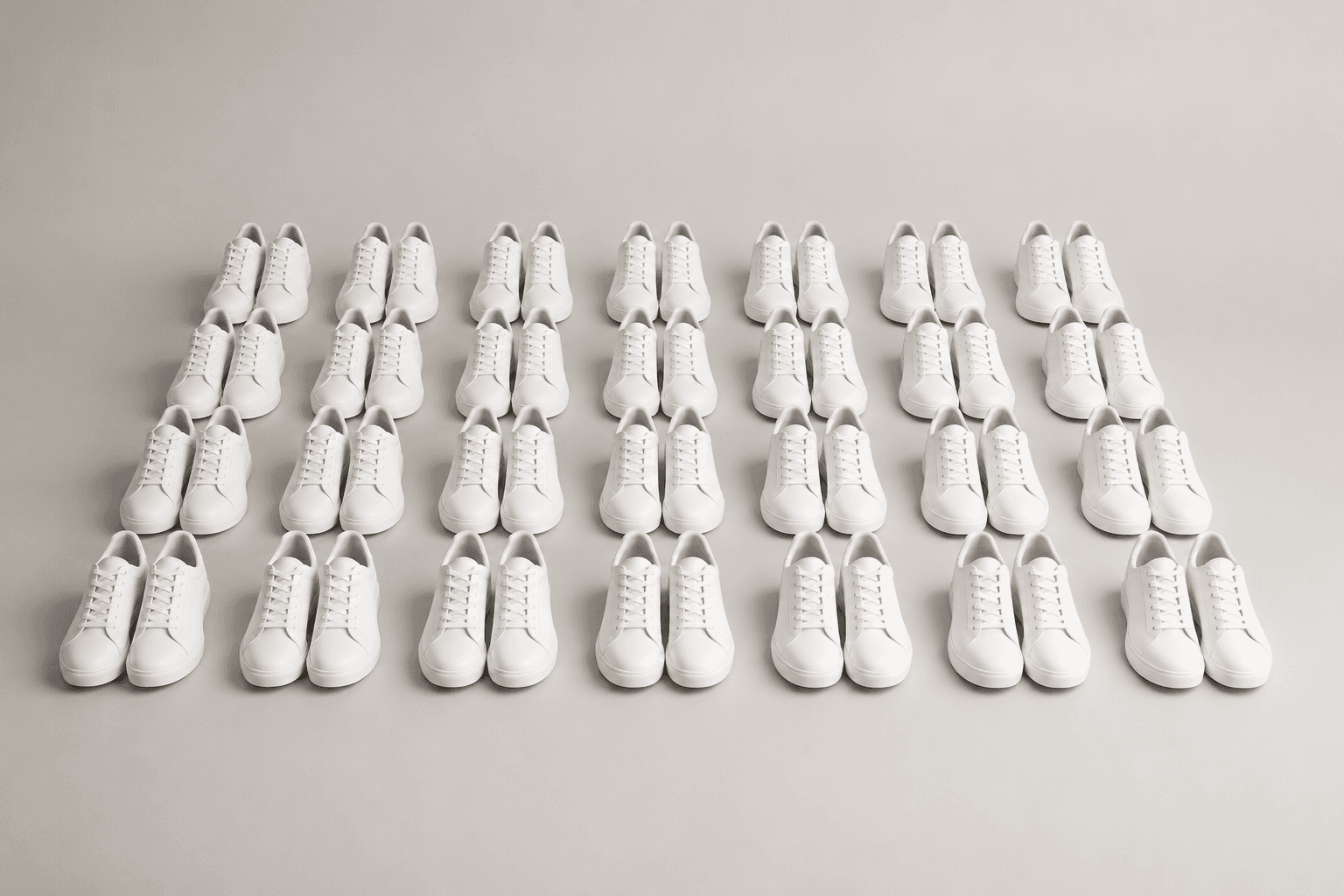
Importing footwear from China is a production-control exercise. A capable shoes china manufacturer should be able to hold last shape, upper material spec, outsole hardness, color standard, carton requirement, and delivery date across repeated orders, not just make one acceptable sample.
For sourcing managers, brand owners, and importers, the main decision is not who sends the lowest opening quote. It is which supplier can convert your target price into a repeatable bulk program with workable MOQ, realistic lead-time days, stable material sourcing, and documented QC. In footwear, a 10 GSM shift in mesh, a softer collar foam, or a 2-3 Shore A outsole variance can change fit, wear, and return rate.
This guide is organized as a buyer decision guide. Each section covers one factor you should verify before you commit to a china shoe factory, with concrete points to check, typical commercial ranges, and the supplier questions that expose whether the factory really understands your category.
The right footwear factory is the one that can reproduce the approved pair at scale without drifting on fit, materials, or shipment timing.
Define the product clearly before you request a quote
A shoes china manufacturer cannot price accurately from a lifestyle image and a target retail price. The factory needs category, gender, age group, construction, size range, outsole type, upper material family, closure system, packaging requirement, and target FOB. A cemented women’s sneaker, a vulcanized kids’ canvas shoe, and a PU-injected safety shoe sit on different equipment, different labor profiles, and different compliance requirements.
Weak briefs create weak quotes. When the specification is incomplete, the supplier either adds risk into the price or leaves commercial gaps that later come back as change charges, material substitutions, or lead-time extensions. At minimum, specify upper material, lining GSM or thickness, foam density, insole board type, sockliner build, outsole hardness, logo application, and destination-market requirement. For many casual sneakers, practical starting values are mesh at 120-180 GSM, collar foam at 45-60 kg/m3, and outsole hardness around 55-65 Shore A depending on wear target.
If you are developing from a reference shoe, convert it into a controlled package before sampling begins. Measure bottom length, heel height, forepart thickness, toe spring, foxing height if applicable, and key upper panel dimensions. Note fit comments by region as well. A sample room can imitate appearance quickly, but bulk consistency improves only when the style is reduced to measurable specifications.
- State shoe type precisely: cupsole sneaker, strobel runner, vulcanized canvas, sandal, boot, slipper, or safety shoe.
- Set a target FOB range before sampling; for example, $7.50-$10.50 for an entry private-label sneaker, not an open-ended 'best price'.
- Specify material values such as mesh GSM, PU thickness, foam density, and outsole hardness.
- Provide size range, fit notes, and base size for development approval.
- Send marked photos, component callouts, and a physical sample where possible.
What to ask before the first quotation
Ask whether the supplier has made the same category in the last 12 months and at what volume. A china shoe factory focused on EVA slides may not manage lasting, roughing, cementing, and upper alignment well enough for cupsole sneakers or leather casual shoes.
Ask for normal MOQ by style, by color, and by outsole source. A stock-outsole casual sneaker may start at 600-800 pairs per color, while a custom outsole, molded logo part, or dyed specialty upper can move MOQ to 1,200-3,000 pairs because of mold setup, material minimums, and cutting loss.
Choose a factory by construction capability, not product catalog breadth
The first technical decision is construction fit. Not every shoes china manufacturer is equally strong in cemented, strobel-cemented, vulcanized, injected, cold-cement outdoor, or welted footwear. Even inside one category, the production controls differ. A knit running shoe with heat-transfer overlays requires different upper handling and bonding control than a heavy cupsole court shoe with stitched foxing and toe bumper.
Ask the supplier to explain its actual line process: cutting, stitching, pre-lasting, toe lasting, side lasting, roughing, priming, cementing, heat activation, sole pressing, cooling, finishing, inspection, and packing. A factory that truly produces your category can identify where defects occur, which stations are most labor-sensitive, and what it checks in-line. If the answer stays broad, assume the supplier is trading, outsourcing heavily, or weak technically.
Also identify outsourced steps. Outsole molding, printed logos, reflective transfer, embroidery, metal hardware plating, and carton printing are commonly subcontracted. Outsourcing is not automatically a problem, but each subcontracted step adds one more lead-time dependency and one more point where the approved sample can drift away from bulk.
- Confirm which construction methods the factory runs every month, not only what it can 'develop'.
- Ask for recent production photos showing line work, not only showroom displays.
- Verify whether outsole molds, embroidery, printing, and cartons are in-house or subcontracted.
- Check monthly capacity by pairs and by active style count.
- Confirm whether the factory has internal lab support and dedicated in-line QC staff.
How capability differs by shoe type
For vulcanized canvas, inspect foxing cleanliness, rubber compounding, and curing consistency. For cemented athletic shoes, focus on lasting shape, adhesive control, and upper-to-outsole alignment. For sandals, ask about strap pull testing, edge finishing, and buckle setting. For safety footwear, verify toe cap, puncture midsole, compression performance, and slip testing against the relevant EN ISO or ASTM requirement before moving into final commercial talks.
As a practical rule, the best china shoe factory for your project is usually one that already runs similar uppers, soles, and line operations every week. A broad catalog can be useful for sourcing convenience, but it is not evidence of stable bulk execution.
Buyer checklist for sourcing shoes from China
| Decision factor | What to verify | Typical buyer target |
|---|---|---|
| Factory fit | Recent category history, construction capability, in-line QC, outsourcing points | At least 3 similar export styles in the last 12 months |
| MOQ | Per style, per color, by outsole and material minimum | 600-1,000 pairs per color for simpler stock-outsole styles |
| Lead time | Sample approval, material booking, production, inspection, ex-factory | 45-75 days first order; 30-45 days repeat order |
| Materials | Foam density, GSM, thickness, hardness, approved supplier control | Written specs plus retained swatches from approved bulk lot |
| Testing | EN ISO/ASTM where relevant plus flex, abrasion, peel, colorfastness | Pass before bulk and repeat if critical materials change |
| QC | Incoming check, first article, in-line control, final AQL, defect logging | Station-level defect tracking and shipment hold on critical defects |
| Packaging | Box size, carton cube, moisture protection, labeling | Freight-efficient carton plan with compliant marks |
| Documents | Invoice, packing list, origin marks, compliance wording, shipment docs | Prepared before shipment release and matched to approved product |
Build the commercial model around MOQ, lead time, and full landed pair cost
Many importers compare only the nominal FOB price and miss the real cost drivers. Footwear buying decisions should include MOQ by style and color, sample charges, mold or tooling fee, packaging inclusion, test cost responsibility, payment terms, and the cost of low-quantity splits. A $6.90 FOB quote is not better than a $7.40 FOB quote if the cheaper offer excludes box, tissue, extra laces, silica gel, inspection rework, or custom logo mold charge.
Indicative FOB ranges help, provided you keep the construction in mind. A simple canvas slip-on may run around $3.50-$5.50 per pair. A casual private-label sneaker with mesh upper, foam-padded collar, molded sockliner, and stock cupsole may sit around $7.50-$12.00. A more technical running-style shoe with engineered mesh, welded film, EVA or Phylon midsole, and rubber bottom pods commonly lands around $11.00-$18.00 FOB. Leather casual shoes, boots, and certified safety footwear can move higher depending on upper grade, hardware, and testing burden.
Lead time also needs to be itemized. For a repeat style using approved materials, 30-45 days ex-factory is achievable in many programs. For a first order with sample revision, artwork approval, lab dip, carton confirmation, and raw material booking, 45-75 days is a more honest range. A new outsole mold often adds 20-35 days for pattern correction, mold trial, and wear confirmation before mass production starts.
- Compare EXW, FOB, and delivered terms line by line rather than assuming the quote basis.
- Clarify MOQ by style, color, outsole, and size curve.
- Separate sample cost, tooling cost, mold amortization, and bulk pair price.
- Confirm whether price includes shoe box, master carton, polybag, tissue, silica gel, and spare parts.
- Check standard payment terms such as 30% deposit and 70% before shipment, then negotiate from there if volume supports it.
- 01Request a written quotation that lists every inclusion, exclusion, and commercial assumption.
- 02Ask for a timeline by day: sample approval, material booking, cutting start, assembly start, inspection date, and ex-factory date.
- 03Clarify who pays for rework if bulk fails against the approved pre-production sample or defect standard.
- 04Confirm whether replenishment orders can run below original MOQ if outsole and upper materials remain unchanged.
Commercial gaps that create disputes later
Ask what really drives MOQ. In footwear, it is often outsole mold setup, mesh dye minimum, lining purchase lot, carton print run, or synthetic material supplier minimum rather than factory policy alone. That tells you where there is real flexibility.
Also ask what happens if one size has fit issues or high defect rate during bulk. A single blocked size can stop shipment if your carton ratio is fixed for a retail program, even when the rest of the order is finished.
Lock the material specification with measurable values
A shoe can look correct and still fail in wear. That is why footwear materials should be controlled numerically wherever possible. Instead of asking for 'soft foam,' specify density and rebound. Instead of 'good mesh,' specify composition, GSM, backing, and hand-feel requirement. Instead of 'strong sole bonding,' define the bonding process and expected peel result after conditioning.
For uppers and linings, request material sheets and retained swatches from the approved bulk lot. Common footwear discussions include sandwich mesh at 140-220 GSM, PU synthetic at stated thickness tolerance, microfiber lining around 0.8-1.2 mm, strobel fabric around 80-120 GSM, and collar foam in the 45-60 kg/m3 range. For outsoles, ask about hardness, abrasion, color sensitivity, and whether the black and light-color compounds use the same base formula.
If the footwear is performance, occupational, or protective, define the test path before development is finalized. Depending on category, that can include EN ISO 20345 or ASTM F2413 for safety footwear, SATRA-style flexing, slip resistance, abrasion, hydrolysis exposure, colorfastness, and restricted-substance control. A serious shoes china manufacturer should tell you immediately which component changes would force retesting.
- Specify upper, lining, tongue, strobel, and collar materials with GSM or thickness targets.
- Define foam density, rebound, and compression-set expectations where comfort matters.
- Set outsole hardness and abrasion requirements by end use.
- Require colorfastness, flex, peel strength, and bond performance targets.
- Request restricted-substance declarations and confirm whether adhesives are solvent-based or water-based.
Material questions that reveal supplier discipline
Ask whether the factory buys from nominated mills and compounders or substitutes locally when lead time tightens. In footwear, a small change in backing cloth, foam cell structure, or adhesive grade can alter fit, wear life, and bonding performance.
Ask how approved bulk materials are segregated from sample-room leftovers, rejected lots, and returned stock. Weak material control is one of the fastest ways for bulk shoes to drift away from the approved standard.
Approve fit, last, and pre-production sample before bulk material booking
Fit is where many import programs fail. In footwear, fit problems are built into the last, pattern, upper allowance, insole board, and outsole geometry. A shoe may look balanced on a table and still fail in wear because the heel slips, the vamp cuts the instep, the topline bites, or the flex point sits too far forward. That is why appearance approval is never enough.
Run at least one wearer-fit round before bulk and a second round if there is any doubt on heel hold, forefoot width, collar pressure, or entry opening. Check the base size you intend to approve and review grading logic across the range. An EU 38 sample can feel acceptable while the EU 41 becomes long in the heel or tight at the ball if grading is not controlled correctly between last and upper pattern.
After fit is accepted, approve a full pre-production sample using final upper material, final lining, final outsole color, sockliner print, lace, packaging, labels, and carton marks. In most footwear programs, you should not allow bulk material booking until this sample is signed off. Otherwise, one late fit correction can freeze material, create dead stock, or add several weeks to the ex-factory date.
- Approve the shoe on-foot and record wearer comments in writing.
- Check heel grip, instep pressure, forefoot width, toe allowance, and flex point alignment.
- Confirm grading method across the entire size range, not only the sample size.
- Review final colors under at least daylight and office lighting.
- Retain one sealed golden sample as the reference for QC and dispute resolution.
- 01Develop prototype and confirm construction feasibility.
- 02Review fit sample and capture comments by size and wear condition.
- 03Revise last, pattern, or upper allowance before material commitment.
- 04Approve pre-production sample with final trims, packaging, and markings.
- 05Release bulk only after written sign-off from the buying side.
Sample-control details worth documenting
Record thread code, lace length, eyelet finish, logo depth, print position, label wording, country-of-origin mark, and box artwork on the approval form. These small details often trigger retailer rejection even when the shoe itself is acceptable.
For more technical programs, ask the factory to retain the approved last, insole board, outsole version, and key upper patterns linked to the pre-production sample. That makes repeat orders far more stable six months later.
Control production through incoming checks, in-line QC, and final inspection
Final inspection by itself is too late for footwear. Once the shoes are assembled and boxed, problems such as weak bonding, poor upper alignment, wrong size labeling, roughing contamination, left-right mismatch, or skewed lasting are expensive to rework and sometimes impossible to correct cleanly. The better china shoe factory controls the process in stages: incoming material check, first-article confirmation, in-line inspection by station, and final random inspection before shipment release.
Ask how the factory checks materials before cutting and assembly. Upper material color, outsole hardness, logo trim, sockliner print, box dimensions, and carton marks should all be verified against approved references before the line starts. Then ask how many pairs are checked per station and whether defects are logged by operator or process step. A disciplined factory should be able to show defect trends such as glue marks, open seams, upper puckering, uneven foxing, wrong eyelet count, or size mix.
Define your acceptance criteria before production starts. Cosmetic and measurement issues are often managed through AQL at final inspection, but critical functional defects should trigger immediate hold-and-rework regardless of AQL outcome. Typical critical issues in footwear include weak bond, wrong safety component, mislabeled size, missing pair mate, major color deviation, and carton mispack against retailer ratio.
- Run incoming checks on uppers, outsoles, insoles, labels, boxes, and cartons.
- Approve first-article pairs on every colorway before full output.
- Monitor bonding, stitching, symmetry, sizing, and packaging during the run.
- Use a defect library with photo standards and clear critical, major, and minor definitions.
- Hold shipment if bulk differs materially from the approved golden sample.
Inspection focus by footwear category
For sneakers, concentrate on bonding strength, toe spring consistency, sidewall cleanliness, insole placement, and left-right matching. For sandals, focus on strap pull, edge paint or edge fold, buckle setting, and outsole attachment. For boots, review shaft height, circumference, zipper run, topline shape, and any waterproof seam detail. For protective footwear, confirm that the certified toe cap, puncture-resistant insert, outsole, and labeling all match the tested configuration.
If you use a third-party inspector, send the measurement sheet, approved sample, carton standard, and defect criteria before the inspection date. Footwear inspections are only useful when the inspector knows the exact tolerances and what constitutes an automatic rejection.
Plan packaging, freight, and import documents before goods are finished
Footwear is highly sensitive to packing efficiency because pairs ship in boxes and cartons with significant cubic volume. A supplier can quote competitively and still erode your margin with oversized boxes, poor carton configuration, or moisture protection that is too weak for the route. Approve pair packing, shoe box dimensions, master carton size, pairs per carton, and gross weight before bulk packing begins.
For sea freight, ask whether the factory uses tissue support, polybag, silica gel, or carton liner where needed by season and material type. Canvas, PU, suede, leather, and foam-packed shoes do not all travel the same way. Premium uppers and light-color materials need better protection against creasing, moisture, dust transfer, and box collapse than basic commodity slippers.
Documentation should also be locked before shipment week. Confirm invoice description, packing list format, country-of-origin marking, carton marks, inner-box labeling, and any compliance language required by your market. If you are importing safety or regulated footwear, the paperwork and product marking must match the tested specification exactly, including model reference and component declaration where applicable.
- Approve shoe box, carton dimensions, and pair packing method before mass packing starts.
- Check carton gross weight and cube against your freight model.
- Confirm country-of-origin marking on shoe, box, and carton where required.
- Align invoice description and HS classification with your customs broker before shipment.
- Use moisture protection appropriate to season, route length, and upper material.
Why packaging decisions belong in sourcing, not only logistics
A carton that is only slightly oversized can reduce container loading efficiency enough to add meaningful freight cost per pair over a large order. Packaging should therefore be treated as part of the sourcing calculation, not an afterthought after production.
Retail-ready packaging also affects downstream cost. Crushed boxes, mixed-size cartons, poor label placement, or weak carton burst strength can create warehouse errors, retailer chargebacks, and avoidable relabeling work even when the shoes pass quality inspection.
Score and select the supplier on repeatability
The final sourcing decision should be based on repeatability, not presentation quality. A good shoes china manufacturer quotes with assumptions stated, samples close to spec, flags risks early, controls materials by lot, and reproduces the approved pair across colorways and repeat orders. That matters more than saving a few tenths of a dollar on the first PO.
Use a scorecard that compares category fit, sample accuracy, communication speed, MOQ flexibility, lead-time realism, material control, testing support, QC discipline, and response to defects. In practical buying terms, the best source shoes from china option is usually the supplier that reduces management load because the factory already understands your construction, documentation standard, and acceptable defect threshold.
If possible, visit the factory or run a structured audit before the first meaningful order. One day on-site can tell you whether the sample room, cutting area, stitching lines, warehouse control, QC records, and packing area match what the sales team describes. For repeat footwear programs, that verification usually pays for itself quickly through fewer delays and fewer corrective actions.
- Score suppliers first on technical match, then on price.
- Compare delivered samples against spec, fit comments, and packaging details, not only visual appeal.
- Check whether the supplier met promised sample lead times, for example 7-14 days for upper sample and 14-21 days for full sample where materials are available.
- Review how the factory handled revisions, defects, and uncomfortable technical questions.
- Select the supplier with the most reliable total landed-cost outcome, not the lowest opening FOB.
- 01Shortlist factories with recent export production in your exact footwear category.
- 02Collect detailed quotations, MOQ rules, and sample lead times from each candidate.
- 03Approve fit sample, pre-production sample, and test path before issuing the purchase order.
- 04Audit the factory in person or by structured video review if travel is not possible.
- 05Place bulk only after QC, packaging, labeling, and document terms are confirmed in writing.
Key takeaways
- Do not request final pricing until the shoe spec includes construction, measurable materials, size range, packaging, and target FOB.
- Choose a shoes china manufacturer by recent category experience and construction capability, not by catalog width.
- Treat MOQ, lead-time days, tooling, testing, packaging, and payment terms as one commercial model.
- Control materials numerically with foam density, GSM, thickness, hardness, and test thresholds wherever possible.
- Approve fit and pre-production sample before bulk material booking to avoid dead stock, rework, and shipment delay.
- Use incoming checks, in-line QC, and final inspection together; footwear defects are cheaper to prevent than to rework.
SoleForge manufactures casual sneakers and athletic & running shoes under OEM and ODM for brands and importers worldwide. Request a quote with your tech pack or reference pair and we'll reply within one business day.