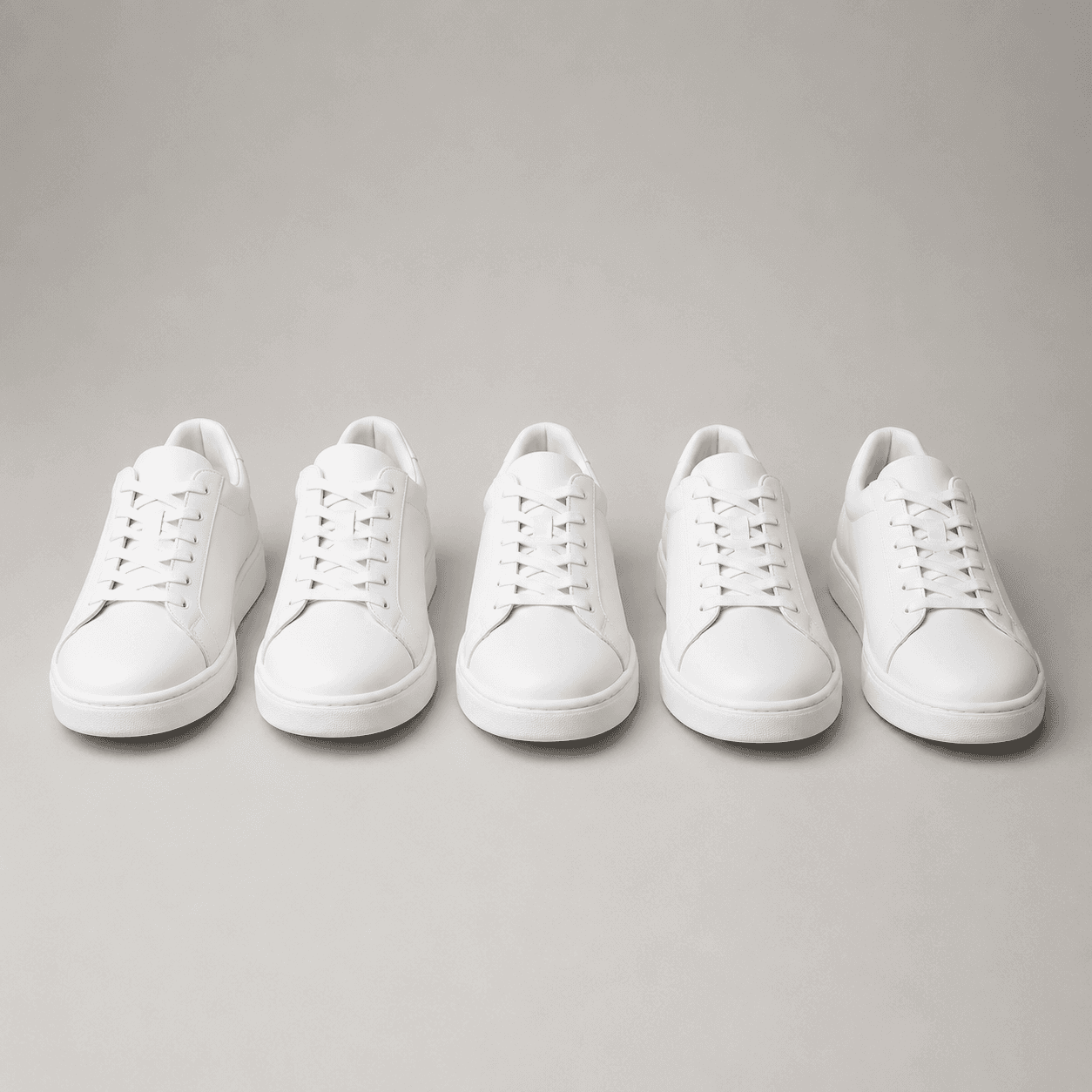
Wide fit footwear sourcing is a fit-engineering project, not a routine size extension. A stable bulk program depends on five linked assets: the correct last, width-aware pattern grading, bottom tooling that supports larger dimensions, support components matched to higher load, and QC points written for wide and top-end sizes. If one of those assets is missing, the factory usually compensates with softer uppers, looser lasting, or late commercial surcharges.
For sourcing managers, brand owners, and importers buying from China, the main risk is assuming a standard-size supplier can also run 2E, 4E, men’s EU 48-52, or women’s EU 42-45 without changing development logic. A reliable wide width shoe manufacturer should be able to show width-specific lasts, separate grading rules, top-end outsole coverage, and actual production references above standard size bands. If the supplier only offers “more relaxed upper” or “we can make bigger pattern,” expect fit claims, delayed approvals, and unstable repeat orders.
The practical route is straightforward: define the size-width brief, audit the factory’s fit assets, engineer the upper and bottom package around volume control, quote on real MOQ and tooling assumptions, then validate with wear trials and lab checks before PO release. The details below are written from a factory floor perspective, with concrete numbers for MOQ, lead-time days, $/pair, foam density, GSM, and EN ISO or ASTM checkpoints relevant to extended size shoes wholesale, plus size footwear sourcing, and repeat export business.
A workable wide-fit program comes from controlling last shape, volume, support parts, tooling, and carton logic together, not from simply making a standard shoe bigger.
1. Write a technical size-width brief before asking for prices
Do not start with a mood board and the phrase “wide fit.” Start with a technical brief that a development room can price and engineer. At minimum, specify category, construction, size range, width designation, target wearer, upper material family, target FOB, and any required performance claim. A workable inquiry is specific: men’s walking shoe, cemented strobel, EU 39-52, standard plus 2E, removable sockliner, orthotic-friendly, anti-slip rubber forepart and heel pads, target FOB $10.80-13.20, launch order 1,500 pairs.
For size extension footwear, separate length, ball girth, and instep height. Buyers often state only the top size, which is not enough. A shoe can have correct internal length and still fail because the ball line is too narrow or the instep closure is too low. In men’s EU 48-52, most fit failures come from ball pressure, lace bite, or heel slip caused by poor volume balance, not lack of toe room.
State clearly whether you need a true width program or a comfort-fit approximation. A true width program requires separate width engineering. In casual and walking shoes, moving from standard to 2E often means about 4-6 mm extra ball girth and 2-4 mm added instep volume; moving from 2E to 4E often adds another 4-6 mm at the ball, depending on toe shape and upper stretch. A comfort-fit approximation may use a forgiving upper on one relaxed last, but that should not be sold as a true width offer.
Also define the commercialization boundaries. If the factory must cover all sizes on one outsole family, that should be written at RFQ stage. If oversize pairs can use a dedicated bottom from EU 47 upward, say so. That decision changes mold cost, carton dimensions, and line efficiency. Many quotation errors happen because the supplier prices a standard-size outsole set, then later discovers the top-end sizes need extra mold cavities or a wider platform.
- List full EU size range and note US or UK conversions only as reference.
- Write width coding clearly: standard, D, 2E, 4E, or metric ball/instep girth targets.
- State wearer needs such as bunion room, high instep, edema tolerance, or orthotic use.
- Declare if top-end sizes may use a separate outsole or must share one platform.
- Give target FOB, expected order quantity, and destination market before sampling starts.
2. Audit last room, grading rules, and bottom tooling before sample approval
In wide fit footwear sourcing, the first audit point is the last room, not the sample display. Ask the supplier to show active lasts in the relevant category and top-end size range. Review data for foot length, ball girth, instep girth, heel width, toe spring, toe box height, and heel pitch. Compare a regular last and a wide last from the same family. If the supplier cannot explain the numerical difference, it is usually not a true width system.
A factory that handles extended size shoes wholesale should also have grading rules beyond standard length increments. Above men’s EU 46 or women’s EU 42, the upper cannot simply be enlarged proportionally. The pattern room should adjust vamp width, eyestay opening, tongue width, quarter height, topline length, and heel pocket geometry. If they only scale length and width uniformly, the usual results are deep vamp creasing, unstable lacing, heel movement, and sidewall distortion.
Bottom tooling needs the same level of review. Many factories can make a wide upper but still place it on an outsole that is too narrow under the ball or too soft under load. For EVA or phylon walkers, check sidewall thickness, heel base width, and compression resistance in top-end sizes. A practical commercial midsole density for comfort walking is often around 0.20-0.25 g/cm3, but heavier wearers usually need a firmer topsole, insert, or carrier frame to reduce collapse. For rubber outsoles, ask for hardness and abrasion targets. A walking or casual outsole may run around 55-65 Shore A depending on compound and tread depth; oversoft rubber on large sizes tends to wear and deform quickly.
Line capability matters as much as tooling. Ask what percentage of the factory’s current output is above men’s EU 47 or women’s EU 42. If it is under 5%, expect trial-and-error. You also want to know whether larger sizes run on the main line or are inserted as side jobs. Inserted runs often create mismatched left-right lasting, inconsistent toe shape, and delayed ex-factory dates because the line team treats them as exceptions rather than standard production.
- Request last sheets with ball girth and instep data, not only photos.
- Confirm outsole coverage up to your top size and whether extra cavities are needed above EU 47 or 48.
- Check if insole boards, counters, and toe puffs are thickness-adjusted for larger sizes.
- Ask the factory’s share of current production in extended sizes; low share usually means a learning curve.
- Verify construction experience in cemented, strobel, cupsole, PU, EVA, and rubber for heavier wearers.
3. Engineer the fit package around volume, support, and material behavior
Once the factory passes the asset audit, move into fit engineering. This is where many plus size footwear sourcing programs lose control. Wide fit is not only extra forefoot room. The shoe must gain ball and instep volume while keeping heel hold, lace function, and upper stability. If the pattern room solves a width request only by adding upper spread, the foot slides laterally and the wearer reads the product as both loose and tight at the same time.
For lace-up uppers, the usual revisions include broader vamp geometry, longer eyestays, wider tongues, and adjusted throat lines so the closure can sit in a usable range. For slip-ons, entry shape and elastic recovery are critical. The forepart must open enough for entry but rebound enough to keep the foot centered. If the upper is mesh or knit, specify where it may stretch and where it must contain. For example, the forefoot can use a more open knit for bunion accommodation while the quarter and eyestay need tighter knit structure or fused film support. Without zone control, larger-width shoes feel unstable after a short wear period.
Support components are often under-specified in wide-fit projects. In larger sizes, insole board stiffness usually needs to increase to control torsion and maintain shape during lasting. Commercial strobel fabric in standard sneakers often sits around 180-240 GSM. For larger-size walking or active shoes, many factories move to about 220-280 GSM to improve seam integrity and reduce distortion under load. Toe puffs and heel counters should also be reviewed by size band. A counter that works in EU 42 may be too weak in EU 50 if the quarter height and leverage increase.
Sockliner specification should be written as density, hardness, and thickness, not comfort language. A 4-6 mm insert is common, but for heavier wearers the real issue is compression set and rebound. EVA or memory foam that feels soft in fitting can collapse after a week, making the fit feel narrower because support height disappears. Practical comfort inserts often use foam densities around 0.16-0.22 g/cm3 in basic programs; larger-size walking shoes frequently perform better with firmer PU, PU+gel, or dual-layer systems that maintain thickness under repeated load.
Fit checklist for first prototype approval
Comments to the factory should be measurable. General notes like “too narrow” or “too loose” usually produce random pattern changes and an avoidable second or third sample round.
4. Quote MOQ, tooling, and pair cost on the real complexity of the program
Commercial control is where many buyers either overcomplicate the first order or force the supplier into underpricing. Every extra width and every top-end size split adds cutting separation, size balancing, stock fitting, lasting attention, QC time, and packing complexity. If you ask for standard, 2E, and 4E across several colors on the first PO, your effective quantity per SKU usually drops below clean line efficiency.
A better opening structure is one upper, one bottom package, one to two commercial colors, and one priority width. A practical launch might be men’s EU 41-46 in standard, EU 42-48 in 2E, with 4E delayed until sell-through data is available. This reduces dead stock and gives the custom fit shoe factory time to stabilize fit comments before you multiply variables.
On the supplier side, opening MOQ depends heavily on construction. A mesh or knit cemented walker using existing wide lasts may open at 800-1,200 pairs per colorway. A cupsole casual needing outsole extension to EU 50 may start around 1,200-1,800 pairs per colorway. Vulcanized or heavy rubber-bottom styles can move higher because mold size, sidewall control, and curing balance become more difficult in oversize. Compared with standard-size orders, expect MOQ to run roughly 15-35% higher for true width or extended-size programs.
Cost should be broken down transparently. New last development commonly runs about $300-700 per last set, depending on complexity and quantity of sizes cut. Additional outsole cavities for top-end sizes may cost about $2,000-5,000. A fully new outsole mold family can reach $4,000-8,000. In recurring FOB, many factories can hold one price through EU 46, then add about $0.25-0.60 for EU 47-48 and another $0.30-0.90 above EU 49. Width-specific versions may add $0.20-0.80 per pair because of separate lasting and inspection. For a standard comfort walker at FOB $9.80, a real 2E extended-size version may land closer to $10.70-12.00 once material yield, support parts, and larger packaging are included.
Ask for a size-cost matrix and a tooling list before development starts. If the supplier only gives one averaged FOB for all sizes and widths, the commercial risk is high. Factories often recover that missing margin later by restricting replenishment MOQ, changing foam quality, or pushing back on fit corrections.
- 01Freeze one construction, one bottom package, and one priority width before RFQ comparison.
- 02Request a size-cost matrix with clear breakpoints such as EU 47, 48, 50, and 52.
- 03Separate last charges, outsole tooling, pattern revision, wear testing, and compliance testing in the quote.
- 04Confirm carton dimensions and pack-out during costing; large cartons affect freight and loading.
- 05Phase extra widths and top-end sizes only after first-order sell-through proves demand.
5. Validate fit with wear trials, lab testing, and production-level QC points
Appearance approval is not enough for wide or extended footwear. Before bulk, test at least three checkpoints: base size, one wide-width sample, and one top-end size in final materials and bottom package. If the range includes both standard and 2E, do not approve only the standard sample and assume grading will hold. In practice, the fit usually changes by the time you reach the top size band.
Wear trials should focus on ball pressure, instep pressure, heel retention, medial-lateral stability, and underfoot fatigue. Run the trial with actual target wearers, not only a standard fit model. For walking, occupational, or outdoor product, add traction and flex checks on the true production bottom. Where the shoe has occupational or slip-resistance claims, align the protocol with the buyer standard. Depending on the category, that may involve EN ISO 20347 for occupational footwear, EN ISO 20345 for safety footwear, or ASTM F2913 for slip resistance. If the shoe carries a safety toe, impact and compression checks must be verified on the actual size family, because top-end geometry can change cap fit and upper stress.
Factory QC should include upper-to-sole adhesion, flexing, outsole abrasion where relevant, colorfastness to rubbing, and compression set of the insert or topsole. On larger sizes, I would also write dimensional checks for ball girth, throat opening, topline symmetry, and sockliner seating. These are the defects that create return claims even when the pair looks acceptable in carton. If the upper uses laminated film, synthetic microfiber, or knit, seam strain and eyelet reinforcement deserve special attention because lacing loads increase with size and width.
Lock material numbers on the sealed sample card. If the insert is 5 mm PU at density 0.20 g/cm3 in development, do not accept a bulk substitution to lower-density memory foam without a new wear trial. The same rule applies to strobel fabric GSM, counter grade, and insole board thickness. In wide-fit product, small component downgrades show up quickly as fit complaints.
- Test base size, one approved width, and one top-end size before bulk confirmation.
- Run slip, flex, and adhesion tests on the actual large-size construction, not a standard-size proxy.
- Align occupational or safety claims with the required EN ISO or ASTM standard before shipment.
- Write QC tolerances for ball girth, eyestay gap, sockliner fit, and topline symmetry.
- Seal foam density, hardness, strobel GSM, and support-component grade on the approved sample sheet.
6. Lock lead time, replenishment logic, and export packaging before PO release
Lead time for wide fit footwear sourcing is usually longer than for a standard-size repeat order because there is often one extra fit round. If the supplier already has suitable lasts and outsole coverage, first prototype usually takes 20-30 days. A second round adds another 10-15 days. New last development normally adds 10-15 days. If new outsole molds or top-size cavities are required, add about 15-30 days including trial shots and bottom confirmation. Once all assets are approved, bulk production usually needs 35-55 days for simple cemented product and 45-60 days for more complex constructions or peak season loading.
Replenishment should be negotiated before the first order is placed. Most factories do not keep extra stock of size 50-52 outsoles, oversized sockliners, extra-long laces, or width-specific insoles unless the buyer reserves material. If repeat business is expected, define which common materials will stay open and what reorder MOQ the supplier can accept. With shared uppers and stocked bottoms, some factories can support a 300-600 pair replenishment per color, but only if the line plan and material carryover are agreed in advance.
Packaging also needs technical review. Larger pairs need larger boxes, stronger corrugate, and often fewer pairs per master carton. For men’s EU 50+ or bulky 4E walking shoes, moving from 6 pairs to 4 pairs per carton often reduces box crush and outsole marking during long transit. Ask for carton board grade or ECT specification, not just carton dimensions. Extended-size cartons fail more often because pair weight is higher and internal movement is greater, especially in humid shipping conditions.
Finally, review the size curve with discipline. The common mistake is copying a standard-size buy curve into an extended-size program. That leaves the factory with isolated quantities in top-end sizes that miss MOQ and become expensive to replenish. It is better to launch with a conservative curve, reserve a little common material, and widen the top-size buy only after real sales data confirms demand.
Pre-PO bulk checklist
Before deposit payment, make sure the commercial PO and technical approval pack say the same thing. This is where many sourcing teams lose control between development and production.
Key takeaways
- Treat wide and extended sizes as a separate engineering program with dedicated lasts, grading rules, and QC points.
- Audit the supplier’s last room, outsole coverage, and real production share in large sizes before approving development.
- Control fit through ball girth, instep volume, heel hold, foam spec, and support components rather than relying on softer uppers.
- Expect MOQ to run about 15-35% above standard programs and budget clearly for last and mold charges.
- Validate actual wide-width and top-end sizes with wear trials and EN ISO or ASTM checks where claims apply.
- Lock replenishment MOQ, carryover materials, carton specification, and size curves before PO release to avoid repeat-order problems.
SoleForge manufactures casual sneakers and leather & dress shoes under OEM and ODM for brands and importers worldwide. Request a quote with your tech pack or reference pair and we'll reply within one business day.