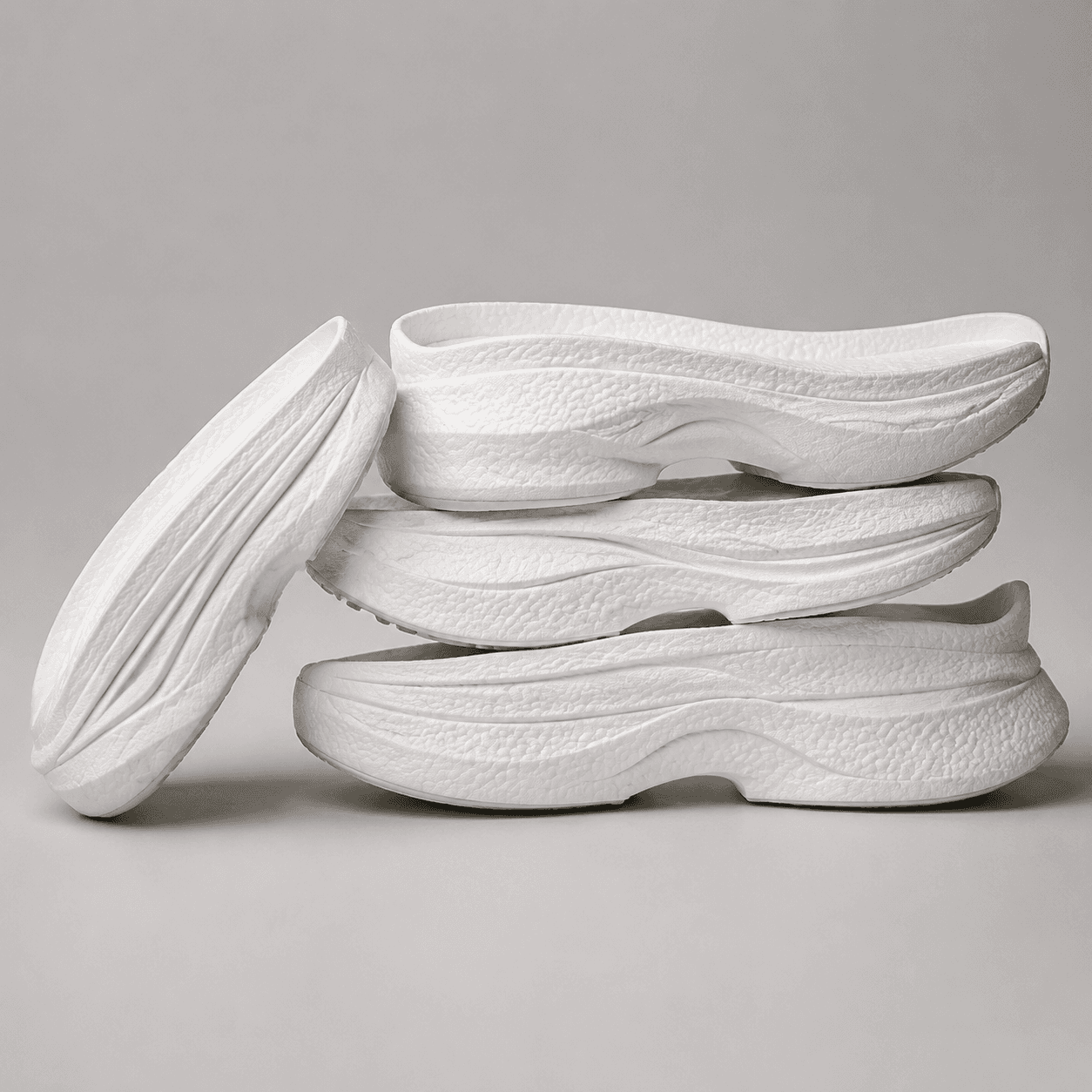
Bulk footwear buying fails for predictable reasons: the supplier is not the real producer, the sample is not industrialized for line production, the material spec is too loose, or the lead time was quoted without line and raw-material reality behind it. That is the practical meaning of how to vet a shoe factory: verify whether the factory can repeat the approved shoe at commercial scale, not just make one attractive sample.
In China, the difference between a direct manufacturer, a trader using partner plants, and a factory with partial subcontracting changes MOQ, price stability, mold control, traceability, and claim handling. A sourcing manager needs disciplined shoe supplier audit and footwear sourcing due diligence steps that check documents, people, machinery, materials, and live orders together.
Use this guide as a buyer decision tool. Each section is one decision factor in a proper footwear factory evaluation, with short checklists on what to inspect, what to ask, and what numbers should make sense before you release a deposit or issue a PO.
A qualified shoe factory is not the one with the best sample; it is the one that can repeat the approved sample at scale with controlled materials, process, and timing.
Confirm who actually manufactures the shoes
The first decision factor in how to vet a shoe factory is identity. Many suppliers present as manufacturers, but the sample room, office, and production site may belong to different entities. If your sample is made in one plant and bulk is placed in another, risk rises immediately: different last shape, different upper stitching quality, different bonding practice, and different packing control.
Ask for the business license, production address, export entity, and the exact factory assigned to your category. Then match those details against proforma invoices, sample courier records, test reports, and production photos. In a real factory verification China process, you should know whether cutting, stitching, lasting, outsole pressing, and packing are all done in-house or split. A supplier selling vulcanized canvas, injected EVA clogs, knit runners, safety boots, and ladies’ sandals from one catalog may be using several unrelated production sources.
- Confirm whether the supplier is manufacturer, trader, or hybrid sourcing office
- Ask which processes are in-house: patterning, cutting, stitching, lasting, sole pressing, injection, packing
- Verify the actual production address for your category, not only the sales office
- Request monthly capacity in pairs for your construction, not a general total
- Ask which operations are subcontracted: embroidery, screen print, molding, finishing, testing
Check specialization by construction, not by product photos
Footwear factories are construction-specific. A plant that runs cemented sneakers well may not control strobel running shoes, PU direct-injection safety shoes, vulcanized foxing, wrapped wedges, or stitched boots. The correct shoe manufacturer checklist starts with fit between your product and the factory’s core output in the last 12 months.
If more than half of the plant’s volume is in a different construction family, treat the supplier as higher risk. For example, if your order is a women’s sandal with 1.0 to 1.2 mm microfiber straps, latex footbed, wrapped wedge, and metal buckle, but the factory mainly produces knit men’s sneakers, the sample may look fine while bulk performance drifts. Different categories require different needle setup, cement system, counter handling, outsole pressing temperature, and fit judgment.
- Ask for the top 5 categories shipped in the last year by pair volume
- Request current production photos of the same construction as your order
- Check experience in your size range: kids, wide-fit, plus-size, safety sizes
- Confirm sole material know-how: rubber, TPR, PVC, EVA, phylon, TPU, PU
- Review past claim types on similar styles: bonding, fit, color rub, strap pull, flex cracking
How to judge a true category match
A strong factory match means the team already understands your likely failure points. For athletic shoes, that includes strobel stitch strength, heel counter shape retention, foam compression set, and upper-lining abrasion. For sandals, it means strap pull, toe-post anchoring, buckle fixation, and footbed adhesion. For boots, it means zip endurance, quarter stiffness, flex cracking, and outsole slip behavior.
A capable supplier answers these points with process detail and target values. A weak one answers with general phrases such as “no problem” or “we made similar” without naming construction, materials, or test method.
Practical shoe factory evaluation scorecard
| Decision factor | What good looks like | Warning sign |
|---|---|---|
| Factory identity | Legal entity, production site, and export company all align | Sales team cannot confirm where bulk will actually be made |
| Construction fit | Recent bulk production in the same category and method | Good-looking sample but no line history in your construction |
| Material control | Specs defined by thickness, GSM, density, hardness, and lot traceability | Materials described only as standard, similar, or good quality |
| Testing | Recent reports, clear in-house checks, market-specific standards understood | Only generic certificates, no comparable product test record |
| Quality system | Inline QC, low rework, documented defect standards | Heavy dependence on final inspection and frequent cosmetic rework |
| MOQ and capacity | MOQ tied to component realities and believable daily output | Very low MOQ promise without material or line logic |
| Lead time | Detailed schedule by mold, material, production, and booking | Single total number with no breakdown or assumptions |
| Costing discipline | Price explained by component, packaging, testing, and mold logic | Large quote gap with no clear reason or unstable price policy |
| Documentation | BOM lock, PP approval, retained samples, and traceable claim process | Frequent verbal changes and no version control |
Audit development capability and sample-to-bulk transfer
A good sample is not enough. You need to know whether the factory can industrialize it. Many sample rooms use hand skiving, hand pulling, temporary fillers, or alternative adhesive practice that the line will not repeat at 1,200 pairs. In how to vet a shoe factory, sample accuracy matters less than sample repeatability.
Review pattern engineering, last availability, grading logic, and mold ownership. If the supplier does not control its own pattern room or relies on outside technicians for outsole mold communication, delays and dimension drift are common. As a working range, new outsole mold opening is often 12 to 25 days, confirmation samples another 7 to 14 days, and size-set confirmation 5 to 10 days. If a factory promises all of this in two weeks, ask what already exists and what is being skipped.
- Ask whether pattern making and grading are in-house
- Clarify last source and whether the last can be adjusted for fit comments
- Confirm outsole mold charge, ownership, storage, life cycle, and re-order terms
- Request a size set for fit-sensitive categories before bulk confirmation
- Compare approved sample BOM against bulk BOM and close every open material item
Inspect raw-material control with measurable specifications
Most footwear claims begin in materials, not in final inspection. A factory may show a clean packing area and still have weak control over synthetic thickness, mesh GSM, outsole compound, counter stiffness, or glue shelf life. A proper footwear factory evaluation checks what enters the warehouse before it checks the finished pair.
Ask for material specs with numbers. Upper microfiber might be 1.2 to 1.4 mm, sandwich mesh 240 to 320 GSM, lining mesh 130 to 180 GSM, insole board 1.8 to 2.0 mm, EVA sockliner 0.20 to 0.25 g/cm3 density, and rubber outsole Shore A 55 to 65 depending on category. For phylon midsoles, a light casual build may target about 0.18 to 0.25 g/cm3, while heavier support builds can run denser. If the factory cannot state these values, it cannot reliably control substitution.
Also check whether material lots are segregated and traceable. On color-sensitive styles, different upper lots or outsole batches can create visible mismatch between left and right shoe or between repeat orders. On bonding-sensitive styles, expired primer, wrong hardener ratio, or moisture-affected upper material can cause delayed failures after shipping.
- Check whether incoming materials are logged by lot number, supplier, and date
- Ask for spec sheets covering thickness, GSM, density, hardness, and color tolerance
- Verify adhesive system by construction: water-based or solvent-based, primer, hardener ratio, open time
- Confirm warehouse controls for temperature, humidity, and adhesive shelf life
- Ask to see rejected materials and the nonconformance handling record
Review testing logic and compliance by market
A serious shoe supplier audit goes beyond asking whether the factory is compliant. You need to know which tests are run, how often, and against what pass standard. Testing for a men’s casual cupsole, a children’s sandal, and a safety boot is not the same. The right supplier already understands where the claim risk sits.
For EU and US bulk buying, the factory should be familiar with the relevant EN ISO or ASTM framework for your category, plus chemical control expectations where applicable. Depending on product type, you may need bond strength, flex resistance, abrasion, slip resistance, color fastness, hydrolysis resistance, toe cap compression, puncture resistance, phthalate or restricted-substance control, and carton labeling accuracy. If the supplier says testing is only arranged after production, that is too late for many issues.
Ask for recent reports on similar constructions. The best evidence is not a generic certificate on the wall; it is a recent lab report for a comparable upper, outsole, and construction. Also verify what the factory can test in-house. Many can do simple peel checks, flex trials, and abrasion comparison, but rely on external labs for EN ISO or ASTM claims. That is acceptable if the trigger point and approval flow are clear.
- Ask for 6 to 12 months of test reports for similar shoes
- Confirm in-house checks for bond strength, flexing, abrasion, and strap pull where relevant
- Check familiarity with EN ISO and ASTM requirements relevant to your product category
- Verify chemical-control procedure for REACH, CPSIA, Proposition 65, or buyer RSL if applicable
- Ask how failed tests are quarantined, corrected, and re-submitted
Technical questions that expose weak suppliers quickly
For cemented sneakers, ask what bond-strength result they target after 24-hour curing and how long pairs rest before packing. For running shoes, ask about compression set of the midsole foam, upper seam durability under flex, and heel counter shape retention. For sandals, ask how they test strap pull and toe-post fixation. For safety shoes, ask which EN ISO or ASTM clauses they work to for toe impact, compression, puncture resistance, and slip performance.
A supplier that cannot explain method, frequency, and target threshold is not ready for controlled bulk production.
Evaluate inline quality control, not only AQL final inspection
Final inspection catches symptoms; it does not control process. In footwear, many expensive defects happen upstream: mismatched upper panels, uneven stitching density, poor lasting tension, contaminated cement line, short pressing time, wrong sockliner, mixed outsole color, or incorrect carton ratio. That is why how to vet a shoe factory must focus on line control.
Ask how the factory checks cutting, stitching, assembly, and packing. A mature line should have inline QC, line-end confirmation, and final random inspection. Rework rate is one of the clearest indicators. On a stable repeat sneaker, rework should not be treated as normal at 10%. On simple constructions, if the factory regularly reworks 8% to 12% of pairs, the process is not disciplined. For approved repeat styles, many competent plants aim materially lower.
- Ask for QC checkpoints at cutting, stitching, lasting, sole bonding, cleaning, and packing
- Review defect categories: critical, major, minor, and photo standards for each
- Request typical rework percentage on repeat styles and top three recurring defects
- Confirm pair matching control for shade, size stamp, logo orientation, and lace length
- Check carton audit for size ratio, barcode, country-of-origin mark, and net/gross weight
Test MOQ, line capacity, and lead-time realism
MOQ in footwear is driven by material minimums and line economics, not only by the factory’s sales policy. A supplier may quote 600 pairs per style-color for a basic repeat outsole with stock lining, but need 1,200 to 1,800 pairs if you require custom outsole color, low-volume upper material, woven logos, and individual box printing. Evaluate MOQ by component, not just by finished shoe total.
Lead time must be broken down. For repeat styles using open-stock materials, 30 to 45 days ex-factory can be realistic. For new development with custom molds and new materials, 45 to 75 days is more typical, sometimes longer during peak season. If a factory promises 25 days on a new molded outsole project, ask whether the mold already exists, whether materials are in stock, and whether your order will jump ahead of existing customers. Capacity claims should also be checked against line count, worker count, and actual daily output in your construction.
Price pressure often hides capacity risk. A plant that needs your order badly may accept a low MOQ and short lead time, then start buying materials late or pushing production into overtime. That is how packing errors, glue issues, and mixed cartons appear at shipment stage.
- Ask MOQ by style, color, outsole color, and size-run flexibility
- Check daily output per line for your construction, such as 800 to 1,500 pairs depending on complexity
- Break lead time into mold, material booking, upper prep, assembly, finishing, and booking
- Confirm peak-season congestion, especially before Chinese New Year and back-to-school season
- Ask what contingency plan applies if material delivery is late by 3 to 7 days
Interrogate costing and price-change triggers
In bulk footwear, a quote that is significantly below market is usually not free efficiency. It often means lower upper thickness, lighter outsole weight, cheaper insole board, weaker glue system, lower-grade mesh, or trimmed labor content. A difference of $0.50 to $1.50 per pair can come from real specification changes that may not be obvious on a first sample.
Ask the supplier to separate the main cost buckets: upper material, sole, insole and sockliner, trims, labor, packing, mold amortization if any, and testing. You do not need a full factory open-costing sheet from every supplier, but you do need enough visibility to understand volatility. Rubber compound, microfiber grade, woven tape, reflective trims, and carton strength all affect price. If the factory cannot explain why one style is $8.20 per pair and another is $9.10 with similar upper coverage and sole weight, its quoting discipline is weak.
Also check what triggers price adjustment after order confirmation. Resin changes can move outsole cost. Oil-derived material swings can affect TPR, PVC, and EVA. Packaging upgrades can add $0.15 to $0.40 per pair. If these rules are not clarified before deposit, the factory may reopen price discussion when materials are already booked.
- Ask which components are most cost-sensitive and by how much they typically move
- Check whether unit price includes testing, extra labels, spare laces, tissue, silica gel, and export carton spec
- Confirm over/under shipment tolerance and billing treatment
- Ask whether mold cost is separate, amortized, or refundable after volume targets
- Review payment terms against raw-material booking commitment and production slot reservation
Check documentation discipline and claim handling
A technically capable factory can still create claims if document control is weak. In footwear, avoidable failures often come from unclosed sample comments, wrong size labels, outdated artwork, changed eyelets, incorrect outsole color code, or carton assortment mistakes. A reliable supplier translates approvals into production documents without ambiguity.
Review how the factory controls BOM release, color approval, size-set approval, pre-production sample signoff, and shipment recordkeeping. Ask who owns the style from development to ex-factory shipment. If sales, merchandising, development, and QC all hold different versions of the spec, expect trouble. A disciplined supplier usually has one accountable merchandiser and one retained-seal-sample process by production lot.
Claim handling also matters before the first claim happens. Ask what evidence the factory keeps, how fast they answer quality complaints, and whether they maintain retained samples, material lot records, and carton traceability. A factory with no written complaint procedure will improvise when a real issue appears.
- Check whether one merchandiser owns the order from sample to shipment
- Ask to review PP approval forms, BOM locks, and production status reports
- Verify how buyer comments are converted into line instructions and QC checkpoints
- Confirm retained-sample policy by production lot and shipment batch
- Ask for claim-response timeline, root-cause format, and corrective-action record
Use an on-site audit or footwear-specific third-party verification
If the annual order value is meaningful, an on-site audit is usually cheaper than one failed shipment. Even a one-day visit can show whether the factory is organized, overloaded, short on skilled labor, or dependent on manual rework to make shoes presentable. If you cannot visit, use a local auditor who understands footwear processes, not only general social-compliance checklists.
A proper factory verification China review should include document confirmation, sample room assessment, raw-material warehouse walk, line walkthrough, QC records, and management interview. Compare what the supplier says with what the floor shows. If a factory claims 100,000 to 120,000 pairs monthly capacity but has limited stitching lines, little WIP, and no clear finished-goods staging area, the number may be theoretical, not usable for your category.
The strongest buyers do not rely on one signal. They compare legal identity, construction fit, material controls, testing discipline, line quality, capacity realism, and communication traceability together before they place a deposit. That is the supplier-side reality behind low-risk sourcing.
- 01Verify legal entity, production address, and export company against documents
- 02Walk the raw-material warehouse and check lot control, labeling, and storage conditions
- 03Inspect cutting, stitching, lasting, sole bonding, cleaning, and packing areas
- 04Review at least one live production order similar to your shoe type
- 05Interview development, merchandising, and QC staff, not only the salesperson
Key takeaways
- Verify the real production site and any subcontracted steps before approving the supplier
- Choose factories with recent bulk experience in your exact footwear construction, not just a similar look
- Lock material specifications with numbers such as thickness, GSM, foam density, and outsole hardness
- Check testing discipline against the EN ISO, ASTM, and chemical requirements relevant to your market
- Break MOQ, price, and lead time into component, tooling, and line-capacity drivers before deposit
- Use an on-site or footwear-focused third-party audit when order value, compliance risk, or repeat volume justifies it
SoleForge manufactures athletic & running shoes and leather & dress shoes under OEM and ODM for brands and importers worldwide. Request a quote with your tech pack or reference pair and we'll reply within one business day.