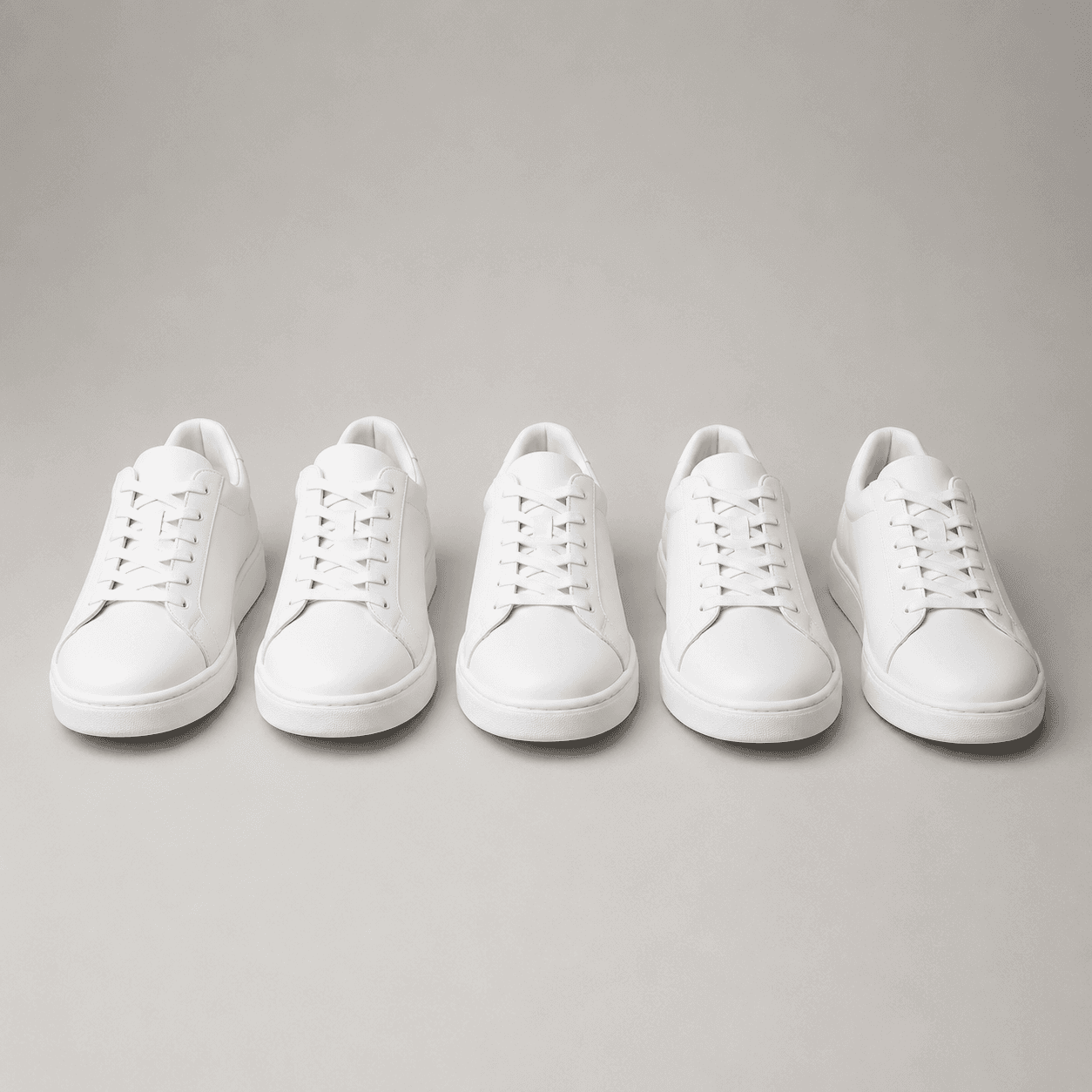
For bulk buyers sourcing from China, the choice between private label shoes and white label footwear is not a branding detail. It affects mold use, material control, fit consistency, test scope, sample cycle count, and whether a quoted FOB still holds after development. In footwear, those differences show up quickly in MOQ pressure, 15-30 extra days of lead time, or a cost increase of $0.80-$2.50 per pair once the real specification is confirmed.
A white label EVA slide may use an existing mold, stock 45-50 Shore C compound, standard 3 mm printed sockliner, and a carton already proven in export packing. A private label vulcanized sneaker may require 14-16 oz canvas, 180-220 GSM mesh lining, 4-6 mm PU foam footbed at 0.18-0.22 g/cm3, custom foxing artwork, and a fresh pre-production sample before bulk cutting starts. These are different factory workflows, not just different sales terms.
For sourcing managers, importers, and brand owners, the practical question is simple: which model fits your volume, target FOB, margin requirement, compliance exposure, and launch date? That is where oem vs odm shoes becomes a working sourcing decision instead of a label used loosely in supplier presentations.
In footwear sourcing, the real decision is whether your expected volume justifies owning more of the shoe specification, testing burden, and development time.
What private label shoes and white label footwear actually are
In footwear, private label shoes are products sold under the buyer's brand, but the level of buyer control can vary sharply. In a lighter private label program, the factory keeps its existing last, outsole mold, grading, and upper pattern, while the buyer changes logo, colorway, upper material, sockliner print, hangtag, and carton. In a deeper private label program, the buyer adjusts technical points such as vamp proportion, toe spring, collar foam package, strobel board spec, outsole geometry, rubber hardness, or midsole density.
White label footwear is usually a faster, narrower model built on an existing factory platform. The factory already has the last, pattern, mold, grading, and standard bill of materials. The buyer chooses from approved upper materials, lining options, outsole colors, and packaging formats, then adds branding through print, emboss, deboss, woven label, heat transfer, or box artwork. The construction itself is not being re-engineered; the buyer is commercializing a pre-developed shoe.
The confusion starts because some suppliers use the words interchangeably. In practice, the difference is operational: how much of the shoe specification the buyer owns, and how much of the factory's existing development the buyer accepts. If that point is not clear at inquiry stage, the quote is usually too optimistic on either cost or timing.
How this maps to OEM vs ODM shoes
The most useful way to sort the terms is through oem vs odm shoes. OEM means the buyer defines the product requirement in detail and the factory manufactures to that requirement. In footwear, that can include last shape, target weight, upper material thickness, foam density, outsole compound, logo execution, packaging standard, and named test protocol. ODM means the factory starts from its own developed style and the buyer adapts it.
Most white label footwear is ODM-based. The factory owns the mold library, pattern, grading, and standard materials, so the buyer is mainly selecting and branding. Many private label shoes also start from an ODM base, but move toward OEM as the buyer changes technical items such as fit allowance, quarter reinforcement, outsole abrasion target, collar foam density, or lining GSM. Once approvals are based on technical specification sheets instead of only artwork and color chips, the project is no longer behaving like a simple stock style.
Why this distinction matters before quoting
A supplier can quote a stock knit sneaker at $9.20-$10.40 FOB using an existing phylon bottom, stock mesh, printed logo, and standard color box. The same upper can move to $12.50-$14.20 FOB if the buyer adds molded TPU branding, 220-240 GSM sandwich mesh lining, abrasion-resistant rubber pods, 5 mm PU insole at 0.20 g/cm3, and a custom outsole color with low-MOQ pigment mixing. The silhouette looks similar, but the quote basis is not the same.
Lead time changes just as fast. A genuine white label canvas shoe can often run 30-40 days from confirmation to ex-factory. A private label court shoe needing logo mold opening, foxing artwork approval, upper material sourcing, compliance review, and pre-production sign-off is more realistically 55-75 days. If the buyer and factory are not aligned on whether the project is OEM-leaning or ODM-leaning, the launch calendar is wrong before sampling even starts.
How each model works inside a China footwear factory
White label footwear runs through a short and familiar factory path. The outsole mold exists, the pattern is already graded, the upper stitching sequence is known, and defect points have production history. The merchandiser mainly confirms color, logo placement, carton marks, size ratio, and whether the selected materials are stock or need replenishment. Because labor minutes and material consumption are already understood, the supplier can usually keep MOQs lower and confirm pricing faster.
Private label shoes need more engineering review before bulk can be booked. Even when the buyer uses an existing bottom mold, the development room still has to check logo scale, panel revision, upper material thickness, stitch density, reinforcement placement, toe puff and counter behavior, sockliner construction, and test requirements. Changing microfiber from 1.0-1.2 mm to 1.3-1.5 mm, increasing collar foam from 8 kg/m3 to 12 kg/m3, or moving lining from 130 GSM mesh to 200 GSM sandwich mesh affects cutting yield, sewing handling, comfort feel, and sometimes fit volume.
That is why private label orders usually require more gates: development sample, revised confirmation sample, size set where needed, pre-production sample, and then bulk approval. Those steps cost time, but they are cheaper than discovering after 2,000 pairs that the collar rubs, the foxing print shifts, or the footbed compresses below expectation after a short wear test.
Typical MOQ and lead-time bands
For white label footwear from China, realistic MOQs are often 300-600 pairs for EVA slides or slippers, 500-800 pairs for standard knit or canvas sneakers, and 800-1,000 pairs when the order includes non-stock colors, upgraded lining, or custom carton requirements. Sales samples are commonly ready in 7-12 days if the selected materials are in-house. Bulk production is often 25-40 days after deposit, final artwork, and sample confirmation.
For private label shoes, practical entry MOQ is usually 800-1,200 pairs per style for casual categories and 1,200-3,000 pairs once custom upper sourcing, outsole recoloring, branded hardware, or logo tooling is involved. Development samples often take 14-21 days, second-round corrections another 7-14 days, and bulk production 45-75 days. If the program includes new outsole tooling, lab testing, or external material sourcing, 80-90 days is more realistic than 60.
Main cost drivers per pair
On white label footwear, the main cost drivers are upper material grade, outsole weight, sockliner build, packaging, and quantity split by color or size. Moving from a stock 2 mm EVA sockliner to a 4 mm open-cell PU footbed can add $0.18-$0.40 per pair. Changing from a plain box to a branded box with tissue, barcode sticker, size label, and stronger export board can add another $0.22-$0.55 per pair depending on print coverage and paper grade.
On private label shoes, the cost map is wider because technical changes are cumulative. New logo molds can cost $150-$400 each, custom metal hardware more if plating and molds are involved, and outsole modifications or new bottom tooling are much higher. Material changes also add up quickly: a lining upgrade from 120-140 GSM mesh to 180-220 GSM sandwich mesh, a tongue foam move to 10-12 kg/m3 rebound foam, or a footbed specification of 4-6 mm PU at 0.18-0.22 g/cm3 can add $0.50-$1.50 per pair before packaging or testing is counted. For many private label programs, the expensive mistake is not one big item but five small upgrades approved without recalculating margin.
Private label shoes vs white label footwear at sourcing level
| Factor | Private label shoes | White label footwear |
|---|---|---|
| Design ownership | Buyer-led or shared OEM/ODM development | Factory-led ODM base style |
| Customization depth | Medium to high: materials, fit, branding, upper details, some bottom changes | Low to medium: branding, color, packaging |
| Typical MOQ | 800-3,000 pairs | 300-1,000 pairs |
| Sample lead time | 14-28 days | 7-15 days |
| Bulk lead time | 45-90 days | 25-45 days |
| Tooling exposure | Often logo tooling, sometimes bottom tooling | Usually none or minimal |
| Typical FOB range | About $9.80-$20.50 depending on category | About $3.00-$11.80 depending on category |
| Margin protection | Stronger if specification is differentiated | Weaker if comparable stock styles are common |
| Compliance workload | Higher because more variables change | Lower because construction is already proven |
Why the choice matters for quality, compliance, and margin
White label footwear usually offers better repeatability at the first order because the factory has already run the construction. The supplier knows how the upper lasts, how the cement behaves, how much the outsole shrinks, and where inspection failures normally occur. For buyers entering a new price point or new category, that production history lowers risk.
Private label shoes provide more control, but every custom change adds a variable that must be validated. A softer phylon can improve step-in feel but worsen compression set. A lighter mesh can reduce cost but lower tear strength. A thicker memory foam sockliner can improve first try-on but tighten fit volume in the toe box. Buyers who treat these as aesthetic changes usually pay for the mistake later through claims, unstable repeat orders, or forced rework.
The margin consequence is straightforward. White label footwear has lower development cost and quicker launch, but it is easier for comparable products to appear from competing suppliers using the same mold family. Private label shoes require more upfront work, yet they protect margin better when the fit, comfort package, upper specification, and visual details are not easy to duplicate at the same FOB.
Compliance checkpoints buyers should lock before bulk
For casual footwear sold into the EU or UK, buyers usually define restricted substance requirements, labeling rules, and selected physical tests before material booking. If the product is sold with occupational, slip-resistant, or protective claims, the relevant EN ISO reference must be written into the purchase specification, not discussed casually after samples are approved. For the US market, ASTM references may be needed when the product is sold with performance claims such as slip, impact, or other occupational features.
At factory level, buyers should specify actual checkpoints: upper flexing, bond strength, outsole abrasion, crocking, color migration, hydrolysis exposure for PU parts, and carton drop or burst requirements where relevant. For EVA, PU, phylon, or memory foam components, define density, hardness, thickness, and tolerance. A sockliner at 0.16 g/cm3 and one at 0.22 g/cm3 may look similar in a showroom sample, but they will not perform the same after repeated compression and heat exposure in use or in transit.
Where margin usually leaks
The first margin leak is late specification drift. A buyer confirms a quote on a stock build, then adds molded branding, reflective webbing, stronger eyelets, 16 oz canvas, higher-density footbed foam, and upgraded carton after the first sample. The FOB climbs by $0.90-$2.20, but the retail plan often stays fixed.
The second leak is over-customizing low volume. A 500-pair launch order almost never absorbs new bottom tooling efficiently unless the buyer accepts tooling cost separately and expects repeat business. The third leak is compliance rework. If test protocol, label language, adhesive requirement, or restricted substance control is not aligned before raw materials are purchased, the factory may need to replace lining, print ink, adhesive, or packing late in the schedule. That creates scrap, delays loading, and can turn a sea-freight program into an airfreight problem that removes the planned margin entirely.
When to use white label footwear
White label footwear is the right choice when speed, lower MOQ, and low development friction matter more than exclusive product architecture. It works best for entry-price retail, seasonal capsules, test orders, promotional programs, and categories where the customer is buying a straightforward function rather than a differentiated footwear package. Common examples include EVA slides, beach sandals, hotel slippers, school canvas shoes, and basic cupsole casuals.
It is also the cleaner option when the buyer team does not want to manage full footwear development. If your process is strong on artwork approval, carton marks, and size ratio planning but not on last adjustment, wear testing, outsole engineering, or material validation, white label keeps more technical responsibility on the supplier side. That often means fewer sample rounds and faster first shipment readiness.
The trade-off is that competitive insulation is weak. If several buyers source from similar ODM platforms with only minor branding changes, the market will compare mainly on price, shipment timing, and packaging presentation.
- 01Use white label when shipment needs to be ready in roughly 30-45 days after confirmation.
- 02Use white label when forecast confidence is low and the trial order is only 300-800 pairs.
- 03Use white label when the target FOB leaves no room for tooling amortization or multiple sample rounds.
- 04Use white label when the factory already has passing production and test history on the same construction.
When to use private label shoes
Choose private label shoes when your brand needs more than logo placement on a stock style. This route makes sense when fit consistency, comfort build, material grade, visual identity, or account exclusivity supports your selling price and reorder strategy. It is common in fashion sneakers, comfort casuals, kids collections, and retailer-exclusive programs where repeat business depends on product identity rather than only low entry cost.
Private label is also the better model when the footwear must meet a defined wearing standard. That can mean 1.3-1.5 mm microfiber instead of entry-level PU, 180-220 GSM breathable lining instead of light stock mesh, a 4-6 mm PU footbed at a defined density, a higher-abrasion outsole compound, or a slip-focused outsole geometry validated against the claimed market standard. These are the points where your shoe becomes harder to compare directly with a catalog item.
The caution is volume discipline. If annual demand is 10,000-20,000 pairs across repeat orders, custom development is often commercially efficient. If annual demand is below about 3,000 pairs, the safer route is usually to stay on an existing mold family, customize the upper and branding carefully, and avoid unnecessary tooling unless the account value clearly justifies it.
- Best for repeat programs with stable forecasts and replenishment potential
- Best for brands that need controlled fit, comfort package, and material specification
- Best for distributor or retailer accounts asking for channel or regional exclusivity
- Best when annual volume can absorb tooling, testing, and a 45-90 day production cycle
SoleForge manufactures casual sneakers and athletic & running shoes under OEM and ODM for brands and importers worldwide. Request a quote with your tech pack or reference pair and we'll reply within one business day.