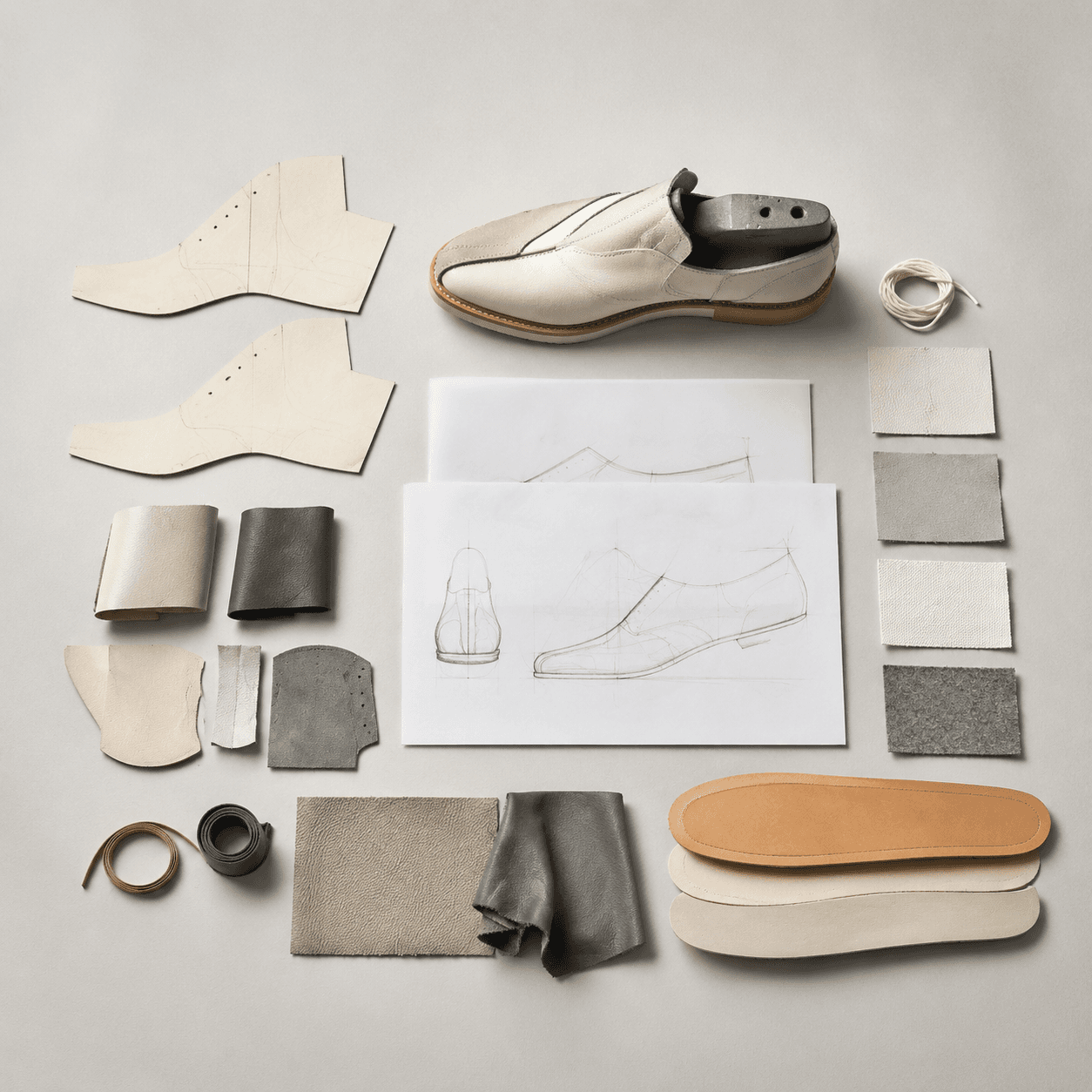
Shoe colorway development becomes expensive when brands treat color as a late design decision instead of a sourcing variable. In China bulk production, every added colorway changes upper material MOQ, dye-lot management, outsole compound booking, sample rounds, stitching line changeover, carton assortment, and the risk of leftover trims. A color that looks correct in a rendering can still fail commercially if it needs a custom mesh lab dip, a painted EVA sidewall, and a woven tongue label that does not meet supplier minimums.
For sourcing managers, brand owners, and importers, the issue is not whether to offer variety. It is how to offer enough variety without turning one footwear platform into eight low-volume custom shoe variants. Factories want shared outsoles, stable foam specs, common linings, and cutting runs long enough to protect efficiency. Buyers want margin, on-time shipment, and SKUs that can reorder without reopening development.
This guide follows the actual supplier workflow: define the SKU structure, convert the palette into material-specific standards, control sample gates, validate MOQ and lead-time by component family, run bulk production with colorway-specific QC, and cut weak variants after shipment. The focus stays practical: MOQ bands, day counts, $/pair impact, foam density, GSM, and the EN ISO or ASTM checks that matter when color changes involve new materials or finishes.
A good colorway is not just approved in design review; it is one the factory can repeat at target cost, on schedule, and with low claims.
Build the SKU architecture before sampling any colorway
The first step in shoe colorway development is not approving colors. It is deciding how many SKUs the factory can run efficiently on one platform. Before opening any sample request, lock the style family by category, target ex-factory or FOB price, outsole platform, upper construction, season, target market, and expected unit volume per style-color. If those basics are loose, the factory has to price in risk through higher costing, stricter MOQ, or longer lead-time.
Separate carryover platforms from seasonal colorways shoes. A carryover platform should keep the same last, outsole tooling, strobel board, insole board thickness, footbed shape, collar foam package, box dimensions, and main BOM logic. Seasonal variants can change shade, contrast, and trim color, but they should not quietly introduce a new substrate. Swapping a 1.5 mm PU microfiber overlay for a 1.2 to 1.3 mm suede-touch synthetic on only one colorway changes cutting yield, skiving behavior, upper stiffness, adhesive absorption, and abrasion performance. That is not a color adjustment. It is a different material execution with its own risk profile.
Volume planning must match factory economics. For many cemented casual, lifestyle, and sport-casual shoes, a workable commercial range is 600 to 1,200 pairs per colorway. Below 500 pairs, the factory usually adds small-order surcharges or refuses custom trims. Vulcanized and injected styles often need 1,200 to 2,400 pairs per color because tooling setup, compound mixing, and line balancing are less flexible. If a range plan proposes six colors at 300 pairs each, the issue is not aesthetic breadth. The issue is six under-recovered setups.
Lock the hidden specifications first. Keep collar foam consistent, for example 45 to 50 kg/m3 on the same platform. Keep lining mesh within a controlled band such as 180 to 220 GSM for light casual product or 220 to 260 GSM for heavier sport-casual product. Keep lace length, eyelet count, strobel board thickness, sockliner die-cut, and box size common wherever possible. These shared details make footwear assortment management easier because the factory can cut, stitch, and pack several colorways with fewer material interruptions.
A practical range structure is core, commercial, and experimental. Core colors should account for most unit volume and use the cleanest BOM. Commercial colors can add contrast or seasonal accents while still sharing most components. Experimental colorways should stay tightly capped, with separate margin and MOQ review before approval.
- Set target cost by style-color, not by style average only.
- Define a pre-sampling forecast; SKUs below minimum volume should be tagged as special order or account-exclusive.
- Group SKUs by shared outsole, strobel board, lace, eyelet finish, footbed, box print, and carton mark.
- Use separate coding for carryover and seasonal variants so replenishment decisions stay clean.
Convert the color brief into material-specific production standards
The next stage in shoe colorway development is translating design color into factory reality. One digital color code will not behave the same on open sandwich mesh, PU microfiber, brushed synthetic, matte rubber, TPR foxing, EVA sidewall paint, TPU logo film, and woven webbing. If the buyer approves only a rendering, the factory still has to resolve absorption, gloss, opacity, and shade tolerance at component level. That is where delays begin.
The correct sequence is color brief, material shortlist, physical swatch review, lab dip or strike-off approval, then full color sample. For textile uppers, ask for lab dips viewed under D65 and warm store light because navy, olive, off-white, and beige can shift sharply between environments. For synthetics, approve from production-grade swatches from the same supplier family, same thickness, and same finish, not from a salesman card. A 1.4 mm matte PU often reads darker than a 1.2 mm semi-gloss PU under the same pigment formula.
For molded or compound parts, confirm whether the color is color-in-material or post-painted. Color-in-material usually gives better batch consistency and better abrasion resistance, especially on rubber or injected EVA. The trade-off is MOQ. A custom outsole compound color may require 300 to 500 kg per batch or enough quantity for roughly 1,200 to 2,000 pairs depending on size range and outsole weight. Post-painted midsoles are more flexible for low-volume fashion colors, but they typically add $0.18 to $0.35 per pair for one solid sidewall color and $0.35 to $0.70 for two-tone masking. They also increase the risk of edge variation, over-spray, or paint cracking after flexing if curing control is weak.
In multi color shoe production, define one master visual anchor. Many factories use the quarter panel, vamp overlay, or mudguard as the primary tone and allow controlled variance on lace, webbing, or lining because an exact match across textile, rubber, and painted EVA is rarely realistic. A written tolerance note in the tech pack is more useful than comments like 'slightly cleaner cream' or 'more premium navy.' If the outsole can be half-tone darker than the upper and still remain acceptable, write that standard before sample review.
Trim discipline matters. A unique pull tab, custom sockliner print, woven tongue label, deboss patch, and speckled outsole may add only $0.50 to $1.30 per pair in direct BOM, but the larger cost is often hidden: separate trim MOQs, extra approvals, and leftover stock after shipment. On low-volume programs, just one new trim family can add 5 to 10 days if the supplier has to redye webbing, reopen label artwork, or wait for a new outsole paint batch.
Color choice should also reflect claim risk. White, bone, pale grey, and light pastel uppers show glue contamination, edge-paint inconsistency, and carton rub much faster than black or tonal dark colors. Metallic films, reflective transfers, and neon prints need extra caution because visual defects are obvious at retail and decorative failures often appear before structural issues.
What the factory color standard pack should include
A usable production standard pack should list every visible component, approved swatch, material thickness, finish type, and panel location. State whether the component is yarn-dyed, piece-dyed, transfer printed, screen printed, spray painted, or injection colored. For outsoles and foxing, include target hardness if compound adjustment can affect shade; for example, a rubber outsole at Shore A 60 to 65 may not present the same pigment depth as the same formula at Shore A 55.
Add gloss or matte expectations where relevant, especially on TPR sidewalls, molded logos, TPU films, and painted EVA. If the style sells into regulated channels, define the compliance path before sourcing starts. Certain pigments, topcoats, or metallic effects can complicate restricted-substance control. Where the footwear must meet EN ISO or ASTM requirements, confirm that decorative paints, films, or overlays do not interfere with flexing, upper-to-sole adhesion, abrasion, slip, or any category-specific performance criteria already specified for the program.
Use hard sample gates so color decisions do not delay commercialization
Sampling only works when each stage answers a different question. Too many projects fail because the brand treats every sample as both a design review and a final production approval. A first prototype should confirm pattern, panel split, last proportion, and upper-to-sole balance. A color sample should confirm shade, material pairing, contrast level, print scale, and trim hierarchy. A confirmation sample should lock production details. If the team is still changing eyelet finish or tongue label color at confirmation stage, commercialization is already slipping.
Typical timelines in China are predictable if comments are disciplined. A first prototype using substitute materials is often 10 to 14 days. A color sample with actual materials is commonly 12 to 18 days once lab dips and trim strikes are ready. A final confirmation sample may take another 7 to 10 days. If custom dyed mesh, printed lining, painted outsole sidewall, or molded logo chips are still pending, add 5 to 12 more days depending on supplier response. These numbers are manageable only if the buyer sends one consolidated comment file and one clear approval status per sample round.
A good cost-control method is to screen colorways before stitching full samples. Many factories can prepare a material laydown board or digital upper map in 2 to 4 days. That allows weak color combinations to be rejected early. On a new platform with five planned colors, it is common to sample only the strongest three physically, then approve the remaining two through a material matrix plus production-grade swatch review if the BOM and panel layout stay unchanged.
Review colorways as a family, not one by one. A single pair can look acceptable on its own but still weaken the range if the trim hierarchy across all colorways is inconsistent. Compare all approved options together under the same lighting and background. This is especially important for neutral stories where small shade gaps between bone, chalk, sand, and warm grey can make the line look unbalanced.
For custom shoe variants, request one cut-open sample whenever lining, reinforcement, toe puff, heel counter, or foam package changes from the base style. A different lining at 150 GSM versus 220 GSM, or a collar foam shift from 45 kg/m3 to 60 kg/m3, can alter fit, collar recovery, and crease behavior even if the exterior color blocking looks identical.
- Approve by purpose: prototype for construction, color sample for aesthetics, confirmation sample for bulk lock.
- Keep dated approvals for swatches, outsole chips, print strike-offs, molded logos, and artwork versions.
- Review all colorways together so tonal balance and trim hierarchy stay consistent across the line.
- If a colorway changes lining, backing, or foam package, request one destructive sample review before PO release.
Validate MOQ, costing, and lead-time by component family before sign-off
The most common mistake in footwear SKU planning is treating the factory MOQ as the only MOQ. A supplier may agree to 800 pairs for one style-color, but the real restriction may sit with the lace mill, woven label vendor, outsole paint shop, mesh dye house, or carton printer. That is why final assortment approval should happen only after the BOM is reviewed by component family.
Ask the factory to divide the BOM into three groups: shared components, color-dependent components, and style-unique components. Shared components protect cost and replenishment speed. If one outsole color, one footbed mold, one strobel board, one box print, and one carton size can support four colorways, the platform remains healthy. Color-dependent components need aggregation across styles wherever visual compromise is small. Style-unique components should face strict scrutiny because they are where margin leakage usually starts.
Typical supplier minimums are not identical across factories, but certain patterns are common. Lace suppliers often ask for 3,000 to 5,000 pairs per length-color combination. Woven labels may need 5,000 to 10,000 pieces per artwork. Custom dyed sandwich mesh may require 300 to 500 meters per color. Synthetic leather suppliers may insist on one lot or apply a small-order surcharge equivalent to $0.08 to $0.20 per pair if consumption is too low. Screen-printed sockliners can trigger setup fees if the artwork changes for every colorway. Carton printers may need 1,000 to 2,000 boxes per print version to avoid inefficiency.
Lead-time must be calculated from the slowest component, not from the factory’s average promise. Once all materials are approved, standard bulk production for many casual and lifestyle shoes is around 45 to 60 days ex-factory. New outsole tooling may add 18 to 28 days for a basic mold and longer for multi-part constructions. Custom dyed mesh can add 7 to 14 days. Transfer print film or reflective logo development may add 5 to 8 days. Fresh outsole paint development may add another 3 to 6 days if the color needs repeated matching.
Costing should be reviewed per colorway, not only as a weighted style average. A black or dark tonal variant usually runs faster, hides minor handling marks better, and has lower visible reject rates. A white-based, pastel, or high-contrast variant may cost $0.30 to $0.90 more ex-factory because of cleaning losses, stricter sorting, extra pair protection, or higher remake ratios. That cost is normal. The question is whether the SKU still clears target margin after expected markdown and claim exposure.
When a colorway falls short of MOQ, there are only a few clean solutions. Aggregate the trim across another style on the same platform, simplify the trim package, switch from a custom component to a stock color, or drop the SKU. Splitting the shortage across late manual workarounds usually creates more delay and more waste than it saves.
- 01List every BOM item and record supplier MOQ, color MOQ, surcharge threshold, and replenishment lead-time days.
- 02Aggregate trims and materials across styles whenever the same component can be used without weakening the line.
- 03Flag any colorway that fails to recover its unique trim MOQ or pushes ex-factory cost above the target.
- 04Review margin and claim risk by colorway, not only by style average.
- 05Keep one reserve colorway ready in case a planned option collapses during MOQ review.
Run bulk production with sealed standards, lot discipline, and colorway-specific QC
Once the PO is placed, control shifts from planning to execution. Bulk consistency depends on lot segregation, material traceability, line housekeeping, and written acceptance standards. If the factory mixes mesh from two dye lots, substitutes a lace shade, or repaints midsoles after rejection without documenting the change, the mismatch may not show until final inspection or retail receipt. By that point, correction cost is high and time is gone.
Require one sealed bulk standard card for each colorway before cutting starts. It should include approved upper swatches, lining, lace, webbing, eyelet finish, outsole chip, midsole paint reference, sockliner print, and logo print or transfer where applicable. The line should compare first-cut panels, first-stitched uppers, and first lasted pairs against that sealed card, not against a salesman sample or memory.
Light colors require stricter housekeeping. White, off-white, stone, and pale grey should run in a cleaner section with tighter glue control, better sole painting discipline, and more surface protection at packing. Tissue wrap, pair bags, toe stuffing, or interleaving paper may add only $0.05 to $0.12 per pair and often prevent claim deductions larger than the packaging cost. On nubuck-touch synthetics or brushed microfiber, ask the factory to confirm whether surface nap direction affects shade appearance in the carton.
Testing should follow the real material risk. For general lifestyle shoes, confirm upper-to-sole adhesion, flexing, abrasion, colorfastness where applicable, print rub, and coating adhesion. If a new colorway uses reflective film, metallic transfer, or painted EVA, test those decorative systems directly because they often fail first. Where the product is sold into occupational, school, outdoor, or protective categories, confirm that the new color-material combination still aligns with the applicable EN ISO or ASTM performance path already defined for the program.
QC on multi color shoe production should include a first article by colorway, in-line stitching and lasting inspection, and final AQL review with cross-color comparison. Many factories inspect one colorway at a time and pass them individually. The buyer should still compare key colorways side by side under D65-equivalent light because an assortment can be individually acceptable yet commercially inconsistent when displayed together.
For outsole bonding and upper flexing, do not assume base-style history covers every variant. A darker or lighter upper coating, a heavier print film, or a changed backing cloth can affect flex crack or peel performance. Any colorway that introduces a new finish family should be treated as a new risk point, even if the outsole and last remain unchanged.
- Seal one signed standard card per colorway before cutting and keep it at cutting, stitching, and lasting.
- Do not mix dye lots or trim lots without written approval and a controlled usage plan.
- Inspect light-color goods under daylight-equivalent and warm light before packing release.
- Test coatings, prints, films, and painted components on each major color-material combination, not only on the base style.
Use sell-through, claims, and reorder speed to simplify the next season
The final stage of shoe colorway development happens after shipment, not before it. Brands that never review colorway performance usually carry too many low-volume variants, too many leftover trims, and too little replenishment capacity. A broad line can look good in a sales meeting and still perform poorly in the factory because the volume is spread across too many weak SKUs.
Review each colorway on four measures: sell-through, margin after markdown, claim rate, and reorder speed. A variant that sold through cleanly, held margin, generated claim rates below 1.0 to 1.5 percent, and reordered within 30 to 45 days deserves carryover status. A variant that sold 300 to 400 pairs, required special trims, generated 3 to 4 percent defects, and never repeated should usually be cut even if the original booking looked promising.
A practical planning model is 60-30-10. Roughly 60 percent of units should sit in proven core colors with replenishment potential. Around 30 percent can sit in adjacent commercial variants that refresh the line without changing platform logic. The last 10 percent can support trend-led experiments, account exclusives, or tightly controlled custom shoe variants. The ratio may change by category, but the rule is stable: most volume should sit in SKUs the factory can repeat with low drama.
Carryover colorways also improve supplier behavior. When the factory knows black, white, navy, grey, or gum-bottom combinations will repeat for two or three seasons, it can negotiate better material bookings, hold approved components, and often shorten repeat lead-time to 30 to 40 days instead of 50 to 70 days for a fully new colorway. This is one of the clearest ways strong footwear assortment management lowers both service risk and cost.
The discipline is simple. Remove complexity that does not pay. The best line is not the one with the most options. It is the one where each colorway earns its MOQ, development time, line space, and carton space.
Key takeaways
- Start shoe colorway development with platform logic, target volume, and shared-component planning before any sample request.
- Approve color by substrate using physical swatches, lab dips, strike-offs, and sealed bulk standards rather than digital artwork alone.
- Use hard sample gates so construction, aesthetics, and production lock are approved separately and faster.
- Validate MOQ, cost, and lead-time by component family; the real constraint often sits with trims, dye lots, paints, or cartons.
- Control bulk execution through sealed standards, dye-lot discipline, first-article review, and testing tied to actual material risk.
- Cut low-value variants using sell-through, markdown, claim rate, and reorder speed so future assortments stay profitable and repeatable.
SoleForge manufactures athletic & running shoes and casual sneakers under OEM and ODM for brands and importers worldwide. Request a quote with your tech pack or reference pair and we'll reply within one business day.