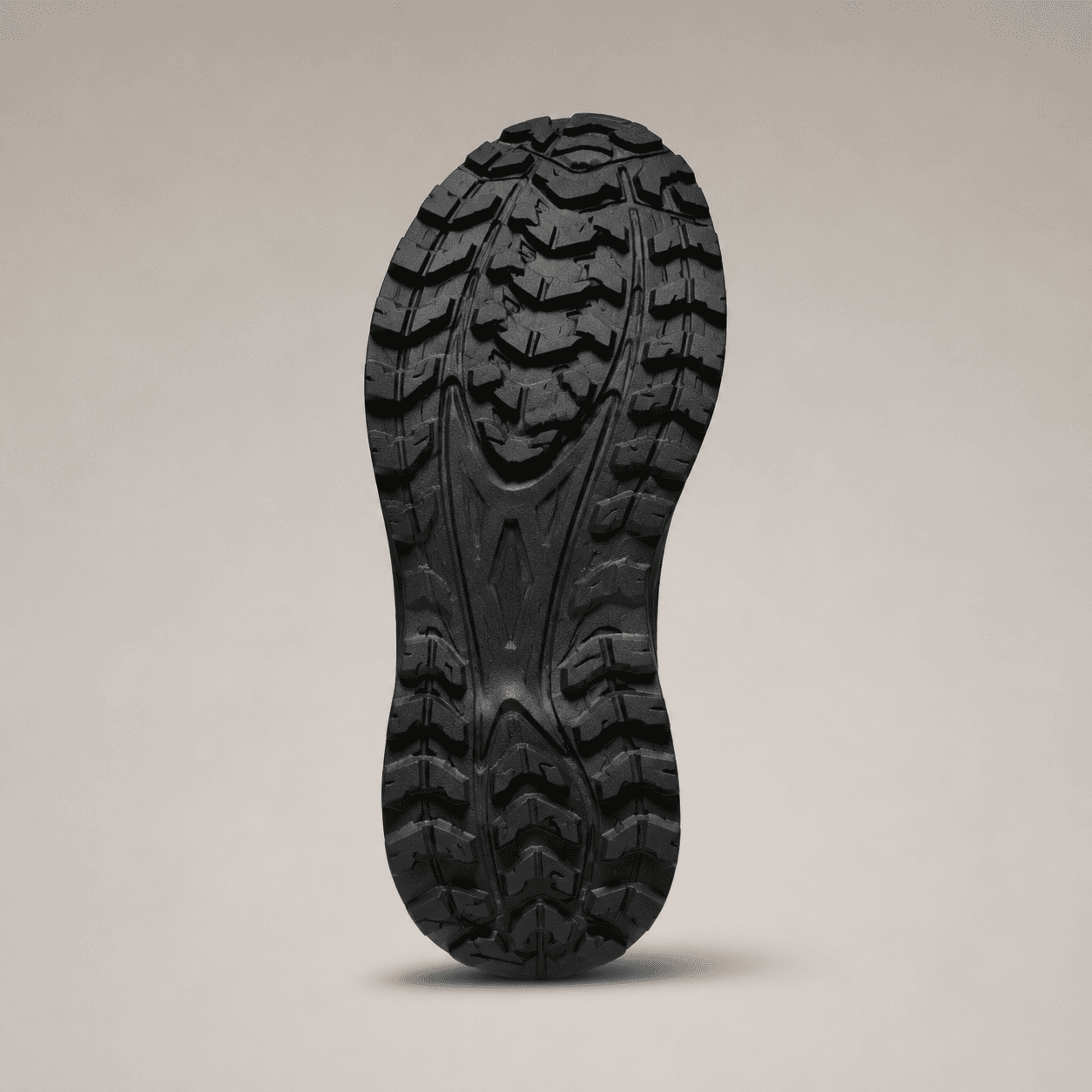
In footwear, capacity is never a single monthly number. It is the real availability of cutting beds, stitching operators, screen-print and heat-transfer stations, outsole molding cycles, cementing lines, lasting machines, finishing tables, and container loading windows tied to a fixed ex-factory date. Shoe factory capacity planning is the discipline of matching forecasted pairs to those resources by construction type, material readiness, and shipment priority.
For sourcing managers, brand owners, and importers buying from China, the decision to secure capacity is usually made 90 to 180 days before shipment. A factory may quote 30 to 35 days for a repeat injected EVA slipper, 35 to 45 days for a repeat sandal, or 45 to 60 days for a repeat cemented sneaker. Those lead times only hold if the order enters a realistic shoe manufacturing schedule with approved samples, confirmed materials, and an assigned line. In peak windows, a factory may still have sample room while mass-production lines are already full.
This article explains what capacity planning means inside a shoe factory, how buyers actually book footwear production, why factory production slots affect cost and delivery, and when to use capacity reservation footwear tools such as forecast blocks, tooling deposits, and call-off orders. The focus is operational and supplier-side: MOQ, line output, material cutoff dates, outsole hardness, upper GSM, foam density, test standards, and the practical reasons bulk shoe orders slip.
In footwear, the order is not secure when price is agreed; it is secure when line time, materials, approvals, and testing are aligned to one workable schedule.
What shoe factory capacity planning means in footwear manufacturing
In footwear, capacity planning is the allocation of line-specific and process-specific resources against a dated order book. A vulcanized canvas sneaker, a cold-cement running shoe, an injected EVA clog, and a Goodyear-welted safety boot do not consume the same factory capacity. They may share some cutting and stitching processes, but they diverge in upper complexity, outsole preparation, forming, curing, bonding, testing, and packing rate. That is why a factory can be open for slippers and full for sport shoes at the same time.
Buyers often ask whether a factory can make 50,000, 100,000, or 200,000 pairs in one month. The useful answer is not the headline monthly volume. It is whether the factory has enough compatible line time for that specific construction. A plant rated at 250,000 pairs per month may still only have room for 30,000 to 40,000 pairs of phylon/rubber runners if its cementing and lasting lines are already committed. True shoe factory capacity planning converts volume into line-ready, material-ready, category-specific production blocks.
Inside a factory, the working measure is usually pairs per line per day. A simple injected EVA slipper can run at 3,000 to 4,500 pairs per day. A beach sandal with basic strap construction may run 2,000 to 3,000 pairs. A cemented lifestyle sneaker with 20 to 28 upper pieces may run 900 to 1,400 pairs. A safety boot with steel toe, puncture-resistant plate, leather upper at 1.6 to 1.8 mm, and EN ISO 20345 testing exposure may only run 500 to 900 pairs. Buyers who understand these ranges get more realistic commitments and fewer schedule disputes.
Capacity is category-specific, process-specific, and season-specific
A full-category shoe manufacturer may cover sandals, slippers, vulcanized casuals, cemented sneakers, knit sport shoes, rain boots, and occupational footwear. The bottleneck changes by category. In running and lifestyle shoes, stitching, toe puff and counter forming, and cementing throughput often control output. In vulcanized footwear, upper prep, foxing alignment, and curing oven load can be the limiting step. In sandals, outsole mold readiness, strap trim supply, and assembly balancing are often the real constraints. In safety footwear, testing lead time, steel component supply, and heavier lasting usually reduce flexibility.
Seasonality compresses these bottlenecks. From May to August, back-to-school canvas and sport shoes absorb upper stitching and cementing capacity. From August to October, holiday casuals and boots put pressure on finishing, inspection, and carton loading. Spring/summer sandal programs often collide after Lunar New Year when many buyers release the same outsole and trim orders at once. Capacity must be read against these booking waves, not against an average annual output claim.
A production slot is only real when all critical inputs are locked
Buyers often treat factory production slots as confirmed the moment a supplier says yes. In disciplined footwear manufacturing, a slot is only hard when it is tied to quantity, construction, production week, and a full set of dependencies: approved pre-production sample, confirmed outsole mold, approved color standard, raw material ETA, carton artwork, and any required deposit. Without these, the slot is only a soft reservation.
For example, a week-38 booking for 24,000 pairs of cemented sneakers means little if the 140 GSM mesh still has no lab dip approval, the TPR outsole color is not signed off, and the wear-test sample is pending. The line may be penciled in, but the factory cannot hold it indefinitely. If another customer confirms outsole, upper, and deposit earlier, the practical priority changes.
How buyers secure production slots in practice
To book footwear production properly, buyers must turn a commercial target into an operational package. A factory cannot schedule accurately from quantity alone. It needs style family, construction type, size range, color split, target ex-factory date, shipment priority, MOQ acceptance, and material direction. The more exact the package, the earlier the factory can reserve line time with confidence.
In most footwear programs, booking follows a fixed gate sequence: forecast, technical review, sample approval, material booking, line allocation, pre-production meeting, and mass-production start. If one gate stays open too long, the order may still look active in email, but the actual line is no longer protected. This is why buyers are often told 'the lead time starts after confirmation' rather than after price approval.
Commercial MOQ and technical MOQ must both be understood. A repeat canvas style may work at 1,200 pairs per color. A cold-cement sneaker with custom outsole color, branded footbed, and printed lining may need 2,400 pairs per color to run efficiently. A new outsole mold can push the opening MOQ to 6,000 to 10,000 pairs depending on size range, mold cavities, and whether tooling is amortized. If the target FOB is only $6.80 to $9.50 per pair, fragmented low-volume SKUs can make the booking unattractive unless grouped into compatible runs.
- 01Send a rolling 4- to 6-month forecast by category, style family, and target ship month.
- 02Mark each SKU as repeat, recolor, carry-over sole, upper update, or fully new development.
- 03Confirm MOQ by color, outsole, upper material, and packaging format.
- 04Freeze technical specifications: size range, grading, upper construction, outsole hardness, insole foam density, logo process, and test standard.
- 05Approve development sample or pre-production sample before the raw material booking cutoff.
- 06Book critical materials including outsole, strobel, toe puff, heel counter, insole board, foam insock, laces, eyelets, carton, and barcode label.
- 07Issue a reservation PO, deposit-backed booking, or seasonal call-off plan.
- 08Review weekly WIP and material status until final inspection and loading.
Forecast quality determines how much capacity can actually be held
Factories can work with uncertainty, but not with vague range estimates. A message such as 'we may need 40,000 to 100,000 pairs' does not justify holding a line. A usable forecast should show style count, category, monthly pair split, target FOB range, and the probability of conversion. Many professional buyers classify volumes as firm, likely, and optional. That allows the factory to distinguish hard capacity from soft reserve.
Good forecasts also separate compatible products. Twenty thousand pairs of cupsole casuals are easier to protect than 20,000 pairs spread across injected slippers, vulcanized shoes, and safety boots. From the supplier side, compatibility of process matters almost as much as total volume.
Material booking is where many shoe schedules are won or lost
Even when line time exists, materials can still block production. Standard polyester mesh at 120 to 160 GSM may be available quickly. Custom air mesh, engineered knit, brushed tricot, suede microfiber, or branded jacquard webbing can add 10 to 20 days. A PU synthetic at 0.9 to 1.2 mm is usually faster to secure than full-grain leather requiring thickness sorting and drum color matching. Open-cell PU insock foam at density 45 to 55, molded EVA footbeds, and blown-rubber compounds each have different procurement and approval cycles.
Outsoles are the most common schedule trigger. A custom phylon carrier with rubber patches needs mold confirmation, compound adjustment, density verification, and color approval before mass production starts. If the outsole target is 55 to 60 Shore A for rubber or 50 to 55 Asker C for EVA, trial pieces may be needed before release. On paper, the line may be available. In practice, no factory will start upper lasting at scale if the outsole compound is still unstable.
Deposits, call-off orders, and tooling charges are standard capacity tools
When capacity is tight, factories usually ask for one of three commitments. First, a raw material deposit covering non-cancelable upper and outsole components. Second, a tooling or mold deposit for a new sole, often partly offset across the first order. Third, a seasonal call-off arrangement under which the buyer commits a minimum monthly pair volume. These are standard tools when the scope and cancellation terms are clear.
A practical example: a buyer reserves 36,000 pairs of women's sandals for March and April with a 30% deposit on custom TPR outsoles, metal buckles, and printed sockliners. Another buyer secures 80,000 pairs of school sneakers across July and August through monthly call-off orders under an annual frame agreement. In both cases, the factory is not reserving empty space. It is reserving line time, mold use, labor planning, and material exposure.
Practical footwear capacity planning benchmarks
| Program type | Typical MOQ | Lead time after approvals | Best time to reserve | Main capacity risk |
|---|---|---|---|---|
| Repeat injected EVA slipper | 1,200 pairs/color | 25-35 days | 60-75 days before ship date | Masterbatch color, mold rotation, packing queue |
| Repeat EVA or TPR sandal | 1,200 pairs/color | 30-45 days | 75-90 days before ship date | Outsole color, strap trim arrival, assembly balance |
| Repeat cemented sneaker, custom colors | 1,200-2,400 pairs/color | 45-60 days | 90-120 days before ship date | Upper material ETA, cementing line load, carton approval |
| New vulcanized casual with custom upper | 3,000-6,000 pairs/order | 55-75 days | 120 days before ship date | Upper complexity, foxing setup, curing capacity |
| New running shoe with fresh outsole mold | 6,000-10,000 pairs/order | 70-90 days | 150-180 days before ship date | Mold development, component lead time, wear-test revision |
| Safety shoe to EN ISO/ASTM standard | 1,200-3,000 pairs/style | 60-90 days | 120-180 days before ship date | Compliance testing, steel components, heavier assembly |
Why shoe factory capacity planning matters commercially and operationally
The first benefit is delivery reliability, but the cost effect is usually larger than buyers expect. When capacity is not secured early, later fixes become expensive: split shipments, premium trucking to port, partial airfreight for launch sizes, forced overtime, or transfer to a backup line or subcontractor. A nominal FOB saving of $0.25 per pair disappears quickly if 5,000 pairs move by air or if a late arrival triggers markdowns on a $39.99 to $69.99 retail style.
Capacity planning also protects process consistency. Footwear is sensitive to line conditions and operator skill. If an order is shifted late, details such as upper lasting tension, primer application, cement open time, sidewall pressing, foxing placement, strobel attachment, and sockliner bonding can change. These shifts affect not only cosmetics but fit, bond strength, and claim rate.
Compliance timing is another reason capacity planning matters. If the product must meet EN ISO 20345, ASTM F2413, slip resistance, flexing, hydrolysis, or restricted-substance requirements, the buyer needs room in the shoe manufacturing schedule for submission, correction, and retest. A failed toe cap compression result, outsole delamination, or bond-strength issue cannot be solved in the final week without affecting shipment.
- Protects ship dates during back-to-school, holiday, and spring/summer booking peaks.
- Reduces the risk of line transfers that change fit, bonding, or cosmetic consistency.
- Allows earlier buying of outsole compounds, foams, cartons, and trims before prices tighten.
- Creates time for EN ISO, ASTM, SATRA, or buyer-protocol testing and any retest cycle.
- Cuts the likelihood of expensive airfreight, rushed tooling corrections, or fragmented shipments.
When buyers should use capacity reservation footwear tools
Not every order needs a formal reservation structure. If you are buying 2,400 pairs of repeat house slippers in February using stock-color EVA and standard polybag packing, a normal PO cycle may be enough. But when the cost of delay is high, customization is heavy, or the selling window is narrow, explicit capacity reservation footwear tools are justified.
Use reservation methods when the order falls in a known peak, when custom molds or compounds are involved, when color fragmentation is high, when a retailer launch date is fixed, or when several categories must ship together. The narrower the launch window and the higher the technical complexity, the more valuable a hard slot becomes.
Use it early for peak season shoe orders
Peak season shoe orders usually include school shoes and canvas sneakers shipping from June to August, holiday casuals and boots loading from September to November, and spring/summer sandal programs booking heavily after Lunar New Year. During these periods, a factory operating at 70% to 80% load in normal months can move above 95%. Once stitching and bottoming capacity is committed, new orders may only fit through overtime, rescheduling, or subcontracting.
A practical rule is to begin slot discussions 120 to 180 days before ship date for new styles and 90 to 120 days for repeats. Very simple carry-over injected styles may still work on 60 to 75 days outside peak periods. For molded, compliance-heavy, or retailer-timed programs, waiting that late is a risk.
Use it for new tooling, compliance-heavy, or fragmented assortments
If your program needs new outsole molds, reserve early. Depending on complexity, outsole tooling may take 18 to 30 days, followed by trial and correction. If your shoe must pass EN ISO 20345 or ASTM F2413, add time for test sample preparation and any retest. If the assortment contains 12 to 20 colors at low volume each, planning gets harder because line efficiency falls, color changeovers increase, and carton assortment work slows down.
Reservation tools are also useful when one buyer is placing mixed categories. A program may include 12,000 pairs of sandals, 15,000 pairs of vulcanized casuals, and 9,000 pairs of safety shoes in one season. The total volume is manageable for a full-category plant, but the mix touches different bottlenecks. Booking these as separate ad hoc orders creates internal conflict; booking them under one seasonal plan gives the factory a cleaner line map.
Typical lead times, MOQs, and pricing realities buyers should expect
Lead time must be read by product type, not by a generic factory promise. Repeat injected EVA slippers can ship in 25 to 35 days after confirmation if molds and color masterbatch are ready. Repeat EVA or TPR sandals usually need 30 to 45 days. Repeat cemented sneakers generally need 45 to 60 days. New vulcanized shoes with custom upper details may need 55 to 75 days. New running shoes with fresh outsole molds, wear testing, and custom packaging can require 70 to 90 days or more.
MOQ directly affects whether your slot is stable. A factory may quote 1,200 pairs per color, but that usually assumes one outsole, one carton spec, and efficient size ratio. If the order is 600 pairs per color across six colors with retailer-specific labels and mixed pack rules, the nominal MOQ no longer reflects the real planning burden. From the factory side, the question is not only whether the order can be made, but whether it can be made without disturbing committed output.
Pricing and capacity are connected. If a buyer pushes a technically complex order into a late window while also pressing for the lowest FOB, the factory has less room to protect the schedule through overtime, backup sourcing, or extra QC. On many programs, paying $0.20 to $0.60 more per pair is cheaper than missing a launch date, especially where the retail window is narrow and replenishment is unlikely.
Benchmark ranges buyers can use in negotiation
For basic open-mold slippers or sandals, MOQ may start at 1,200 pairs per color and FOB may range from about $2.20 to $4.80 per pair depending on material, outsole weight, and packaging. For repeat casual sneakers with custom upper colors and cupsoles, MOQ often sits at 1,200 to 2,400 pairs per color with FOB around $6.50 to $11.00. For new sport shoes with phylon/rubber bottoms and engineered uppers, opening MOQ may move to 3,000 to 6,000 pairs per style, with FOB often in the $9.00 to $16.00 range depending on spec and tooling exposure.
Safety footwear behaves differently. A basic low-cut work shoe may start around 1,200 pairs per style, but if it includes full-grain leather, steel toe, puncture-resistant plate, dual-density PU, and EN ISO or ASTM validation, buyers should expect longer booking lead time, more technical checkpoints, and less line flexibility. The issue is not only FOB. It is process load, compliance exposure, and claim risk.
Common mistakes buyers make when booking footwear production
The most common mistake is treating accepted price as confirmed capacity. A factory can agree on target FOB and still have no reliable line opening in the required week. The second is delaying material freeze. One late change to mesh, eyelet finish, webbing width, logo print method, outsole color, or carton dimension can reset procurement and break the slot.
Another frequent mistake is ignoring cumulative approval delay. One day on fit comments, two days on packaging, three days on color standard, and five days on test correction do not stay separate. They stack against the same line window. Once the reserved week passes, the order joins the next available queue.
A third mistake is spreading moderate volume across too many suppliers to chase a few cents. In footwear, fragmented annual volume lowers priority. A factory will usually defend line time more strongly for a customer with a visible seasonal plan than for late ad hoc orders that change repeatedly and do not meet efficient MOQ structure.
- Assuming a forecast is the same as a booked line.
- Confirming ship date before outsole and upper material ETAs are verified.
- Adding colors, retailer labels, or mixed-pack rules after the material cutoff.
- Leaving EN ISO, ASTM, SATRA, or buyer-protocol testing too late.
- Underestimating how low-volume fragmented SKUs reduce line efficiency and booking priority.
SoleForge manufactures athletic & running shoes and casual sneakers under OEM and ODM for brands and importers worldwide. Request a quote with your tech pack or reference pair and we'll reply within one business day.