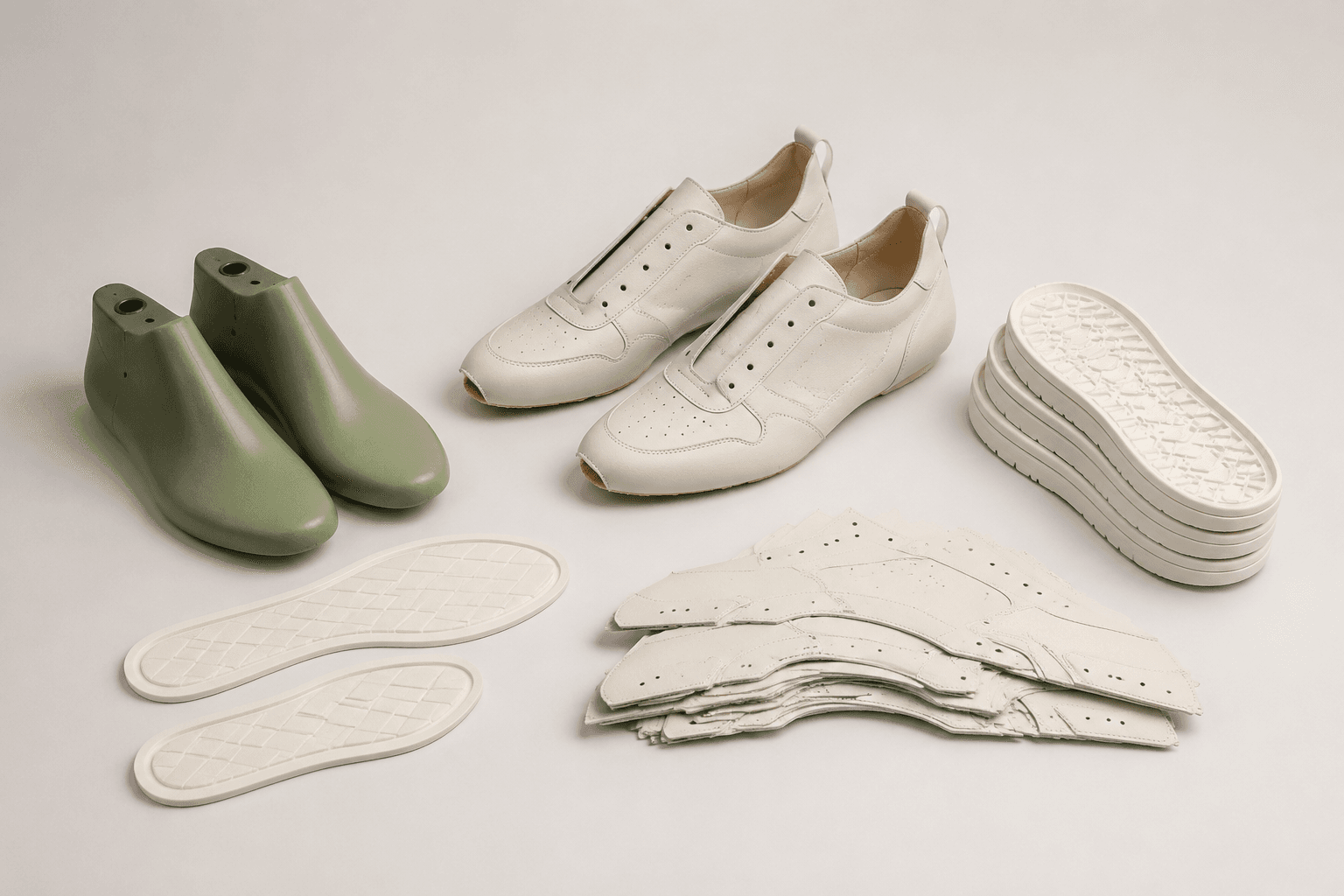
A shoe last is the 3D form that defines the internal shape of a shoe. It controls toe spring, heel pitch, ball girth, instep height, toe box volume and overall stance. For sourcing managers and brand owners, it is not a technical side topic. It is the base decision that affects fit consistency, outsole tooling, upper pattern engineering, material consumption, testing outcomes and repeat order stability.
In bulk footwear manufacturing, many fit problems that appear during sample review are not really upper or insole issues. They come from a mismatch between the intended consumer fit and the selected last geometry. A factory can change foam density, sockliner thickness, vamp pattern and even strobel board spec, but if the last is wrong, the product will still feel short, shallow, unstable or oversized in key areas.
The practical question for importers is not just what is a shoe last, but how to manage footwear last development as a sourcing process. The right method reduces remake rounds, keeps tooling under control and improves production predictability. The guide below walks through that process in order, from target fit definition to final production sealing.
In bulk footwear, the last is not just a shape model; it is the control point that connects fit, tooling cost and production consistency.
Start by defining the target fit before approving any shoe last
The first action is to define the wearer profile and usage case in measurable terms. A running shoe for North America, a vulcanized canvas style for Europe and a cemented kids sneaker for South America cannot share the same fit target, even if the outsole bottom looks similar. Width tolerance, toe allowance, heel hold and instep volume all shift by market, age group and category.
At factory level, we usually begin with the target size run, reference brand fit and expected socks usage. For example, men’s athletic footwear in US size 9 may require a different forefoot volume than a casual cupsole in EU 42, even when the outsole length is close. If the buyer only sends artwork and outsole references, the development team will default to an existing last library. That may save 7-10 days in the sample room, but it often creates hidden fit compromises that appear later in wear-test comments.
A correct brief should include fit direction such as true-to-size, generous toe box, performance-locked heel or comfort-wide forefoot. It should also state whether fit is benchmarked against a specific competitor style. This matters because the same nominal size can vary materially between brands. On a production scale, a 2.0-3.0 mm internal length difference is enough to trigger size claim risk and return issues.
- Define target consumer: gender, age group, market and usage category
- State benchmark fit: brand reference, competitor style or previous PO style
- Confirm sizing system: US, EU, UK, CM and the base sample size
- Specify sock assumption and orthotic or insert requirements if applicable
- Clarify fit intent: standard, wide, comfort, performance or fashion-narrow
Why this step matters to sourcing cost
When the fit target is vague, development rounds increase quickly. One extra sample round typically adds 7-14 days depending on upper complexity and outsole source. If the last change forces outsole modification, cost impact can move from a simple upper correction to new bottom tooling, often adding USD 2,500-6,000 per mold set for molded outsoles, and more for complex dual-density constructions.
Select or build the right last for the category and construction
After the target fit is clear, the next step is to decide whether to use an existing factory last, modify a library last or create a fully new one. This is the core of footwear last development. In China factories with broad category capability, a last room may already hold hundreds or thousands of archived lasts for running, lifestyle, sandals, boots, vulcanized shoes and kids footwear. Reusing one can shorten lead time, but only if the geometry truly fits the project.
Construction method is critical here. A strobel running shoe needs different last assumptions than a board-lasted hiking style or a California slipper. The upper lasting margin, sidewall wrap, insole board stiffness and outsole attachment process all interact with the last. For example, on a cemented fashion sneaker, a more aggressive toe spring may be visually acceptable. On a casual comfort shoe, the same toe spring can create balance issues and awkward forefoot flex.
A new last is justified when the brand has a proprietary fit standard, when the category has technical performance requirements, or when tooling investment is already significant enough that fit should not be compromised. New last development normally takes around 10-21 days depending on whether it starts from 2D spec, 3D file or physical fit sample. Cost can range from approximately USD 150-500 per size for development pieces and duplications, with additional cost if extensive revisions are needed.
- 01Review existing last library against target category and market fit
- 02Choose full new last only if fit, brand identity or tooling demands require it
- 03Approve base size last first, then confirm grading strategy for size run
- 04Lock toe shape, heel seat and instep profile before upper patterns are finalized
Common last decisions by footwear type
Athletic footwear usually needs closer control of heel grip, medial support and forefoot splay. Casual vulcanized shoes often tolerate simpler fit architecture but still require correct toe box height to avoid vamp pressure. Safety shoes must also consider toe cap volume, sockliner compression and compliance with EN ISO 20345 or ASTM F2413 where applicable. Boots need special attention on entry opening, ankle wrap and shaft alignment relative to heel pitch.
Translate the shoe last into upper patterns and outsole tooling without losing fit
A last is only useful if the engineering team converts it correctly into patterns and bottom tooling. This is where many buyer assumptions break down. An approved 3D last shape can still produce poor fit if the upper pattern allowances, lasting margin, foam package and outsole wall dimensions are not synchronized. In other words, shoe fit tooling is not just the outsole mold. It is the combined engineering of upper, strobel or board, insole package and bottom unit around the last.
For upper development, pattern engineers must account for material behavior. Mesh with 280-350 GSM and moderate stretch behaves differently from 1.4-1.6 mm split suede, PU microfiber or tightly woven canvas. Foam package also changes perceived fit. A collar foam at 45-55 kg/m3 and a tongue foam at 35-45 kg/m3 can improve comfort, but they also reduce entry and internal volume if not offset at pattern stage. Likewise, a sockliner using 4 mm open-cell PU over 2 mm EVA can materially tighten fit compared with a simple 3 mm die-cut EVA board top.
Outsole tooling has the same sensitivity. If the mold wall, toe bumper or side foxing is drawn too tight to the last bottom, the upper will be forced inward during lasting. That can create toe pinching or sidewall pressure even when the naked last fit seemed acceptable. On cupsole and vulcanized constructions, inside cavity dimensions must be checked carefully against lasting allowance and cement or rubber wrap thickness.
- Confirm upper material stretch and thickness before finalizing patterns
- Match tongue, collar and sockliner foam density to internal volume plan
- Check outsole cavity, sidewall and toe bumper dimensions against the last bottom
- Review heel seat lock and waist support in the bottom design, not only in the upper
Where tooling changes become expensive
Upper pattern changes are usually manageable during the sample phase. Full outsole mold changes are not. Once tooling is cut, even a 1.5-2.0 mm adjustment in critical fit areas can require mold welding, re-machining or complete remake depending on the construction. For TPR, rubber or phylon molds, this can add 10-20 days. If the project uses dual-color cupsoles or multi-part athletic bottoms, schedule impact can be longer.
Test fit with physical samples, not drawings, and review the right points
The fourth step is physical validation. A digital file or sample room explanation is not enough. Buyers should insist on fit samples built on the actual last, with intended bottom and as-close-as-possible material package. If upper materials are substituted during the first round, that is acceptable, but the factory should declare where stretch, thickness or rebound differs from the final bill of materials.
A proper fit review goes beyond overall length. It should check toe room, ball position, vamp pressure, instep entry, heel slip, ankle bite and flex point alignment. For kids footwear, easier entry and growth allowance are especially important. For sports shoes, lace closure range and heel lockdown often determine whether a sample can move to wear-test approval. For safety or occupational shoes, toe cap clearance and sockliner compression under load should also be assessed.
In bulk sourcing programs, we normally recommend at least one base-size fit sample and one confirmation round after comments. If the size run is broad or the construction is technical, it is prudent to review one smaller and one larger graded size before mold release. This is cheaper than discovering scale distortion after commercialization.
- 01Review fit on-foot with intended sock thickness
- 02Mark pressure points, heel movement and flex line position
- 03Measure internal length and forefoot girth against spec tolerance
- 04Recheck visual proportions after comfort corrections are made
Useful acceptance checks for buyers
Internal fit tolerances vary by category, but practical controls can be set. Many importers work with length tolerance around plus or minus 1.5 mm in the base size, with girth and width reviewed against agreed fit samples rather than only paper specs. If the style has a removable sockliner, inspect fit both with and without it to understand volume sensitivity. This helps prevent production claims when end users replace inserts.
Grade the last correctly across the size range and control production variation
A base-size approval does not guarantee a good size run. Last grading is the process of scaling the shoe last up and down while preserving fit proportions. This sounds straightforward, but poor grading is one of the main causes of complaints in bulk orders. If the forefoot expands too fast, larger sizes feel sloppy. If instep height does not scale adequately, smaller sizes become hard to enter. On kids shoes, grading errors create especially high return risk.
Factories should not rely only on outsole length increments. The last grading must address girth, toe depth, heel breadth and joint position. Size conversion between US, EU and UK systems also needs careful handling because market expectations differ. A buyer may approve an EU 38 sample, but commercial sales may skew heavily into EU 40-41 or US preschool ranges where the grading behavior matters more than the sample itself.
Production control then becomes the final layer. Once the last, patterns and tooling are approved, factories must hold consistency in cutting, stitching, lasting and bottom assembly. Material variation can shift fit significantly. A mesh batch with higher stretch, a lining substitution, or a sockliner thickness increase of 1 mm can change wear feel enough to trigger claims, even if the dimensions still look acceptable.
- Approve grading rules, not only the base sample
- Check one small size and one large size for volume balance
- Lock sockliner thickness, strobel board and upper foam specs before PP sample
- Control material substitutions through written approval only
Typical bulk-production control points
For large orders, pre-production samples should match approved fit, materials and construction exactly. During inline inspection, check lasted shape retention, toe puff positioning, heel counter placement and bond line uniformity. For sandals or injected constructions, strap position and shrinkage behavior must also be monitored because they affect fit as much as the base last does.
Use the last as a commercial tool to reduce MOQ risk, lead time and claim cost
The final step is commercial discipline. Buyers often treat the last as a development detail, but it should be managed as part of sourcing strategy. If a brand can standardize a small family of approved lasts across categories, it can reduce development time, simplify fit communication and improve reorder speed. This is particularly useful for importers consolidating multiple styles into one seasonal shipment from China.
Using an existing approved last can shorten development by around 1-3 weeks and reduce mold adjustment risk. It may also allow lower trial MOQs because the factory sees less technical uncertainty. On common categories, trial MOQ might stay at 600-1,200 pairs per colorway if existing lasts and outsoles are used, whereas a fully new fit platform with custom tooling may require 1,200-3,000 pairs or more depending on the bottom package and material sourcing complexity.
Claims cost should also be evaluated realistically. One season of fit-related returns can exceed the cost of proper footwear last development many times over. A remade outsole mold, another wear-test round and 10 additional development days are usually cheaper than carrying a bulk shipment with systematic heel slip, short fit or toe pressure. The practical rule is simple: approve aesthetics later if needed, but lock fit architecture early and treat the last as a controlled asset.
Key takeaways
- A <strong>shoe last</strong> defines internal fit, silhouette and the engineering limits of the entire shoe.
- Good <strong>footwear last development</strong> starts with a clear target wearer, sizing system and benchmark fit.
- Upper patterns, foam package, sockliner and outsole cavity must all be engineered around the last to protect fit.
- Physical fit samples are essential; drawings and 3D files alone do not reveal entry, pressure or heel-hold problems.
- Last grading across the size range is as important as base-size approval for bulk orders.
- Treat the last as a sourcing asset to reduce lead time, tooling changes, MOQ risk and post-shipment claims.
SoleForge manufactures athletic & running shoes and leather & dress shoes under OEM and ODM for brands and importers worldwide. Request a quote with your tech pack or reference pair and we'll reply within one business day.