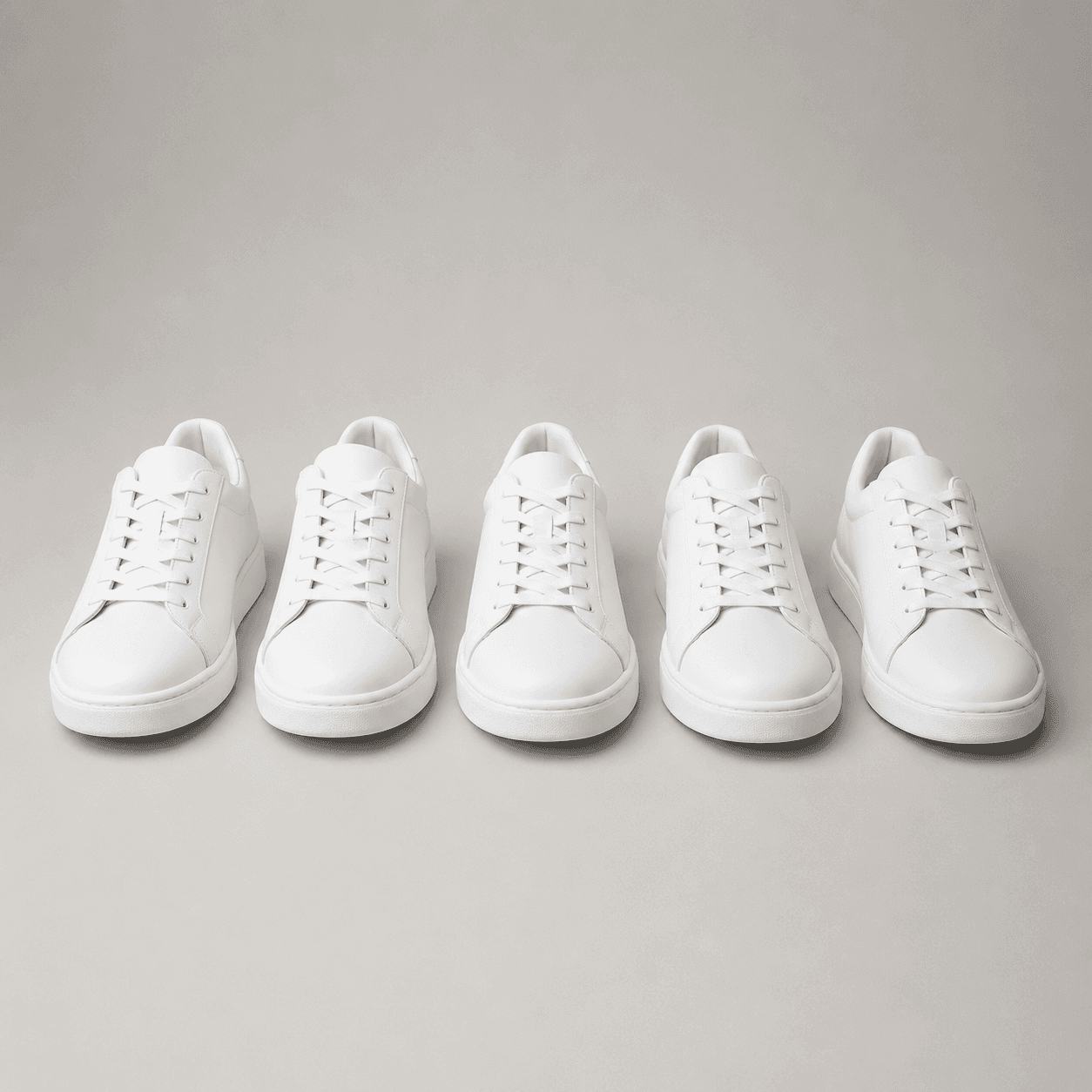
Choosing shoe manufacturers for small businesses is a capacity and process decision before it is a price decision. In footwear, a startup order fails when the factory accepts the project commercially but cannot support the size run, outsole source, upper material minimums, or fit-revision cycle. The result is usually a delayed launch, hidden tooling charges, or a bulk order built from substituted materials.
China remains the strongest sourcing base for startups because the supply chain for footwear components is dense: rubber cupsoles, Phylon midsoles, EVA injection, knit uppers, microfiber, mesh, strobel boards, counters, labels, and boxes can all be coordinated within one region. That matters because a genuine low moq shoe manufacturer only works when the factory already has compatible tooling and can pull most materials from existing supplier programs rather than opening every component from zero.
This guide is written as a buyer decision framework for sourcing managers, brand owners, and importers evaluating a shoe manufacturer for startups. Each section covers one selection factor and ends with practical checkpoints to use during RFQ, sampling, and pre-production approval.
In startup footwear sourcing, the safest supplier is usually the one whose existing molds, materials, and process discipline already fit your product, not the one promising the lowest MOQ.
Choose the right supplier model before comparing quotes
In footwear, 'factory' can mean three different things: a direct assembly plant, a development house that subcontracts production, or a trader managing several partner factories. For a small brand, each model can work, but the operating risk is different. A direct factory gives better control over cutting, stitching, lasting, and packing, but may reject a 400-pair order if the line is tuned for 3,000-pair repeats. A development house may accept lower volume, but you need to know where bulk production actually happens and who owns quality decisions if there is a defect claim.
The best supplier for a startup is usually not the cheapest one. It is the supplier already making a similar category at a similar complexity level. A plant producing cupsole sneakers every week can often support 500 to 800 pairs on an existing outsole family. A sandal factory running cemented sandals and slippers may quote very low on sneakers but still struggle with collar foam consistency, toe lasting symmetry, or strobel stitching quality.
When screening shoe manufacturers for small businesses, ask what portion of their monthly output is under 1,000 pairs per style and how many active molds or last families they already use in your category. Those two answers tell you whether they have a startup workflow or are simply trying to fill spare capacity.
- Ask whether they are a direct factory, subcontractor, trader, or hybrid.
- Confirm their main categories: vulcanized, cemented, injection EVA, cupsole, sandals, or safety footwear.
- Ask what their smallest repeatable order size is by category, not by sales promise.
- Request photos or video from pattern room, stitching line, lasting, finishing, and packing.
- Check whether the same team develops the sample and controls bulk production.
MOQ is set by the material stack, not the sales sheet
Most buyers hear one MOQ number and assume that is the order minimum. In footwear, MOQ is layered. The assembly plant may accept 600 pairs per style, but the actual minimum can be driven by rubber batch size, mesh dye lot, insole print setup, woven label quantity, eyelet color, or carton artwork. A startup can technically place a low-volume order and still absorb the cost structure of a much larger one.
A workable low-volume build usually means one outsole color, one base upper material, one shared lining, standard lace length, standard foam thickness, and a concentrated size run such as EU 36-40 for women or EU 41-45 for men. A cemented sneaker using stock microfiber at 1.4 to 1.6 mm, standard sandwich mesh around 220 to 280 GSM, and an existing cupsole can often be done at 500 to 800 pairs. The same shoe with custom knit upper, molded TPU heel clip, new rubber outsole mold, and three colorways may need 1,500 to 3,000 pairs before the factory can price it sensibly.
The supplier-side question is not just 'What is your MOQ?' but 'Which components are forcing the MOQ upward?' That is where a serious factory gives useful answers. It should identify the exact drivers: outsole mold trial quantity, foam sheet order, webbing dye lot, logo trim minimum, or box print quantity.
- Ask for MOQ split by style, color, and size range.
- Request separate minimums for outsole, upper material, logo trim, lace, insole print, and box.
- Check whether stock materials can replace custom color or custom embossing.
- Ask if one outsole color can be shared across multiple upper colors.
- Confirm whether odd-size ratios increase cost or delay production.
Typical startup sourcing ranges by footwear type
| Footwear type | Common MOQ | Sample lead time | Bulk lead time | Typical FOB/pair |
|---|---|---|---|---|
| EVA slide or clog using existing mold | 300-800 pairs/style | 7-10 days | 25-35 days | $2.80-$5.50 |
| Vulcanized canvas shoe with stock outsole | 600-1,200 pairs/style | 10-14 days | 30-40 days | $5.50-$9.50 |
| Cemented casual sneaker with existing cupsole | 500-1,000 pairs/style | 10-18 days | 30-45 days | $7.50-$14.00 |
| Knit runner with molded details | 800-1,500 pairs/style | 14-21 days | 35-50 days | $12.00-$22.00 |
| Custom outsole program | 1,500-3,000+ pairs/style | 20-35 days development plus sample time | 45-60 days after approvals | Varies with tooling and material build |
Development cost should be budgeted before pair price
For startups, the first expensive mistake is focusing on FOB price and ignoring development cash. In footwear, sampling is not just sewing an upper. It can involve pattern engineering, grading, last adjustment, outsole sourcing, logo mold opening, trial assembly, wear-test revisions, and packaging proofing. A project can look affordable at $9.80 FOB per pair and still consume several thousand dollars before bulk starts.
In current China sourcing conditions, a simple existing-mold slide or slipper sample may cost about $60 to $120 per pair. A basic canvas shoe or simple cemented casual sample often lands around $80 to $180 per pair. Multi-material sneakers with fused overlays, molded ornaments, custom footbeds, or multiple pattern revisions often cost $150 to $350 per pair. Tooling is separate. A standard EVA or PVC mold may run around $2,000 to $3,500. A multi-size rubber cupsole or outsole tool can easily reach $4,000 to $8,000 depending on cavity count, sidewall detail, and whether men’s and women’s size ranges are split.
A disciplined shoe manufacturer for startups should issue a development cost sheet before the first sample is cut. That sheet should state which costs are refundable against bulk volume, which are amortized over future orders, and what triggers fresh charges. If the supplier cannot define this in writing, your first PO is already carrying cost risk.
- Request a line-by-line sample and tooling charge sheet.
- Ask whether sample fees are credited back after bulk order placement.
- Confirm if outsole tooling covers the full size range or only core sizes.
- Ask how many revision rounds are included before re-sampling charges apply.
- Check whether fit changes require a new last, new pattern, or only upper adjustment.
Typical startup-friendly cost ranges
For EVA slides or clogs using an existing mold and standard density around 0.20 to 0.25 g/cm3, FOB often sits at $2.80 to $5.50 per pair. Vulcanized canvas shoes with standard foxing and stock outsole units commonly fall around $5.50 to $9.50 FOB. Casual cemented sneakers using synthetic uppers, mesh lining, and existing cupsoles are often in the $7.50 to $14.00 FOB range. More technical knit runners with Phylon or EVA midsoles, molded TPU parts, branded footbeds, and premium packaging can reach $12.00 to $22.00 FOB. These are buyer budgeting bands, not universal market prices, and they assume startup-to-mid volumes rather than container-scale ordering.
Lead time must be broken into development, materials, testing, and bulk
A single lead-time promise is usually meaningless in footwear. You need separate timing for pattern confirmation, sample sewing, material booking, outsole trial, lab testing, line booking, bulk production, and packing. If a supplier says '30 days' without asking whether the outsole is existing or custom, whether the mesh color is stock or dyed, or whether the market requires testing, that timeline is not reliable.
For stock-material projects, first samples often take 7 to 12 days after tech pack and artwork confirmation. Counter samples with fit or logo revisions commonly take 10 to 18 days. If a new outsole mold is required, tool making and trial confirmation can add 20 to 35 days before the final sample stage. Once deposit, approved pre-production sample, and material readiness are in place, bulk production for 500 to 2,000 pairs usually takes 30 to 45 days. If lab testing is built into the path, add 5 to 10 working days for standard physical and chemical checks.
Small orders are vulnerable during peak booking windows. Before Lunar New Year shutdown, and again during late summer and holiday shipping peaks, factories often prioritize repeat programs that already occupy the line. A 700-pair startup order can slip 7 to 15 days unless materials are locked and the booking is secured early.
- Ask for separate timelines for sampling, tooling, material booking, testing, and bulk.
- Confirm whether outsole production is in-house or outsourced to a sole supplier.
- Ask what lead-time extension applies if a material fails lab test.
- Check the latest order-booking date before peak seasons.
- Request a time-and-action calendar tied to each approval point.
Quality control starts with measurable construction standards
Footwear quality should be discussed by construction, not by generic phrases such as 'good export quality.' A vulcanized shoe, a cemented sneaker, and an injection EVA clog fail in different ways. If the supplier does not speak in construction-specific checkpoints, you are not yet discussing usable QC.
For cemented footwear, the usual risk points are upper-to-sole bond strength, toe spring consistency, upper wrinkling at the vamp, heel counter collapse, glue overflow, and left-right shape mismatch. For vulcanized styles, watch foxing adhesion, sidewall thickness consistency, rubber scorch marks, sole contamination before curing, and stripe alignment. For EVA injection products, check density variation, shrinkage, warpage, flash trimming, pin marks, and weight variance between left and right shoes.
Ask the factory to define target specifications. For example: outsole hardness 55 to 65 Shore A for many casual rubber outsoles, EVA density around 0.20 to 0.28 g/cm3 depending on product, footbed foam 45 to 60 kg/m3 for standard open-cell PU sockliners, upper sandwich mesh around 220 to 320 GSM, and strobel board thickness around 1.5 to 2.0 mm for many casual sneakers. The exact figures vary by product, but a credible supplier should be able to quote targets and tolerances rather than vague promises.
- Request construction-specific QC checkpoints with tolerance limits.
- Ask for target specs on hardness, density, material thickness, and GSM.
- Confirm whether 100% pair inspection is done before packing or only AQL sampling.
- Check how they control left-right color, weight, and size variance.
- Request defect photos showing what they reject at inline and final inspection.
Compliance and testing must match the destination market
Testing should be defined before sampling is approved, not after goods are packed. The factory needs to know whether the shoes are for adult casual wear, children’s products, occupational use, or retailer-specific compliance programs. A supplier that builds fashion sneakers is not automatically equipped to manage safety shoes tested to industrial standards.
For Europe, chemical control may include REACH-related restrictions, azo dyes, phthalates, and limits on certain heavy metals or restricted substances by material type. For children’s footwear going to the US, CPSIA-related requirements may apply depending on components and product age grading. Occupational and safety footwear may need compliance with EN ISO 20345, EN ISO 20347, or relevant ASTM methods for impact resistance, compression, puncture resistance, slip, or electrical performance. These are not box-ticking exercises; they change the material build, component sourcing, and factory capability you need.
Even where legal compliance is lighter, performance testing still matters. Adhesion, colorfastness, flexing, abrasion, sole detachment, and carton drop performance should be planned in advance. The buyer should decide which tests happen on raw materials, which on confirmation samples, and which on finished production pairs.
- State destination market, user type, and end use in every RFQ.
- Ask which EN ISO, ASTM, or retailer protocols the factory already passes regularly.
- Confirm whether the factory manages third-party lab booking or only provides samples.
- Request material declarations from upper, outsole, and trim suppliers where needed.
- Ask who absorbs cost and delay if a pre-shipment test fails.
Price comparison only works when specifications are frozen
Quote comparison is often distorted because each supplier fills missing information with its own assumptions. One factory quotes 1.6 mm microfiber upper, 4 mm foam backing, 12 mm open-cell PU footbed, branded tissue, and an export carton. Another quotes thinner synthetic, lower-density sockliner, plain box, and a lighter outsole compound. The second quote looks cheaper, but it is not pricing the same shoe.
Before asking for final quotes, freeze the specification sheet. Define upper material composition and thickness, lining material, toe puff and counter type, outsole compound, hardness target, insole construction, lace type, logo application, size range, weight target, carton packing, and trade term. Clarify whether the quote is EXW or FOB and whether testing, barcodes, polybags, and carton marks are included.
For startup buying, it is useful to request two quotes from each supplier. The first should follow the target spec exactly. The second can be a value-engineered version using stock outsole units, stock mesh colors, or simplified trims. This gives a transparent basis for cost reduction without hidden downgrading.
- Ask for a costed quote with all assumptions listed line by line.
- Confirm carton quantity, carton size, and estimated gross weight.
- Check whether pricing is based on one colorway or multiple colors.
- Ask whether repeat orders at the same volume can hold the same price.
- Request a note on which materials are stock and which require custom booking.
- 01Freeze the bill of materials and packaging spec before collecting final pricing.
- 02Standardize trade terms so every quote is EXW or FOB on the same basis.
- 03Separate tooling, sample, testing, and bulk pair costs.
- 04Request one value-engineered option with each spec change stated clearly.
- 05Compare defect risk and repeat-order stability, not only first-order FOB.
Order control and communication are part of the manufacturing result
A 600-pair startup order often needs more management than a 20,000-pair repeat because every detail is still moving: fit comments, logo placement, tongue label artwork, outsole color, carton marks, and barcode data. If the supplier has weak internal control, small errors quickly become bulk defects because the order is too small to justify remakes without argument.
The factory should assign one merchandiser or project owner from development through shipment. Sample comments should be version-controlled, and every approval point should be recorded: material swatches, confirmation sample, pre-production sample, packaging, carton mark, and shipment sample. In footwear, common startup failures are surprisingly basic: wrong insole print, missing shank, incorrect grading between pairs, substitute lace tips, or outsole color drift between sample and bulk.
This is why the best shoe manufacturer for startups is often a medium-scale supplier with disciplined process, not the largest exporter in the region. Small orders run well when decisions are recorded, materials are locked early, and problems are escalated before cutting begins.
- Ask who owns the order from tech pack receipt to shipment release.
- Confirm how sample comments and revisions are documented and signed off.
- Require a pre-production sample before bulk cutting starts.
- Ask for inline update photos at stitching, lasting, and packing stages.
- Check the approval process for labels, carton marks, and barcode placement.
Key takeaways
- Separate factory MOQ from component MOQ before approving any pair price.
- Use existing lasts, outsole molds, and stock materials if you need lower cash exposure and faster launch.
- Budget for samples, tooling, fit revisions, and testing before you model margin on FOB price.
- Freeze specs before comparing quotes or the cheaper offer may be a different shoe.
- Match EN ISO, ASTM, chemical, and physical testing to the destination market and end use.
- Approve a pre-production sample and written time-and-action plan before releasing the bulk deposit.
SoleForge manufactures casual sneakers and athletic & running shoes under OEM and ODM for brands and importers worldwide. Request a quote with your tech pack or reference pair and we'll reply within one business day.