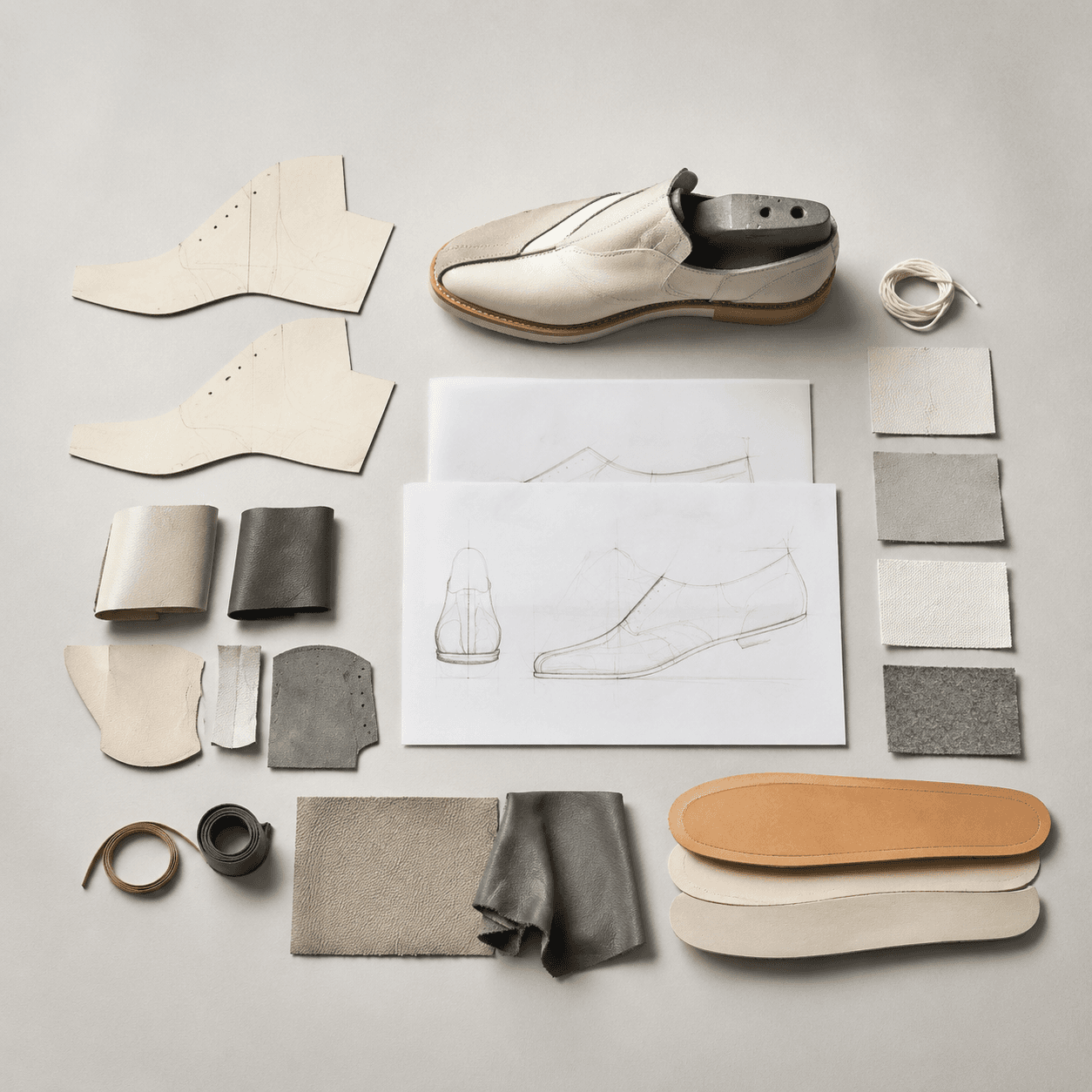
For bulk footwear imports, shoe packaging options affect more than appearance. They change packing labor, FOB cost, carton cube, container utilization, retail compliance, and damage rate during ocean freight. In practice, many avoidable claims on toe collapse, box crush, barcode mismatch, and mold transfer begin with loose packaging specifications rather than bad shoemaking.
When sourcing from China, importers usually choose between three packaging levels: transit-only protection, retail-ready packaging, or fully branded private label shoe packaging. Each level has a different cost structure. A plain pair pack may add only $0.03-$0.08/pair, while a branded box, tissue, inserts, hangtags and labels footwear, and upgraded carton can add $0.45-$1.20/pair before freight impact.
The correct choice depends on the shoe category and sales channel. EVA slippers, cemented knit sneakers, cupsole casuals, leather loafers, and kids' boots do not need the same pack-out. The packaging spec should answer four sourcing questions clearly: what it is, how it works, why it matters, and when to use it.
In footwear, the right packaging spec protects margin twice: once in freight and once in claims prevention.
What shoe packaging actually includes
In footwear production, packaging normally has five layers: individual pair protection, shape-retention inserts, retail packaging, outer shipping carton, and shipping marks. Importers should define each layer in the tech pack and PO because a factory's default pack is usually cost-driven, not channel-driven.
The most common shoe packaging options are PE polybags, tissue paper, silica gel, cardboard toe supports, EVA or EPE foam shapers, custom shoe boxes, barcode stickers, hangtags, size labels, and corrugated master cartons. Factories may quote these as a combined packaging charge, but serious buyers should request a line-item breakdown by $/pair or $/carton.
The packaging logic should fit the shoe construction. A lightweight mesh running shoe may ship safely in a 35-40 micron polybag with a heel support card inside a 5-ply carton. A corrected-grain leather derby or suede loafer usually needs acid-free tissue, a vamp support insert, a printed box, and lower carton pack density to prevent upper marking and quarter collapse.
How factories usually price packaging
Chinese footwear factories typically price packaging in three ways: included in the FOB pair price, quoted as a packaging adder, or split between tooling and recurring material cost. Custom shoe boxes usually carry the highest non-recurring cost because of plate making, die-line setup, and color proofing.
A supplier-side costing sheet should separate material, printing, labor, and carton efficiency. For example, a simple retail pack might include $0.04 tissue and stickers, $0.26 box cost, $0.03 insert material, and $0.04 packing labor. If the box dimension is oversized, the freight penalty can add another $0.05-$0.12/pair depending on route and container fill rate.
What should be specified in the PO
The PO should state polybag thickness in microns, tissue weight in GSM, insert material and thickness, box structure, board grade, print colors, barcode type, hangtag attachment method, carton count, carton dimension tolerance, and shipping marks. If the buyer only writes 'standard export packing', the result will not be consistent across repeat orders.
For private label shoe packaging, approve artwork by PDF and physical sample, then lock a signed version number. Importers should also specify destination-market items such as suffocation warning language, origin statement, size conversion table, recycling logos, and any retailer carton label format such as GS1-128 or buyer-specific outer carton labels.
Custom shoe boxes
Custom shoe boxes are the core retail-facing component in many footwear programs. They protect the pair, carry the brand, and create a stable unit for warehouse receiving and shelf placement. For structured shoes, they also help maintain silhouette during long transit from South China or Fujian to destination DCs.
Most footwear boxes are folding cartons made from 350-450 gsm SBS or CCNB wrapped over 900-1200 gsm grey board or E-flute/B-flute corrugated structures, depending on price point and shoe weight. Premium boxes may include matte lamination, spot UV, foil stamping, or embossing, but each finish increases defect risk, lead time, and replacement cost.
From a sourcing perspective, the best box is not the most decorative one. It is the one that fits the last shape correctly, survives compression, closes consistently on the packing line, and loads efficiently into the master carton. A box that wastes even 6% of outer carton volume can materially raise ocean freight cost per pair.
When to use boxes
Use custom shoe boxes when the shoe is sold through branded retail, DTC, department store, marketplace fulfillment, or gifting. They are especially useful for leather footwear, suede uppers, molded cupsole sneakers, and kids' shoes where presentation and shape retention affect sell-through.
A full printed box is often unnecessary for discount wholesale, club-store programs, and promotional footwear where the buyer repacks at destination. In those cases, a plain kraft box, 1-color flexo print, or branded box label may deliver the needed identification at lower cost.
Typical MOQ, lead time, and cost
For Chinese box suppliers serving footwear factories, MOQ commonly starts at 1,000-3,000 sets per artwork, but the workable commercial MOQ is often 3,000-5,000 sets once size runs and spare quantity are included. Lead time is usually 15-25 days for repeat artwork and 20-30 days for new artwork after color approval.
Indicative cost is $0.22-$0.38/set for a plain kraft or simple 1-color box, $0.40-$0.75/set for a standard branded box with 4-color print, and $0.80-$1.50/set for rigid or premium laminated formats. Sampling and plate charges can range from $50-$200/artwork, depending on complexity.
Typical footwear packaging ranges from China
| Packaging item | Typical MOQ | Lead time | Indicative cost | Notes |
|---|---|---|---|---|
| Plain PE polybag | 5,000-10,000 pcs | 7-12 days | $0.01-$0.04/pair | Usually 30-50 micron; confirm warning print and sticker spec. |
| Tissue and basic insert set | 1,000-5,000 sets | 7-12 days | $0.01-$0.06/pair | Often 17-30 gsm tissue plus 250-400 gsm toe or heel support. |
| Basic printed shoe box | 1,000-3,000 sets | 15-25 days | $0.22-$0.50/set | Common for entry private label; board and size drive cost. |
| Premium custom shoe box | 3,000-5,000 sets | 20-30 days | $0.45-$1.20/set | Lamination, embossing, rigid setup, or special closure adds cost. |
| Hangtags and labels footwear set | 1,000-5,000 sets | 7-15 days | $0.02-$0.12/pair | Includes box label, swing tag, size label, and barcode elements. |
| Master export carton | 500-2,000 pcs | 10-18 days | $0.35-$1.20/carton | Depends on flute, board strength, print, dimensions, and pair count. |
Polybags and basic pair wrapping
Polybags remain common because they are fast, cheap, and light. They are widely used for flip-flops, injected sandals, budget sneakers, and high-volume replenishment programs where packaging is designed for warehouse flow rather than retail display.
A polybag functions as a dust and scuff barrier, not as structural protection. In footwear, it is usually paired with tissue, heel cards, or toe fillers when the upper can deform. If the shoe is packed without inserts and then loaded too tightly into a humid container, the importer may see toe spring distortion or logo transfer by the time the goods arrive.
The right polybag spec is simple but should be written precisely. Factories often call everything 'OPP bag' or 'PE bag', yet the material, seal strength, and thickness can vary enough to affect both failure rate and compliance.
Material and compliance details
Most footwear polybags are LDPE or HDPE in the 30-50 micron range. Lightweight slippers may use 25-30 micron bags, while bulky sneakers or boots often need 40-50 micron to avoid seam burst during packing. If hang hardware or buckles can puncture the film, request a tougher grade or a folded tissue barrier at the contact point.
For import programs into major retail channels, confirm suffocation warning text, recycle code, print color, sticker adhesion, and whether the bag opening size triggers special warning requirements. If the buyer claims recycled content, ask the supplier to separate post-industrial and post-consumer content rather than using a vague 'eco bag' description.
When polybags make sense
Use polybags when freight density is more important than presentation, when the shoe has inherent structure, or when the product is sold in bulk packs, off-price channels, or warehouse club formats. They are also practical for trial orders, closeouts, and factory-to-3PL transfers.
Do not rely on a polybag-only pack for premium leather dress shoes, fragile ornaments, or soft unlined uppers. In those cases, the savings of $0.20-$0.50/pair on box cost can be erased quickly by rework, markdown, or shape-related claims.
Hangtags and labels footwear
Hangtags and labels footwear are small cost items, but they control traceability, retail compliance, and receiving accuracy. A box can be perfect and still be rejected if the tag shows the wrong size curve, origin, or barcode format.
In footwear, the label system typically includes the box end label, in-shoe size label, outsole size mark if molded, hangtag or swing ticket, and outer carton shipping mark. For private label shoe packaging, these items should all use the same SKU logic, size conversion, and country-of-origin declaration.
Supplier-side failures are predictable: wrong EAN or UPC, inconsistent US/EU/UK size tables, tag attached to the wrong lace, sticker adhesive lifting in humidity, or origin text omitted on one size run. These are not design issues; they are process-control issues.
Artwork, barcode, and compliance control
Lock barcode format before mass production and test scan contrast on actual print stock. Matte laminated labels, dark kraft boxes, or low-resolution thermal transfer printing can reduce scan reliability. If the buyer uses GS1 standards, confirm quiet zones and minimum bar width with the packaging vendor before first print.
For content accuracy, align the tag language to the actual bill of materials. If the upper is PU-coated split leather or microfiber, the tag should not use a vague premium claim that conflicts with market rules. Buyers serving Europe may also request material icons, while U.S. mass retail often focuses more on origin, size, and ticket accuracy.
Carton packing for shoes
Carton packing for shoes has the biggest effect on landed cost after the shoe itself. The master carton controls handling, pallet stability, load factor, and how much compression the retail box or pair pack must survive. Weak carton design is a common root cause of crushed boxes, split seams, and mixed-size receiving errors.
Most export cartons for footwear use 3-ply or 5-ply corrugated board, with B flute or BC flute common for heavier footwear. For low-weight canvas shoes, a regular slotted carton may be sufficient. For boots, heavy cupsole styles, or boxed leather shoes, many factories move to stronger board specifications and lower pair counts per carton.
Carton planning should be based on actual shipping data, not habit. Importers should ask for carton dimensions in centimeters, gross and net weight, pair count, box orientation, and container loading estimate. Those numbers determine freight cost per pair more reliably than a vague '12prs/ctn' note on a proforma invoice.
What to specify for carton quality
Specify board construction, flute type, bursting strength or ECT target, moisture resistance if required, and carton dimension tolerance. A common footwear export standard is 5-ply outer cartons for boxed shoes, but the exact requirement depends on pair weight and route. Some buyers work with ECT references such as 32 ECT or equivalent board performance, while others specify bursting strength in kg/cm2.
If the destination route includes humid storage or long transshipment, ask the supplier how the carton performs after moisture absorption. Where relevant, reference recognized test frameworks such as ASTM carton compression methods or ISO-related board testing used by the carton mill. The purpose is practical: reduce collapse risk under stack load, not add paperwork.
Why pack count and nesting matter
Pack count should be decided by warehouse handling limit, retail box crush risk, and freight density. A 12-pair carton may work for slippers or polybag-packed sneakers, while a 4- or 6-pair carton is often safer for boxed leather shoes or ankle boots. Keep gross weight within the buyer's manual-handling preference; many importers target roughly 12-18 kg per carton for easier handling.
Nesting pattern matters as much as count. If the retail box is too tall or the pair orientation is wrong, the factory creates dead space inside the master carton. Good nesting reduces void ratio, increases pallet stability, and can improve 40HQ loading efficiency by several hundred pairs on a full container.
Inserts, tissue, and shape retention
Inserts are often the cheapest way to prevent expensive shape claims. A toe puff support card, heel cup insert, collar paper wrap, or foam spacer can stabilize the shoe during packing and transit without moving to a more expensive box format.
For footwear, common insert materials include 250-400 gsm folded cardboard, 1.5-3 mm EPE foam, EVA spacers, molded pulp forms, and unprinted tissue in the 17-30 gsm range. The correct choice depends on upper softness, toe shape, and whether the shoe is packed tight in size runs. Soft moccasins and ballet flats need different support from cemented runners or vulcanized sneakers.
Importers should ask whether the insert is purely cosmetic or load-bearing. If the upper creases easily, a token filler will not solve the problem. The factory should test the packed pair after 24-48 hours under top-load simulation to confirm the vamp and toe box keep their intended shape.
Foam density and material choices
When foam is used, request material type and density instead of accepting 'foam insert' as a description. EPE densities around 18-30 kg/m3 are common for light protective spacers, while firmer support parts may use EVA around 45-70 kg/m3 depending on shape and recovery requirement. For premium leather shoes, low-migration materials are preferred to reduce surface marking after long storage.
Tissue should also be specified properly. Acid-free tissue in the 17-22 gsm range is common for general wrapping, while 28-30 gsm may be used for heavier shoes or where print-through must be avoided. Cheap tissue can shed dust, tear on eyelets, or transfer ink when moisture is present.
When added inserts are worth the cost
Use inserts when the shoe has a soft toe, high vamp, decorative hardware, or premium upper finish. A cardboard toe support or EPE filler often costs only $0.01-$0.04/pair, which is much cheaper than replacing shape-damaged stock.
Skip complex inserts only when the upper is stable, the route is short, and the channel tolerates minor cosmetic variation. For most branded programs, a basic support set is low-cost insurance.
Choosing the right package by channel
The best shoe packaging options depend on where and how the shoes will be sold. A wholesale replenishment program values freight density and warehouse speed. A boutique retail program values presentation and pair condition. A marketplace program often needs retail-ready packaging strong enough to survive parcel handling without an extra overbox.
A value canvas sneaker may use polybag plus size sticker and 12 pairs per export carton. A mid-tier ladies' flat may use tissue, cardboard toe support, printed box, and 6-8 pairs per carton. A premium private label boot may require a reinforced box, shaft support, silica gel, collar wrap, and reduced carton count to protect shape and finish.
A practical selection framework is to compare each packaging option against five variables: cost per pair, lead time days, damage risk, container efficiency, and retail readiness. If one packaging decision weakens three of those five, it is usually the wrong decision even if the direct material cost looks low.
- 01Define the sales channel and destination compliance requirement first.
- 02Match the protection level to upper material, outsole weight, and shoe structure.
- 03Calculate the freight effect of box size, carton count, and 40HQ loading.
- 04Approve pair pack, box, and carton samples before mass production.
- 05Add packaging checkpoints to inline QC and final random inspection.
How to source packaging from China without mistakes
Footwear packaging sourcing should run in parallel with upper and outsole development, not after size confirmation. Late packaging decisions create the most common delays: wrong box size, revised artwork, missed barcode approval, and carton dimensions that no longer match booking assumptions.
For standard packs, the shoe factory can usually coordinate polybags, tissue, simple labels, and export cartons. For more complex private label shoe packaging, many importers use a specialist packaging supplier for the box system and then deliver the components to the footwear factory for final packing. This gives better print control, though it requires tighter timing and inventory coordination.
A disciplined approval flow reduces mistakes. Approve digital artwork first, then a white sample, then a color sample, then a packed wear-test or shipping sample using actual shoes. This sequence adds several days up front, but it prevents much larger delays after mass production starts.
- Typical MOQ for basic packaging trims is 1,000-5,000 sets; for printed polybags, often 5,000-10,000 pcs.
- Typical lead time is 7-15 days for tags, labels, tissue, and bags; 15-30 days for custom shoe boxes and cartons.
- Ask suppliers to quote spare ratio separately; many buyers carry 1-3% extra packaging for replacement and rework.
- Request carton drawings, loading photos, and gross weight confirmation before booking freight.
- Include packaging checks in final inspection: barcode scan, box compression, carton marks, count, and visual finish.
Cost and specification snapshot
The cost ranges below are indicative supplier-side ranges for China sourcing and should be used for budgeting discussions only. Actual cost depends on order size, print finish, board grade, insert complexity, and whether the packaging supplier ships directly to the shoe factory or through a consolidator.
What matters is total packaging effect per pair. Two factories may quote the same shoe price but different packaging structures. One may include a 350 gsm box with no insert and weak 3-ply carton. Another may include 400 gsm box stock, 20 gsm tissue, toe support, and stronger carton board. Those are not equivalent offers.
The most reliable comparison method is a normalized packing schedule: one line each for pair wrap, insert, retail box, hangtag and labels footwear, carton, labor, and expected pairs per container. Without that, 'included packaging' is too vague to support a clean supplier comparison.
SoleForge manufactures athletic & running shoes and casual sneakers under OEM and ODM for brands and importers worldwide. Request a quote with your tech pack or reference pair and we'll reply within one business day.