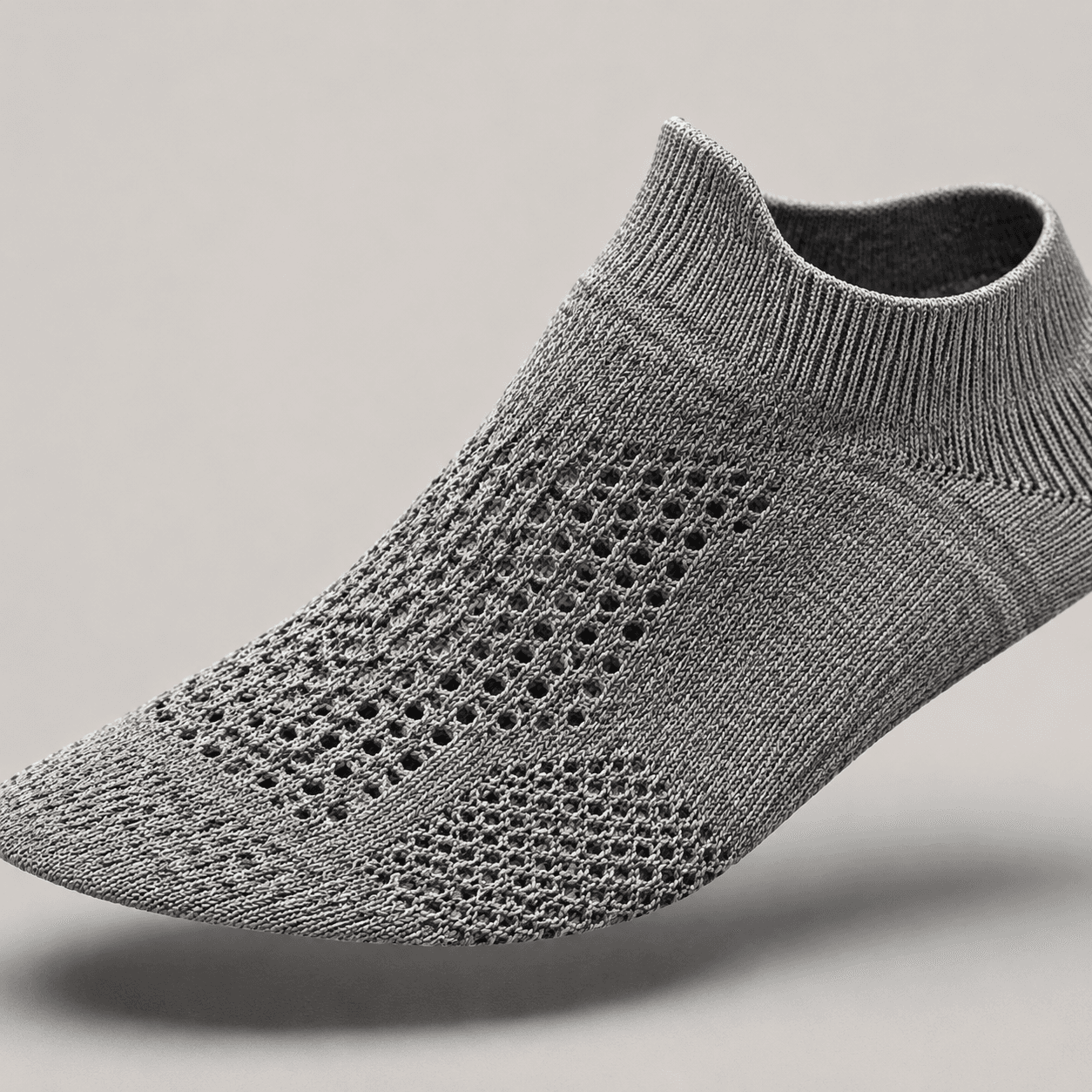
A footwear size run in bulk production is a technical control point, not only a sales forecast. It determines outsole size sets, upper grading, sockliner dies, carton assortments, barcode mapping, and the probability of fit claims after shipment. For sourcing managers, brand owners, and importers buying from China, the size run should be locked together with fit approval, tooling scope, and labeling conversions before bulk material booking starts.
On the factory side, the size run affects cutting yield, mold utilization, line efficiency, packing complexity, and cost per pair. A weak shoe size breakdown usually creates three problems: fringe sizes with poor sell-through, late carton or label changes, and inconsistent fit between the base size and the top or bottom of the range. Those problems do not stay in the sampling room. They show up as slower production, extra sample rounds, and claims after delivery.
This article treats bulk footwear sizing as a specification and cost issue. The aim is practical: build a workable size curve shoes plan, connect it to a controlled fit strategy footwear process, and manage private label shoe sizes without unnecessary mold cost, delay, or return exposure.
A footwear size run that looks convenient in the PO can become expensive in tooling, lead time, and returns if the last, ratio, and material package are not controlled together.
Why the footwear size run must be fixed before bulk booking
Every size in a bulk order changes factory work content. Outsole suppliers need the confirmed size set before mold allocation or stock mold reservation. The pattern room needs grading rules. Cutting needs the ratio to calculate material consumption and marker yield. Packing needs the carton assortment and barcode file. If the buyer changes the footwear size run after confirmation sample approval, the impact is usually not clerical. It can require relabeling, repacking, new size-set checks, or in some cases a tooling change.
The risk is higher in constructions with tight fit tolerance. A basic cemented mesh sneaker in EU 39-44 is relatively forgiving. A safety shoe under EN ISO 20345 or ASTM F2413 is not, because internal toe cap clearance, sockliner thickness, and vamp height all affect comfort and compliance margin. The same applies to winter boots with 250-400 GSM lining, PVC or EVA rain boots with fixed mold geometry, and kids' shoes where one size step changes functional fit more sharply.
For importers, the practical rule is simple: lock the market sizing system, the size range, and the ratio before outsole booking and upper grading are released. If the factory develops in EU sizing but the retail pack shows US and UK conversions, the conversion matrix must be frozen early. Late changes create direct rework cost on shoe labels, box labels, carton marks, and customs packing files.
- 01Confirm the sales market and conversion logic first: EU, US, UK, CM, men’s, women’s, kids’, or unisex.
- 02Freeze the size range and ratio before outsole size allocation, die cutting, and grading are released to production.
- 03Approve a fit benchmark, either a carry-over last, a known best-seller, or a physical reference sample with stated tolerances.
How to build a workable shoe size breakdown from the factory side
A workable shoe size breakdown concentrates volume in the core sizes and limits low-volume tails. Most adult runs are not even. In women’s casual sneakers, EU 37-39 often carry the volume. In men’s outdoor, work, and safety footwear, EU 42-43 usually dominate. The ratio should follow demand, but it also has to run efficiently on the line and in packing.
Low-volume fringe sizes have a real factory cost. In a standard cemented sneaker line, once one size falls below about 60 pairs, efficiency drops because the line still needs separate material bundles, labels, inspection records, and carton mapping. Cutting waste also tends to increase because the marker is optimized around the main volume sizes. In vulcanized or cupsole constructions, the threshold can be slightly higher because line changeover and packing become slower. In injected sandals or one-piece EVA slippers, the threshold depends more on mold cavity utilization than on cutting efficiency, but the cost logic is the same.
A wider range is not automatically better. Open-toe sandals, slides, and molded slippers can often cover demand with fewer sizes because fit is more forgiving. Closed toe sport shoes, safety footwear, snow boots, and lined kids' shoes need tighter bulk footwear sizing control because lining bulk, toe cap geometry, strobel stiffness, and foam package change internal fit more noticeably.
- Typical MOQ for an adult cemented sneaker with standard upper materials and existing bottom source: 800-1,200 pairs per colorway.
- Typical MOQ for a vulcanized canvas sneaker: 1,200-1,500 pairs per colorway, depending on foxing construction and outsole source.
- Practical minimum per size for efficient assembly, inspection, and packing in most adult programs: 60-120 pairs.
- If one fringe size is less than 3% of order volume, check outsole availability, carton split cost, and stock mold coverage before confirming the PO.
Setting a size curve shoes ratio that is commercially useful
A common men’s EU 40-45 run may be built as 1:2:3:3:2:1, centered on 42 and 43. A common women’s EU 36-41 run may be 1:2:3:3:2:1 or 1:2:3:2:1:1 depending on channel and country mix. These are not fixed rules. If POS data shows EU 40 and 41 over-indexing in Northern Europe, or smaller sizes moving faster in Japan or Korea programs, the ratio should reflect that before the PO is issued.
Factories do not need a perfect bell curve. We need a ratio that matches sell-through and still lets cutting, assembly, and packing run efficiently. Uneven ratios are acceptable. What creates cost is a long tail of tiny quantities, because it means more carton splits, slower barcode handling, and higher bottom-stock exposure. For first orders, a tighter run is usually safer than trying to cover every edge size on limited data.
Bulk footwear sizing and fit cost breakdown
| Component | Typical range | Notes |
|---|---|---|
| Adult style MOQ | 800-1,200 pairs/color | Typical for cemented casual or sport shoes using standard upper materials and existing source base. |
| Vulcanized style MOQ | 1,200-1,500 pairs/color | Higher because line setup, foxing process, and rubber bottom handling require better volume efficiency. |
| Minimum efficient quantity per size | 60-120 pairs | Below this level, cutting, packing, inspection, and carton utilization usually weaken. |
| New outsole mold size set | $2,000-$5,000/style | Common for adult EVA+rubber outsole sets; technical, multi-part, or extended-size tooling can be higher. |
| Incremental FOB impact from complex size run | $0.08-$0.25/pair | Usually caused by mixed prepacks, extended sizes, extra labels, more barcode splits, and added sample rounds. |
| Lead time with existing tooling | 35-50 days | Typical after material confirmation on repeat or straightforward programs. |
| Lead time with new tooling or fit correction | 60-90 days | Covers outsole development, last review, grading confirmation, size-set approval, and possible remake. |
| Size-set remake delay | 7-14 days | Can be longer if outsole marks, insole dies, or packaging conversions require revision. |
| Sockliner specification | 4-6 mm; 38-50 kg/m3 | EVA, PU, or memory foam density affects perceived fit and underfoot volume. |
| Lining or foam package | 1.5-5.0 mm; 120-400 GSM | Mesh backing, fleece, faux fur, and foam laminate materially change internal volume. |
| Outsole hardness | 55-65 Shore A | Common rubber range; harder compounds can change flex feel and fit perception. |
| Third-party lab testing | $300-$1,500/style | Lower end for standard physical tests, higher for safety or expanded compliance scope. |
| Packing method | Solid size or mixed prepack | Mixed prepack helps wholesale allocation but reduces flexibility for late ratio changes. |
| Inspection focus | AQL plus dimension control | Internal length, girth consistency, size labeling, outsole matching, and carton accuracy should all be checked. |
Fit strategy footwear: last, grading, and production-equivalent materials
A usable fit strategy footwear process starts with the last. The last determines heel hold, toe allowance, ball girth, instep height, and entry opening. If the target consumer expects comfort width, work-boot volume, or a broader forepart, a narrow fashion last cannot be corrected by relabeling the size. This is one of the most common mistakes in fast private label development.
After the last is approved, grading rules must stay tied to the actual material package. Adult footwear may follow standard EU size increments, but the fit change from one size to the next depends on upper stretch, seam turn, lining thickness, toe puff stiffness, counter shape, and sockliner compression. A microfiber upper with 3-5 mm foam backing behaves differently from an engineered knit with 1.5-2.0 mm laminated foam. A winter boot with 300 GSM faux fur lining cannot use the same internal dimensions as an unlined low-cut sneaker.
The sockliner, strobel, and foam package are often where fit drift starts. A 4 mm die-cut EVA sockliner at 45-50 kg/m3 density feels very different from a 6 mm open-cell memory foam insert at 38-45 kg/m3. Add 6-8 mm collar foam and a thicker vamp lining, and the wearer may perceive the shoe as half a size smaller even though the external size has not changed. For that reason, fit approval must be made on production-equivalent materials, not on a hand-made sample using substitute lining or softer foam.
- 01Approve the base size sample with actual production sockliner, lining, toe puff, counter, strobel board, and outsole hardness.
- 02Review at least one smaller and one larger size in the approved run, especially when the span is wider than six EU sizes or includes safety, winter, or kids' constructions.
- 03Freeze grading rules after fit approval and do not revise them during bulk unless the last or material package is formally changed and reapproved.
Where size and fit problems usually begin in bulk
Most fit claims come from cumulative drift rather than one large error. Typical examples are lining upgraded from 180 GSM to 260 GSM, collar foam increased from 6 mm to 8 mm, or sockliner thickness changed from 4 mm EVA to 6 mm PU foam without checking internal volume. Another case is outsole compound shifting from 55 Shore A to 62 Shore A rubber, making the shoe feel stiffer and shorter in wear even when measured size is unchanged.
Sample-to-bulk mismatch is another routine issue. Development pairs are often hand-lasted with cleaner upper placement and softer pull. Bulk pairs are line-lasted under production tension. If only the base size sample is checked and the size set is skipped, the top and bottom sizes may come out short at the toe, tight at the ball, or loose at the heel. In supplier terms, size-set review is not an optional visual check. It is a production control step that reduces claims on the core sizes after shipment.
Compliance, labeling, and conversion control in bulk footwear sizing
Fit control and compliance control are linked. In safety footwear under EN ISO 20345 or ASTM F2413, toe cap clearance, internal height, and sockliner package influence comfort and test margin. In children’s footwear, flexing, small parts, and restricted substances may force material substitutions that change fit. In rain boots, injected sandals, and one-piece EVA clogs, the mold geometry limits what can be corrected after tooling, so the size run and conversion table need to be right before mass production.
Labeling mistakes are a frequent supplier-side cost. EU, US, and UK conversions are not handled identically across brands, especially in women’s and kids’ ranges. If the buyer revises the conversion chart after labels and carton marks are printed, the result is direct rework cost and higher mixed-packing risk. For private label programs, the conversion table should be treated as a signed specification, not as artwork only.
For repeat programs, it is good practice to lock the conversion chart, last code, outsole mold code, sockliner spec, and signed fit comments in one master file. That prevents confusion when repeat orders are placed months later, and it matters even more when the same brand sources the style through more than one factory line.
- Third-party testing is usually style-based, but fit-related retesting may be required if the production material package differs from the approved sample.
- Typical lab cost for standard non-safety physical tests: about $300-$700 per style.
- Typical lab cost for safety footwear with toe impact, compression, slip, and electrical options: about $800-$1,500 per style depending on scope.
- Shoe tongue labels, hangtags, box end labels, carton marks, and barcode files should all reference the same approved conversion matrix.
Cost drivers behind size runs and fit decisions
From the supplier side, size planning affects both visible cost and hidden factory cost. Visible cost includes outsole molds, sockliner dies, size labels, cartons, barcode setup, and additional sample rounds. Hidden cost includes weaker cutting yield in low-volume sizes, slower line loading, more complicated final packing, and higher return risk if the fit was not validated across the run.
Tooling is the clearest cost driver. For a new adult EVA plus rubber running outsole, a full size mold set typically costs $2,000-$5,000 depending on the number of pieces, engraving detail, and cavity plan. A one-piece injected EVA slipper mold can be lower, while a technical hiking or safety outsole with larger range and multiple parts can exceed that. If extended sizes are added for very small quantities, the mold amortization per pair rises quickly and can make the order commercially weak.
FOB impact from size complexity is often missed in buying discussions. On a straightforward cemented casual shoe with existing tooling, a standard size run may have little or no surcharge. Once the order adds mixed prepacks, extended sizes, separate labels, extra barcode splits, and additional size-set correction rounds, the practical impact is often $0.08-$0.25 per pair. On value-price footwear, that is a material change in margin.
Lead time moves as well. A repeat style with existing outsole tooling and confirmed materials can often ship in 35-50 days after material confirmation. A new outsole, a revised last, or a wider extended-size program typically moves the cycle to 60-90 days. If a fit problem is found at size-set stage, the delay is commonly 7-14 days for remake, and longer if the insole die, box labels, or outsole size marks need correction.
Managing MOQ, replenishment, and private label shoe sizes
MOQ should be checked at three levels: per style-color, per material package, and per size. A buyer may meet the style MOQ on total pairs and still create poor factory efficiency if the volume is split across too many colors or too many low-quantity sizes. Factories price by actual work content, not by total pair count alone.
For a first private label launch, the safest structure is one commercial range, one packing method, and one confirmed fit standard. For example, 1,000 pairs in one color with a disciplined ratio is easier to control than 1,000 pairs spread across three colors and several fringe sizes. The second structure creates more carton splits, more label combinations, slower inspection, and weaker stock balance if the first sell-through is uneven.
Repeat business is where private label shoe sizes become efficient. If the brand keeps the same last, outsole, and main material package for at least two seasons, the factory can compare return comments by size and apply controlled corrections. If every season changes last shape, sockliner thickness, upper build, and bottom package, the size data becomes noisy and improvement slows.
- 01Launch with a narrower range around core sizes, then widen only where actual sell-through and return data justify it.
- 02Keep the same last and bottom package across repeat orders whenever possible so size feedback remains comparable.
- 03Use replenishment POs to rebalance the size curve instead of forcing all possible sizes into the first production run.
Regional demand and extended-size planning
Regional demand shifts are real and should be priced early. Northern Europe often needs more larger women’s sizes than Southern Europe. US men’s programs usually need stronger top-end sizes than a standard EU core run. If extended sizes are required, check stock mold coverage before FOB is finalized. Many factories hold stock molds only for standard ranges such as EU 36-41 for women or EU 39-45 for men. Sizes outside those bands may require new mold spend or longer component lead time.
When extended sizes are requested, buyers should ask two direct questions before placing the PO: what is the extra tooling cost, and what is the realistic minimum quantity per added size? Without those answers, a quotation may look acceptable on paper but become inefficient once outsole booking, packaging, and production planning begin.
Factory controls that reduce size claims after shipment
The minimum control sequence should be salesman sample, confirmation sample, size-set sample, and pre-production sample. Each stage should check fit, not only appearance. At size-set stage, the factory should verify internal length, forepart girth, heel fit, collar opening, outsole matching, and labeling accuracy. On safety footwear, toe cap clearance and sockliner package should also be rechecked against the approved construction.
Inline production control should include dimension checks by size group during lasting or closing, then again at final inspection. For adult categories, internal length and key girth points should be checked against the signed spec with practical tolerances. If the style uses thick memory foam, faux fur, or a stiff counter, a post-packing check is useful because compression and shape recovery can affect immediate try-on feel when goods reach retail.
For importers, the best protection is written approval language. 'Same as sample' is weak and creates room for dispute. A better specification references the approved last code, outsole mold code, conversion chart, material package, internal dimension tolerances, and fit comments from the signed sample. That gives both buyer and factory a technical baseline if a size claim appears after delivery.
- Typical size-set sample cycle: 7-14 days; longer if outsole, insole die, or labeling needs correction.
- Pre-production sample approval should be completed before mass cutting starts, not in parallel with cutting.
- Mixed-size prepacks usually need final packing confirmation 15-20 days before ex-factory to avoid repack cost.
- A size correction after bulk cutting normally becomes a remake, discount, or claim cost, not a simple inline adjustment.
SoleForge manufactures casual sneakers and sandals & slippers under OEM and ODM for brands and importers worldwide. Request a quote with your tech pack or reference pair and we'll reply within one business day.