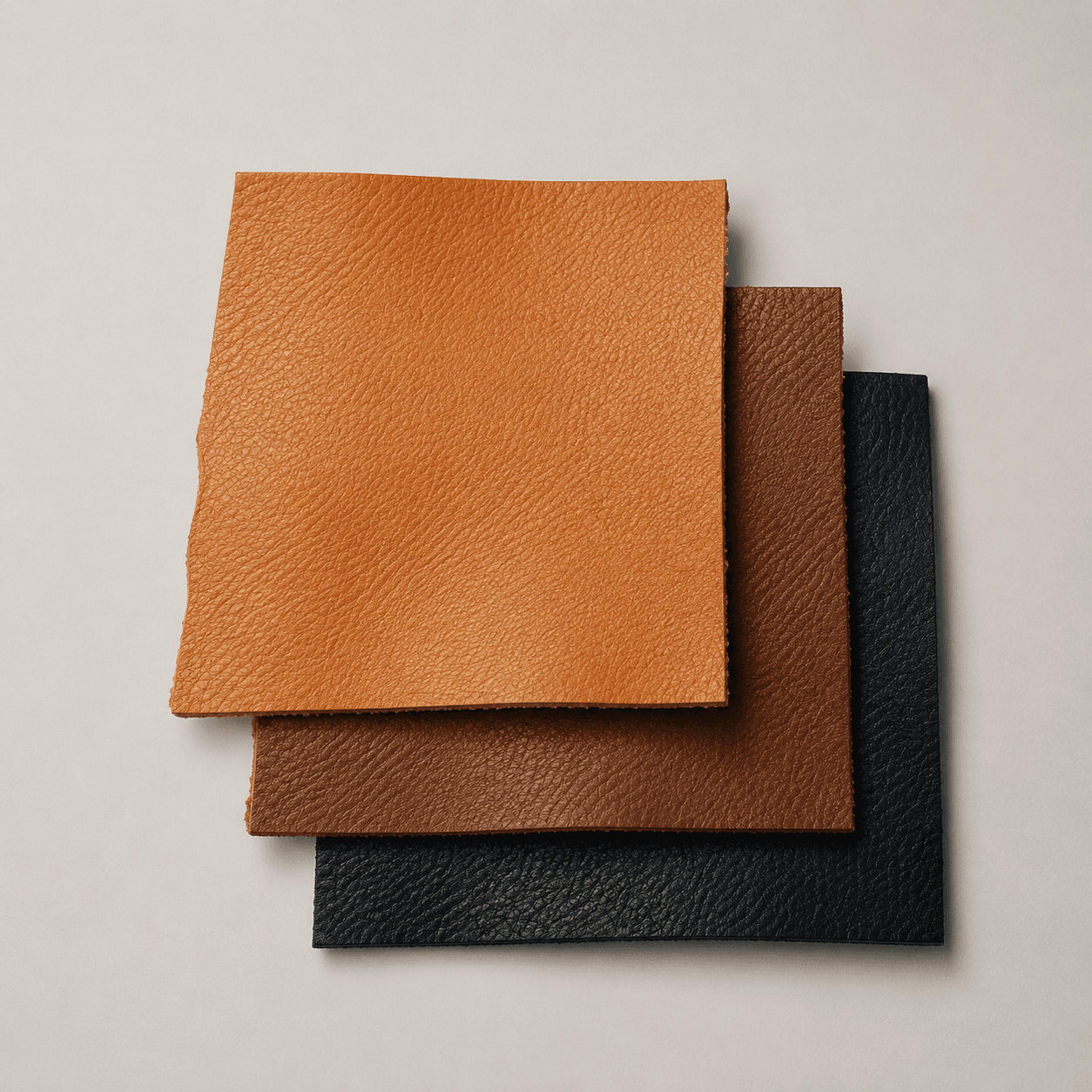
Selecting shoe upper material options is a cost, performance and sourcing decision at the same time. For importers buying from China, the upper affects FOB by far more than the surface material price: it also drives cutting yield, backing selection, reinforcement count, labor minutes, and the likelihood of claims for cracking, collapse, seam failure or color mismatch after shipment.
In bulk footwear, the correct upper is never chosen from appearance alone. Buyers need to compare footwear upper materials against the target category, expected wear hours, retail price band, compliance requirement and reorder plan. A mesh jogging shoe, a school lace-up in PU, a knit athleisure style and a leather court sneaker may all sell at similar price points, but they require different GSM, thickness, foam density, reinforcement layout and test standards.
This guide is structured as a buyer decision tool. Each section covers one practical filter: wear case, cost, lead time, failure risk, test method and sourcing continuity. The aim is not to rank materials in the abstract, but to help sourcing managers and brand owners decide what to approve, what to test, and what to ask before releasing a bulk PO.
The right upper is the one that holds shape, passes the required tests, fits the target FOB and can be reordered without changing performance.
1. Start with wear case, construction and target FOB
The first filter is not material type; it is usage. The same upper can perform well in one category and fail in another. A 180-220 GSM mono mesh with 3 mm foam backing may be acceptable for a lightweight jogging-inspired shoe, but it is a weak choice for a school or uniform style that needs shape retention, low maintenance and a cleaner upper surface. Likewise, a 1.3-1.5 mm corrected-grain leather suitable for a cupsole sneaker can push the FOB too high for an entry-price casual runner.
Factories can quote accurately only when the buyer defines the brief clearly: category, target FOB, expected wear duration, climate, and construction method. Cemented strobel, cupsole stitched, vulcanized and sidewall-stitched constructions place different stress on the upper. Without this context, one supplier may quote 0.9 mm PU with 150D backing, another may quote 1.2 mm PU with 300D backing, and both will describe the material as suitable. In production terms, they are not equivalent.
Upper approval also has to include the full component package. A soft upper can sometimes be stabilized with 30-40 kg/m3 vamp foam, a stronger toe puff, a 1.5-1.8 mm heel counter, or extra no-sew reinforcement, but those additions increase both pair cost and labor. The material decision should therefore be made at upper-package level, not from the shell material alone.
- State end use, target FOB, climate and expected wear hours per day.
- Confirm construction method: cemented, strobel, cupsole, vulcanized or welded.
- Ask for the recommended upper package including lining, foam density and reinforcements.
- Request one spec sheet per option showing thickness, GSM, backing, price and test status.
H3: Align test requirements before sampling
Compliance should be set before upper development starts. For sports-inspired and casual footwear, buyers commonly request abrasion and flexing on upper materials, seam strength on assembled uppers, and colorfastness to rubbing and perspiration where applicable. Relevant references may include ASTM D3884 for abrasion, ASTM D5034 or comparable tensile and tear methods for textile-based uppers, EN ISO 20344 methods for upper tearing and flexing in protective or uniform categories, and hydrolysis evaluation for PU-coated materials stored in hot or humid markets.
Ask for reports on the same article, backing and thickness that will be used in bulk. Generic laboratory reports from another season or from a different substrate should not be accepted as full evidence. A practical control point is to approve the upper material at sample stage, then recheck one bulk lot report before cutting starts.
2. Mesh is efficient and breathable, but stability decides whether it is commercial
Mesh remains one of the most useful shoe upper material options for running-inspired, training and lightweight casual product because it is breathable, relatively light, and widely available from mills in Fujian, Guangdong and Zhejiang. Common commercial types include mono mesh, sandwich mesh, warp-knit mesh and jacquard or engineered open mesh. In production, the material name matters less than the structure, openness and support requirement.
Typical mesh for commercial sneakers runs from 160-320 GSM. A basic mono mesh may sit at the lower end and usually needs support from 0.15-0.30 mm hot-melt film, printed overlays or laminated tricot. Sandwich mesh may run 220-320 GSM and adds body, but it also increases seam bulk and can affect fit in tight toe shapes. Material cost for the upper content is often around $0.45-$1.10/pair for stock mesh and $1.20-$1.55/pair for custom jacquard, reflective print or multilayer laminated versions.
MOQ is usually manageable if the buyer stays on stock programs. Many mills can support 1,000-1,500 pairs per colorway for stocked mesh, while custom yarn-dyed jacquard or logo mesh often requires 2,500-4,000 pairs or a fabric minimum in meters. Lead time is commonly 15-20 days for stock and 25-40 days for custom programs after lab dip or color strike-off approval.
The main risk with mesh is not supply; it is shape stability during closing and lasting. Low-cost open mesh can stretch unevenly, wrinkle at the vamp, absorb glue staining, or split at the throat and eyestay if the stitch gauge and reinforcement layout are weak. Ask for elongation and recovery in wale and course direction, heat-set shrinkage data, and confirmation of whether the mesh is laminated before closing.
- Check mesh type, GSM, yarn count and whether it is laminated or unsupported.
- Confirm elongation, recovery and shrinkage after heat setting.
- Ask if no-sew film, printed support or TPU overlays are required.
- Request snag, abrasion and seam-slippage results before material approval.
H3: Mesh usually fails at three points
The most common failure points are eyestay seam opening, forefoot collapse at the flex zone, and vamp wrinkling caused by over-pulling in lasting. These problems are usually caused by the combination of openness, seam allowance and reinforcement thickness rather than by mesh price alone.
Ask the supplier to review the upper pattern with seam allowance, stitch density and overlay placement. If a 0.5-0.7 mm open mesh is used on a narrow or pointed last, additional support is almost always required.
Practical comparison of common shoe upper materials
| Material | Best commercial use | Typical upper cost impact ($/pair) | Typical MOQ | Typical lead time (days) | Primary sourcing risk |
|---|---|---|---|---|---|
| Mesh | Running-inspired and lightweight casual | 0.45-1.10 | 1,000-3,000 pairs | 15-40 | Stretch, seam opening, glue staining |
| Knit | Athleisure, sock-fit and modern casual | 0.70-1.70 | 1,200-3,000 pairs | 20-50 | Fit drift, weak recovery, snagging |
| PU | School, uniform, value casual, fashion | 0.60-1.40 | 1,000 pairs or mill minimum | 20-45 | Hydrolysis, peel failure, surface cracking |
| Leather | Premium casual, court, boot, uniform | 1.20-3.50+ | Color and tannery dependent | 30-60+ | Yield loss, shade variation, longer approval |
| Synthetic | Private label casual and leather-look product | 0.55-1.60 | 1,000-3,000 pairs | 20-45 | Poor substrate strength, fold whitening, stitch tear |
3. Knit offers fit comfort and cleaner styling, but control the program and reinforcement
When buyers compare mesh vs knit shoes, the practical difference is control. Knit can create a more sock-like fit, reduce cut-and-sew operations, and give a cleaner modern silhouette. However, knit is more sensitive than mesh to machine gauge, yarn lot, humidity and upper reinforcement design. A knit that looks balanced in a confirmation sample can become too loose in bulk if the stitch program or yarn source changes.
Commercial knit uppers are usually polyester-based, sometimes blended with nylon or elastane in support or flex zones. Typical weight for footwear knit runs from 250-450 GSM depending on gauge, density and whether tricot, foam or TPU film is added. For upper material cost, a basic programmed knit often lands around $0.70-$1.10/pair, while engineered knit with multiple densities, logo areas, fused eye stay and decorative yarn can move to $1.20-$1.70/pair.
MOQ is often higher or less flexible than mesh because the yarn booking and machine setup have to be justified. A common working range is 1,200-3,000 pairs per color. If the buyer requires a custom yarn shade, the mill may ask for yarn minimums equal to 500-800 kg. Lead time is usually 20-35 days for existing programs and 35-50 days for first-time engineered knit development.
The deciding factor is reinforcement. Knit rarely works commercially without support in the eyestay, quarter and heel zones. Ask whether the factory is using fused TPU film, stitched synthetic support, embroidery, internal quarter reinforcement or a separate heel stabilizer. Also review collar foam density, often 35-45 kg/m3 in casual athletic product, because a weak collar package will magnify heel-slip complaints even if the knit itself is acceptable.
- Check knit structure, machine gauge, GSM, yarn denier and stretch percentage.
- Lock yarn source and stitch program before size-set approval.
- Confirm reinforcement map, film thickness and collar/vamp foam density.
- Request pilling, snagging, flex and colorfastness test results.
H3: Evaluate knit after assembly, not only as a panel
A flat knit panel can look stable before closing but lose shape after strobel lasting. For that reason, approval should be based on the assembled upper and finished shoe. Compare topline height, throat opening and quarter recovery before and after lasting.
If the collar rolls outward, the throat spreads, or the forefoot bags after fitting, the knit package is too soft or under-reinforced for the chosen last and wear case.
4. PU is commercially strong for price and consistency, but hydrolysis is the key risk
In PU vs leather shoes, PU remains the most practical commercial option for school shoes, value casuals, uniform product and fashion sneakers where buyers need consistent color, easy wipe-clean performance and stable pair cost. PU also simplifies reorders because the same article can often be booked again by code without hide grading or visual sorting.
What matters is not the label PU by itself, but the construction behind it. Performance changes with the resin quality, coating thickness, emboss depth, surface hardness and backing fabric. In commercial footwear, a light 0.8-0.9 mm PU with thin backing may be acceptable for a quarter overlay, but it is risky for a high-stress vamp or toe-facing panel. More reliable programs often sit around 1.0-1.4 mm total thickness with 180-300 GSM backing depending on use.
Upper material cost commonly falls around $0.60-$1.40/pair, with premium soft-touch, matte, patent, metallic or deep-emboss versions moving higher. Stock-material MOQ may start at around 1,000 pairs per color, while custom grain, gloss or special finish can push the requirement to 2,500-5,000 meters at the mill level. Lead time is usually 20-35 days for standard programs and 30-45 days for custom finish after color confirmation.
The main supplier-side concern is hydrolysis resistance, especially for distribution into humid markets or long warehouse cycles. A PU upper can look acceptable at inspection and still fail later through surface breakdown or cracking. Ask for hydrolysis results, flex resistance, cold crack where relevant, and peel strength between surface and backing. For school or uniform programs, also confirm scuff resistance and stain-release performance on dark and white colors.
- Check total thickness, backing type, backing GSM and topcoat description.
- Ask for hydrolysis, peel, flex and cold-crack data on the same article.
- Confirm whether the material can be skived, folded and edge-finished cleanly.
- Review scuff, stain and color migration performance before approval.
H3: Where PU is stronger than leather for bulk programs
PU is usually the safer sourcing choice when the brand needs large-volume consistency, lower MOQ exposure and repeatable color across multiple shipments. Leather is stronger for premium positioning, but PU generally wins on standardization and reorder control in value and mid-price categories.
5. Leather carries premium value, but buyers must price in yield loss and variation
Leather remains one of the strongest premium footwear upper materials for court sneakers, boots, uniform footwear and better-grade casuals. Compared with most synthetic shoe uppers, leather offers more natural hand feel, better perceived quality at retail, and a more authentic crease pattern in wear. It can justify a higher retail price, but only if the buyer controls article selection and cutting yield carefully.
The sourcing challenge is natural variation. Thickness, scar level, grain break, color depth and finish adhesion vary across hides and tannery batches. Buyers should therefore specify the leather article in technical terms: full grain, top grain, corrected grain, nubuck, suede or split, plus thickness and finish. For many sneakers and casual court styles, practical thickness is around 1.2-1.6 mm. Too thin and the upper may lose body; too heavy and the style becomes costly and stiff.
Upper material cost for leather commonly starts around $1.20-$3.50/pair and goes higher for premium articles, cleaner grades and branded tannery supply. MOQ depends on stock color availability and tannery policy. Standard black, white or tan may be workable at moderate volume, while custom colors often require higher square-foot commitments. Lead time is typically 30-60 days, and 45-70 days is more realistic when the buyer needs custom color, finish confirmation and tannery testing.
The hidden variable is yield. Lower-grade leather can look cheaper on paper but produce worse real pair cost because of scars, loose grain or panel rejection. Ask the factory for expected cutting yield by size range and pattern layout. Also request results for tear strength, flexing, finish adhesion, color rub and any market-specific chemical checks such as chromium VI where required by the import market.
- Specify leather type, finish, thickness range and acceptable hide grade.
- Ask for cutting yield assumptions and sorting loss by article.
- Check flexing, tear, finish adhesion and dry/wet rub performance.
- Confirm lead time from color approval, not just from PO date.
H3: Leather cost should be reviewed by usable yield, not only by square-foot price
A tannery quote without yield information is incomplete. Panel-heavy uppers, mirrored quarters and clean white uppers all reduce usable cutting area. In practice, a higher-grade hide with better yield can produce a lower real pair cost than a cheaper article with more defects.
For premium projects, ask for a trial cutting exercise on the confirmed pattern so the supplier can validate the true material consumption before final PO confirmation.
6. Synthetic shoe uppers are broad, so define the substrate and process capability
The term synthetic shoe uppers covers a wide group: microfibre, PU-coated textile, coated woven fabric, nonwoven-backed synthetic leather, and other leather-look composites. This breadth is exactly why buyers should force the discussion into technical terms. Two materials can look similar on a swatch card and perform very differently once stitched, folded, skived and lasted.
The substrate under the surface layer determines much of the performance. A good microfibre base with stable density and quality coating will usually handle stitching, perforation and repeated flex better than a low-cost coated fabric with light backing. Typical commercial synthetics for uppers run around 0.9-1.5 mm total thickness with backing weights from 150-320 GSM depending on use. Pair cost often lands around $0.55-$1.60, though technical microfibre or premium hand-feel versions can go higher.
MOQ usually ranges from 1,000-3,000 pairs per colorway for standard programs, with mill minimums applying when the finish, emboss or color is custom. Lead time is typically 20-45 days. Microfibre and specialty coated materials may require more time if the supplier does not hold greige or finished stock.
These materials can be very effective for private-label programs because emboss, perforation, grain and color are easier to standardize than natural leather. However, approval must cover process compatibility. Confirm whether the material can be skived without surface burst, folded without whitening, stitched without needle cutting, and bonded cleanly with the factory’s cement or heat process.
- Ask for the exact substrate, surface coating and total thickness.
- Check stitch tear, fold performance and skiving suitability.
- Confirm backing GSM, abrasion level and flex performance.
- Request test data on the same finish, not just on a similar base material.
H3: Synthetic is not automatically the low-end choice
Well-made microfibre or technical synthetic can outperform low-grade leather or weak PU in consistency, appearance and consumer complaint rate. The correct question is not whether the upper is synthetic, but whether the substrate and finish are suited to the shoe’s construction, price band and wear target.
7. Compare landed decision factors: pair cost, MOQ, lead time and repeatability
The final decision should compare real pair cost, not just material quotations. Real pair cost includes material price, cutting yield, reinforcement count, reject rate, labor sensitivity and expected claim exposure. A cheap mesh can become expensive if it requires extra no-sew film and careful lasting. A higher-cost leather can still be commercially sound if the cutting yield is stable and the return rate remains low.
Lead time should be counted from material approval, not from the date the PO is issued. In practice, stock mesh can be ready in 15-20 days, standard PU or basic synthetic in 20-35 days, knit in 20-50 days depending on development complexity, and custom leather in 30-60 days or longer. Delays often come from color strike-offs, emboss confirmation, yarn booking, and waiting for bulk test reports rather than from shoe assembly itself.
Repeatability matters for any carryover style. Stock mesh, common PU and standard synthetics are usually easier to reorder than custom engineered knit or tannery-developed leather shades. If the shoe is intended as a repeat program across two or more seasons, ask whether the supplier can lock the article code, source mill and backing specification for future orders.
Before bulk approval, request a single material comparison sheet showing price per pair, MOQ in pairs and meters, lead time in days, test status, known production risks and reorder availability. That document often prevents more errors than a long chain of emails or chat messages.
- Compare real pair cost including yield loss, added reinforcement and defect rate.
- Confirm MOQ in both pairs and meters where relevant.
- Ask for lead time from color approval to bulk-ready material arrival.
- Review reorder continuity by article code, mill source and backing spec.
- 011. Freeze end use, target FOB and target retail band.
- 022. Shortlist two upper materials the factory already runs well.
- 033. Approve technical specs with thickness, GSM, foam density and test methods.
- 044. Wear-test the finished upper package, not only raw swatches or panels.
- 055. Release bulk only after pre-production sample and bulk lot checks are complete.
H3: Questions experienced buyers ask on the first call
Ask whether the material is stock or custom, what the mill MOQ is, how many days are needed after color approval, which upper zones are most likely to fail, and what reinforcement the factory normally adds. Strong suppliers answer with thickness in mm, backing GSM, foam density, film thickness, expected yield and likely defect points, not with general statements about quality.
Key takeaways
- Define wear case, construction and target FOB before asking a factory to quote upper materials.
- Approve upper packages by thickness, GSM, backing, foam density and reinforcement plan, not by appearance alone.
- Mesh and knit both work for breathable product, but knit needs tighter control of yarn, program and support zones.
- PU and other synthetic shoe uppers are efficient for bulk buying if hydrolysis, peel, flex and process compatibility are verified.
- Leather supports premium positioning, but buyers must budget for yield variation, longer lead times and stricter article control.
- Before committing, confirm MOQ, lead-time days, test method, reorder continuity and the supplier’s real experience with the chosen upper.
SoleForge manufactures athletic & running shoes and casual sneakers under OEM and ODM for brands and importers worldwide. Request a quote with your tech pack or reference pair and we'll reply within one business day.