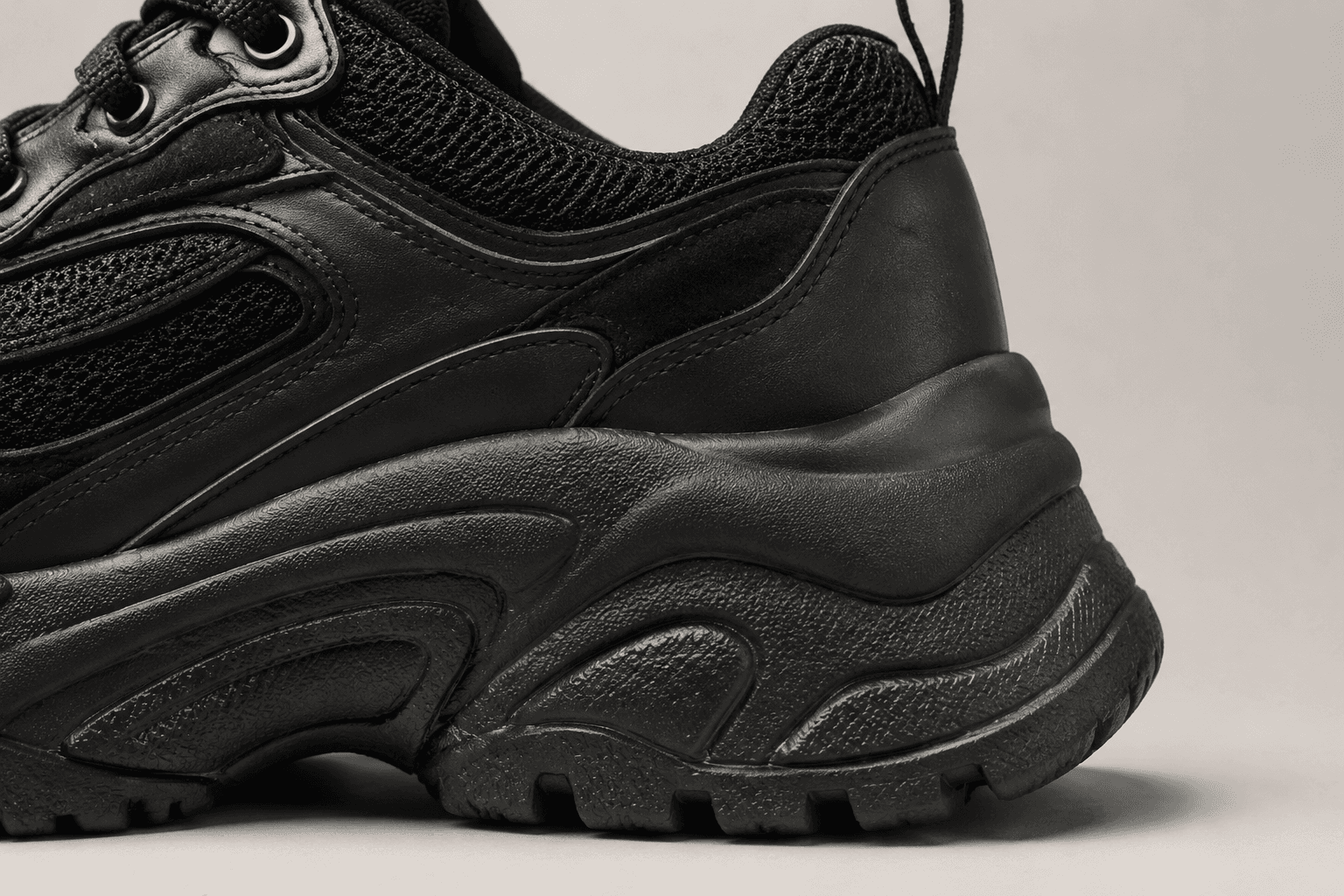
For importers and private-label footwear buyers, the vulcanized vs cupsole decision should be locked before outsole booking, upper material approval, and size-set signoff. It drives mold spend, MOQ by colorway, labor route, bond-testing exposure, and how stable your FOB will remain across repeat orders. In China, many factories quote both constructions, but they often run them on different lines, with different subcontractors and different reject profiles.
Vulcanized sneakers are built around a rubber bottom package cured under heat, usually with foxing tape and an upper that must tolerate oven conditions without distortion or color change. Cupsole sneakers use a pre-molded sole unit, then attach the lasted upper by cementing and sometimes side stitching. These are both established sneaker construction types, but they fit different buying strategies. Vulcanized is usually easier to launch on stock bottoms. Cupsole usually gives better structure, comfort options, and repeatability once the sole platform is fixed.
This guide compares vulcanized vs cupsole as a buyer decision tool for sourcing teams, brand owners, and importers buying in volume from China. Each section covers one commercial factor: cost, MOQ, lead time, durability, comfort, compliance, and reorder logic. Each ends with short checkpoints to use with the factory before you release bulk.
In bulk footwear, the better construction is the one the factory can repeat at target FOB, lead time, and claim rate, not the one that looks best in the first sample.
Construction route: confirm who controls each process
The main mistake in a vulcanized vs cupsole review is judging only silhouette and hand feel. Vulcanized sneakers are assembled with the upper wrapped to the bottom package, then heat-cured so the outsole and foxing become integrated through the rubber curing process. This means canvas, suede, inks, toe puff, eyelets, binding, and adhesives must all survive the same thermal cycle. When the material package is not built for that route, the usual defects are foxing lift, yellowing, uneven foxing height, toe distortion, and localized scorching.
Cupsole construction splits bottom making from upper assembly. The sole is molded first, often in rubber, TPR, or RB with a Shore A range around 55 to 68 depending on target wear. The upper is lasted to a strobel or board-lasted package, roughened, primed, cemented, heat-activated, and pressed into the cup. Some buyers add side stitching for visual value or extra security, but on commercial cupsole product the real quality driver is still adhesion process control: roughing depth, primer compatibility, activation temperature, dwell time, and press pressure.
For China sourcing, line ownership matters more than sample appearance. A factory may close uppers in-house but outsource vulcanizing to one partner and cupsole molding to another. Another may own vulcanizing ovens but buy all cupsoles from Jinjiang or Putian. If the factory cannot show where each step is done, who signs off production, and which defects are checked before packing, the sample room is telling you less than you think.
- Ask whether upper closing, vulcanizing, sole molding, lasting, and packing are all in-house or split by vendor.
- Request a cut-open confirmation sample showing foxing, outsole, glue line, board or strobel, toe puff, and heel counter.
- Confirm cupsole adhesive route: water-based or solvent-based cement, primer type, and activation temperature window.
- Ask for recent bulk references in the same construction, not just development samples.
FOB cost: compare the cost stack, not only the headline quote
In China, basic vulcanized sneakers usually open lower because stock rubber bottoms and simple upper packages are easy to source. A low-cut canvas vulcanized style using 12 oz to 14 oz canvas, cotton laces, 3 mm die-cut EVA sockliner, and stock foxing commonly lands around US$5.20 to US$8.50 per pair FOB at 1,200 to 3,000 pairs. Upgrade to 14 oz to 16 oz canvas, suede overlays, printed foxing, molded footbeds, or higher natural-rubber content and the FOB often moves into the US$8.50 to US$11.80 range.
Cupsole usually starts higher because the sole unit carries more material, mold cost, and bottom labor. Entry-level cupsole casual in canvas or synthetic uppers often sits around US$7.80 to US$11.20 per pair FOB. Court-inspired cupsole product with split suede, action leather, padded collar foam, 5 mm to 8 mm PU or memory foam insock, and custom rubber outsole commonly lands around US$11.50 to US$16.80. Genuine leather, stitched sidewalls, molded heel clips, or branded tooling push it higher.
Buyers should also separate opening FOB from repeat FOB. Cupsole tends to become more predictable after the mold, weight target, and compound are frozen. Vulcanized can drift more with compound cost, foxing waste, and appearance grading. A cheap vulcanized quote is not cheap if the line runs a 6 percent to 10 percent reject rate and the factory quietly blends second-quality pairs into bulk.
- Request a cost breakdown for upper, bottom, sockliner, packaging, testing, and mold amortization.
- Ask for outsole material description: virgin rubber, reclaimed blend, TPR, or RB mix, plus target outsole weight per pair.
- Confirm whether the quote includes size set, wear test, pre-production sample, and carton drop test.
- Ask the factory to declare normal reject rate by construction and how shortage pairs are settled.
Buyer comparison: vulcanized vs cupsole
| Decision factor | Vulcanized sneakers | Cupsole sneakers |
|---|---|---|
| Typical FOB range | US$5.20-US$8.50 basic canvas; US$8.50-US$11.80 with suede or upgraded footbed | US$7.80-US$11.20 entry casual; US$11.50-US$16.80 with custom mold and premium upper |
| MOQ with stock bottom | 600-1,200 pairs/colorway common | 800-1,200 pairs/colorway common |
| MOQ with custom tooling | Lower if using existing foxing and stock outsole profile; rises with custom foxing colors or rubber details | Usually 1,200-3,000 pairs/style depending on cavities, sole colors, and size span |
| Development lead time | 7-14 days sample round; 30-45 days bulk with stock materials | 18-30 days tooling plus 45-60 days bulk after confirmation |
| Comfort potential | Moderate unless sockliner, board, and heel insert are upgraded | Higher due to thicker insock, strobel foam, and more structured bottom package |
| Common failure points | Foxing separation, flex cracking, scorching, sidewall staining, shape variation | Delamination, abrasion loss, stitch breakage, heel collapse, pair-weight inconsistency |
| Best use cases | Canvas casual, skate-inspired, school, promotional, seasonal value retail | Court casual, leather-look private label, carryover programs, premium casual |
| Best buyer profile | Fast-turn importers, promotional programs, lower-risk trial orders | Brands and importers building repeat platforms and higher perceived retail value |
MOQ and tooling: choose a construction that matches your order profile
MOQ reflects line efficiency, color setup, and material loss. With stock bottoms, vulcanized programs can be workable at 600 to 1,200 pairs per colorway, and some factories will accept 300 to 500 pairs for repeat customers if fabrics, labels, and foxing are standard. Once you add washed canvas, toe cap contrast, heavy print registration, suede paneling, or custom foxing color, the practical MOQ rises because cutting waste, setup time, and curing scrap all increase.
Cupsole MOQ is usually tied to sole source and color complexity. With a stock sole, 800 to 1,200 pairs per colorway is common. With a new sole mold, the commercial MOQ often moves to 1,200 to 3,000 pairs per style, especially when the size run spans youth and adult, or men’s and women’s grading requires separate cavity planning. A simple cupsole tool may cost about US$2,000 to US$6,000. Multi-part bottoms, translucent pods, logo inserts, or dual-hardness outsoles can push tooling well above that.
The buyer risk is approving a development sample made below commercial economics. Many factories will absorb one sample round to secure the business, then recover margin through higher MOQ, limited color flexibility, or weaker material substitution. Get MOQ in writing by colorway, outsole option, upper material family, and packaging type before you book materials.
- Ask MOQ separately for stock bottom, recolored stock bottom, and fully new mold.
- Confirm if MOQ is per colorway, per PO, per shipment, or per release against a blanket order.
- Check whether sizes below EU 35 or above EU 46 trigger separate mold cavities or surcharges.
- Ask if repeat orders inside 60 to 90 days can use reserved upper fabric or rubber inventory.
Lead time: map the critical path by construction
Vulcanized usually wins on speed if you stay on stock components. A realistic calendar is 7 to 10 days for the first sample, 10 to 14 days for one revision, 7 to 10 days for size set, and about 30 to 45 days for bulk after final material approval and deposit. If the style uses stock canvas from local mills, common eyelets, and standard foxing colors, some factories can compress the bulk window. If it uses reactive print, washed upper panels, or custom foxing striping, that advantage disappears quickly.
Cupsole typically needs more front-end time because the sole is a separate engineering item. New tooling often takes 18 to 30 days for mold opening and first trial shot. Then come fit correction, sidewall cleanup, hardness adjustment, and upper-to-sole matching. Bulk production after confirmation is usually 45 to 60 days, and 60 to 75 days is normal in peak season or when leather, suede, or third-party lab testing is involved before shipment release.
The useful way to manage lead time is by failure point. In vulcanized, foxing color, curing consistency, and upper heat resistance are the main gates. In cupsole, mold trial approval, bonding stability, and outsole delivery from the sole vendor are the gates. Ask the factory which step can still fail after deposit. That answer is more reliable than a single promised delivery date.
- Request a T&A covering mold opening, trial shot, material booking, size set, wear test, PPS, inspection, and ex-factory date.
- Ask where outsole molding is done and how many days inter-province transfer adds.
- Confirm third-party lab lead time for adhesion, abrasion, flexing, colorfastness, and restricted substances.
- Check holiday impact separately for upper factory, outsole vendor, and packing supplier.
Durability and claims: focus on the failure pattern you are buying
Neither construction is automatically stronger. Vulcanized sneakers flex well and are commercially efficient for casual use, but their failures are usually foxing separation, sidewall staining, flex cracking, toe bumper distortion, and inconsistent foxing alignment. For canvas vulcanized product, upper spec matters. Around 12 oz canvas is entry level for value retail; 14 oz to 16 oz gives better shape retention and usually lower seam grin. Rubber hardness for casual vulcanized product often falls around Shore A 55 to 65, but the right target depends on slip, flex, and wear profile.
Cupsole product usually feels more substantial, but its claim pattern is different: upper-to-sole delamination, outsole abrasion loss, side stitch breakage where decorative stitching is added, heel collapse, and inconsistent pair weight between sizes. Most delamination claims come from process shortcuts, not from the outsole concept itself. Common causes are shallow roughing, primer mismatch, moisture in the upper, low heat activation, or inadequate pressing dwell. If the factory cannot explain its bond process in numeric terms, treat the style as high-risk.
The correct spec depends on use case. A vulcanized canvas shoe for fashion casual does not need the same cushioning or recovery target as a cupsole court shoe intended for long daily wear. Define the usage clearly, then write the component range around that usage instead of relying on generic 'good quality' language.
- Ask for upper weight in oz or GSM, outsole hardness, abrasion target, and finished pair weight by reference size.
- Specify peel and flex targets in the PO and test plan, not only in email discussion.
- Confirm toe puff and heel counter material type with thickness, such as 0.8 mm to 1.2 mm thermoplastic.
- Request pilot-run images of foxing line, toe shape, heel seat, sole edge trimming, and bonding edge.
Comfort and fit: cupsole offers more room, but only if the last is managed correctly
Cupsole construction usually gives the buyer more room to build comfort into the bottom package. A typical commercial court cupsole may use a 4 mm to 8 mm PU or memory foam insock, foam-backed lining, 2 mm to 3 mm strobel foam, and a stronger heel counter package. Memory foam in this category often sits around 0.16 to 0.30 g/cm3 density. Better rebound usually comes from molded PU or dual-density footbeds, but those add cost and can reduce internal volume if the last bottom is not adjusted.
Vulcanized sneakers are usually flatter underfoot. Standard builds often use a 3 mm to 5 mm EVA sockliner with canvas or mesh cover and limited arch contour. That is commercially acceptable for school shoes, entry casual, and promotional orders. If you need better underfoot feel while keeping a vulcanized profile, practical upgrades include a 5 mm molded insock, latex top layer, or heel insert. These are useful, but they must be balanced against vamp volume and toe cap height.
Fit consistency is as important as cushioning. Cupsole sizing is usually easier to hold after the sole mold is fixed. Vulcanized can vary more in internal length and toe spring because the final shape is influenced by lasting, foxing wrap, and curing. For chain retail or e-commerce, approve a full size set and ask for internal length, ball girth, and fitting comments for key sizes before bulk.
- Ask for sockliner thickness, density, rebound, and compression-set data from the material supplier.
- Request internal length and girth charts for at least one small, one mid, and one large size.
- Confirm whether fit grading follows EU, US, or JP standards and if wide-foot adjustment is available.
- Check if comfort upgrades require last correction or only material substitution.
Compliance and testing: set the test matrix before materials are booked
Testing should follow the construction route. For vulcanized sneakers, priority checks usually include upper-to-rubber adhesion, flex crack resistance, foxing adhesion, colorfastness of canvas or suede, outsole abrasion, and odor or migration issues from inks and cements after curing. For cupsole, priority checks usually include upper-to-sole peel strength, outsole abrasion, flexing, side stitch integrity where present, lining colorfastness, sockliner compression set, and hydrolysis risk if PU components are used in the insole or mid component.
Many buyers work to retailer protocols, but the factory should still be able to discuss EN ISO and ASTM methods in practical terms. EN ISO footwear methods are commonly referenced in Europe for bond strength, abrasion, flexing, slip, and upper performance. ASTM references may be requested by US customers depending on use case and channel. What matters is whether the supplier can match the test list to the actual construction and not submit a casual vulcanized sample to the wrong protocol.
The easiest way to reduce claims is to remove vague wording. Do not write 'rubber sole' or 'foam insole' in the tech pack if the retail program depends on durability and comfort. State outsole hardness range, upper GSM, foam density, minimum peel target, colorfastness grade, and flex cycle expectation. That prevents post-approval downgrading on compounds, foam, or reinforcement sheets.
- Ask the factory to propose a style-specific EN ISO or ASTM test matrix before final sample approval.
- Specify restricted-substance control for canvas, suede, inks, adhesives, rubber, and carton printing.
- Confirm whether third-party lab fees are included in FOB or charged by submission and retest.
- Request written pass thresholds for adhesion, abrasion, flexing, slip, colorfastness, and compression set.
Design flexibility and reorder logic: decide if you are buying an upper or a platform
Vulcanized works best when the upper is the seasonal story. It is efficient for canvas low-cuts, slip-ons, school shoes, skate-inspired basics, summer programs, and lower-risk test orders. Because stock bottoms are common, you can refresh color, print, or fabric with relatively low front-end commitment. The tradeoff is that visual consistency can vary more from run to run if foxing, curing, and grading are not tightly controlled.
Cupsole is stronger when the bottom platform is part of the brand identity. A custom sidewall, heel logo insert, outsole map, stitch channel, or heel clip makes the same upper look more proprietary. That suits private-label buyers selling into chain retail, department stores, or marketplace channels where comparison is immediate. The tradeoff is slower correction, higher tooling commitment, and more exposure if the platform misses on sell-through.
The practical decision is whether you need a fast seasonal upper-driven program or a repeatable sole platform that can carry several uppers across multiple seasons. Vulcanized usually lowers opening risk. Cupsole usually improves carryover consistency and perceived value if the sell-through justifies tooling.
- Ask how many future uppers can share the same bottom to spread tooling over several POs.
- Check whether custom sidewall textures, logo plugs, or stitch channels require mold inserts and added days.
- Confirm the retail target can absorb the FOB and tooling of a custom cupsole platform.
- Review whether the construction suits replenishment business or only a one-season launch.
How to decide: align construction with your order economics
Choose vulcanized when you need faster launch, lower front-end commitment, stock-bottom flexibility, and a commercial casual look at tighter FOB. It is usually the better fit for school canvas, skate-inspired basics, summer capsules, promotional programs, and trial orders where demand is not yet proven. It also works well for suede casual if the factory has stable curing control and the upper package has already passed heat-risk checks.
Choose cupsole when you need more internal structure, better heel support, cleaner carryover consistency, or a more premium court-inspired look. It is usually the better option for leather or suede private label, chain retail casual, department store programs, and repeat SKUs that will be reordered across seasons. The mold cost is easier to justify when the outsole can support multiple upper executions and more than one production cycle.
From a sourcing perspective, vulcanized vs cupsole is a decision about where you want the risk to sit. Vulcanized lowers opening exposure but often carries more visual-process variation. Cupsole raises tooling and development commitment but usually gives stronger repeat control once the platform is stable. Buy the construction your factory can execute repeatedly at the target FOB, target lead time, and target claim rate, not the one that only wins in the sample room.
- 01Choose vulcanized for lower opening risk, faster launch, and upper-driven casual programs.
- 02Choose cupsole for comfort, structure, carryover business, and stronger private-label identity.
- 03Use stock bottoms first if sell-through is unproven; move to custom tooling after reorder confidence is real.
- 04Lock measurable specs early so lower-grade rubber, foam, or reinforcement substitutions cannot enter bulk unnoticed.
Key takeaways
- Lock the vulcanized or cupsole decision before outsole booking, size-set approval, and material reservation.
- Write measurable specs into the buy: canvas GSM, rubber Shore hardness, sockliner density, pair weight, peel target, and flex target.
- Confirm MOQ by colorway, outsole option, upper material family, and packaging format, not just by total style quantity.
- Use vulcanized for faster, lower-risk casual launches; use cupsole for comfort, structure, and repeat carryover business.
- Ask for a construction-specific capability review covering in-house steps, subcontractors, recent bulk history, and cut-open samples.
- Approve full size set, style-specific test matrix, and PPS before bulk to reduce fit claims, delamination, and visual rejects.
SoleForge manufactures casual sneakers under OEM and ODM for brands and importers worldwide. Request a quote with your tech pack or reference pair and we'll reply within one business day.