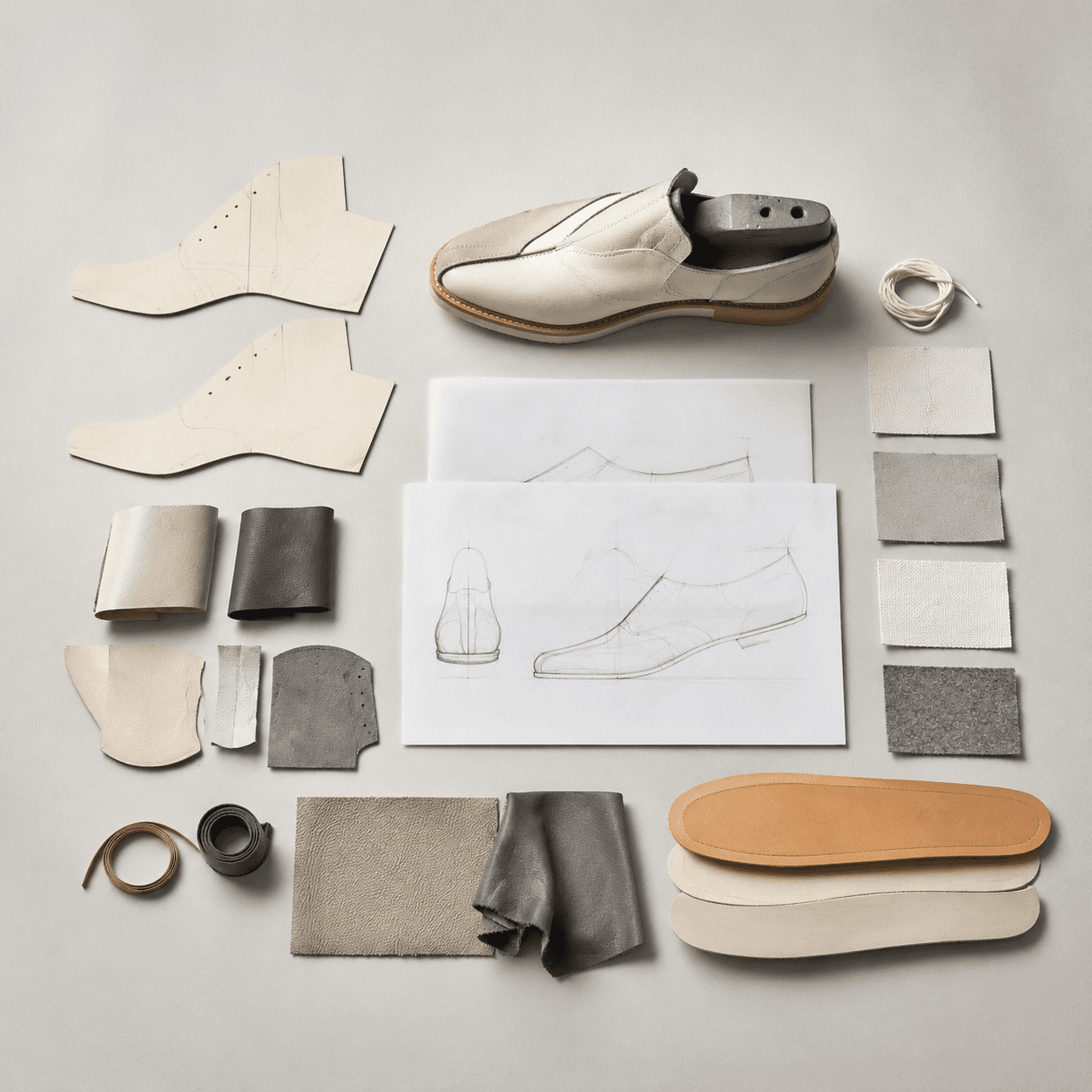
For footwear importers buying from China, shoe carton CBM is one of the few packing variables that can change landed cost without changing the shoe itself. It affects freight per pair, container utilization, warehouse handling, and carton damage risk. The goal is not the smallest carton on paper. The goal is the lowest-cost packing method that still protects the shoes through factory storage, ocean transit, customs handling, and destination distribution.
Footwear does not pack uniformly. A knit runner with 45-50 kg/m3 collar foam, a vulcanized canvas shoe, and an EN ISO 20345 S1P safety style with steel toe cap and anti-penetration plate need different carton strength, different pairs-per-carton logic, and different stack limits. On repeat programs, a small packing change can move freight by $0.05-$0.20 per pair once the order reaches 15,000-60,000 pairs.
The practical approach is simple: calculate the real CBM at pair level, remove wasted space from the shoe box, engineer the export carton around gross weight and compression strength, then check the final loading plan against the actual style mix. The sections below follow that sequence in the order we use with brands and importers at factory level.
The correct shoe carton CBM is the lowest cube that still delivers every pair saleable, compliant, and easy to handle.
Calculate shoe carton CBM at pair level before you approve the PO
Start with the finished outer carton size, not the nominal inner shoe box layout. CBM is length x width x height in meters. If the export carton measures 63 x 45 x 35 cm, the volume is 0.099225 CBM. If it holds 12 pairs, the freight volume is about 0.00827 CBM per pair. That pair-level figure is the one to compare across suppliers, styles, and seasons.
In footwear sourcing, a difference of 0.0015-0.0030 CBM per pair is material. On a 40HQ loading 24,000 pairs of lightweight sport shoes, that gap can change payable ocean freight by several thousand dollars depending on lane and season. On smaller programs of 6,000-12,000 pairs, poor packing often adds $0.06-$0.12 per pair to landed cost. That is usually more than the paper cost of a better carton.
Do not rely on theoretical cube. Ask whether the dimensions are measured after sealing, with real shoe boxes, tissue, toe stuffing, spare laces, hangtags, silica gel, and polybags already inside. In humid months in South China, a carton can bulge 1-2 cm after packing. That small change can affect the final loading count more than buyers expect. If the destination uses pallets, include pallet overhang and stack-height limits in the calculation from the start.
- Request outer carton dimensions, CBM, net weight, and gross weight on the same packing sheet.
- Compare CBM per pair by style, not by shipment average.
- Separate floor-loaded ocean assumptions from palletized warehouse assumptions.
- Reject any estimate based only on empty cartons or standard templates.
Reduce shoe box waste before you touch the master carton
The most effective carton optimization footwear work usually starts with the retail shoe box. If the inner box is too long, too high, or inconsistent across adjacent sizes, the outer carton will carry wasted air no matter how carefully it is arranged. The most common causes are oversized toe allowance, excessive lid clearance above the topline, and a box footprint selected only because the die line already exists at the printer.
A practical example: a men's cemented court sneaker in EU 40-45 may fit safely in a 33 x 22 x 12 cm box, while a factory may propose 35 x 24 x 13 cm to avoid a new die line charge. Across 10 or 12 pairs per carton, that difference can add $0.08-$0.15 per pair in freight, while the new box cost may rise only $0.02-$0.04 per pair depending on print and board grade. On repeat orders, that tradeoff usually pays back immediately.
Do not shrink the shoe box blindly. Lightweight knit uppers can tolerate a tighter fit if collar foam density, tissue wrap, and toe support are correct. A nubuck hiking boot, a cupsole skate shoe, or an ASTM F2413 safety style will not. If the quarter panel rubs, the counter distorts, or metal hardware imprints during stacking, the saved CBM becomes a claim cost. For that reason, fit testing should be done with the full packing set, not with the shoe alone.
- Measure outsole length, toe spring, and highest collar point by size range.
- Check whether one box size can cover the full size run without excessive void space.
- Specify box board clearly, such as 1100-1300 gsm for standard printed boxes or 1300-1500 gsm for premium boxes.
- Run the fit test with tissue, inserts, polybag, silica gel, lace bag, and labels.
Engineer the export carton for cube, strength, and handling
Once the shoe box is fixed, build the master carton around three controls: cubic efficiency, gross weight, and compression strength. The best carton is not automatically the smallest. In footwear shipping, a 3 percent cube saving is not worthwhile if the carton exceeds the buyer's handling limit, collapses under long-haul stacking, or creates rework at destination.
For most adult sport and casual shoes, 8, 10, or 12 pairs per carton are the usual working options. Heavy winter boots and safety shoes often perform better at 6 or 8 pairs so the gross weight stays within 16-22 kg. When the packed carton reaches 24 kg or more, manual handling slows, sidewall damage rises, and unloading cost increases. A freight-efficient pack-out can still be warehouse-inefficient.
Board specification should be stated in measurable terms. For heavier footwear, suppliers often need 5-ply BC flute or equivalent construction. Lighter styles may ship safely in 5-ply AB flute, depending on carton dimensions and stack height. Ask for bursting strength or edge crush data if your shipment will be stacked 8-10 layers high in a 40HQ during wet season. A light EVA runner with a stable 1200 gsm shoe box can use a lighter carton than a PU work boot with metal trim and a rigid toe structure.
The real test is a sealed-carton stack check for 7-10 days, followed by inspection for wall bowing, lid sink, and shoe deformation. That test is basic factory work and usually costs far less than solving one container of crushed cartons after arrival.
- 01Set the acceptable gross weight range before approving pairs per carton.
- 02Confirm flute type, ply count, and strength data with the supplier.
- 03Approve the carton only after sealing, stacking, and re-measuring the outer size.
- 04Review whether size splits or retailer assortments create partial cartons.
Plan container loading shoes on the full order mix, not style by style
Container planning should happen after quantities are frozen. A factory may correctly say that one low-cut runner loads 4,600-4,900 pairs in a 40HQ and one safety boot loads 3,000-3,300 pairs. But once those styles are mixed with kids' shoes, sandals, or partial-color lots, the real utilization depends on carton footprint compatibility and dead space near the doors and roof line.
This is where MOQ structure matters. If the order is split into 1,200 pairs per color for fashion sneakers, 600 pairs per size run for a work-shoe replenishment, and 300-pair trial colors for an inline update, the carton pattern becomes less efficient even when each style alone looks fine. Partial rows and short stacks reduce container yield. A supplier with strong logistics discipline should simulate the full mix before booking.
Ask for a consolidated loading sheet showing carton count by style, carton dimensions, total CBM, estimated utilization, and any known dead space. If the shipment is close to the 40HQ limit, a 1 cm reduction in carton height or a shift from 10 to 12 pairs per carton on one compatible style can recover meaningful capacity. In high-rate periods, that often saves more than aggressive FOB negotiation.
If your distribution center requires pallets after arrival, evaluate that separately. A loading plan that is excellent for floor-loaded ocean freight may be poor for pallet conversion if carton footprints do not stack efficiently on 110 x 110 cm or 100 x 120 cm pallets.
- Request mixed-style loading simulation before confirming the booking.
- Compare 20GP, 40GP, and 40HQ based on the actual order mix, not a single style.
- Flag low-volume or trial colors that create partial rows and dead space.
- Recalculate loading after any shoe box or carton revision.
Negotiate packaging together with FOB, lead time, and compliance
The right time to optimize shoe shipping carton size is during development and price review. Once the retail boxes and outer cartons are ordered, changes usually add 5-12 days to lead time and may trigger new die-line cost, print plate revision, or carton minimums at the paper supplier. On urgent replenishment orders, those days matter as much as the packaging cost itself.
A useful supplier-side discussion compares three figures together: FOB cost per pair, packaging cost delta per pair, and estimated freight cost per pair. For example, a revised shoe box may add $0.03 per pair and a stronger export carton another $0.01, but save $0.09-$0.14 per pair in freight through improved cube and cleaner loading. In other programs, especially bulky winter boots, the carton change may save only $0.03 per pair and not justify tooling disruption. The point is to decide on total delivered economics, not packaging price alone.
Keep compliance in the discussion. If the product is made to EN ISO 20345, ASTM F2413, or retailer-specific transit standards, the packaging must not create shape distortion that affects presentation or fit perception at inspection. Thick memory foam collars around 50-60 kg/m3, molded PU footbeds, steel shanks, and hard toe caps create concentrated pressure points when the box is too tight. The correct sequence is product approval first, packing optimization second, and mass-pack confirmation third.
For repeat styles or outsole families, ask the factory to maintain a carton history record. A simple file with previous carton size, board grade, pairs per carton, lead-time impact, and claim history can shorten the next season's decision cycle and reduce packing errors.
Points to settle before PO release
Confirm MOQ by color, size range, and packaging version, because inefficient lot splits worsen CBM per pair. Ask whether two adjacent styles can share the same retail box tooling. Check whether retailer carton marks, barcode label placement, or country-of-origin labeling force one carton orientation over another. These details often decide the final cube more than buyers expect.
If the same factory is producing running shoes, sandals, and casual boots for one shipment window, ask whether carton footprints can be partially standardized. Shared carton footprints often improve mixed-container loading even when the products themselves use different heights and pairs-per-carton rules.
Approve one real packing test before scaling to mass shipment
Before final booking, validate the chosen packing method with one production-intent test. Use the actual shoe box, actual export carton, real accessories, final size ratio, and the same tape and sealing method that will be used in bulk production. A spreadsheet cannot show lid bulge, collar crush, or wall bow after seven days of stacking.
For orders above 10,000 pairs per style, a pilot packing test is standard good practice. Measure sealed outer dimensions, confirm gross weight, and inspect the product after stacked storage. On suede or oily nubuck, check for tissue rub marks. On white foxing tape or cupsole sidewalls, check whether box pressure transfers dust or adhesive trace. On EVA or IP soles, inspect for compression marks. On steel-toe safety footwear, verify that the internal box clearance is still sufficient after accessories are added.
Use this step to confirm commercial reality as well. If the optimized carton saves freight but slows carton labeling, complicates mixed-size sorting, or creates picking errors at the destination warehouse, then the saving is incomplete. The best importers treat carton optimization as a supply chain control, not only a packaging exercise.
- Measure and record final sealed carton dimensions and gross weight.
- Open stacked test cartons and inspect shape retention on actual footwear.
- Verify container loading quantity against the tested carton, not the pre-test estimate.
- Release mass carton production only after the packing test is signed off.
Key takeaways
- Track shoe carton CBM per pair by style and compare it before approving the PO.
- Reduce wasted space in the retail shoe box first, because master carton efficiency depends on inner-box geometry.
- Balance freight savings against carton strength, gross weight limits, and product protection.
- Run container loading shoes calculations on the full mixed-style order, not one style at a time.
- Negotiate packaging changes together with MOQ, lead time, compliance, and delivered cost per pair.
- Approve one real packing test before mass shipment to reduce footwear freight cost without creating claims.
SoleForge manufactures athletic & running shoes and casual sneakers under OEM and ODM for brands and importers worldwide. Request a quote with your tech pack or reference pair and we'll reply within one business day.