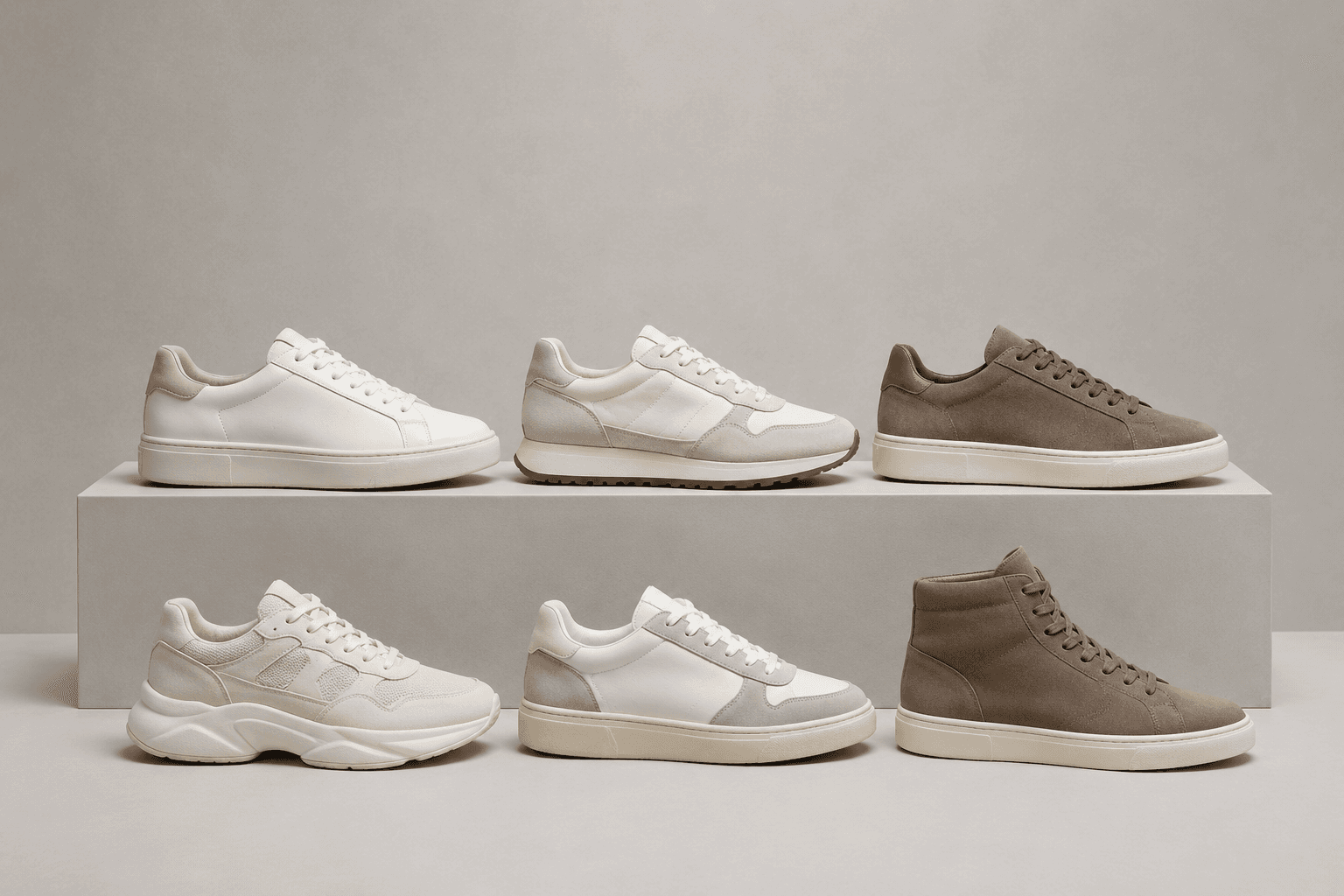
Buying wholesale womens shoes from China is a specification exercise before it is a price exercise. A factory can quote in 24 hours, but if the brief does not lock construction, material grade, size range, testing scope, and packaging, the number is only a placeholder. Buyers then compare three quotes that describe three different shoes and discover the mismatch after samples or, worse, after bulk is booked.
For sourcing managers, importers, and brand owners, the safest workflow is sequential. First define the shoe in production language. Then screen factories by category capability, not by catalog breadth. Next cost the product from materials and labor, approve fit and materials with written standards, and run bulk through stage gates before shipment release. In women’s footwear, small technical downgrades create large commercial problems: a lining reduced from 130 GSM to 90 GSM, a sock foam changed from 0.20 g/cm3 to 0.14 g/cm3, or an outsole shifted from 62 Shore A to 52 Shore A can change comfort, wear life, and return rate quickly.
This guide is written for buyers of wholesale fashion shoes and bulk womens footwear who need practical supplier-side numbers. It focuses on workable MOQ ranges, realistic lead times in days, FOB ranges in dollars per pair, common EN ISO and ASTM testing checkpoints, and the process controls that prevent fit inconsistency, adhesion failure, trim loss, heel instability, and labeling mistakes.
In wholesale women’s footwear, the lowest quote rarely wins long term; the repeatable shoe with controlled fit, materials, and documentation does.
1. Build the RFQ as a production brief, not a mood board
A usable RFQ for wholesale womens shoes should look like the opening pages of a tech pack. If the request only says “women’s sneaker,” “fashion heel,” or “summer sandal,” the factory has to guess upper grade, outsole type, sock construction, fit standard, and packaging level. One supplier quotes stock PU with a stock TPR bottom. Another quotes microfiber with a semi-custom outsole. A third assumes leather-look upper, lower-density insole foam, and plain packing. The numbers may look comparable, but the products are not.
Start with construction and wear use. State whether the shoe is cemented, strobel-cemented, vulcanized, sidewall stitched, California, lasted, or direct-injected. Then define the upper by panel and material family. A commercial women’s fashion sneaker may run microfiber or PU at 0.9-1.2 mm, mesh lining at 120-140 GSM, strobel board at 1.8-2.0 mm, sock foam at 4-6 mm and 0.18-0.22 g/cm3, and TPR outsole at 55-65 Shore A. A dress pump may require upper at 1.1-1.4 mm, lining at 110-130 GSM or pigskin, insole board at 1.5-2.0 mm cellulose, ABS heel with steel pin, and a rubber forepart insert for slip improvement. A molded slide may use PVC or EVA upper, molded footbed at 0.20-0.25 g/cm3, and outsole hardness adjusted for market and season.
Commercial details belong in the RFQ from day one. State target FOB, ex-factory date, size range, destination market, testing requirements, and expected reorder volume. A factory will usually price a first order of 600-1,200 pairs with more confidence than a 300-pair trial that includes custom bottom tooling, multiple colors, and exclusive packaging. Clear volume expectations help the supplier decide whether to quote stock components, absorb some development cost, or insist on a higher MOQ.
MOQ should be discussed by component, not just by finished pair count. For inline wholesale fashion shoes, 300-600 pairs per style is workable when stock uppers, stock soles, and standard boxes are used, often with 100-200 pairs per color. Add a custom outsole mold, logo hardware, foil print lining, or molded ornament and the practical MOQ often moves to 800-1,200 pairs. If the order is below that level, the supplier should recommend which parts must return to stock rather than accepting the order and making silent substitutions later.
- Lock upper thickness, lining GSM, sock foam thickness and density, outsole hardness, and heel height tolerance in the RFQ.
- Quote by size run such as EU 36-41 or US 5-10 because grading affects material consumption and fit review.
- State packaging early; color box, barcode sticker, tissue, silica gel, and size label can add about $0.25-$0.80 per pair versus plain packing.
What the factory needs before it can quote cleanly
Provide lateral and outsole views, heel height in millimeters, last shape reference, branding positions, closure type, target pair weight, and any fit instruction such as narrow forepart, standard ball girth, wider toe box, or extra toe spring. If the product sells into the EU or UK, declare restricted-substance expectations and material labeling format at RFQ stage. If the channel is US retail, identify ASTM or retailer protocol requirements early because they may affect material selection and testing cost.
For bulk womens footwear, also state what cannot be changed. If comfort is critical, protect sock foam density, top-cover quality, and lining weight. If the price ceiling is fixed, tell the supplier where simplification is allowed, such as reducing upper panel count, using stock eyelets, or simplifying box print. That keeps cost engineering focused on non-critical areas instead of hidden structural downgrades.
2. Screen factories by category skill and process discipline
A factory that runs vulcanized canvas shoes well may not run women’s pumps, molded slides, or heeled sandals well. Women’s footwear is construction-sensitive. Pattern engineering, bottom preparation, edge finishing, heel attachment, and lasting control vary sharply by category. When buying wholesale womens shoes, a better opening question is: what percentage of your line is this exact construction, what is your monthly capacity on it, and which steps are done in-house?
Ask for recent references that match your category and were produced within the last 12 months. On sandals, inspect strap skiving, edge paint, buckle set, insole wrap, and outsole bond line. On pumps, check topline symmetry, heel-seat fit, heel centering, top-piece contact, and balance on a level plate. On sneakers, ask whether the bottom is stock TPR, EVA, IP, or rubber blend; what density or hardness they normally run; and whether strobel stitching, roughing, cementing, and pressing are controlled in-house.
Documentation quality is one of the strongest supplier-side indicators. A good factory can state material assumptions, sample lead time, mold cost, color MOQ, carton pack ratio, standard defect criteria, and realistic production window without hesitation. A weak factory often gives a low opening FOB, vague material descriptions, and no written assumptions. In private-label footwear, that usually leads to unapproved material substitution, shade variation between pairs, or barcode and labeling errors close to ship date.
Compliance experience should be checked by market and category. For Europe, confirm familiarity with EN ISO footwear methods and chemical control procedures. For US retailer programs, ask how the supplier handles ASTM or retailer testing for adhesion, flexing, heel attachment, slip, and trim security. The answer should describe a process: confirmed sample sent to lab, report reviewed against standard, corrective action issued, and retest completed before bulk release if needed.
- Ask what share of monthly output is women’s shoes in your exact category, not general footwear.
- Confirm whether cutting, stitching, lasting, finishing, and packing are in-house or subcontracted.
- Request current examples with similar heel height, outsole family, upper material, and target FOB band.
- Verify support for third-party inspection, lab testing, sealed reference samples, and version-controlled BOMs.
Red flags that usually cost more later
Treat generic descriptions such as “PU leather,” “rubber sole,” or “good quality foam” as incomplete, not acceptable. The supplier should specify thickness, backing, hardness, density, or at least standard commercial grade. The same caution applies if a factory promises 100-pair MOQ on a fully custom outsole program but cannot explain mold amortization, outsole material minimums, or size grading charges.
If two factories are within $0.20-$0.40 per pair of each other, the safer choice is usually the one that writes down assumptions clearly: sample terms, mold fee, material standard, size run, carton spec, lead time from deposit, and substitution rules if a booked material becomes unavailable. In wholesale fashion shoes, clarity prevents more cost leakage than a small headline price concession.
3. Cost the shoe from materials, labor, and customization before negotiating FOB
FOB negotiation works best when the buyer knows where the cost really sits. In women’s footwear, the main cost drivers are upper material, outsole unit, labor minutes, hardware, and packaging. A simple stock-material women’s slide may FOB around $3.80-$5.50 in volume. A casual cupsole sneaker with padded collar, branded tongue, and molded comfort sock may run $7.50-$12.50. A heeled sandal with wrapped heel, metal trim, buffed edges, and more handwork often lands in the $8.50-$15.00 range. Mid-calf fashion boots and dress boots can move above that quickly once lining coverage, outsole complexity, and shaft reinforcement increase.
Ask for a structured costing view even if the supplier does not disclose every margin line. You need enough detail to engineer cost without damaging the product. Standardizing outsole color removes small-batch complexity. Reducing upper panel count can save stitching minutes. Moving from custom hardware to stock hardware can reduce cost by roughly $0.25-$0.60 per pair. Simplifying a full-color printed box to a standard box with sticker application can save another $0.20-$0.50. These changes usually preserve commercial appearance if the silhouette and material hand feel remain intact.
Do not chase FOB by weakening hidden performance materials. Sock foam is one of the most common shortcuts. A 4 mm foam at 0.20 g/cm3 and a 4 mm foam at 0.14 g/cm3 may look similar at packing but perform differently after repeated compression. The same is true of lining. A 120-140 GSM heel and vamp lining generally resists collapse and abrasion better than an 80-90 GSM substitute chosen only to save a few cents. If bulk womens footwear must hit a tighter target, simplify visible design complexity before downgrading the internal package.
Private-label branding should match order scale and reorder confidence. Printed sock logos, woven size labels, tissue print, hangtags, and box artwork are low-risk custom points. Custom outsole logos, molded ornaments, engraved buckles, metal logo plates, and unique bottom tooling require longer development, tighter approval, and firmer MOQ discipline. Use them where repeat volume can absorb tooling and rework cost, not just to make the first order look more custom.
- 01Set a realistic target FOB before sample approval and identify which specifications are fixed versus flexible.
- 02Request stock-material and custom-material options on the same style where possible to compare real savings.
- 03Reduce cost first through trims, panel count, color complexity, and packaging before touching structural materials.
- 04Separate first-order tooling and development charges from repeat-order pricing so reorders stay commercially clean.
Typical supplier-side commercial ranges
A stock-bottom development sample usually takes 7-14 days. If the style needs a new outsole mold, custom ornament, or fit correction, sample lead time often extends to 21-35 days. Bulk production commonly runs 30-45 days after deposit and final sample approval for slides, sandals, and simple fashion sneakers, and 45-60 days for more complex heels, boots, or peak-season orders. If the shipment falls before major holidays or in a peak loading window, build extra days into the ex-factory plan instead of forcing the line.
New outsole tooling can range from a few hundred US dollars for very simple bottom work to several thousand dollars for multi-part molds with full size grading. Common terms remain 30 percent deposit and 70 percent balance before shipment or against copy documents, depending on relationship and order history. For wholesale womens shoes, the best comparison is repeatable landed cost with acceptable defect risk, not the lowest opening FOB on a loosely defined shoe.
4. Approve fit, materials, testing, and labeling before bulk release
Development is where most preventable claims can still be stopped at low cost. Fit approval in women’s shoes must be done on-foot, not by shelf appearance alone. Review the sample in the intended key size and check toe allowance, vamp pressure, topline grip, heel slip, arch placement, strap position, walking stability, and balance. A pump that looks clean in a box may still pitch the foot forward if the heel angle, toe spring, or sock build is wrong. A sandal may pass visual review yet fail wear because the forefoot strap cuts across the joint line.
Material approval should be based on signed swatches, not verbal descriptions. Confirm upper thickness, finish, backing, color tolerance, lining GSM, sock build, board thickness, outsole hardness, and all branding executions. If laminated or coated materials are used, ask whether the same upper-and-adhesive combination has already run in production. Many sole-detachment and wrinkle complaints on wholesale womens shoes start with an unverified material pairing rather than poor assembly alone.
Testing should be planned before bulk, not added after production when the goods are already packed. Depending on category and customer requirement, practical checks include upper-to-sole adhesion, flexing, abrasion, colorfastness to rubbing, heel attachment, slip resistance, and trim security. EU programs commonly align with EN ISO footwear methods. US retailer programs may specify ASTM methods or proprietary protocols for adhesion, heel fatigue, slip, or migration. The exact method number depends on the market and customer, but the discipline is the same: test the approved construction, not a similar earlier sample.
Labeling and packaging deserve the same control level as the shoe. The size stamp, box end label, carton mark, barcode file, country-of-origin declaration, material declaration, and retailer routing labels must all match the approved master data. For private-label orders, incorrect barcode setup or size label sequence can delay shipment as easily as a failed wear test.
- Approve at least one on-foot fit sample for every new last, outsole family, or heel height.
- Sign off swatches for upper, lining, sock, outsole, hardware finish, and box before cutting begins.
- Align required EN ISO, ASTM, or retailer test scope before booking bulk materials.
Tests that usually justify their cost
For fashion sneakers and casuals, upper-to-sole adhesion, flexing, abrasion, and colorfastness are usually the most useful pre-bulk checks. For pumps and dress heels, add heel attachment and balance-focused review. For sandals and slides, prioritize strap fixation strength, outsole bond, and slip behavior on the intended outsole compound. The exact standard can vary by lab, but the sample sent for testing should match the approved BOM and not contain substitute materials.
A modest round of lab confirmation on the approved sample often prevents much larger losses later, especially in repeat wholesale fashion shoes programs where one bottom package may carry several colors or upper variations across a season.
5. Control bulk production through stage gates, not only final inspection
Once the PO is released, the factory should move through fixed checkpoints: material booking, incoming material approval, cutting, stitching, assembly, finishing, packing, and shipment release. Each stage carries a different risk profile. Cutting errors create shade mismatch, panel mispairing, and material waste. Stitching defects create seam slippage, topline distortion, broken backtacks, weak reinforcement, and asymmetry. Assembly defects include poor roughing, dirty cement lines, unstable toe shape, and wrong outsole matching. Finishing defects usually show up as glue marks, sock print shift, edge-paint variation, pair imbalance, or scratched ornaments.
For bulk womens footwear, require a pre-production record that confirms the approved sample reference, BOM version, outsole code, packaging method, carton ratio, and defect standard. If the order includes metallics, satins, pale pastels, suedes, or mixed-material uppers, ask for a first-pair check from each color before the line runs at full speed. These materials react differently to cutting pressure, folding, gluing, and cleaning than black PU or standard mesh, so they need separate confirmation.
Final random inspection still matters, but it should be the last filter rather than the first serious control point. Footwear inspection should cover heel centering, pair matching, outsole bond line, strap symmetry, upper shade consistency, lasting wrinkle tolerance, sock print location, and label accuracy. If you wait until final inspection to discover a balance issue, recurring glue contamination, or a barcode sequence error, the least expensive corrective options are already gone.
- 01Approve incoming materials against signed standards before cutting release.
- 02Review first stitching output for symmetry, logo position, seam quality, and reinforcement accuracy.
- 03Check first assembled pairs for bond line, toe shape, balance, size mark, and heel centering.
- 04Conduct final random inspection against the agreed AQL and footwear-specific defect list before shipment release.
Claim categories that repeat most often
The most common claims in women’s footwear are fit inconsistency, sole detachment, broken ornaments, color transfer, heel instability, lining abrasion, and incorrect labeling. Fit inconsistency usually comes from last changes, unapproved material substitutions, or grading drift between sample and bulk. Bond failures often trace back to poor roughing, incorrect primer selection, inadequate curing, or an upper-and-lining combination that behaves differently from the approved sample. Ornament loss usually points to weak attachment hardware, poor setting pressure, or inconsistent plating quality.
The practical supplier-side fix is procedural. Freeze the BOM, define substitute rules in writing, keep a sealed reference pair, and require re-approval for any change affecting thickness, density, finish, backing, hardness, or hardware plating. For repeat orders of wholesale womens shoes, that discipline reduces both defect rate and argument over responsibility when a claim appears.
6. Close the shipment accurately and preserve reorder data
Shipment closing is not just loading cartons into a container. It is the point where the order becomes either easy or difficult to repeat. Before release, verify actual carton dimensions, net and gross weight, pair count per carton, color assortment, inner box labels, and shipping marks. If freight booking was made on estimated carton data and the packed carton runs larger or heavier, the problem becomes a freight, warehouse, and margin issue even if the shoes themselves pass inspection.
Document control should include commercial invoice, packing list, PO reconciliation, final inspection report, test records where required, carton-mark file, barcode file, approved artwork, and any special retailer compliance documents. For private-label programs, also archive the approved BOM, outsole mold reference, grading spec, fit comments, material card, and sealed confirmation sample. That is what allows a reorder to move in days instead of restarting development from zero.
After delivery, review claims and sell-through feedback by style, color, size, and defect type. Record both units affected and cost per pair so the next sourcing decision is data-based. A women’s sandal may sell well but still require a softer topline binding, wider strap placement, or higher-density sock on reorder. A fashion sneaker may need stronger heel lining or improved outsole abrasion. The strongest buyers treat every shipment of wholesale fashion shoes as engineering feedback for the next PO, not as a finished transaction.
- Reconfirm assortment, carton marks, and actual packed carton data before freight booking release.
- Archive BOM, approved swatches, fit notes, mold references, test reports, and inspection records by style number.
- Feed post-delivery defect and comfort feedback into the next reorder specification instead of repeating the same construction unchanged.
Key takeaways
- Write the RFQ in production language: construction, thickness, GSM, foam density, outsole hardness, size range, testing scope, and packaging.
- Choose factories by women’s category capability, in-house control, and documentation quality, not by catalog breadth or opening FOB alone.
- Reduce cost first through trims, panel count, stock components, and packaging efficiency before weakening structural materials.
- Approve fit on-foot, lock swatches and BOM versions, and align EN ISO, ASTM, or retailer testing before bulk release.
- Run production through material, stitching, assembly, finishing, and final inspection checkpoints with footwear-specific defect criteria.
- Keep full reorder records, including BOM, molds, grading, tests, and claim data, so repeat orders become faster and less risky.
SoleForge manufactures casual sneakers and sandals & slippers under OEM and ODM for brands and importers worldwide. Request a quote with your tech pack or reference pair and we'll reply within one business day.